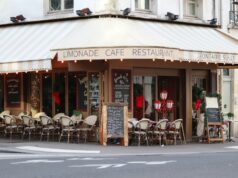















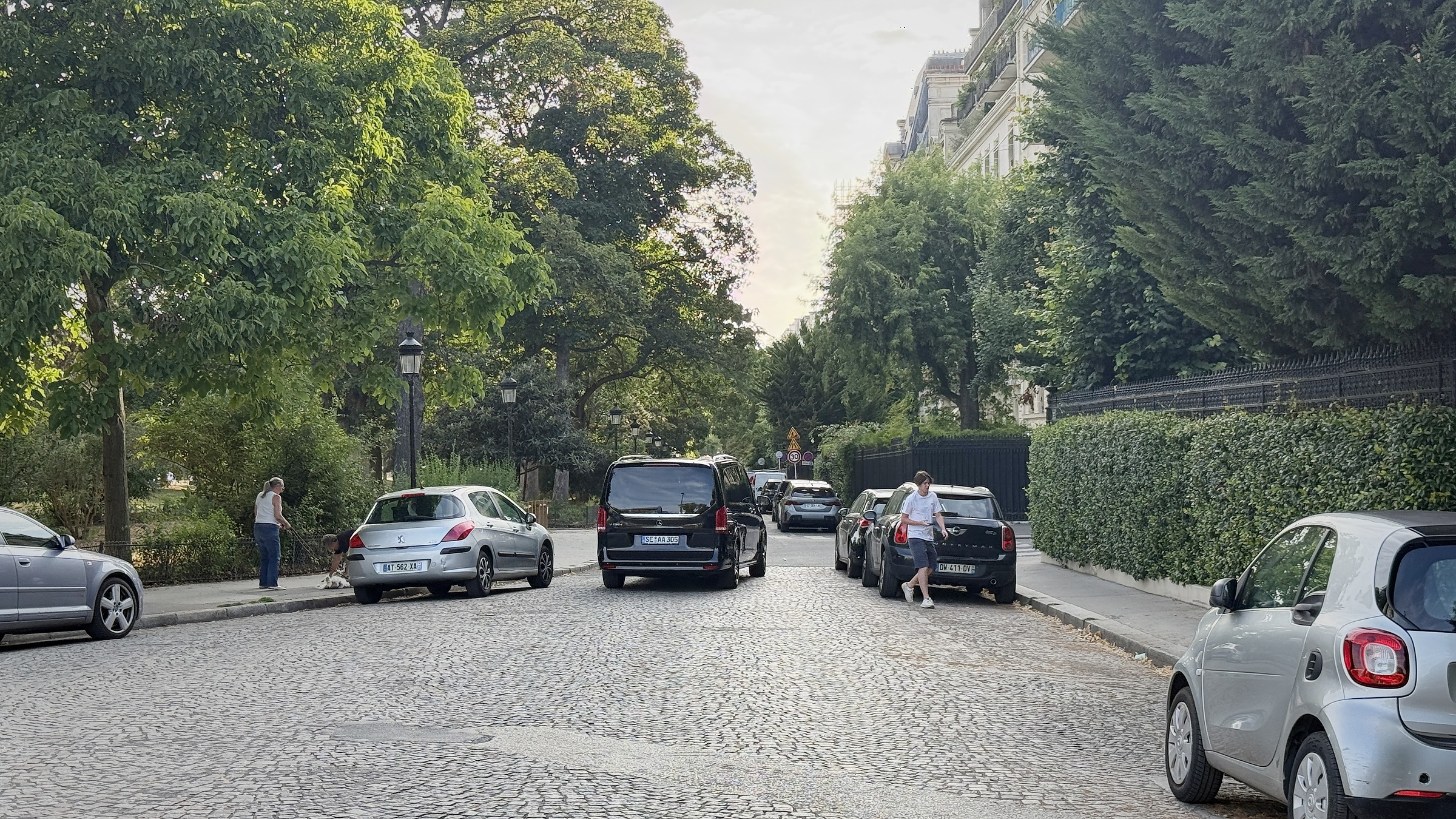
Paris 16 rarely needs to shout. Its appeal to wealthy international families is built less on a single luxury street than on a complete western-Paris routine: larger apartments, formal reception rooms, schools, parks, sports clubs, embassies, private services and routes toward Neuilly, La Défense, the airports and Normandy. For a family arriving with children, assistants, drivers or security, that routine can matter more than being within walking distance of the Louvre.
Investing in France series: this report belongs to the French Real Estate Investment Guide. It examines why international families choose Paris 16 and whether that demand can support a defensible property case. Prestige is not a guarantee; all facts, analysis and opinion are separated. This is not individualized investment, legal or tax advice.
The newest official data introduces discipline. At the end of 2025, the 16th arrondissement’s notarial price indicator was below its level one year and five years earlier. Families may still choose western Paris, but an investor must identify exactly what they are choosing it for.
Paris 16 is not one neighbourhood
The arrondissement stretches from the Trocadéro and Chaillot in the east to the Bois de Boulogne in the west, and from Porte Dauphine in the north to Auteuil in the south. Passy and La Muette offer a village-like commercial life near the Seine. Avenue Foch and parts of Porte Dauphine are associated with grand apartments, security and diplomatic addresses. Auteuil is more residential and sports-oriented. Chaillot places the Eiffel Tower, museums and central Paris within view.
These micro-markets serve different families. A household prioritizing international business may favour access to Neuilly and La Défense. Another may want school routes around Passy. A sports-focused family may look toward Roland-Garros and the Bois. A diplomatic buyer may place security and vehicle access first. “Paris 16” is only the beginning of the search.
The price correction matters
Notaires du Grand Paris data for old apartments at the end of December 2025 put the standardized price in the 16th arrondissement at €10,050 per square metre. It was down 1.1% over one year and 10% over five years. For Paris as a whole, the notaries’ February 2026 communication later placed apartments around €9,580 per square metre.
The 16th therefore retained a premium to the city average, but the five-year movement contradicts the idea that family prestige creates a one-way market. Higher financing costs, weaker transaction activity and changes in buyer expectations affect western Paris too.
Arrondissement averages are especially limited here. A renovated family apartment near Trocadéro with lift, outdoor space and an Eiffel Tower view is not comparable to an unrenovated unit on a traffic-heavy edge. Very large apartments may achieve a lower price per square metre but require a much larger total budget, narrowing the future buyer pool. The entry price, not the postcode, determines how much resilience an investor has purchased.
A residential depth that Paris 8 does not replicate
INSEE’s 2023 profile counted 80,793 principal-residence households in Paris 16, housing 157,338 people, with an average 3.1 rooms per principal residence. Almost 44.6% of households had occupied their home for at least ten years. Secondary and occasional residences represented 12% of the housing stock.
Those numbers describe a large, lived-in residential district, not only a trophy market. Long tenure can support community, schools and local commerce. It can also reduce the supply of family-sized homes at any one moment. The second-home share shows international and occasional use, but most of the arrondissement’s homes remain part of ordinary residential life.
This depth is one reason Paris 16 can offer greater choice in large apartments than central tourist districts. It also means investors compete with owner-occupiers who assess a property in practical terms: school mornings, groceries, doctors, parking, playgrounds, domestic staff and the time required to cross the arrondissement.
Why international families build a western-Paris life
Space and formal layouts
Many late 19th- and early 20th-century buildings offer reception rooms, multiple bedrooms, separate kitchens and service areas. For multi-generational visits or households travelling with nannies, assistants or protection teams, separation between public, private and service circulation can be valuable. Yet historic plans are not automatically efficient; corridors, maid’s rooms and merged lots must be measured carefully.
Education and continuity
The arrondissement and nearby western suburbs concentrate public, private, bilingual and international education options. For globally mobile families, the school commute can be the anchor around which property choice is made. A home that reduces daily transfers and allows children to remain in the same system may have more utility than a more iconic central address.
Security and diplomatic infrastructure
Embassies, ambassadorial residences and protected buildings are part of the landscape. Wide avenues, controlled entrances, underground parking and staffed buildings can suit privacy-conscious owners. Security is still asset-specific: a prestigious road with an exposed lobby may work less well than a discreet side street with a professional gardien and controlled parking.
Green space, sport and the Seine
The Bois de Boulogne changes the scale of daily life. Roland-Garros, Parc des Princes, the racecourses, clubs, gardens and Seine paths make the west attractive to families who want outdoor routines without leaving Paris. Proximity does not guarantee quiet, particularly during major events, and buyers should test traffic and crowd patterns.
Tourism supports the address without defining it
Paris 16 contains powerful visitor attractions. The official tourism office highlights the Trocadéro museums, Palais Galliera, Musée Marmottan Monet, Maison de Balzac and Fondation Louis Vuitton, Frank Gehry’s cultural landmark in the Bois de Boulogne. Roland-Garros and Parc des Princes bring global sports audiences.
This cultural and sporting economy supports restaurants, hotels, chauffeurs, retail and international recognition. It can make a residence useful for repeated stays across the year. But the investment case should not depend on nightly tourist rental. Family ownership, long stays and conventional residential demand are more compatible with the district’s character and Paris’s regulatory direction.
The right relationship is complementary. Tourism introduces affluent visitors to western Paris. Lifestyle gives some of them a reason to return. Property ownership may then create a longer connection, but only when the home works beyond the week of a tournament or fashion event.
The employment and business connection
INSEE counted 120,355 jobs in Paris 16 in 2023; 43.6% were senior managerial and intellectual professions. The arrondissement is also positioned between central Paris and the major employment corridor running through Neuilly to La Défense.
That geography supports executives, entrepreneurs and diplomatic households. Metro lines 1, 2, 6, 9 and 10, the RER C, buses and tram connections serve different edges, but accessibility varies widely inside the arrondissement. A home near Victor Hugo, Passy or Auteuil does not offer the same commute.
International buyers should test school, office and airport routes at real travel times. Western Paris can be convenient by car for certain trips, but congestion, parking and street works alter the calculation. A driver-friendly entrance may carry genuine utility for one household and no premium for another.
Where do the strongest family micro-markets sit?
Passy and La Muette
These areas combine shops, food markets, schools, transport and residential streets. They may suit a family seeking independence for children and staff. The risk is paying for a broad “Passy” label while sitting on a noisy artery or far from the daily services that create the premium.
Trocadéro and Chaillot
The attraction is monumental Paris, views, museums and proximity to the Golden Triangle. Properties with protected outlooks can be exceptionally rare. Visitor pressure, security perimeters, traffic and event disruption require close inspection. View premiums must be supported by light, plan and building quality.
Porte Dauphine and Avenue Foch
Large apartments, formal architecture and access toward Neuilly and the Bois can fit diplomatic and high-net-worth households. Total acquisition and operating costs can be substantial. Very large formats take longer to sell and may require staff and significant renovation.
Auteuil
Auteuil is often more residential, with sports infrastructure, local commerce and access to Boulogne. It can offer more living space for a given budget than the northern trophy addresses. Some locations feel distant from central Paris or depend more on specific transport routes.
What a wealthy family actually needs from the building
A buyer should look beyond parquet floors and mouldings. Is there a lift large enough for everyday life? Can luggage move without blocking the main entrance? Are service rooms legally connected to the apartment? Does the parking accept modern vehicles? Can deliveries be controlled? Is there storage for long absences? How does the gardien arrangement work?
Climate comfort has become more important. Upper floors and large west-facing windows can overheat. Installing external units or changing windows may be restricted by façades, planning or copropriété rules. Energy ratings affect rental possibilities and renovation strategy. Acoustic performance also matters on major roads and near sports venues.
A family that travels frequently needs management during absence: water checks, insurance compliance, post, maintenance, contractors and rapid response to leaks. These services add cost, but weak management can destroy more value than it saves.
The rental question: long-term utility versus short-stay fantasy
Paris rent controls may apply to conventional leases, and furnished rental has tax and legal consequences. Tourist furnished rentals are tightly regulated. Since January 2025, a principal residence is generally limited to 90 tourist-rental days a year. A non-principal residence can require change-of-use authorization and compensation, while the copropriété may prohibit the activity.
A large Paris 16 apartment rarely produces a high gross yield relative to its purchase and renovation cost. Its case may rest on a blend of personal use, long-term family demand, scarcity and capital objectives. Investors should model rent conservatively and never use illegal or uncertain short-term occupancy to make the numbers work.
The risks behind the calm façade
Price cycle: the 10% five-year fall in the notarial indicator is evidence that entry timing and price matter.
Liquidity: a €3 million family apartment has fewer buyers than a smaller unit. Highly customized or extremely large homes can wait.
Building expenditure: façades, roofs, lifts, heating, pipes, staff and courtyards create heavy calls for funds.
Energy and summer comfort: heritage limits can make improvements slower and more expensive.
Micro-location: traffic, schools, events, aircraft routes, stadium crowds and construction affect streets differently.
Tax and international structure: non-residents must examine income tax, capital gains, inheritance, IFI exposure and treaty effects with specialist advisers.
Opportunity cost: money tied to a low-yield residence is not liquid and cannot be redeployed quickly.
Who does Paris 16 suit?
It suits a family that expects repeated, substantial time in Paris and values continuity, privacy, schools and space. It can suit an executive household connected to western Paris or La Défense. It can also suit an intergenerational buyer who accepts low liquidity and ongoing stewardship in exchange for a usable family base.
It is less suited to an investor seeking a high rental yield, a simple tourist-let strategy or the fastest resale. Buyers motivated mainly by monuments and short visits may prefer central districts or hotels. Buyers seeking newer buildings and lower maintenance may look beyond the city boundary.
A family-office due-diligence list
- Map the routine: schools, work, airport, doctors, worship, sport, groceries and family contacts.
- Verify capacity: bedrooms, bathrooms, staff space, security, vehicles, storage and accessibility.
- Audit the copropriété: three years of minutes, accounts, arrears, major works, staff contracts and reserve funds.
- Test climate and noise: visit morning, evening, summer conditions and event days where possible.
- Confirm legal status: residential use, lot boundaries, service rooms, past alterations and rental plan.
- Model absence: insurance, management, emergency response and annual fixed costs even with no rent.
- Model exit: identify who buys the property if the family’s Paris needs change.
Analysis: the value is in continuity
Paris 16 remains compelling because it can turn an international family’s visits into a stable life. The district offers a rare combination of space, education, green areas, diplomacy, culture and access to the western economic corridor. Its strongest properties are homes first and financial assets second.
The market data prevents romanticism. A 10% five-year decline in the arrondissement benchmark means “wealthy families still choose it” cannot be translated into guaranteed appreciation. The best defence is a property with durable family utility, sound governance, manageable costs and a price that reflects current evidence.
Western Paris does not preserve value through reputation alone. It does so when generations of owners keep buildings functional, when neighbourhood services remain useful and when a home solves the practical problem of living internationally. That is a quieter investment thesis than a trophy view, but it may be the more serious one.
Sources and editorial note
- Notaires du Grand Paris: old-apartment prices by arrondissement, December 2025
- INSEE: Paris 16 population, housing and employment profile, 2023
- Paris je t’aime: official tourism profile of Paris 16
- City of Paris: furnished tourist-rental rules
Facts were checked on 5 September 2026. Data is dated and geographically scoped. Legal, tax and rental rules change. This article is independent editorial analysis and not a property advertisement or individualized advice.
Read the previous feature, Paris 8 & the Golden Triangle: Can One of the World’s Most Prestigious Addresses Preserve Property Value?, and follow oui stars Travel for continuing analysis of tourism, investment, luxury and the economies shaping the way the world travels.