









OUISTARS TRAVEL DATA DESK · ORIGINAL ANALYSIS · 28 SEPTEMBER 2026
The headline is Gustave Roussy’s global No. 3 position. The structural story is the map behind it: our analysis of the six French institutions in the 2027 global oncology top 100 finds a double concentration. Two-thirds are in Greater Paris, and two-thirds are dedicated cancer centres.
French institutions in the top 100
located in Greater Paris
dedicated cancer centres
average global rank
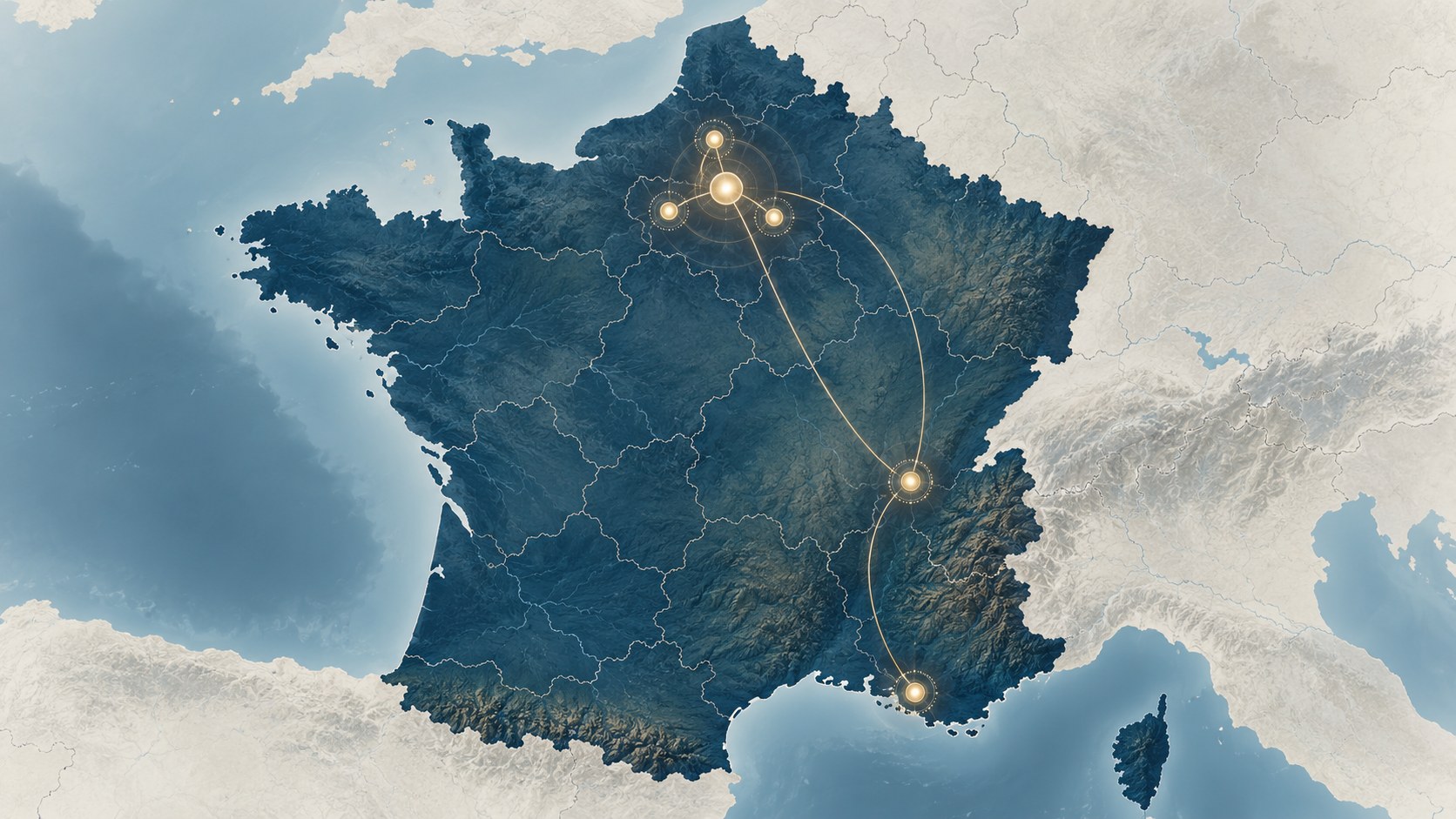
Paris leads, but Lyon and Marseille prevent a monopoly
Greater Paris contains Gustave Roussy in Villejuif, Institut Curie, Pitié-Salpêtrière and Hôpital européen Georges-Pompidou. Centre Léon Bérard represents Lyon, while Institut Paoli-Calmettes represents Marseille. That puts 66.7% of the leading French sample in Île-de-France, with two clear regional counterweights.
France’s global top-100 map
| World | Institution | Area | Model |
|---|---|---|---|
| 3 | Gustave Roussy | Greater Paris | Dedicated non-profit CLCC |
| 25 | Institut Curie | Greater Paris | Dedicated non-profit CLCC |
| 50 | Centre Léon Bérard | Lyon | Dedicated non-profit CLCC |
| 55 | Pitié-Salpêtrière | Greater Paris | Public university hospital |
| 67 | Institut Paoli-Calmettes | Marseille | Dedicated non-profit CLCC |
| 90 | Georges-Pompidou | Greater Paris | Public university hospital |
Dedicated centres form the majority
Four of the six are dedicated cancer centres: Gustave Roussy, Institut Curie, Centre Léon Bérard and Institut Paoli-Calmettes. They account for 66.7% of the group, compared with two major AP-HP academic hospitals.
This does not prove one model is always better. France’s two pathways are complementary: highly concentrated oncology expertise on one side and the broad multi-specialty capacity of a large academic hospital on the other.
A strong average that hides a gap
The six institutions have an average global rank of 48.3 and a median of 52.5. Gustave Roussy at No. 3 pulls the average upward, while a 22-place gap separates it from the next French institution, Institut Curie at No. 25. France therefore combines one global-podium institution with a broader, strong top-100 tier.
Two French institutions sit in the global top 25, four in the top 55 and all six in the top 90.
The map is still moving
Gustave Roussy moved from sixth worldwide in 2026 to third in 2027. In Nice, Centre Antoine Lacassagne reports a 2027 position of No. 131 worldwide and No. 8 in France. These shifts show that international visibility, accreditation and PROMs implementation can change the annual order.
What these numbers do not show
- They do not uniformly compare survival for every cancer type and stage.
- They do not measure appointment access or international-patient cost.
- A general rank does not replace tumour-specific expertise.
- The analysis covers only the six French institutions in the global top 100.
OUISTARS Travel Data Desk methodology
We analysed the published global positions of the six French institutions in the 2027 oncology top 100: 3, 25, 50, 55, 67 and 90. We calculated the arithmetic mean (48.3) and median (52.5), then grouped sites by geography and institutional model. We created no estimated scores and did not alter the source ranking’s weights.
Sources
- 2027 ranking and methodology — Statista
- Gustave Roussy
- Institut Paoli-Calmettes
- Centre Antoine Lacassagne
- Unicancer
Original editorial analysis of public data—not a new medical ranking or treatment recommendation. Verified 28 September 2026.