




Creators Who Left Their Mark | Aix-en-Provence
On 14 April 1878, Paul Cézanne wrote to Émile Zola about a view of Sainte-Victoire that had struck him during a journey towards Marseille. The mountain had not yet become the dominant subject later associated with his name. A moment of attention would develop into years of returning.
In a study published by the Société Cézanne, Denis Coutagne counts roughly forty oil paintings and a similar number of watercolours with Sainte-Victoire as their essential subject. The approximate tally gives a measure of the return: each work tests a different relationship between forms and colours.
Travel often rewards moving on. Cézanne’s relationship with the country around Aix-en-Provence suggests another rhythm: returning to a subject long enough for familiarity to reveal what a first glance missed. The Société Cézanne traces Sainte-Victoire as a theme that developed within his creative work.
A studio for the final years
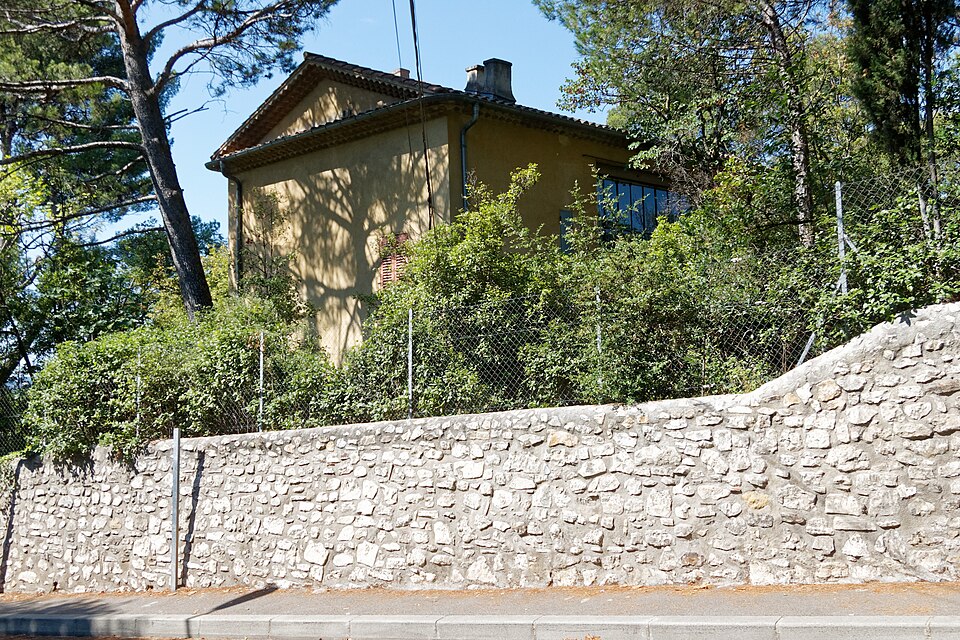
After the sale of the family home, Jas de Bouffan, in 1899, Cézanne had a studio built on the Lauves hill north of Aix. He worked there from 1902 until his death in 1906. The place is associated with work from his final years, including The Large Bathers.
A studio changes the nature of curiosity. A museum presents the completed work; a working room raises questions about the conditions behind it. The space, the light and the objects connect the finished picture to the daily effort of making it.
That effort rarely survives intact in the encounter with a painting. The studio restores a sense of time between an idea and its result: an arrangement reconsidered, a decision tried again, work carried from one day into the next.
Cézanne drew the studio plan himself, placing the working room on the first floor. Designing the place was part of arranging the conditions in which he would paint.
The path towards Sainte-Victoire
From the studio, Cézanne could walk in a few minutes to the Colline de la Marguerite, now the Terrain des Peintres, with its view towards Sainte-Victoire. The proximity links a working place to a subject and gives the visitor a geographical connection between them.
From such a viewpoint, the mountain also belongs to what surrounds it. Its outline, neighbouring colours and the intervals between forms participate in the scene. A stable subject can invite changing treatments because the painter’s decisions keep changing.
Repetition can seem wasteful to a traveller intent on seeing somewhere new. Yet a return may expose what speed concealed. Recognition of the mountain gives way to attention to its surroundings, then to the relationships that hold the view together.
What remains in a place
The mountain exists independently of the paintings. The studio has its own material history. Their connection comes from an artist who chose to work here and to revisit his subjects. That connection makes the journey valuable: the landscape can be seen alongside the choices that brought it into painting.
A photograph and a Cézanne landscape do different work. Comparing them directs attention to what the painter selected and how he organised it. Recording a view and constructing a painting become visibly distinct activities.
Our route began in Paris with a body carrying thought, then passed through Normandy and a surface of shifting reflections. In Aix, a mountain makes the case for returning. Each place preserves a different way of looking.
Sainte-Victoire will stay when the visitor leaves. The question it asks of the eye can travel further.
Sources : Sainte-Victoire · Atelier des Lauves · Atelier Cézanne
Cover photograph: The exterior of Cézanne’s Atelier des Lauves in Aix-en-Provence. Bjs · CC BY-SA 4.0 Image source and licence