







Hidden Landmark Stories — Episode 2
An assassination attempt, an unknown architect, an underground reservoir and a staircase designed as social theatre: inside the palace where architecture became the performance.
Halfway up the Grand Staircase, almost everyone pauses. The auditorium is still beyond the doors, yet the performance has begun. Below, new arrivals divide around the marble balustrade. Above, people lean over balconies beneath onyx, coloured stone and electric gold. One visitor photographs the ceiling; another turns toward the room, suddenly aware that she too is visible.
This is Charles Garnier’s most seductive idea. The Palais Garnier was not designed simply to contain opera. It was designed to turn arrival into theatre—and its audience into a second cast.
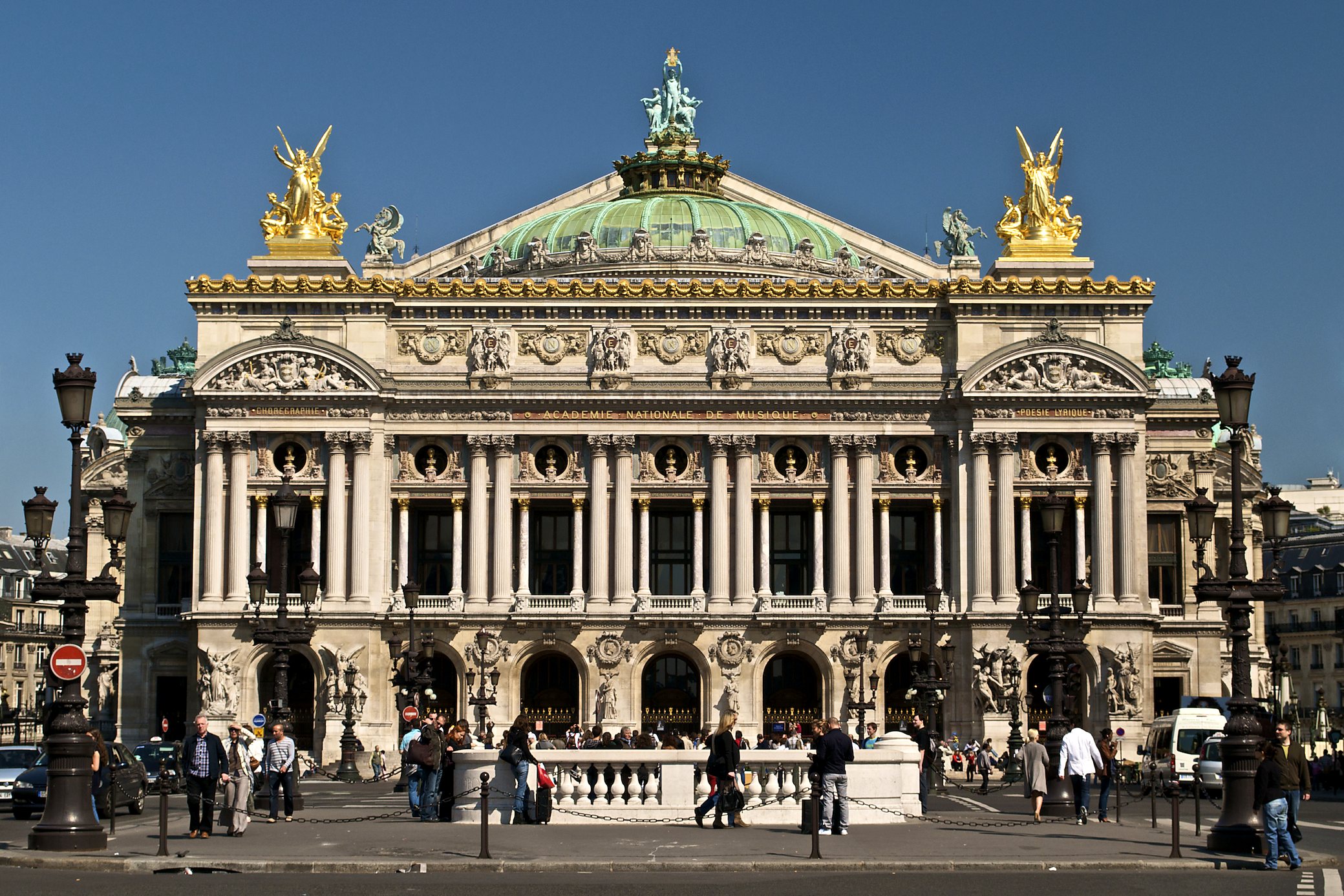
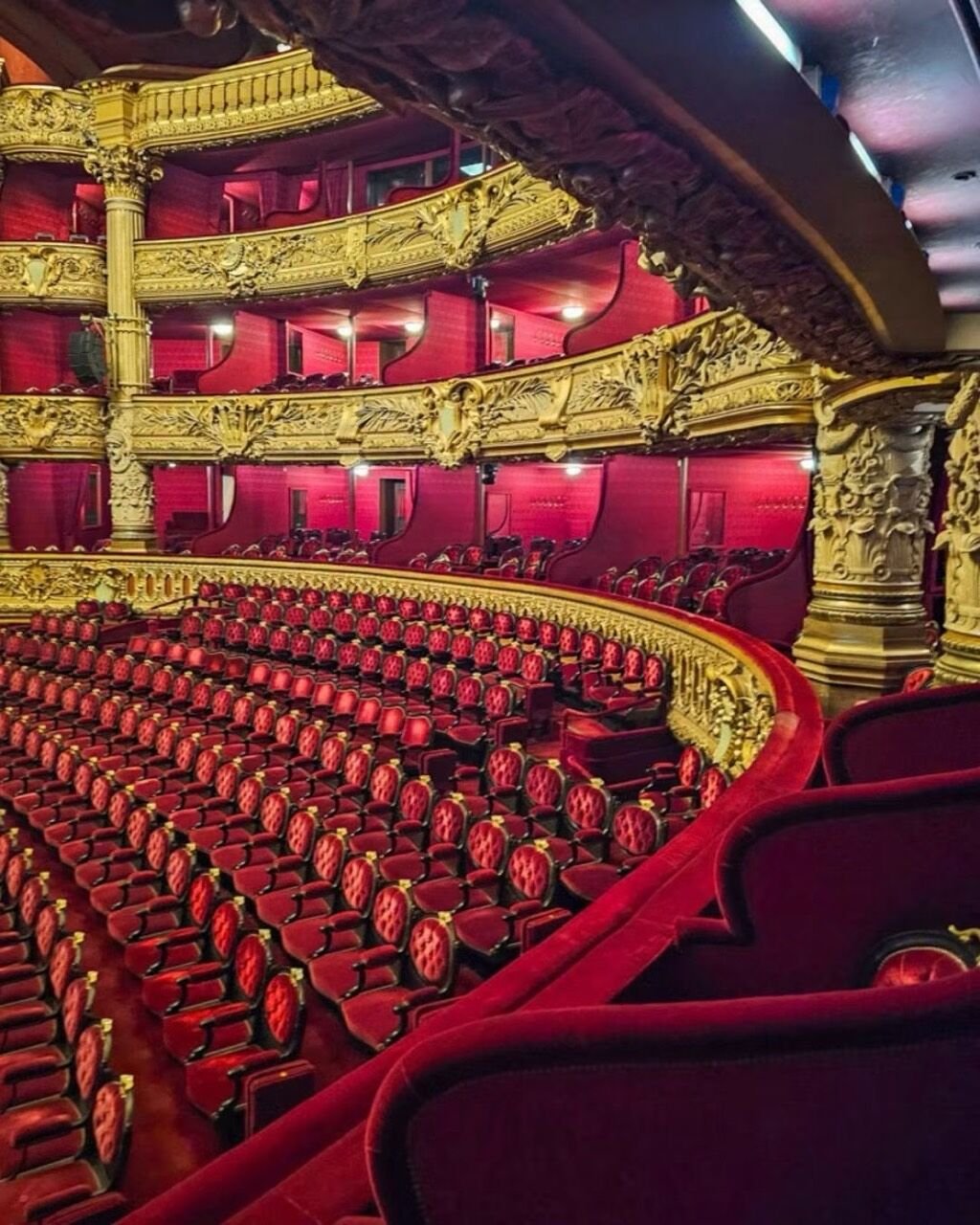
Paris had other reasons for building it: security, imperial prestige, urban transformation and the need to replace an inadequate opera house. But Garnier gave those ambitions a form so theatrical that the building became more famous than many works performed inside it. The façade is a prologue. The staircase is an entrance scene. The foyer is an interval parade. Even the red velvet of the horseshoe auditorium was chosen, the Opéra notes, for the way it flattered complexions.
Behind that beauty lies a more complicated story: a bomb attack, an outsider’s competition victory, groundwater, war and revolution, a vast creative team, and two events transformed into The Phantom of the Opera.
The night security became architecture
On 14 January 1858, Napoleon III and Empress Eugénie were arriving at the old Salle Le Peletier when the Italian revolutionary Felice Orsini and his accomplices threw three bombs. The imperial couple survived; the attack killed and injured scores of people.
Paris already needed a better opera house. The Salle Le Peletier was cramped, vulnerable and understood to be temporary. The attack did not create that need, but it made the project politically urgent. The next day, according to the Opéra national de Paris, Napoleon III decided on a new hall. Its setting would also matter: a broad, controlled approach from the Tuileries offered ceremony, clear sightlines and fewer opportunities for another ambush.
That avenue—the future Avenue de l’Opéra—was part of the remaking of Paris associated with Baron Haussmann. It would produce one of the city’s grandest vistas, but only after existing blocks had been demolished and residents displaced. Monumental Paris was never made on an empty stage. Read how Haussmann redrew the capital.
Beauty, power—and what the gold can hide
The Palais Garnier was never universally adored. Critics compared it to a confectionery, a casino and a necropolis. Degas, though a subscriber and one of the great artists of the ballet world, rejected its decorative excess and the regime it represented. Carpeaux’s dancers were treated as a moral threat before opening night.
Those objections sharpen the building rather than diminish it. Garnier produced a remarkably clear circulation machine dressed as a dream. Yet the dream advertised imperial authority, depended on urban demolition and staged social hierarchy as entertainment. Its beauty could make inequality look effortless.
That contradiction is part of its continuing force. Classified as a historic monument in 1923, the Palais Garnier remains a working theatre rather than a preserved shell. The opening of Opéra Bastille in 1989 strengthened Garnier’s association with ballet, but opera, concerts and other performances still inhabit it. More than a million people visited in 2023, according to the Opéra; in 2025 the building marked its 150th anniversary.
Its next chapter will require intervention again. A state programme announced in 2025 plans major stage modernisation, with a stage closure currently scheduled from summer 2027 to summer 2029 while visits are intended to continue. Dates and access should be checked before travel.
Where to see it: Palais Garnier visitor guide for 2026
Address: Place de l’Opéra, 75009 Paris Visitor entrance: corner of Rue Scribe and Rue Auber, behind the Charles Garnier statue Metro: Opéra (lines 3, 7 and 8); Chaussée d’Antin–La Fayette (7 and 9) RER: Auber (RER A)
Visits: The standard official schedule verified on 3 October 2026 is daily, 10:00–17:00, with a summer extension to 18:00. Last entry is one hour before closing; evacuation begins 15 minutes before closing. Performance activity and exceptional closures can alter access.
Booking: Online reservation is currently mandatory, and the live official page states that visit tickets are not sold on site. Tickets normally open for the next 30 days. Entry may begin up to 30 minutes after the time printed on the ticket; later admission is not guaranteed, and there is no re-entry after leaving. The auditorium can close without notice for rehearsals or technical needs; a timed ticket does not guarantee entry to it and this does not trigger a refund.
Self-guided admission verified for 2026: €15 for adult residents or nationals of France/EEA; €25 for other adults; €10 for ages 13–25 from France/EEA; €20 for other visitors aged 13–25. Children through age 12 and several eligible categories enter free with proof. Prices and conditions are dynamic: check the official Palais Garnier visitor page on the day you book.
Accessibility and bags: Lift access is available, although the temporary-exhibition area and shop are not wheelchair-accessible. Cloakrooms are closed during visiting hours, and suitcases or travel bags are prohibited.
The following 60-, 90- and 150-minute routes are OUISTARS Travel editorial itineraries, not official visit products. Book an entry slot first and never build the plan around guaranteed auditorium access.
If you have 60 minutes: the social-theatre route
Spend five minutes reading the façade from Place de l’Opéra, then move through the Subscribers’ Rotunda and Marcello’s Pythia. Give the Grand Staircase 15 minutes: climb halfway, turn, then look back from a balcony. Continue through the Avant-Foyer to the Grand Foyer. If the auditorium is open, finish at its door; if not, study the architectural model rather than racing the staff.
If you have 90 minutes: the complete interior rhythm
Follow the same route slowly, adding the Sun and Moon salons, Glacier Rotunda and the Library-Museum gallery. Reserve about 15 minutes for the auditorium and ceiling if accessible, or for the model and current exhibition if it is closed. Ninety minutes matches the Opéra’s stated standard self-guided duration.
If you have 150 minutes: architecture, myth and city
Begin with 20 minutes outside: compare the subscriber and former imperial pavilions and identify Belmondo’s copy of La Danse. Allow 90 minutes for the interior. Afterwards, walk south along Avenue de l’Opéra for 20 minutes, reading the vista as both urban theatre and security corridor. Use the final 20 minutes to separate the building you have seen from the myths: reservoir, not romantic lake; counterweight, not falling chandelier. The underground infrastructure is not part of the ordinary visit.
Watch: the Palais Garnier as a performance in itself
In this official 150th-anniversary film, the Opéra national de Paris presents the building as a spectacle in its own right.
Source: Opéra national de Paris on YouTube.
Palais Garnier FAQ
Is there really a lake under the Palais Garnier?
There is a water-filled engineering reservoir beneath the building, created in response to groundwater. It is not a natural, navigable lake like the one in The Phantom of the Opera.
Did the Palais Garnier chandelier fall?
No. In 1896, a heavy counterweight associated with the chandelier mechanism fell through the ceiling and killed one spectator. Later retellings turned that fatal component failure into the fall of the whole chandelier.
How long should a Palais Garnier visit take?
Allow 90 minutes for a well-paced self-guided visit. Sixty minutes covers the essential social spaces; about 150 minutes lets you study the exterior, interior and Avenue de l’Opéra without rushing.
Can you always enter the auditorium?
No. Rehearsals, performances and technical work may close it unexpectedly, even to ticket holders. The Grand Staircase and foyers remain the core of the architectural experience.
What is the nearest station?
Opéra Métro station, served by lines 3, 7 and 8, is directly beside the monument. Auber on RER A is also close.
Sources and fact-checking
This feature was checked against the Opéra national de Paris history of the building, its Charles Garnier biography, the current official visitor information, the Bibliothèque nationale de France’s 150th-anniversary research, the Musée d’Orsay architectural dossier, its record for Carpeaux’s La Danse, the Fondation Napoléon account of the Orsini attack, Le Matin of 21 May 1896 on Gallica, the French heritage register, and the Ministry of Culture record of the Chagall ceiling.
Visitor hours, ticket rules, prices, access and planned works can change. They were last verified on 3 October 2026 and should be reconfirmed on the official site immediately before publication and travel.
Continue the series: Why the Eiffel Tower Was Not Demolished.
OUISTARS Travel
Editorial team
Cite this article
When citing the text or analysis, include the magazine, title, original URL and publication date. Preserve the stated attribution of statistics and photographs.
OUISTARS Travel — Palais Garnier: The Opera House Built So Paris Could Watch Itself
Published: