







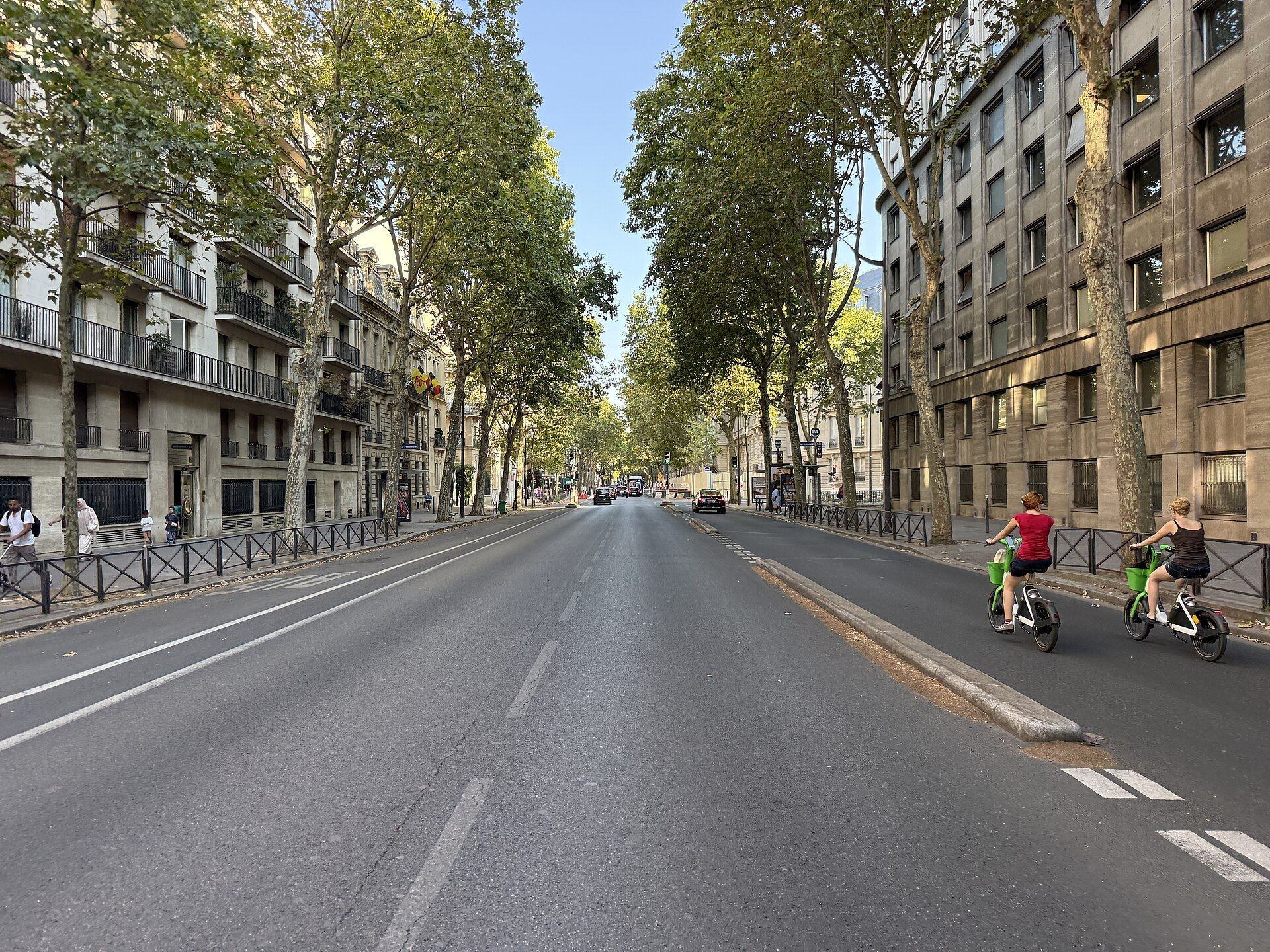
Some streets take you to a destination. Boulevard Saint-Germain changes the way you read the city. Along roughly three kilometres of the Left Bank, monks, monarchs, planners, writers, students, demonstrators, shopkeepers and visitors have left overlapping claims. Here coffee was not merely a drink: it became office, heated refuge and philosophical stage.
The story in one minute
The boulevard takes its name from the Abbey of Saint-Germain-des-Prés—Saint Germain ‘in the meadows’—because the monastery once stood beyond the cultivated city. A nineteenth-century avenue later cut through the older fabric. In the twentieth century, cafés turned it into a public living room for literature and existentialism; in May 1968, arguments moved from tables to barricades.
A saint, an abbey and a name older than the boulevard
The name recalls Germanus, a sixth-century bishop of Paris. The abbey was founded around 543 under King Childebert I outside the city walls, among fields—hence des Prés. Viking attacks devastated the complex; rebuilding followed, and the surviving church remains one of Paris’s rare Romanesque witnesses.
The boulevard is therefore not named after a café district invented for visitors. Paris je t’aime traces the abbey’s long history, while the French heritage register documents its protected architecture.
The long Haussmannian incision
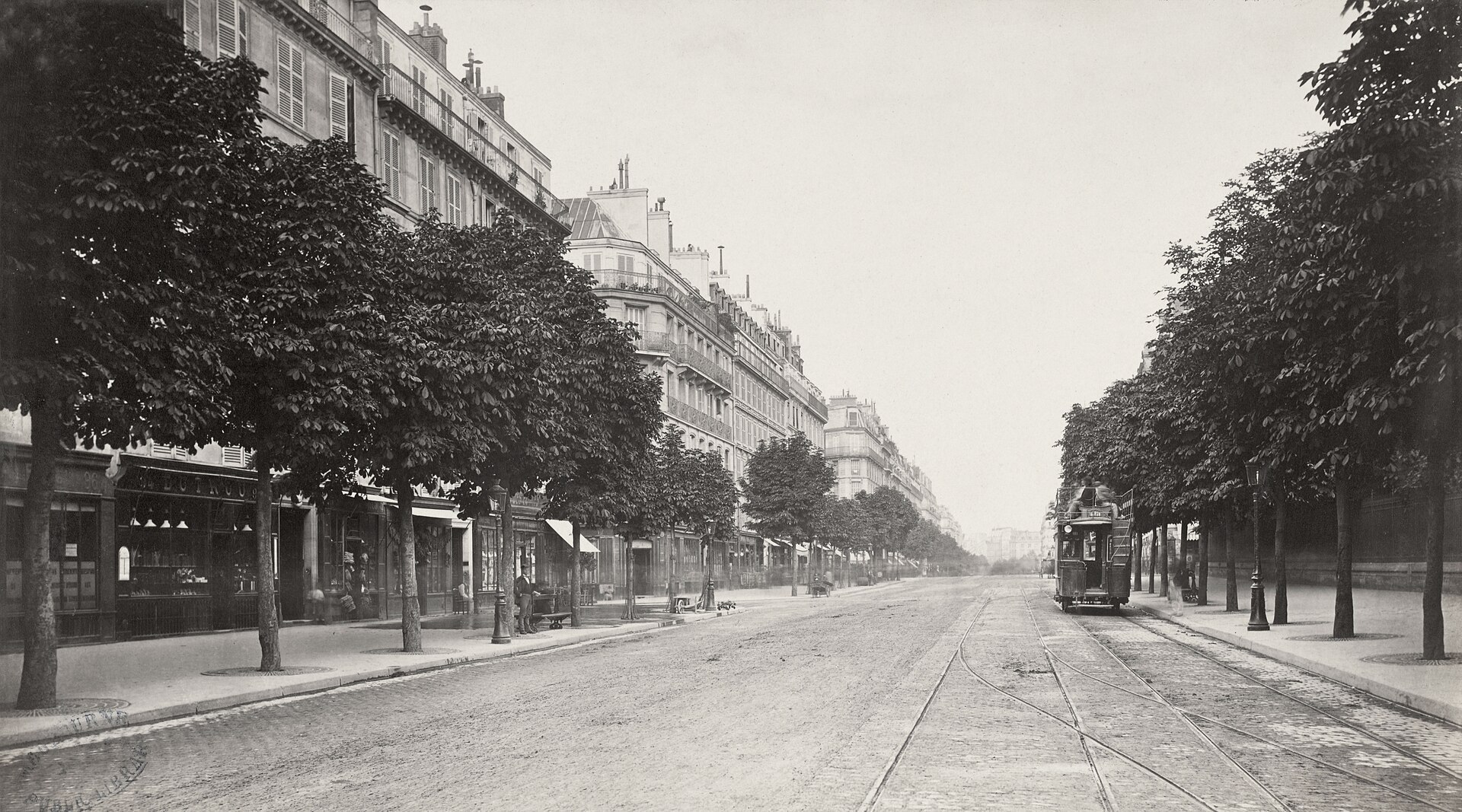
In the second half of the nineteenth century, authorities wanted a broad east–west route to relieve and reorganise the Left Bank. The project belonged to the age of Haussmann, yet it was not completed as one immaculate stroke. Expropriations, politics, the fall of the Second Empire and the Paris Commune stretched construction across decades.
A City of Paris planning study warns against imagining a perfectly regular Haussmannian composition: width and evenly spaced trees create the impression of unity, while the buildings record many dates and compromises.
When a café table became an office
After the Second World War, Saint-Germain became shorthand for existentialism. Jean-Paul Sartre and Simone de Beauvoir worked at Café de Flore and met across the neighbourhood; Albert Camus, Boris Vian, Picasso and many others fed the mythology. The Bibliothèque nationale de France notes a practical beginning: during wartime, heated cafés offered somewhere to meet and write.
The inspiring part is not that famous people ordered expensive coffee. It is that a semi-public room gave ideas time, friction and an audience. Arguments about freedom and responsibility grew among newspapers, cups and passing strangers rather than behind an institutional door.
Three famous rooms, three different characters
| Address | Historic character | What to notice |
|---|---|---|
| Café de Flore | Writers, artists and the existentialist legend | Corner terrace, Art Deco interior and the theatre of being seen |
| Les Deux Magots | Literary meetings and its own book prize | Church-facing terrace and continuing cultural events |
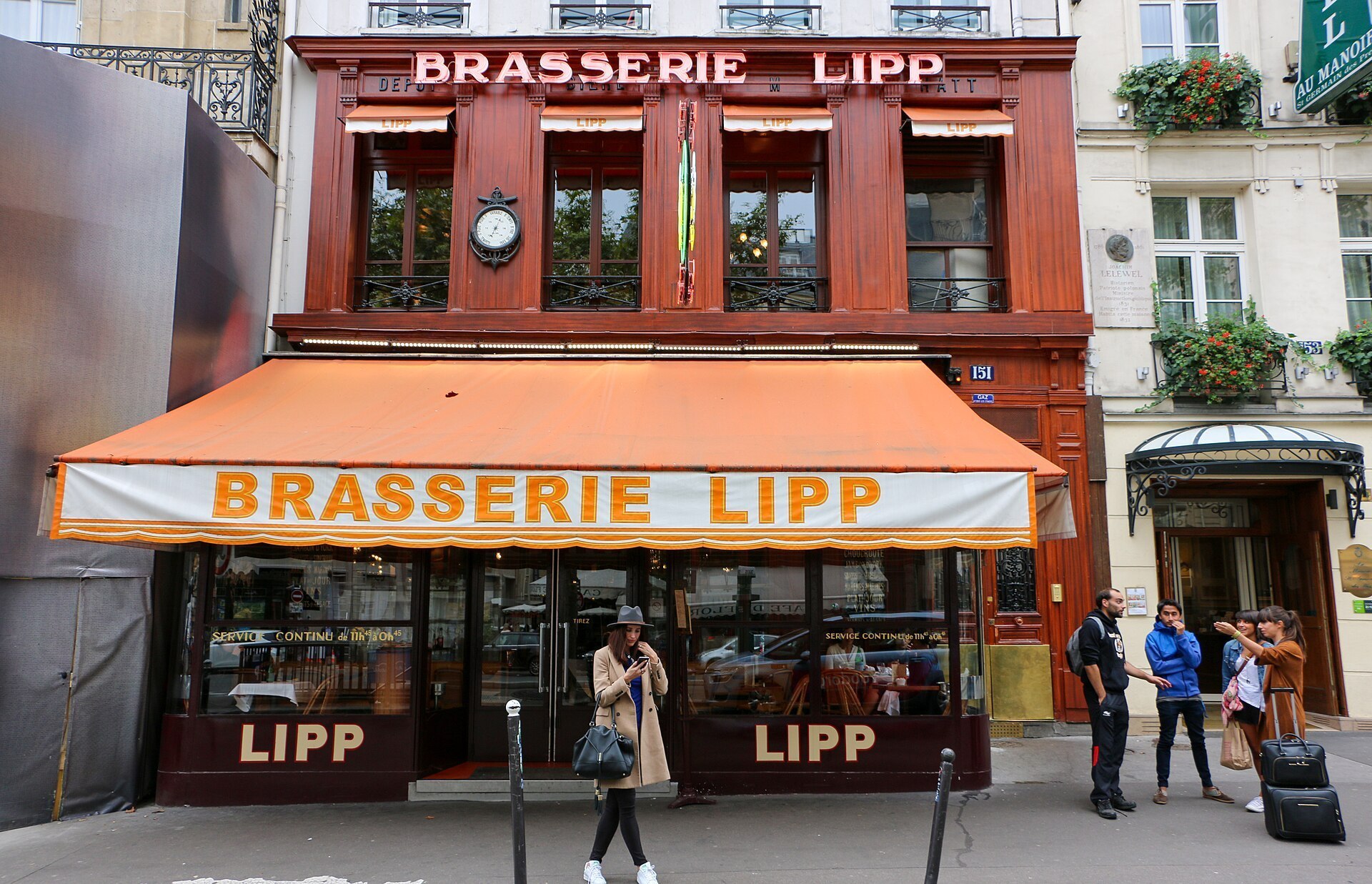
| Brasserie Lipp | Alsatian brasserie frequented by writers and politicians | Protected mosaics, mirrors and a more formal dining rhythm |
May 1968: thought steps into the street
On 6 May 1968, barricades appeared on Boulevard Saint-Germain during clashes around the Sorbonne. The France-Soir and City of Paris archive records how paving stones and construction materials were used as demonstrations spread across unusually long routes.
The boulevard’s biography suddenly reads as a sequence: an abbey preserving texts, cafés debating freedom, students testing it on the pavement. You do not have to romanticise every slogan or every clash to recognise a city publicly arguing with itself.
Old passages behind the grand line
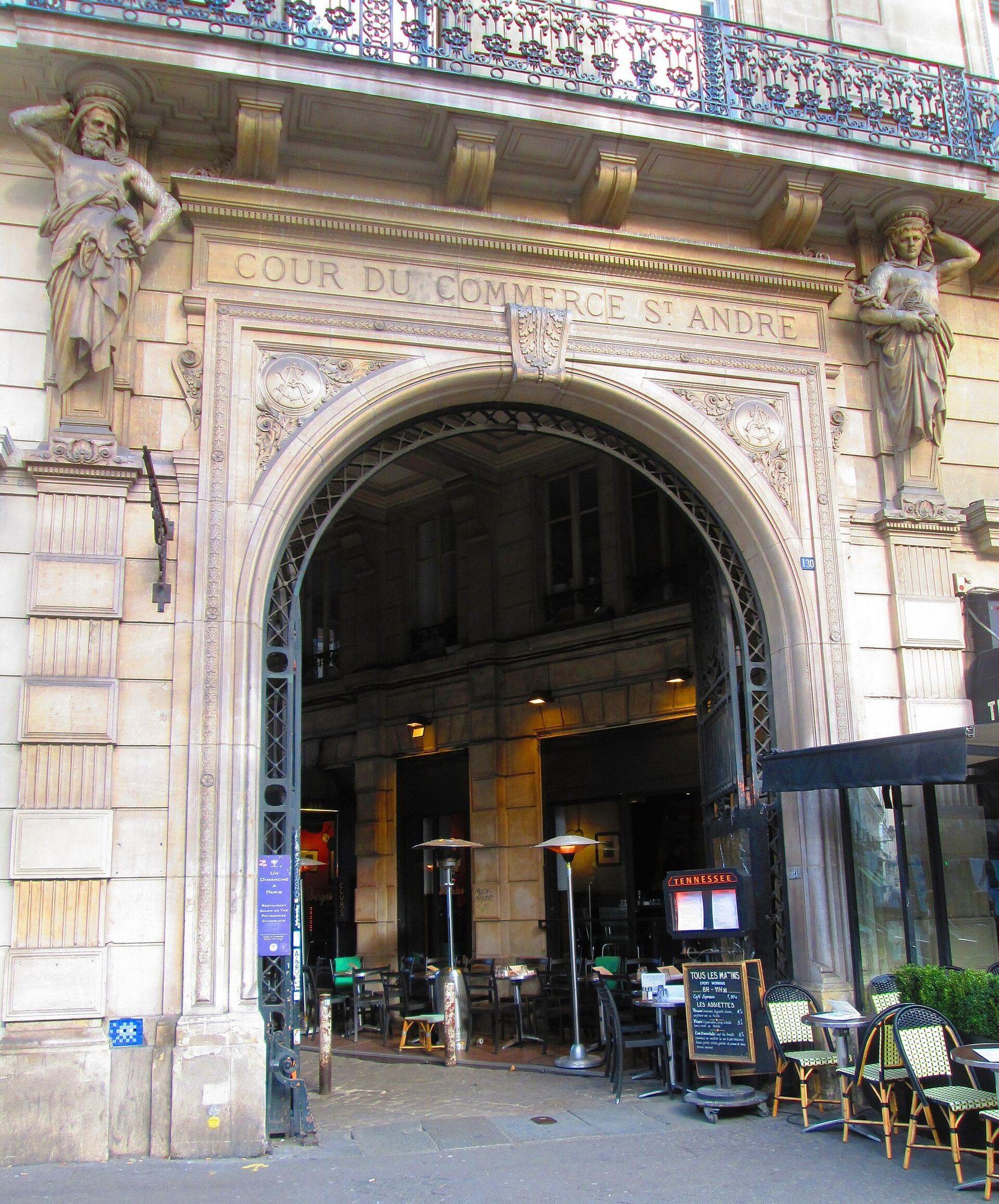
The boulevard never erased every older route. Cour du Commerce Saint-André survives beside it as a narrow passage of workshops, restaurants and revolutionary memory. Near the eastern end, the implausibly thin house at 7 bis occupies the line of Philip Augustus’s medieval wall—an architectural clue to the city that preceded the boulevard.
These anomalies matter. They stop Saint-Germain becoming a smooth postcard and reveal urban history as negotiation: what is demolished, what adapts, and what is squeezed into the remaining centimetres.
Shops, books and the modern boulevard
Today the route changes character as it crosses the 5th, 6th and 7th arrondissements. The east feels academic and everyday; the centre concentrates cafés, cinemas, galleries and bookshops; the west moves toward design, luxury houses and government offices.
- Browse bookshops and cinemas around Odéon and Boulevard Saint-Michel.
- Look for art galleries along Rue de Seine and Rue Bonaparte rather than only on the boulevard.
- Explore food shops around Marché Saint-Germain.
- Use the western stretch for fashion, interiors and window-shopping toward Rue du Bac.
- Notice the students, residents and workers between the famous addresses—their routines keep the area from becoming a closed museum.
Rising rents and prestige retail do place pressure on independent life. The honest contemporary story is not ‘authentic cafés versus fake luxury’; it is the daily overlap of memory, commerce and belonging.
A respectful east-to-west walk — about 2½ hours
- Begin near Pont de Sully and read the boulevard’s long perspective.
- Pause at 7 bis Boulevard Saint-Germain, the narrow house on the medieval wall line.
- Continue through Maubert–Mutualité toward Cluny and Boulevard Saint-Michel.
- Enter Cour du Commerce Saint-André near Odéon, then return to the boulevard.
- Give time to the church and square of Saint-Germain-des-Prés.
- Compare Café de Flore, Brasserie Lipp and Les Deux Magots; buying something at all three is not an obligation.
- Walk west through Rue du Bac and finish near the Assemblée nationale and Quai d’Orsay.
Open the route in Google Maps. The distance is manageable; reading plaques, entering the church and sitting for coffee make it a half-day experience.
Practical advice without the mythology
- Arrive before 10am for calmer streets and cleaner architectural photographs.
- Ask for the menu before taking a terrace table; fame and value are not the same thing.
- Sunday and holiday opening varies among shops and galleries.
- The boulevard is broad and generally straightforward, but historic passages may be cobbled or narrow.
- Do not photograph café guests closely without consent.
- Support the living district: buy a book, visit a small gallery or choose a side-street café as well as seeing the icons.
Watch Saint-Germain beyond the three cafés
This independent 2026 guide covers 15 stops, including churches, courtyards, food shops and quieter corners. Use it to prepare your walk—not to replace slow observation.
Frequently asked questions
Is Boulevard Saint-Germain the whole neighbourhood?
No. The boulevard is a long axis; Saint-Germain-des-Prés is a wider district of streets, passages and squares around the church.
Do I need reservations at the famous cafés?
Usually not for a simple drink, though queues occur. Reservations make more sense for meals and special events.
How long should I allow?
About 2½ hours for the route and short stops; four hours with a museum, the church or a long café break.
Can I do it on a budget?
Yes. The walk is free. Choose a bakery or side-street café instead of treating all three legendary venues as compulsory.
Which idea will you take away?
The ancient abbey, the courage of café writers, the energy of May 1968, or the tension between books and luxury? Share your reaction or memory in the comments.
Send this article to a friend who loves Paris, literature or urban history. The conversation may begin with a coffee photograph and end with a larger question: what kind of city do our ideas create?
Travel service
Explore the Left Bank with OUISTARS
For a private Saint-Germain walk or a cultural itinerary adapted to your time and budget, discover OUISTARS services. This service panel is separate from our editorial choices and sources.
Sources and method
This article draws on official and archival sources; checked on 3 October 2026. Its four images are real licensed photographs or historical documents. No AI-generated image is used.
- City of Paris: the urban formation of Boulevard Saint-Germain
- Paris je t’aime: a walk in Saint-Germain-des-Prés
- Bibliothèque nationale de France: Sartre in Saint-Germain
- City of Paris / France-Soir archive: May 1968 barricades
- City of Paris: the Philip Augustus wall on the Left Bank
- French Ministry of Culture: Saint-Germain-des-Prés church
OUISTARS Travel
Editorial team