












OUISTARS TRAVEL · PARIS AT FOUR SPEEDS
Canal Saint-Martin is not one place all day. In the morning it feels like a private corridor for the neighborhood; at midday the locks and swing bridges restore its working rhythm; by late afternoon it becomes a design-and-café address; and after dark it turns into a long mirror for Parisian light. The trick is not to collect the most addresses, but to match each hour with the right pace.
Why this neighborhood now?
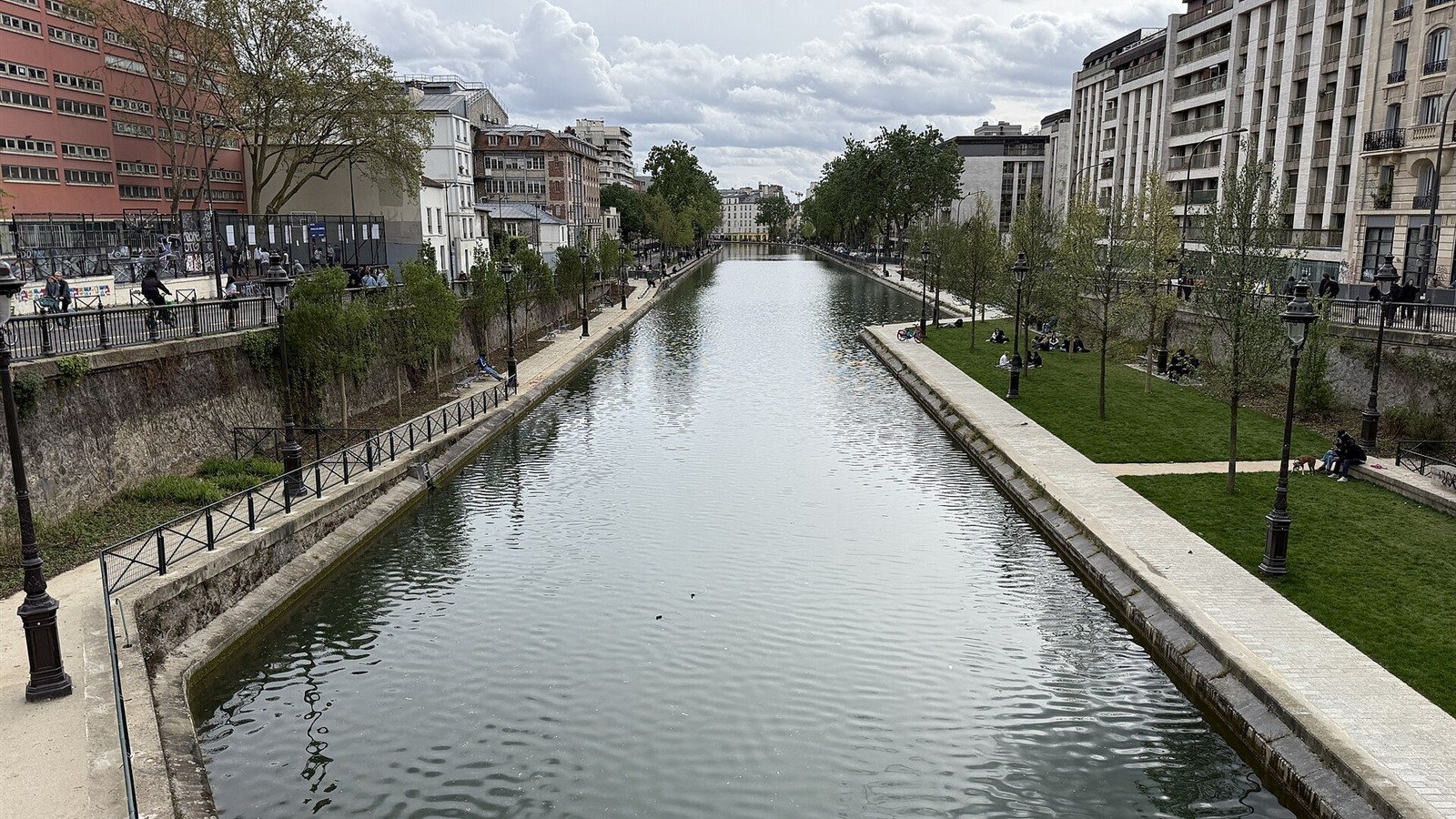
Opened in 1825 to help supply Paris with water and move goods, Canal Saint-Martin changed as the city changed. Its locks, iron footbridges and moving bridges still carry an industrial memory, while greener banks support contemporary daily life. Paris has also been working on calmer traffic, safer walking and more planting around the canal, making it a clear example of the city reusing infrastructure rather than freezing it as scenery.
That overlap makes the canal better than a checklist. You can read history, watch the neighborhood, stop for coffee and continue walking without feeling that the day has been divided into disconnected attractions.
Pace one: 8:00–10:30 | Quiet Paris
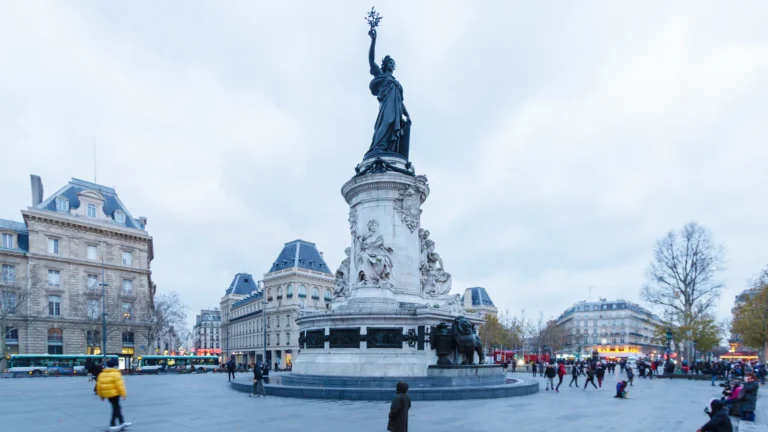
Start near Place de la République and walk toward the Temple locks along Quai de Valmy and Quai de Jemmapes. The banks are lighter on crowds, the light is softer and the sound of the water is clearer. This is the best window for a slow walk and clean photographs from a footbridge before bicycles and waterside gatherings take over the scene.
You do not need a famous restaurant to make the morning work. Pick up coffee and one pastry from a nearby independent shop, then choose a seat that leaves the path clear. The pleasure is not “breakfast beside a landmark”; it is watching the district wake up as shutters rise, residents cross the bridges and the first boats approach the locks.
Pace two: 10:30–14:00 | Water, machinery and the city
When a lock operates or a swing bridge moves, the canal’s real purpose becomes visible. The City of Paris notes that the rue Dieu and Grange-aux-Belles swing bridges still work with canal traffic, while six pedestrian footbridges shape the open-air landscape. Stand back and let the mechanism take its time: this is functioning transport infrastructure, not a staged performance.
Continue toward Jardin Villemin and switch banks instead of committing to one side. One offers façades and café life; the other opens views of locks and the canal’s long perspective. To see the hidden stretch under Bastille, a boat is the only way to travel through roughly two kilometres of tunnels and vaults. This itinerary stays above ground and focuses on the lived-in, open section.
Pace three: 14:00–18:00 | Design and small storefronts
Afternoon turns the walk into a discovery trail of independent bookshops, design stores, small fashion labels, bakeries and cafés in the side streets. Do not treat the canal as a straight line. Detour for ten minutes into rue de Marseille or rue Beaurepaire, then return to the water. Those short departures give the route its neighborhood character and lead away from businesses trading only on the tourist address.
For shopping, choose one well-made object rather than a rushed haul. For a late lunch, look for a short menu and a clear point of view, and check opening hours on the day: schedules can shift, especially on Sundays and Mondays. Evening tables reward booking; afternoons reward flexibility.
Pace four: after 18:00 | Reflections, then dinner
Just before sunset, return to a footbridge between rue des Récollets and rue de la Grange-aux-Belles. Water, trees and façades settle into a single frame, and even an overcast day begins to feel warmer. It is the strongest moment for photographs, provided you do not block the crossing or use intrusive lighting around residents.
Then move into the surrounding streets for dinner rather than occupying the bank for hours. Canal Saint-Martin is a residential neighborhood before it is a backdrop for Paris at night. Keeping noise down, taking rubbish away and leaving the path open for walkers and cyclists makes the evening better for everyone.
A smart half-day route
- Start: République and the Temple locks.
- Quiet morning: Quai de Valmy and Quai de Jemmapes.
- Green pause: Jardin Villemin.
- Best working views: swing bridges and locks when they are operating.
- Afternoon: side streets around rue de Marseille and rue Beaurepaire.
- Finish: continue toward Bassin de la Villette, or loop back for dinner near the canal.
The route can be completed entirely on foot and needs no ticket. Comfortable shoes matter more than a packed plan. If works or diversions are in place, follow local signs and never cross barriers; ongoing improvements to walking and planting mean conditions may change.
When should you go?
Spring and early autumn offer the best balance of light and crowds. In summer, begin early or return before sunset. In winter, shorten the open-air section and use coffee and lunch as warm pauses. The day of the week matters too: Tuesday or Wednesday mornings are generally calmer than Friday evenings or weekends.
The verdict
Canal Saint-Martin deserves more than a quick photo because it offers four versions of Paris. Its morning is local, its midday mechanical, its afternoon creative and its evening visual. Walk it at those four speeds and you will not simply visit a neighborhood; you will watch Paris change rhythm by the hour.
Frequently Asked Questions
Is Canal Saint-Martin free to visit?
Yes. Walking the banks and crossing the footbridges is free. Boat cruises are separate paid experiences operated by private companies.
Is the route suitable for families?
Yes, with close attention near the water, cycle paths and locks, and by following any temporary diversions.
What is the best time for photographs?
Early morning gives you calm, while the hour before sunset gives the richest reflections and warmest light.
Should restaurants be booked in advance?
Weekend dinner reservations are wise. Always verify opening hours directly on the day of your visit.
Official sources and visit planning
Canal Saint-Martin in Paris, 12 April 2026. Photo: Chabe01 / Wikimedia Commons / CC BY-SA 4.0. Cropped for publication. Source · CC BY-SA 4.0
Cite this article
When citing the text or analysis, include the magazine, title, original URL and publication date. Preserve the stated attribution of statistics and photographs.
OUISTARS Travel — Canal Saint-Martin From Morning to Night: One Neighborhood at Four Speeds
Published: