




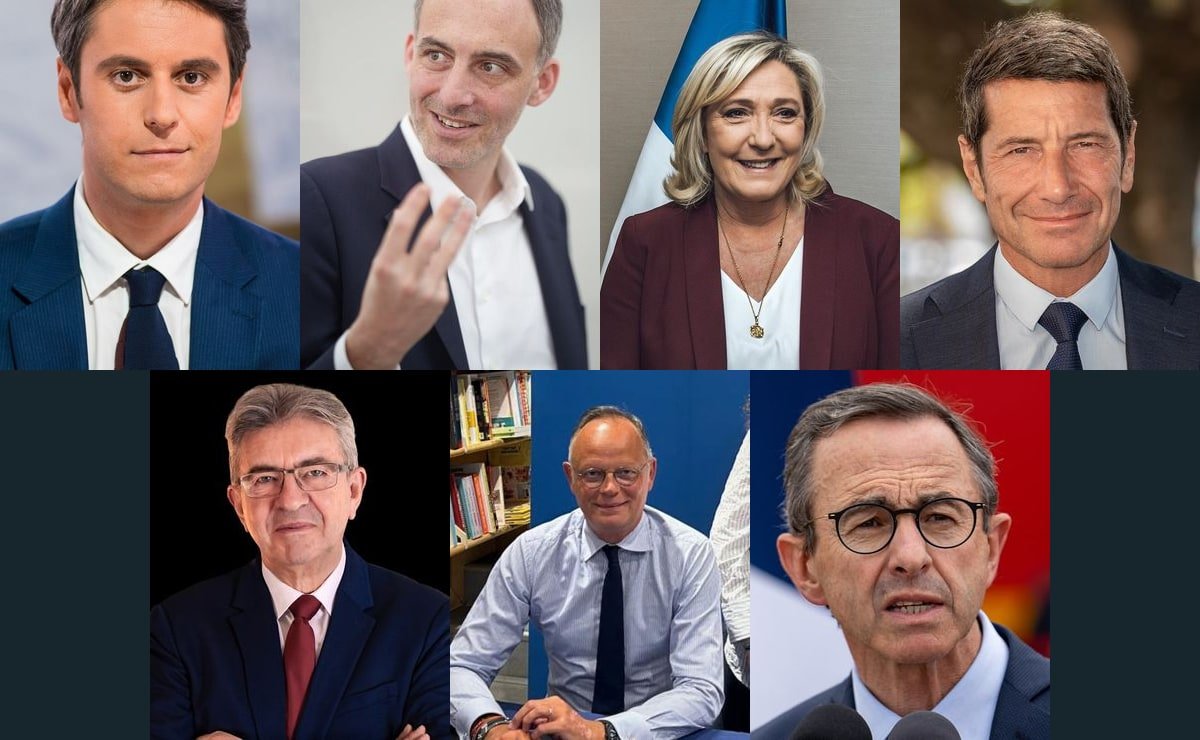

Seven campaign figures in a composite of separate archive portraits. Names, dates, photographers and licences appear below. CC BY-SA4.0
Editorial · France’s 2027 presidential election · Economy and tourism
France needs more than a list of what presidential hopefuls intend to give away. It needs to understand what they intend to build, produce and make possible. Before asking for the country’s votes, every candidate should answer a straightforward question: where will the money come from?
An election promise often begins with a sum: a new allowance, an extra payment, another grant. The number fits neatly on a poster. The funding does not always receive the same prominence. Yet a payment is not, by itself, an economic strategy. Lasting purchasing power cannot depend entirely on the assumption that someone else will cover the difference.
This argument should not become contempt for people who need help. Illness, unemployment and hardship are real. Social protection is part of a decent society. Taking it seriously means asking how to sustain it. A reliable safety net needs an economy capable of supporting it.
Our editorial position is that work, investment and the creation of prosperity should be central to this election. It is not an endorsement of any candidate. The portraits identify people involved in the campaign; they neither rank them nor imply the magazine’s support.
Our argument is clear: choose policies that create work, attract investment and support producers, industry and tourism. Do not settle for a promised payment: demand a plan to fund it, rather than merely move the bill from one citizen to another.
Who is running? Announced bids are not the final official list
Information checked on 28 November 2026. Announcing a bid, winning a party nomination and being admitted to the ballot are different stages. The Constitutional Council will determine the final list. The following selection is not exhaustive, and a portrait is not evidence of ballot qualification.
France election 2027: voting dates and opening hours
| Round | Announced date | General opening hours |
|---|---|---|
| First round | Sunday 18 April 2027 | 08:00–19:00; possible extension to 20:00 |
| Second round, if needed | Sunday 2 May 2027 | 08:00–19:00; possible extension to 20:00 |
Hours are local to the polling station. Certain overseas territories vote on 17 April and 1 May. Voters abroad should check their consulate’s dates and hours. Local orders and town-hall guidance determine the applicable times; specific station hours should not be assumed this far ahead.
Opening hours: Service Public · Announced calendar: French government

Horizons
Announced bid; final validation pending
2025-11-22 05:02:34 · Maxime Davaine · CC BY 4.0 · Licence
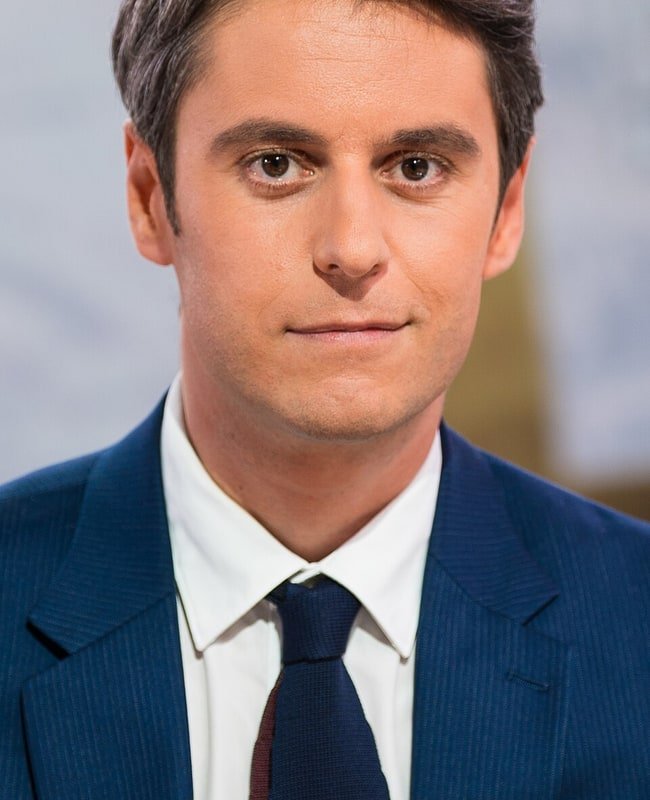
Renaissance
Announced bid; final validation pending
2025-03-03 · Ismail Aissoub · CC BY 4.0 · Licence
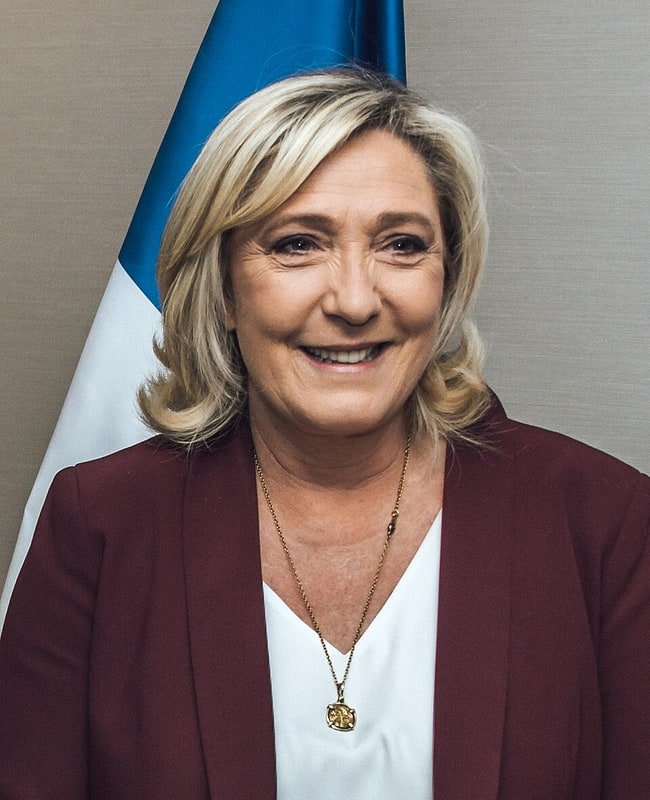
Rassemblement national
Announced bid; final validation pending
2022-01-28 19:36:13 · VOX España · Public domain
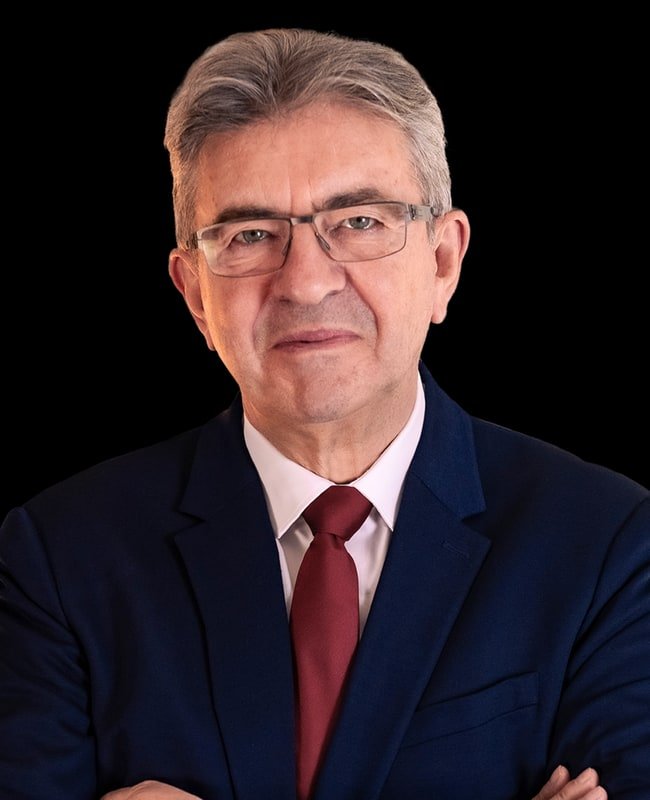
La France insoumise
Announced bid; final validation pending
2026-05-11 07:16:49 · jlm2017.fr · CC BY 4.0 · Licence
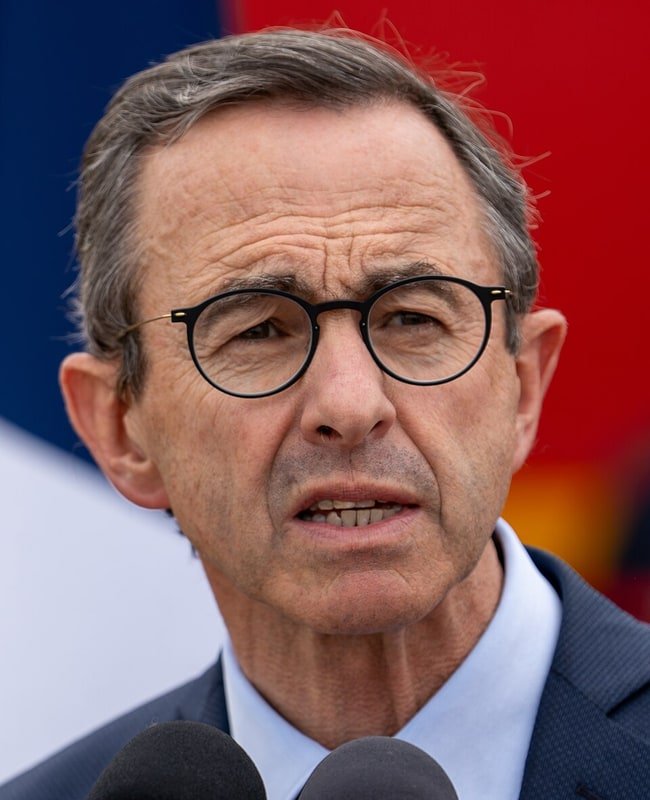
Les Républicains
Announced bid; final validation pending
2025-06-05 16:19:39 · Anthonymontardyfr · CC BY 4.0 · Licence

Place publique
Announced bid; final validation pending
2024-03-03 · Mathieu Delmestre · Public domain
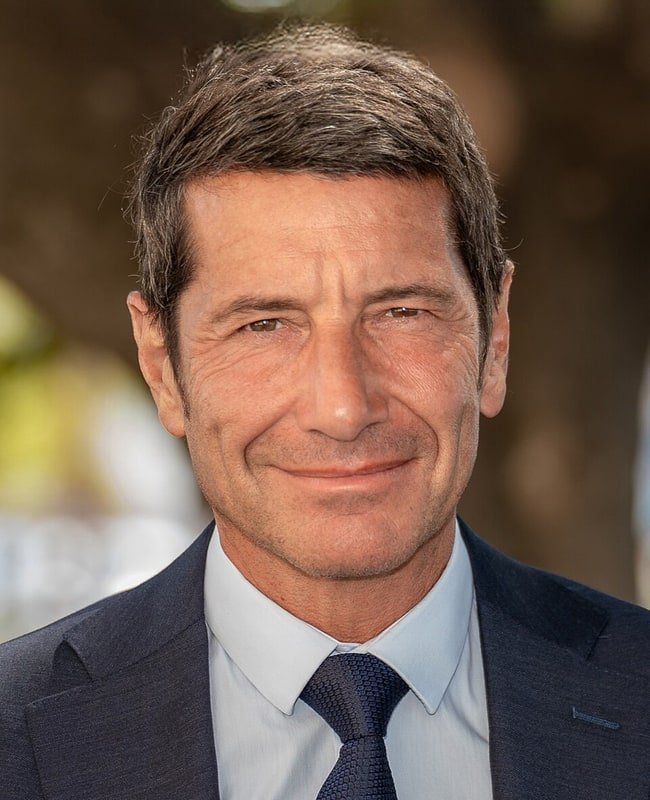
Nouvelle Énergie
Announced bid; final validation pending
2026-10-08 · Grégor Sauvagère · CC BY-SA 4.0 · Licence
Marine Tondelier and Les Écologistes still face a decision about their campaign strategy. Dominique de Villepin, of La France humaniste, announced his bid on 20 November. Fabien Roussel represents the Communist Party, PCF. There are other contenders; this gallery is not an official register. See the dated overview of announced candidacies.
A national election, not a contest for parliamentary constituencies
The announced voting dates are 18 April and 2 May 2027, with voting a day earlier in certain territories. This is a nationwide two-round presidential election. France’s 577 legislative constituencies do not award presidential seats. Local and departmental results describe the geography of the vote; they are not a separate electoral college.
Eligibility to vote requires, among other conditions, French nationality, adulthood and registration. Living in France or caring deeply about it is not enough. Check registration and proxy procedures through the government’s election guide. Under Article 6 of the Constitution, Emmanuel Macron cannot serve a third consecutive term.
How many voters? Insee counted 50,187,093 registrations on 11 February 2026 across a scope including supplementary electoral lists. This is not the final electorate for the 2027 presidential contest. As a historical comparison specific to a presidential round, the 2022 second round had 48,752,339 registered voters.
Apply the same funding test to every promise
Consider an illustrative proposal, not one attributed here to a party: €300 each month for one million recipients would cost €3.6 billion a year before administration and wider economic effects. Would it use existing revenue, a new tax, a specified saving or borrowing? Would it depend on growth that has not yet happened? These are different choices, with different consequences.
A tax cut deserves the same scrutiny. If revenue is reduced, what expenditure changes? What public service is reorganised? What additional activity is expected, and how cautiously has it been estimated? An unexplained tax reduction is no more convincing than an unfunded increase in benefits.
France is not starting from an empty balance sheet. Insee’s May 2026 publication put the 2025 public deficit at €152.5 billion, or 5.1% of GDP, and debt at 115.7% of GDP. Those are dated public-account figures, not a household budget or a prediction of the election’s outcome. They do demonstrate why financial room cannot be treated as unlimited. Source: Insee’s 2025 public accounts.
A credible programme should explain the sequence behind its ambitions: investment, energy, training, infrastructure, production and sales. Which decisions come first? Which institution is responsible? When should results appear? The number of zeros in an announcement says less than the practical steps needed to deliver it.
Investment must become real activity
Announcing investment is not the same as opening a factory. Businesses need skilled people, dependable energy, suppliers, transport and predictable decisions. An artisan needs orders and time to fulfil them. Investors need rules they can understand before committing capital. Tax stability and competent administration are practical economic issues.
Producing more in France does not mean that closing every import channel would automatically make it richer. French businesses also use imported inputs and sell abroad. An industrial plan must explain its instruments, European constraints and possible trading responses. Economic sovereignty needs a working strategy behind the slogan.
Tourism deserves a place in that strategy. The government’s DGE reported €77.5 billion in international tourism receipts in 2025. This is not net profit or a fund available for immediate distribution. It represents activity connected to accommodation, restaurants, culture, shopping and transport. Source: the official 2025 tourism review.
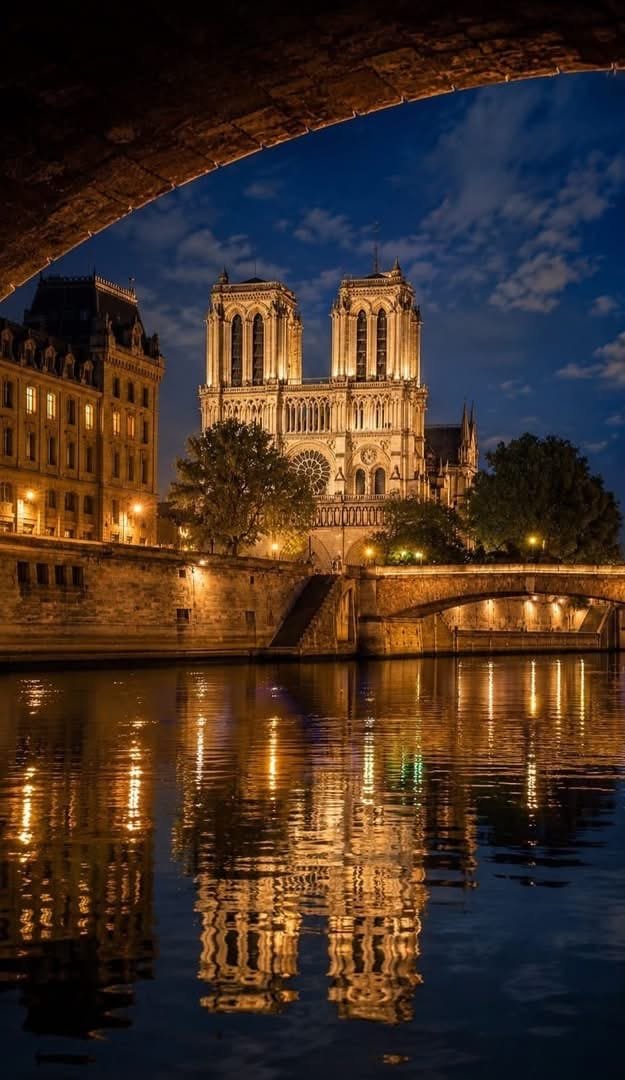
Paris should be beautiful, welcoming and alive. Clean streets, safety, understandable transport, accessible shops and cared-for heritage benefit residents first, and visitors as well. Lighting can contribute, with thoughtful decisions about location, hours, energy and disturbance. A capital is a place to live, not simply a display window.
Nor can the presidency deliver every local improvement alone. Municipalities, other local authorities, Parliament, government and private organisations have distinct responsibilities. A serious national promise explains how those responsibilities will connect.
Ukraine and overseas commitments: demand accountability, not a single-cause explanation
Emmanuel Macron’s support for Ukraine is open to scrutiny over its objectives, costs and relationship with domestic priorities. Voters can reasonably demand a clear explanation of foreign commitments, the pursuit of peace and the risks involved.
That does not establish that Ukraine assistance alone caused France’s economic difficulties. A Senate report distinguishes gross valuations of support from financing arrangements. Equipment deliveries, asset valuations, budget spending and European contributions are not interchangeable figures. Criticising a priority is a political judgment; claiming it explains an entire economy requires evidence.
The next president must answer both questions: what France needs to protect abroad and what it needs to rebuild at home. Neither can be used to avoid explaining the other.
Ask every contender the same things. How will you generate activity? How will you pay for your commitments? What results can we check? Where do industry, innovation, trade and tourism fit?
Before telling France how much you will hand out, explain how it will earn more. An election should be more than a competition between payments. It should help the country choose a future it knows how to build.
A question for readers: which economic proposal should every candidate be required to explain and cost first? The standard should be the same, regardless of party.
Read also: Made in France, purchasing power and industry
From our coverage: who has a plan for tourism and the streets of Paris?
Cite this article
When citing the text or analysis, include the magazine, title, original URL and publication date. Preserve the stated attribution of statistics and photographs.