



















Planning for 2027 · Reviewed 16 October 2026. Historical data keep their original reference year; this is not a 2027 price forecast.
At the eastern edge of the French Riviera, a border of a few streets can separate two radically different ways of holding luxury property. On one side is Monaco: two square kilometres of compressed global wealth, apartments priced like portable capital and a legal-fiscal ecosystem designed around residence. On the other is the Riviera: villas, gardens, historic apartments and coastal towns spread from Menton and Cap-Ferrat to Nice, Antibes and Cannes. Which preserves wealth better?
The honest answer cannot be extracted from a headline price per square metre. Wealth preservation depends on what survives after acquisition costs, annual taxation, maintenance, currency and financing risk, regulation, vacancy and the friction of resale. It also depends on whether the owner values residence, personal use, space, rental income, privacy or rapid access to capital.
This comparison uses Monaco Statistics, French notarial data and government tax guidance. It does not promise returns and does not treat Monaco and the Alpes-Maritimes as statistically equivalent markets. Monaco is a city-state dominated by apartments at the extreme end of global pricing. The French Riviera is a diverse region containing mass-market homes and unique estates. The difference is the point.
First, define “preserve wealth”
A property preserves wealth when it can retain a meaningful proportion of purchasing power over a long holding period after all costs and taxes, while remaining legally secure and saleable. Appreciation helps, but it is not the only test. An asset that rises on paper yet requires a large discount to sell, or consumes exceptional maintenance, may preserve less than its chart suggests.
Five questions matter. How scarce is the exact property? How deep is the future buyer pool? What are the recurring and exit costs? Does the owner receive useful housing or lawful income while holding? Finally, is the asset part of a diversified balance sheet, or an oversized bet on one building and jurisdiction?
Monaco often scores highly on institutional scarcity and international buyer recognition. The Riviera can score more highly on space, use-value and diversification by location and property type. Neither automatically wins on net outcome.
What the latest annual Monaco data actually tell us
The 2025 IMSEE observatory records 493 transactions and an estimated €57,569 per square metre, versus €58,402 in the recalculated 2024 series. These are historical model estimates, not today’s asking prices or 2027 forecasts. Changed methodology prevents direct comparisons with earlier observatories.
Scarcity is Monaco’s strongest argument
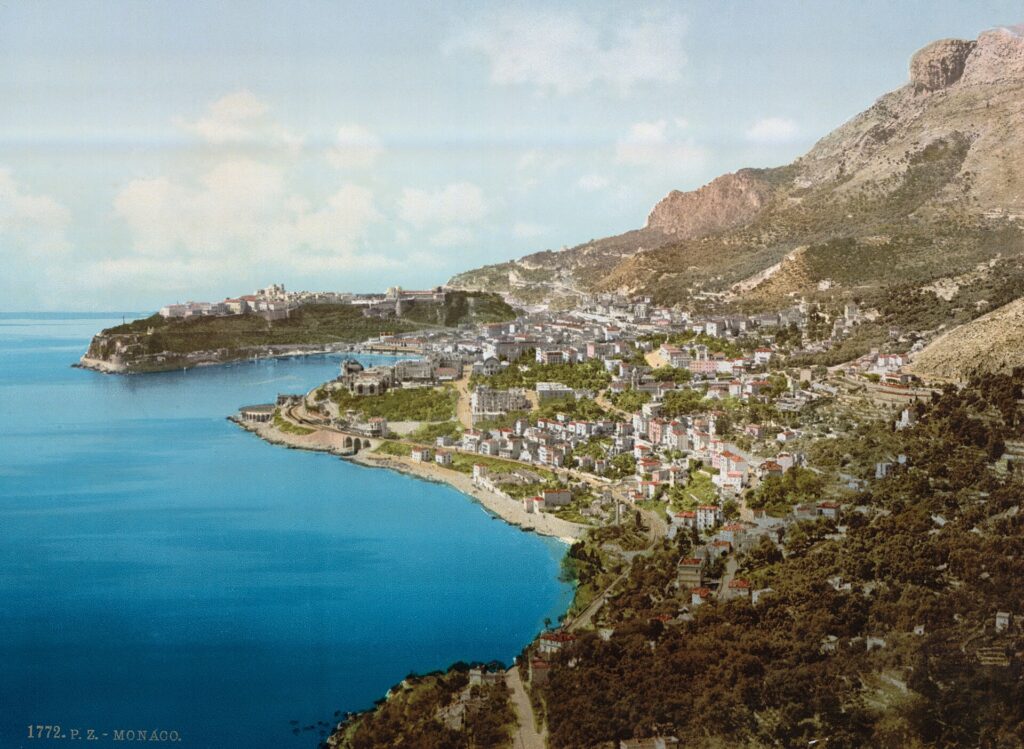
Monaco cannot reproduce land in the conventional sense. Mareterra demonstrated that engineering can create new territory, but at extraordinary cost and in discrete projects. The principality’s supply remains physically and politically constrained, while residence, finance, yachting, events and security attract an international population.
That scarcity makes individual buildings legible to global buyers. Addresses, views, floor height, parking, concierge standards and whether an apartment is in the free or regulated sector can change value dramatically. A well-known building with a functional family plan may be easier to explain to the next buyer than an idiosyncratic villa in a remote location.
But extreme scarcity creates concentration risk. The entry ticket is very high, renovation can be expensive, and a small number of transactions can move district statistics. In 2024, for example, IMSEE cautioned that Larvotto’s extraordinary resale figure rested on only three transactions with known area. Thin evidence should increase due diligence, not confidence.
The Riviera’s counterargument: choice and real use
The French Riviera offers what Monaco structurally cannot: meaningful land, gardens, pools, guest accommodation, multiple bedrooms for staff or extended family, and a range of urban and resort settings. A buyer can choose a Cannes apartment, a Nice pied-à-terre, a Cap d’Antibes villa, a Saint-Jean-Cap-Ferrat estate or a house above the coast.
That breadth permits a better match between property and purpose. It can also reduce the danger of paying Monaco’s jurisdictional premium when the owner primarily wants summer space. For a family staying six weeks with children, assistants and security, a well-run villa may provide more usable value than a smaller Monaco apartment costing several times more per square metre.
The wider Riviera combines urban, leisure, events and yachting demand. Their importance varies by neighbourhood, season and property type. A tourism trend alone does not demonstrate that a particular home will rent legally or sell easily.
Compare the property, not incompatible averages
A quality-adjusted estimate for Monaco is not directly comparable with a departmental French median. The geography, property mix, period and statistical measure differ. Use official notarial information as context, then compare properties at the same total budget, usable area, condition and legal status. Refresh the evidence before making an offer in 2027.
Tax can reverse the apparent winner
Monaco’s official Welcome Office guidance states that the principality has no personal income tax, wealth tax, taxe foncière or taxe d’habitation for people genuinely and effectively established there, while noting the special position of French nationals under the 1963 Franco-Monegasque convention. It also warns that Monaco’s rules do not override obligations imposed by other states.
This distinction is crucial. Buying an apartment does not by itself erase an owner’s tax residence elsewhere. Residence requires an actual administrative process, suitable accommodation, sufficient resources and compliance checks. Nationality, family circumstances, business interests and days of presence can change the result. Cross-border advice must precede, not follow, a purchase motivated by tax.
In France, official guidance confirms that the impôt sur la fortune immobilière can apply when net taxable French real estate exceeds €1.3 million, including for non-residents holding property in France, subject to treaties and deductions. Owners may also face taxe foncière, taxation of rental income and capital-gains tax on sale. The exact burden depends on residence, ownership structure, debt, use and treaty position.
Therefore, Monaco can have a major recurring-tax advantage for a qualifying resident, but that advantage may be smaller or nonexistent for a buyer who remains taxable elsewhere. A French property may cost less to acquire in absolute terms while carrying more annual fiscal friction. Net wealth preservation must be calculated household by household.
Acquisition structure and legal sector matter
Both jurisdictions use formal legal processes, but their market structures differ. In Monaco, buyers must identify whether a home is in the free sector or subject to protected-sector rules, understand occupation and letting constraints, document beneficial ownership and pass rigorous compliance. Registration duty and professional fees depend on whether the buyer is an individual or an entity and on transparency of ownership.
In France, the notaire verifies title, mortgages, planning and the transfer, but the buyer still needs to investigate copropriété records, diagnostics, easements, permits and rental rules. Acquisition costs for existing property commonly include transfer taxes, the land-security contribution, disbursements and the notaire’s regulated remuneration. Government guidance should be applied to the actual price and department at signing.
Complex company structures should not be used merely because they sound sophisticated. They can trigger reporting, higher duties, financing constraints, inheritance problems and anti-money-laundering scrutiny. The right structure is the one supported by documented legal, tax and succession advice in every relevant jurisdiction.
Liquidity: Monaco is recognisable, the Riviera is broader
Monaco has global recognition and a concentrated network of banks, lawyers, family offices and licensed agents. That can make a high-quality apartment easy to position internationally. But 493 transactions across sales and resales in 2025 still describe a small market. At very high prices, the buyer pool narrows and the difference between a saleable apartment and a compromised one becomes severe.
The Riviera has a much larger volume of transactions and wider price bands. An ordinary apartment in Nice or Antibes may have a local as well as international exit market. Trophy villas, however, can be as illiquid as Monaco’s rarest homes, especially when pricing is aspirational, documentation is incomplete or renovation needs are underestimated.
Liquidity is property-specific. Elevators, parking, security, outdoor space, view protection, energy performance and practical floor plans can matter more at resale than a famous commune name. Owners should model a longer selling period and a negotiated discount rather than assuming an immediate exit.
Income versus personal use
Monaco rental demand can be strong because residence requires accommodation and the territory has limited supply. But purchase prices are so high that gross yield alone may not justify the asset; management, vacancy, charges and fit-out reduce the net result. No yield should be accepted without a recent signed lease comparable and a full expense schedule.
On the French side, a lower acquisition price may produce a more attractive income ratio, but tourist letting is increasingly regulated. Check current municipal requirements, copropriété restrictions and management costs for the intended use. Long-term residential demand may be more predictable than holiday revenue in some districts.
Personal use changes the equation. A residence that replaces repeated luxury-hotel stays, stores a family’s belongings and provides continuity has economic value even when it is not rental income. That value is real but subjective, and should be separated from investment performance.

Security, privacy and the meaning of luxury
Monaco’s compact geography, managed public realm and concentration of high-end services are central to its appeal. A resident can combine home, bank, school, marina, restaurants and events within a small, closely monitored territory. For some global families, that operational simplicity is worth a premium.
The Riviera offers a different privacy: distance, walls, land and the possibility of hosting a household out of public view. It also brings cars, grounds, private security, contractors and the complexity of maintaining an estate. Monaco sells managed proximity; the Riviera sells controlled separation.
Neither is inherently more luxurious. The better choice is the one that solves the owner’s actual logistical problem without creating an excessive financial one.
Where each market can fail
Monaco risks: extreme entry price, concentration in one small jurisdiction, thin comparable evidence, sensitivity to building and legal sector, high renovation standards, limited space, and the possibility that tax assumptions fail because residence is not established.
French Riviera risks: transaction and annual taxes, IFI exposure, maintenance of villas and old buildings, climate and insurance risk, short-term-rental regulation, seasonal vacancy, car dependence, and wide variation in quality and liquidity.
Both face interest-rate, geopolitical and currency effects on international demand. Both can suffer from overpaying for a view that later changes or for a renovation whose permissions were never regularised. Neither is a guaranteed safe haven.
So where is wealth preserved better?
Monaco may be stronger for a buyer seeking genuine residence, compact security, an internationally recognised address and extreme supply constraint, and who can tolerate the capital concentration. Its tax framework can be decisive when it lawfully applies. The ideal asset is usually a highly functional free-sector apartment in a building with enduring service quality, not simply the most expensive launch.
The Riviera may be stronger for a buyer seeking land, family use, a larger home, a broader range of entry prices and the option to choose between urban and resort demand. The best preservation case is often a scarce, well-documented property in a location with more than one demand engine, not a seasonal villa bought on emotion.
Some families may sensibly use both markets: a Monaco residence for operational and fiscal life, and a French property for space and leisure. That structure introduces cross-border tax and succession complexity and should never be improvised.
Editor’s perspective: buy the ecosystem, not the label
Osama Samaha, Editor-in-Chief, OUISTARS Travel: From the Gulf, the Middle East and Europe, Monaco and the Riviera can look like neighbouring versions of the same dream. They are not. Monaco sells scarcity, administration and proximity. France sells land, heritage, tourism depth and a much wider geography of choice.
Wealth is not protected because an address is famous. It is protected, if at all, by the ecosystem around the asset: law, maintenance, demand, access, taxation, governance and the ability to sell to the next rational buyer. The correct question is not “Which postcode is richer?” It is “Which property, after every cost and obligation, serves this family’s horizon?”
Travel brings people to France. Lifestyle makes them return. Investment can keep them connected to the region for generations. The connection is valuable only when the structure is sound.
Decision checklist
- Compare properties at the same total budget, not headline prices per square metre.
- Define whether residence, personal use, income or capital preservation is the primary objective.
- Obtain completed transaction evidence for the exact building or micro-market.
- Verify Monaco legal-sector status or French planning, copropriété and rental restrictions.
- Model taxes in every relevant jurisdiction, including the special rules for French nationals in Monaco.
- Calculate ten-year ownership cost, including acquisition, charges, renovation, insurance, management and exit.
- Stress-test a long sale period, lower rent and an adverse currency or interest-rate move.
- Coordinate property, residence, succession and beneficial-ownership advice before signing.
This is editorial analysis, not personalised investment, residence, legal or tax advice. Regulations, prices and tax treatment change. Obtain qualified cross-border advice.
Read our evidence-led analyses of Nice, Cannes and Antibes and Cap d’Antibes, and explore the complete French Real Estate Investment Guide.
Sources
- IMSEE Monaco Statistics: real-estate observatories
- IMSEE Real Estate Observatory 2025, English mirror
- Monaco Welcome Office: official residence and personal-tax framework
- Journal de Monaco: property-transfer registration law
- Notaires de France: Alpes-Maritimes transaction-price page
- French Ministry of Economy: IFI guidance
- French Ministry of Economy: property capital-gains guidance, 2026
- French Ministry of Economy: property acquisition costs
- Côte d’Azur France Tourism Observatory: 2025 indicators
A practical preparation calendar for a 2027 purchase
Start in late 2026 with a written brief: intended use, total budget, currency, ownership horizon, accessibility and the cash reserve that must remain outside the property. Select independent legal, tax and technical advisers before narrowing the shortlist. Visit the locations at different times; do not let a single sunny viewing determine a long-term commitment.
Before an offer in 2027, refresh completed comparables, charges, insurance, financing and local-use rules. Before signing, resolve ownership, planning, building works and tax questions in writing. Agree appropriate conditions with your adviser. At handover, document condition, keys, utilities and management arrangements. This is a suggested workflow, not a market forecast or a promise of completion by a fixed date.
Questions buyers ask before planning 2027
Are the quoted statistics forecasts for 2027?
No. The IMSEE figures concern 2025 and were published in 2026. Recheck completed transactions and the law in force before a purchase.
Does buying a Monaco apartment automatically change tax residence?
Do not assume this. Ownership, administrative residence and tax residence are separate questions requiring advice for the buyer’s circumstances.
Which market guarantees better returns?
Neither. Net results depend on the particular property, costs, financing, use, taxes and sale conditions.
DGFiP — IFI · Service Public — copropriété
General editorial analysis. Results depend on the property, buyer and applicable law. Obtain independent legal and tax advice before committing.
Share this guide with a family comparing Monaco and the French Riviera
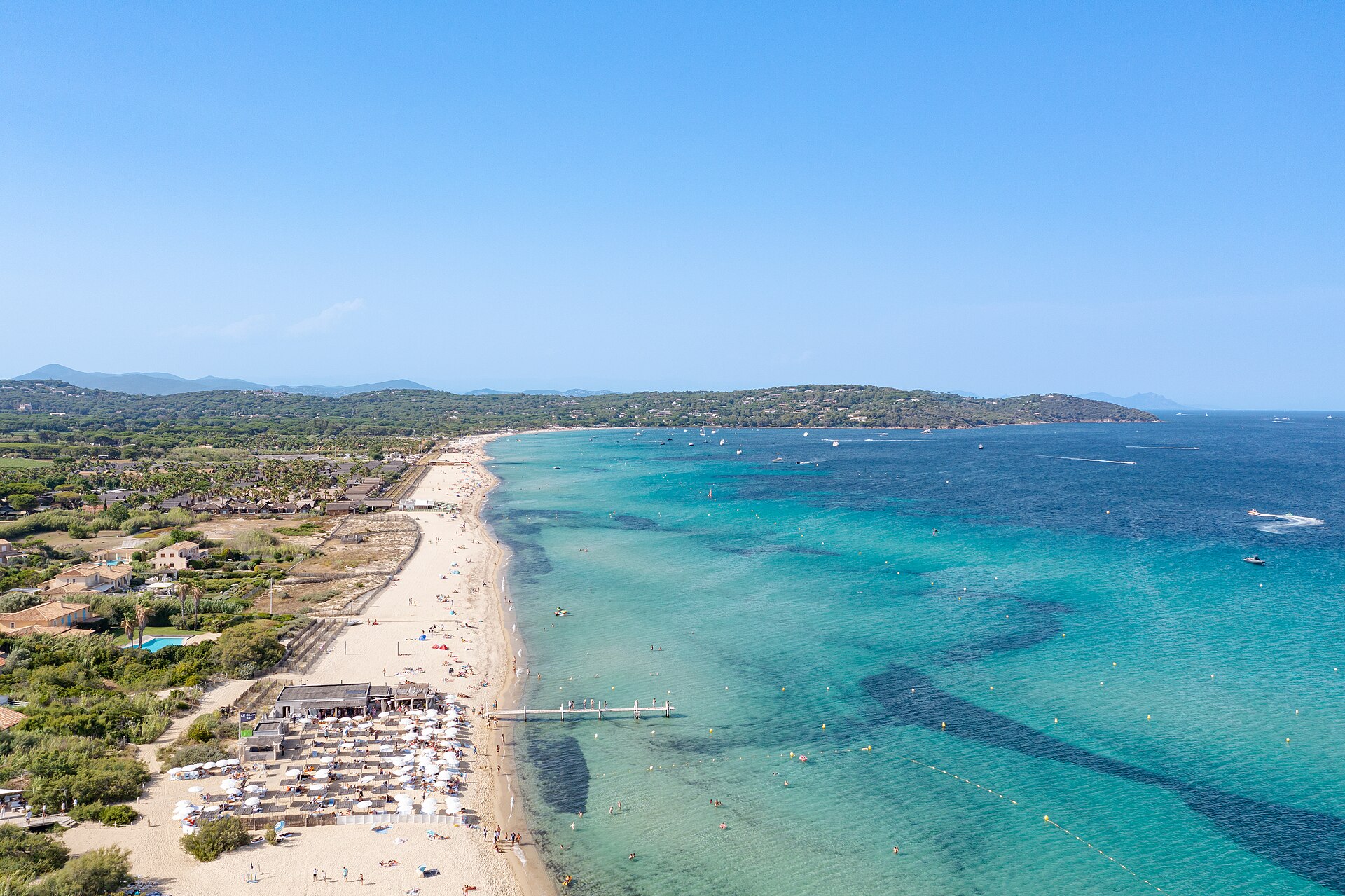
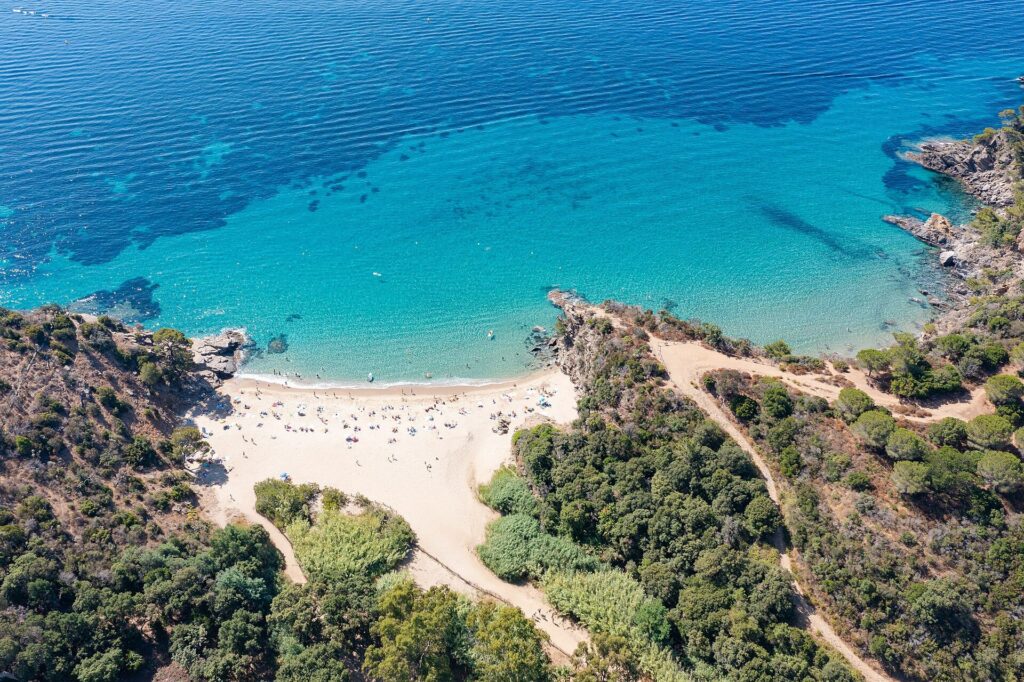
Cover photograph: Pampelonne Beach, Ramatuelle, near Saint-Tropez · Photo: dronepicr / Wikimedia Commons · CC BY 2.0. Wikimedia web resize; no other alteration.
Osama Samaha · Editor-in-Chief, OUISTARS Travel
Official video: how Monaco recalculated its property market
Monaco Info explains the new calculation method used to read the Principality’s property market, with the latest official transaction context.
Official video: Monaco Info.




.jpg)
.JPG)

.jpg)