














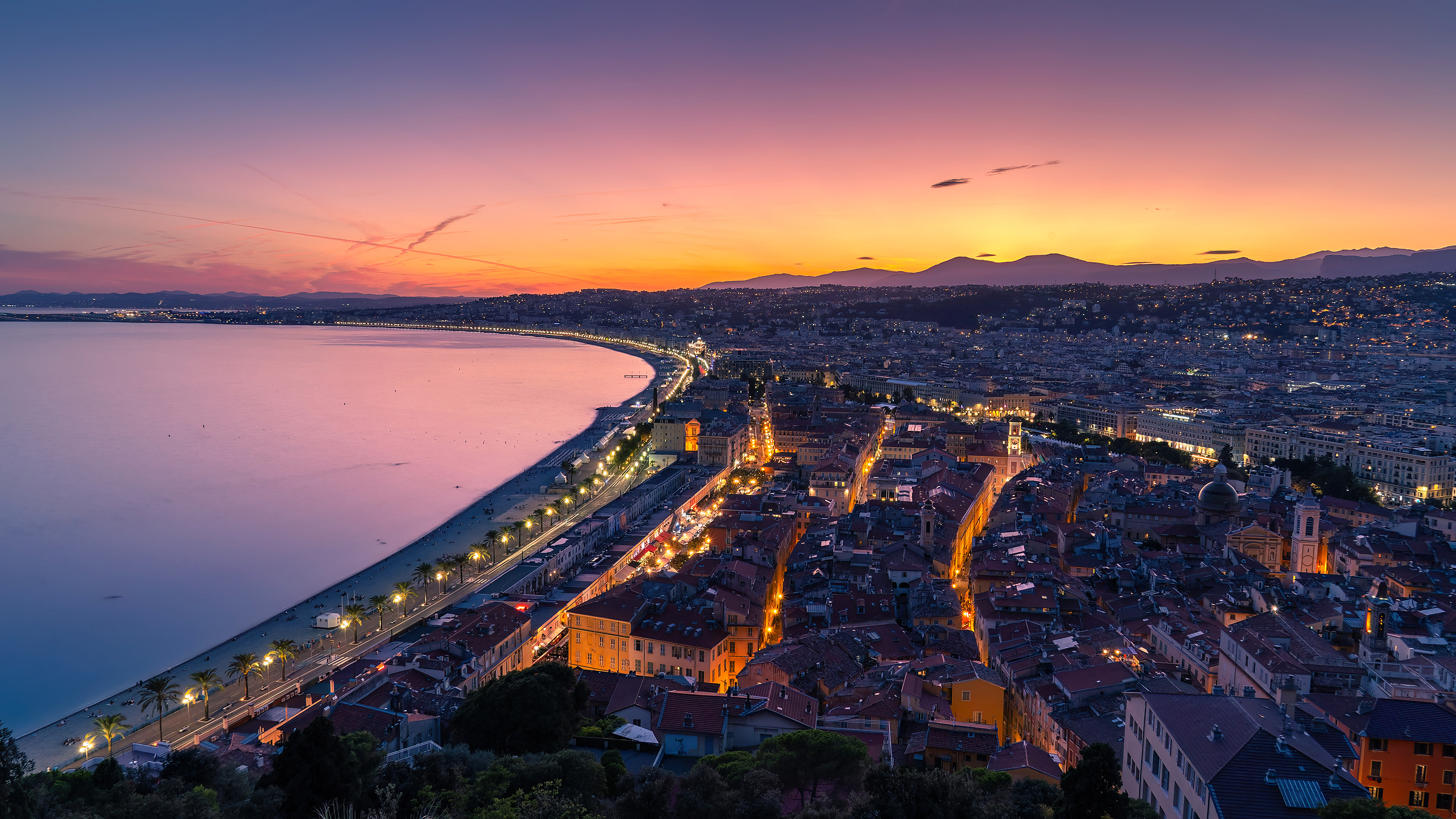
NICE, France – The most revealing fact about Nice is hidden in its UNESCO title. The city was inscribed on the World Heritage List in 2021 not simply as a Mediterranean resort, but as “Nice, Winter Resort Town of the Riviera.” Long before airlines made the Côte d’Azur a summer shorthand, international visitors came here to spend the colder months.
That history gives today’s property question an unusual shape. Nice is trying to sell four seasons, not a single peak. In 2025 its hotels and tourism residences recorded the lowest seasonal variation in the Nice Côte d’Azur metropolitan area, according to the official tourism observatory. Annual nights in the city had risen 35% over ten years. If that demand is genuinely broad rather than concentrated in a few holidays, can it strengthen the case for owning property?
The answer is yes, but only in a limited and testable sense. Year-round tourism can diversify occupancy, expand the resale audience and support services that make a home useful beyond summer. It cannot guarantee rent, remove a high purchase price or turn an unsuitable apartment into a sound investment. Nice is first a large resident city, and that fact may be more important than its beach.
Fact check: 5 September 2026. Figures are dated and geographically identified. This is editorial analysis, not personalized investment, legal or tax advice.
Nice has more than one demand engine
INSEE counted 357,737 residents in Nice in 2023, up from 340,017 in 2017. The city contained 240,935 dwellings: 177,829 principal residences, 33,235 second or occasional homes and 29,871 vacant units. Principal homes accounted for 73.8% of the stock, while second and occasional homes represented 13.8% and vacancy 12.4%. Apartments made up 92.7%.
This profile differs sharply from Cannes, where 44.2% of homes were secondary or occasional in 2023. Nice has a much larger permanent population, universities, hospitals, offices, retail, public services and everyday transport. Tourism adds demand to a resident economy rather than replacing it. For a cautious investor, that can mean more potential uses: owner occupation, long-term tenancy, student or professional rental where appropriate, a second home, or a legally compliant tourism product.
Different demand pools do not automatically produce high returns. They can, however, reduce dependence on one calendar. A flat near a tram and a university addresses a different market from a sea-view pied-à-terre; an apartment near the Port may appeal to visitors and residents; a large Cimiez home can serve a family but may not suit a short-stay model. “Nice property” is a category, not a strategy.
The official evidence for year-round tourism
The Nice Côte d’Azur Tourism Office reported 6.6 million nights in metropolitan hotels and tourism residences in 2025, up 7% from 2024. Nice itself accounted for 5.3 million of those nights, an 8% increase, with 2.2 million stays and average annual occupancy of 73%. Foreign visitors represented 55% of stays in Nice’s hotels and residences.
The same official report makes the year-round claim more concrete. It says Nice had the smallest seasonal fluctuations within the metropolitan territory and that annual nights in the city increased by 35% over a decade. This is stronger evidence than a generic “300 days of sunshine” slogan because it describes measured accommodation activity. It still does not prove that every month, neighborhood or property performs equally.
Furnished tourism rentals recorded another 1.7 million nights in Nice in 2025, up 5% year on year, with average occupancy of 48% and an average stay of 4.1 nights. These figures reveal a sizable market, but also the gap between hotel occupancy and furnished-rental occupancy. A city can be busy while an individual apartment remains empty. Supply, regulation, quality and platform competition matter.
Seasonal balance comes from several products. Winter brings the Carnival and the heritage of climatic resort tourism. Spring and autumn suit urban breaks, conferences, sport and touring the wider Riviera. Summer remains the largest leisure season. Cultural events, the Nice Jazz Fest, the Nice-Cannes marathon, major cycling and triathlon events and international meetings create spikes around the calendar. In June 2025 the UN Ocean Conference pushed hotel occupancy to 96% for its week, according to the tourism office. That exceptional event should not be used as a normal forecast.
The airport changes the property map
Nice Côte d’Azur Airport handled 15,229,664 commercial passengers in 2025, 3.2% more than in 2024, according to the airport company’s annual traffic statistics. It is France’s principal international gateway outside the Paris system and connects the Riviera directly with European capitals and long-haul markets. The practical advantage is not abstract: tram line 2 links the terminals to central Nice and the Port corridor.
For international owners, access affects actual use. A beautiful second home loses utility if every visit requires a difficult transfer. Nice can serve as both destination and gateway to Antibes, Cannes, Monaco and the Alps. That network broadens its audience, but it also creates neighborhood trade-offs. The Promenade des Anglais and Carré d’Or offer immediacy to the sea and centre; west Nice and the Arénas place the airport and business district closer; the Port improves access eastward; hillside addresses may deliver views at the cost of walkability.
Airport growth is not a free benefit. Capacity, noise, emissions, congestion and climate commitments are public-policy constraints. The Terminal 2 adaptation raised theoretical capacity to 18 million passengers, according to the airport operator, which also reports major cuts in emissions under its direct control. An investor should distinguish corporate environmental claims from the broader emissions of flights and examine aircraft-noise exposure at the precise address.
A heritage city built by visitors
UNESCO’s wording matters for property. Nice’s urban form and architecture were shaped between the eighteenth and twentieth centuries by winter residents from across Europe. The Promenade, gardens, villas, hotels and apartment buildings are not decorative extras around tourism; they are evidence of how tourism created the city.
The 2021 inscription covers a 522-hectare property with a 4,243-hectare buffer zone. UNESCO asked for continued inventories of built heritage, documentation of interiors and monitoring of cumulative change. In its 2026 decision, the World Heritage Committee welcomed progress while encouraging clearer, regularly updated conservation indicators.
For owners, heritage can support identity and scarcity, but it can also constrain alterations. Windows, shutters, façades, air-conditioning equipment, roof changes and internal adaptations may require approvals depending on the building and zone. The premium for a Belle Époque address should therefore be paired with a technical question: can this property be modernized comfortably and legally, and who will pay?
What do current prices actually tell us?
Notaires de France reported a median of €4,670 per square metre for existing apartments in Nice in the first quarter of 2024. A commercial barometer published in August 2026 by AFEDIM, citing notarial data, placed the current existing-apartment median around €4,798 per square metre, compared with €4,697 the previous year. The first number is a primary notarial publication; the second is a secondary presentation and should be treated accordingly.
Neither figure values a specific property. Nice’s spread is enormous. A renovated sea-view apartment in the Carré d’Or, a Belle Époque building in Musiciens, a family home in Cimiez, a port-side apartment, a Mont Boron residence and a unit in western Nice belong to different micro-markets. Floor, lift, terrace, parking, noise, view, condition, energy rating and building management can outweigh the citywide median.
Investors should request completed comparable sales from a notaire or qualified valuer, not rely on portal averages. They should separate the value of the address from the cost of defects. A top-floor view without a lift has a narrower audience. A period façade with major works pending can shift tens of thousands of euros from the purchase price into the capital plan. A building with weak insulation and no feasible cooling solution may become less comfortable as heat intensifies.
Where the year-round thesis is strongest
Carré d’Or and the central Promenade offer international recognition, beaches, hotels, retail and walkability. They may preserve a broad prestige audience, but entry prices and building charges can compress yield. Traffic, nightlife and event noise vary by block.
Musiciens and Thiers combine period architecture, the main rail station and central access. They may suit longer stays and resident demand, but street quality and building condition are uneven. Investors should inspect security, noise and common areas rather than buy a district label.
Port, Garibaldi and Riquier have gained from tram connectivity, restaurants and access toward Monaco. The Port has lifestyle appeal; Riquier can offer more resident-oriented demand. Rapid repricing creates overpayment risk, and tourism-rental restrictions deserve particular attention.
Cimiez offers schools, heritage residences, greenery and a family profile. It is less dependent on tourism and more on resident quality of life. Some addresses are car-reliant, and older large buildings can carry significant maintenance and energy costs.
Mont Boron and the eastern hills provide views, privacy and scarce high-end homes. Liquidity can be strong for exceptional properties and thinner for compromised ones. Slopes, access, retaining walls, vegetation and geotechnical risk belong in due diligence.
West Nice, Fabron and the Arénas corridor connect more directly with the airport, tram, offices and the Eco-Vallée. Newer buildings may be easier to operate, but aircraft exposure, future construction and distance from the historic centre vary. This is an infrastructure case more than a postcard case.
Tourism rental is a regulated business, not an automatic right
Nice and its metropolitan authority have tightened the conversion of housing into furnished tourism rentals. The regulation effective from 1 December 2024 requires a change-of-use authorization for a secondary residence used for short stays, with limited temporary permissions and compensation in certain cases. Registration and tourist-tax formalities also apply, while the copropriété rules must permit the activity.
The position continued to evolve in 2025 and 2026. The city approved the principle of reducing the annual letting ceiling for principal residences from 120 to 90 days in May 2025, and metropolitan deliberations in June 2026 addressed quotas and a new change-of-use regulation. A buyer must obtain the current consolidated rule directly from the housing authority before underwriting tourism income. Old guides, seller assurances and a previous owner’s listing are not sufficient.
Nice also promotes mixed student and tourism use in some circumstances, reflecting the policy trade-off between visitor demand and resident housing. That may create a useful operating model, but it requires compliance, management and realistic turnover costs. The safe assumption is zero short-term-rental income until legality is documented for the exact property and owner structure.
Year-round demand does not mean year-round profit
A 73% hotel occupancy rate and a 48% furnished-rental occupancy rate are destination indicators, not a private forecast. Hotels pool rooms, professional sales and daily service; private apartments have different review histories, minimum stays, owner blocks and management quality. Gross revenue must be reduced by vacancy, platform and agency commissions, cleaning, linen, utilities, repairs, insurance, taxe foncière, copropriété charges and tax.
Acquisition costs on an existing French property commonly approach 7% to 8%, subject to the exact transaction. A high-price, low-yield property may require a long holding period simply to overcome entry and exit friction. Financing changes the calculation again. International buyers must model interest, currency, tax residence, succession and possible IFI exposure with independent advisers.
Year-round tourism strengthens the case most when it complements a property already useful to residents or the owner. A walkable, well-maintained, energy-efficient apartment near transport may have several exit audiences. A highly specialized holiday product that depends on one platform and one legal permission has fewer.
The social and policy test
Nice’s 29,871 vacant homes and 33,235 second or occasional homes coexist with housing pressure. Those categories are not interchangeable: vacancy may be temporary, technical or administrative, and a second home is not automatically rentable. But the scale explains why authorities are regulating furnished tourism accommodation.
A durable destination needs workers who can live near hotels, restaurants, hospitals, shops, transport and cultural venues. If visitor accommodation crowds out the resident base, service quality and social legitimacy weaken. For investors, this is not merely ethics. Regulation risk rises when the local housing bargain is perceived as unfair.
Climate adaptation is the other test. Coastal flooding, intense rain, urban heat, hillside movement, wildfire exposure and seismic risk vary by address. Buyers should obtain the official Géorisques report, inspect the building’s claims history and understand adaptation costs. The Riviera lifestyle depends on the environment; preserving it is part of preserving property value.
Verdict: Nice’s advantage is breadth
Nice can make a stronger year-round property case than a purely seasonal resort because its demand is broad: permanent residents, international air access, heritage, winter culture, summer leisure, events, education, health care and a functioning metropolitan economy. The tourism office’s measured reduction in seasonality and ten-year growth in nights support that argument.
But breadth is not immunity. Prices are high, regulation is tightening, buildings vary dramatically and climate costs are becoming harder to ignore. The investable insight is not “buy in Nice.” It is to prefer a property with multiple lawful uses, strong transport, sound governance, manageable energy performance and a realistic resale audience.
Compare this analysis with our feature on Cannes and La Croisette, our national locations overview and the central French Real Estate Investment Guide.
Sources and further reading
- INSEE – Dossier complet, Commune de Nice, 2023 population and housing
- Nice Côte d’Azur Tourism Office – 2025 key tourism figures
- Official 2025 tourism data report – hotels, residences and furnished rentals
- Aéroports de la Côte d’Azur – 2025 annual traffic
- UNESCO – Nice, Winter Resort Town of the Riviera
- UNESCO World Heritage Committee – 2026 state-of-conservation decision
- Notaires de France – existing apartment prices, first quarter 2024
- Métropole Nice Côte d’Azur – change-of-use regulation effective December 2024
- Métropole Nice Côte d’Azur – 2026 deliberations on furnished tourism rentals
- Géorisques – official property risk information
Follow oui stars Travel for continuing analysis of tourism, investment, luxury and the economies shaping the way the world travels.