

All 11 photographs are from the OUISTARS Travel magazine visit album, supplied for this story.
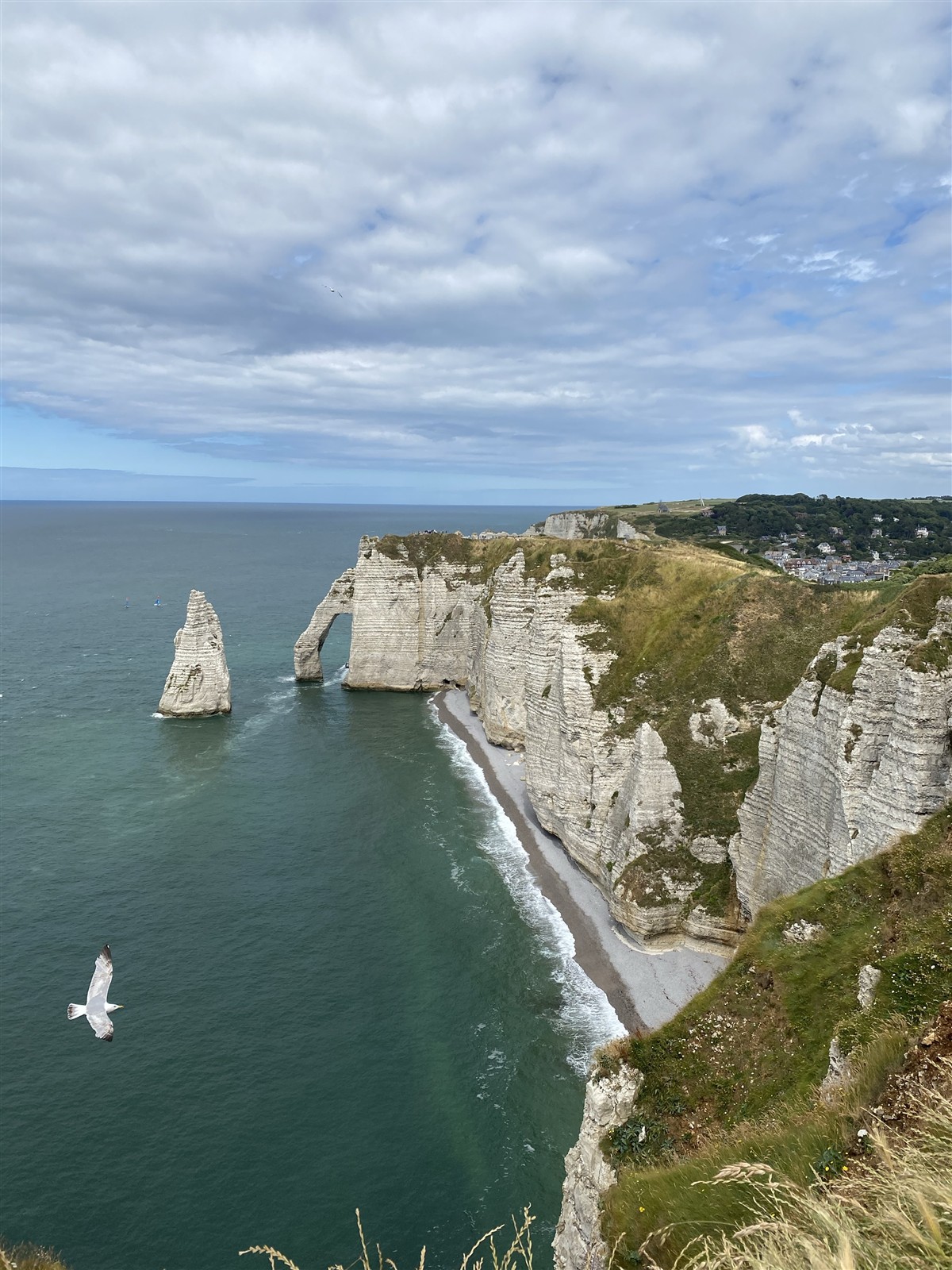
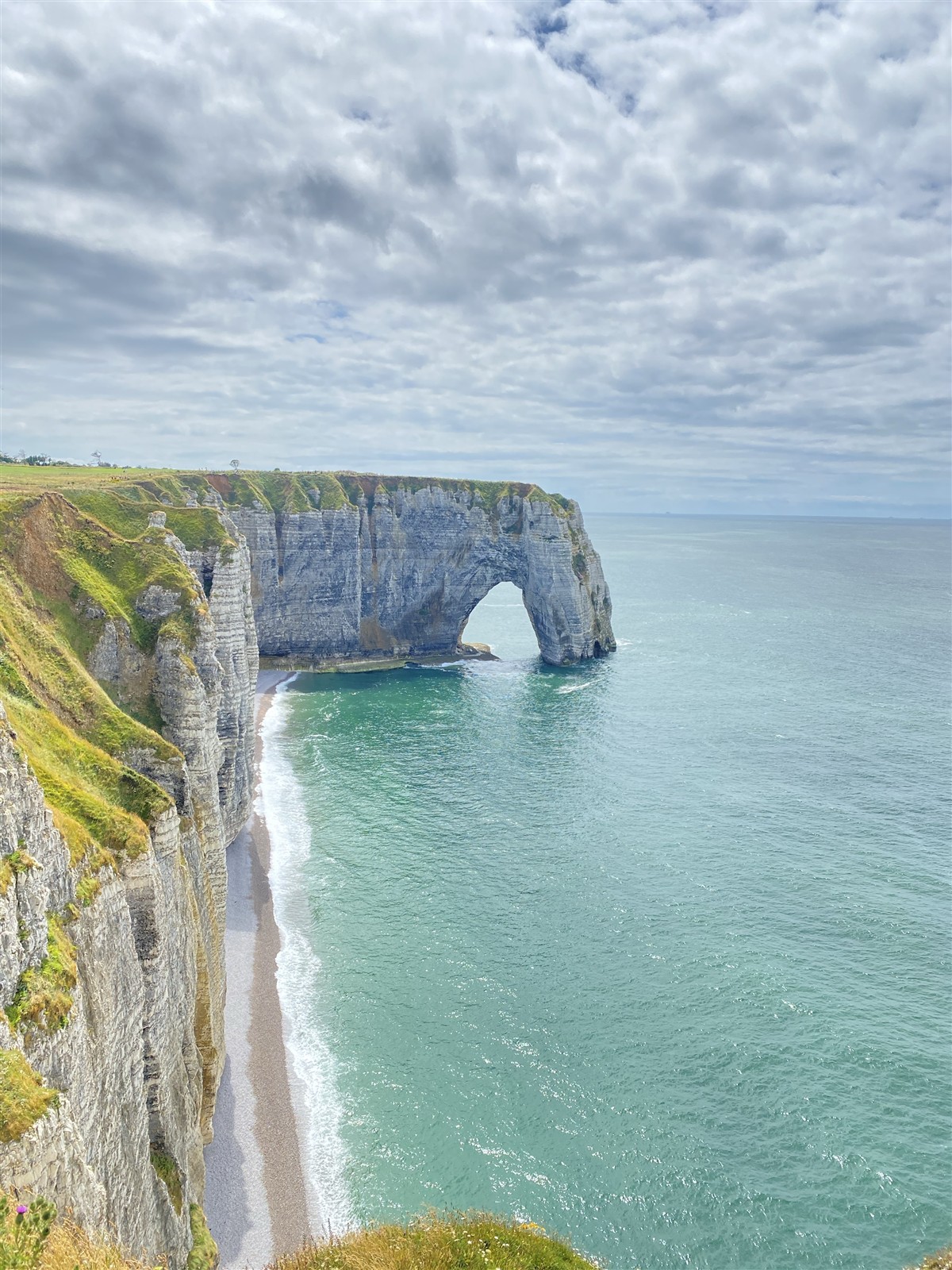
Étretat’s needle and arch with a seabird in the foreground, from the magazine’s Normandy visit.
In Normandy, a journey can begin with a quiet garden and end in front of a white cliff unlike anything in the everyday landscape. Between those images there is room for a beautiful table, a bird crossing the sea and a different relationship with time. Through photographs from OUISTARS Travel magazine’s visit, this story opens a window onto Étretat and the French countryside: scenery to look at, a place to linger and a history best approached without rushing.
A photo story from the OUISTARS Travel visit album, exploring Étretat and rural Normandy. Practical information checked on 20 October 2026.
When the garden becomes part of the journey
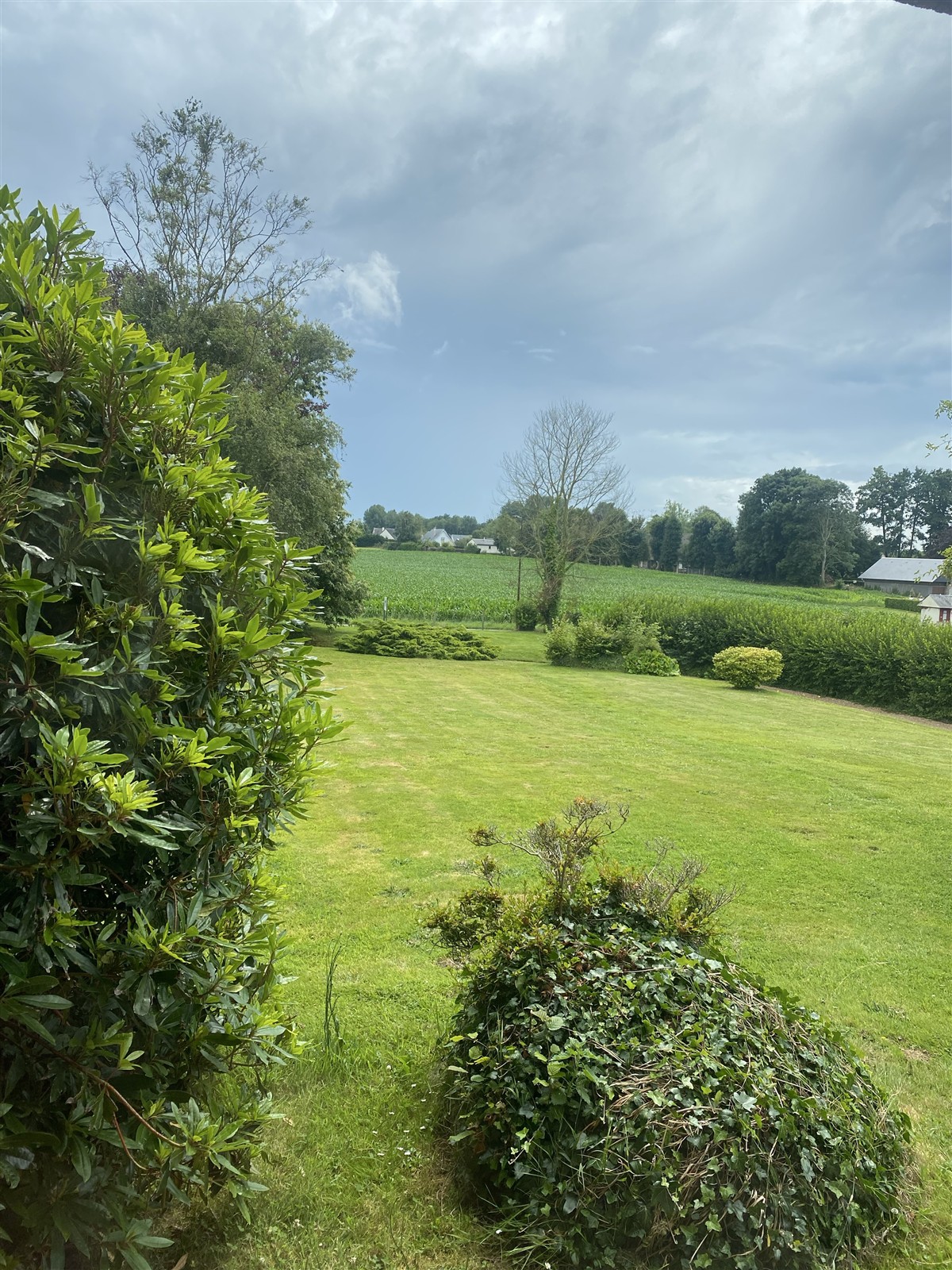
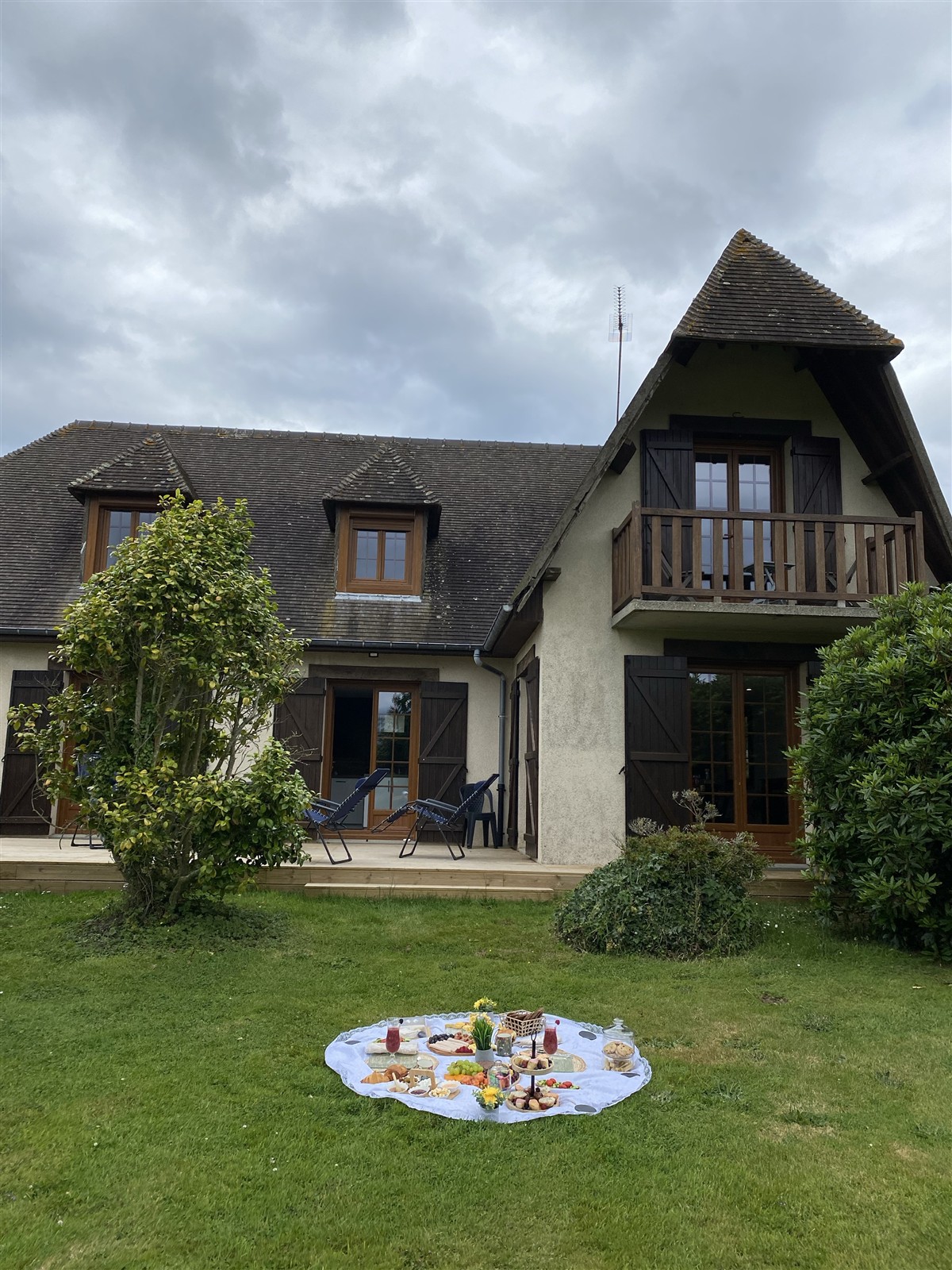
Beyond the trees, a green field stretches towards a handful of roofs. Nothing here competes to be a monumental attraction. The pleasure is in allowing the eye to rest. Another photograph shows a house with timber shutters and a terrace opening onto the lawn, with a small spread laid out on the grass. The album reveals a side of Normandy that is easy to overlook when every day becomes a race towards the next landmark.
The clipped lawn and cared-for planting convey attention to the setting. That is an impression supported by these photographs, rather than a claim that every village or beach is always quiet and immaculate. The countryside remains a working and living landscape for its residents. Visiting well means leaving room for that life.
The luxury of time: a table worth lingering over
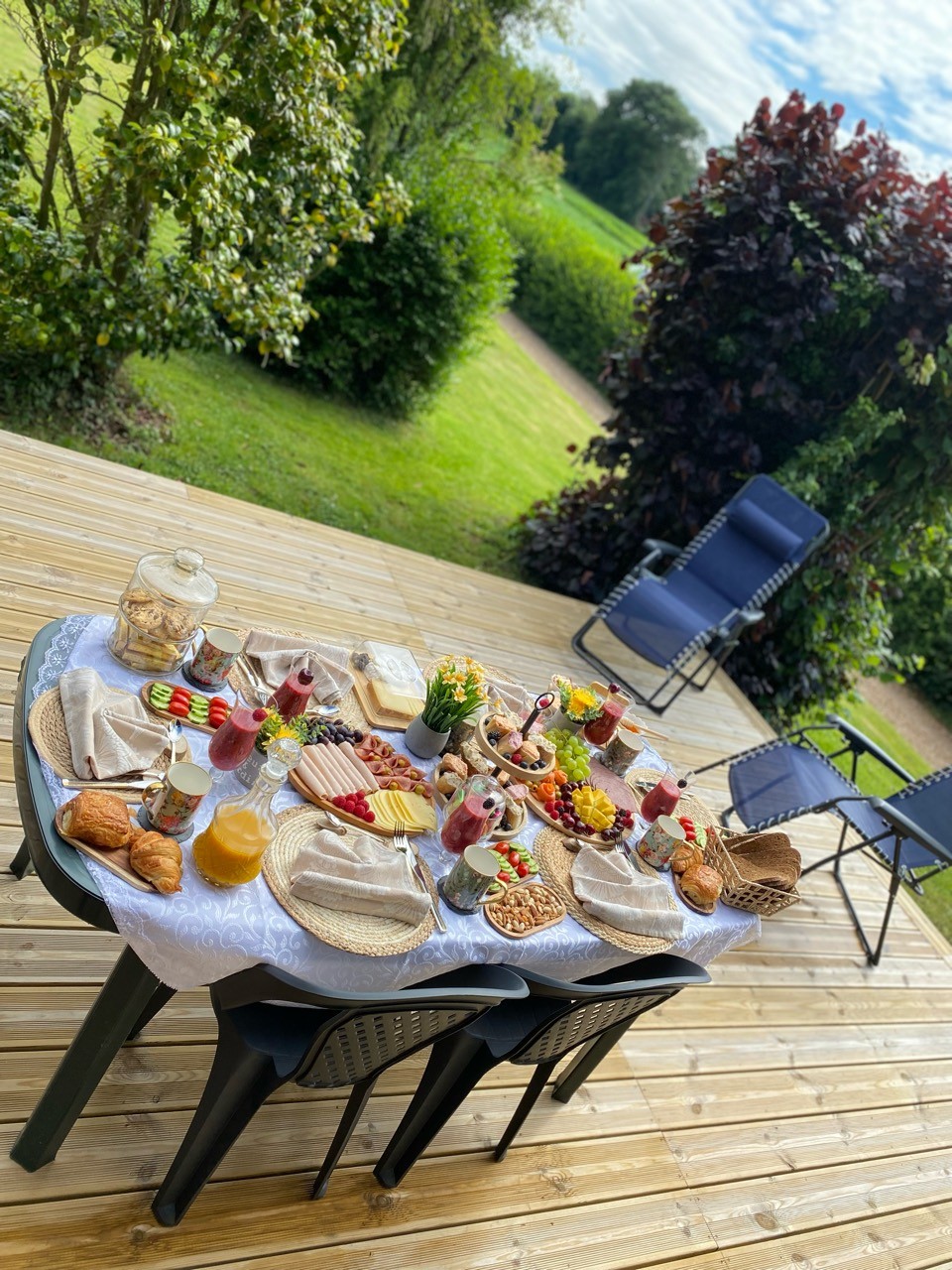
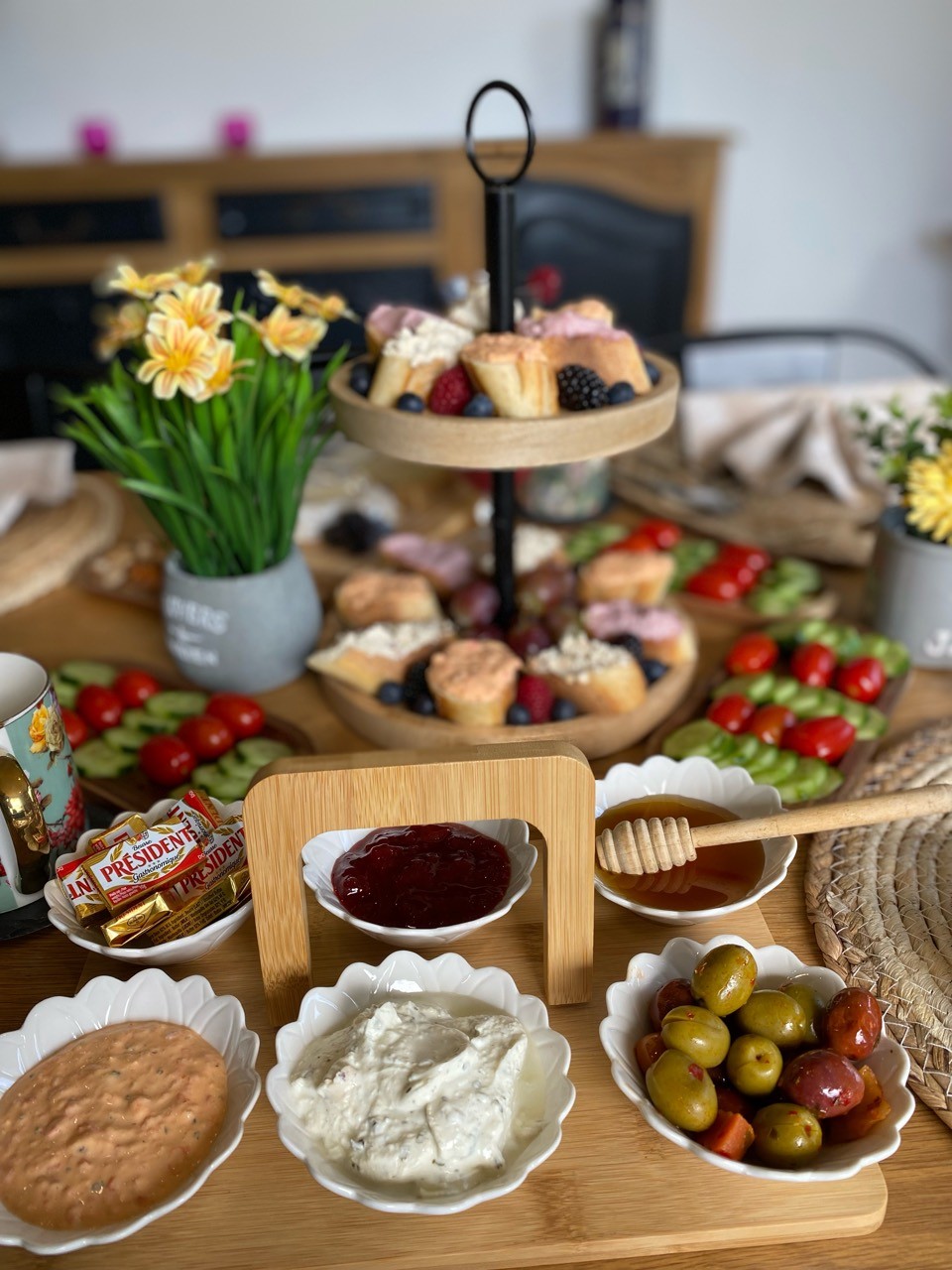
On the terrace, chairs surround a table of pastries, fruit and colourful drinks, with flowers tucked between the dishes. Close-up photographs bring honey, jam, olives and bread to the foreground. The OUISTARS mark appears in another table detail. The appeal is less a checklist of food than a decision to make the pause part of the journey.
Around the table, hospitality becomes simple and warm: contrasting colours, dishes to share and a garden close at hand. To explore Normandy’s flavours further, look for its four PDO cheeses: Camembert de Normandie, Livarot, Pont-l’Évêque and Neufchâtel. Discovering a region through food works best when each stop is allowed its own taste and its own time.

Étretat: a small town that lets the sea take the lead
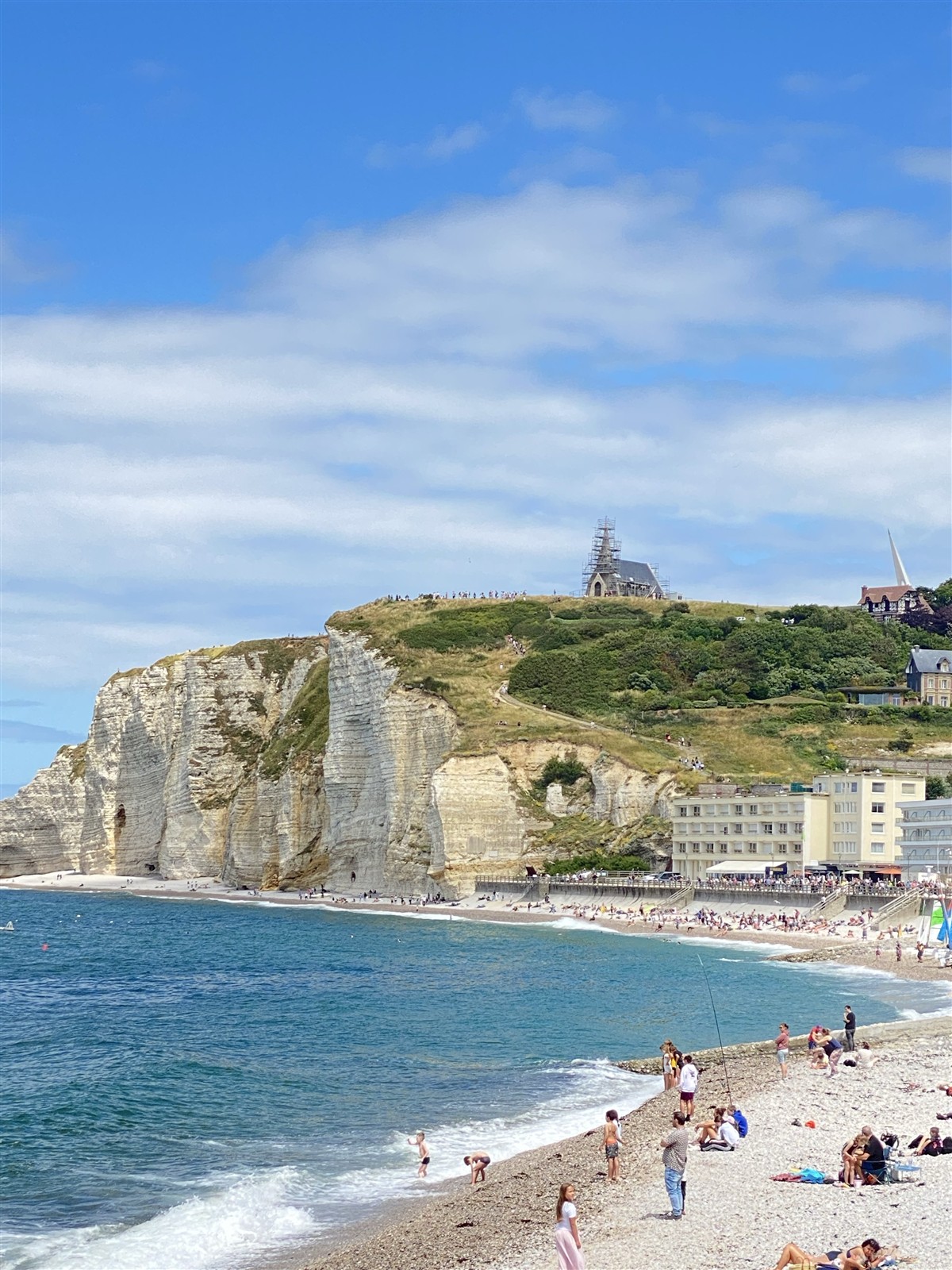
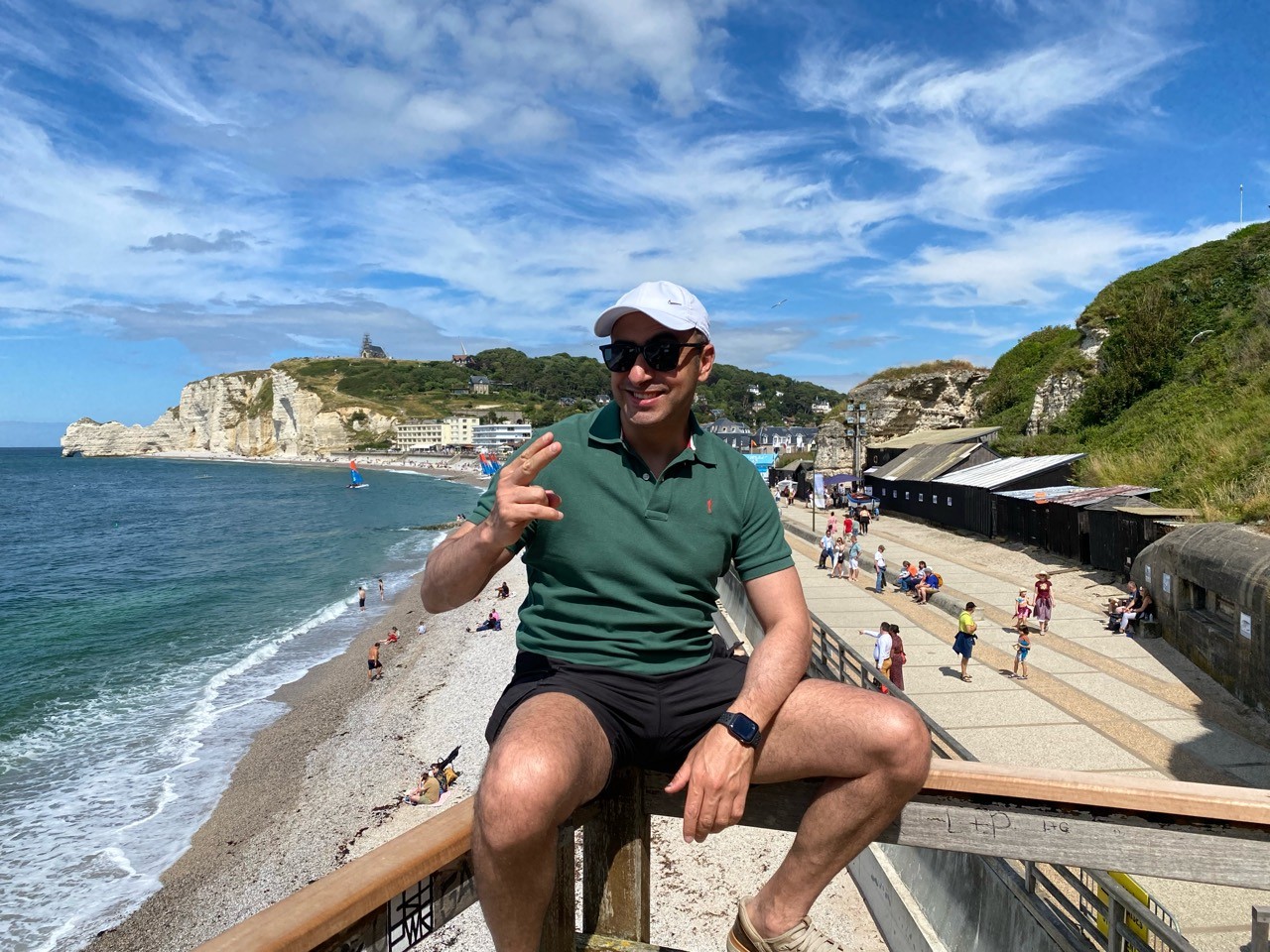
Then the view opens. A white cliff rises above a pebble beach, the town meets the water and a small chapel stands on the opposite headland. This is Étretat, a seaside town in Seine-Maritime, within the Normandy region on the English Channel. Normandy is the wider region; Étretat is one of its destinations. They are not two names for the same town.
The scene depends on a meeting of colours: grass along the top, layered chalk below and water shifting between blue and green. The beach photographs also show visitors, sailing craft and a promenade. Étretat is a popular place, so solitude should not be promised. Timing changes the experience as much as the weather does.
White arches and the pleasure of looking twice
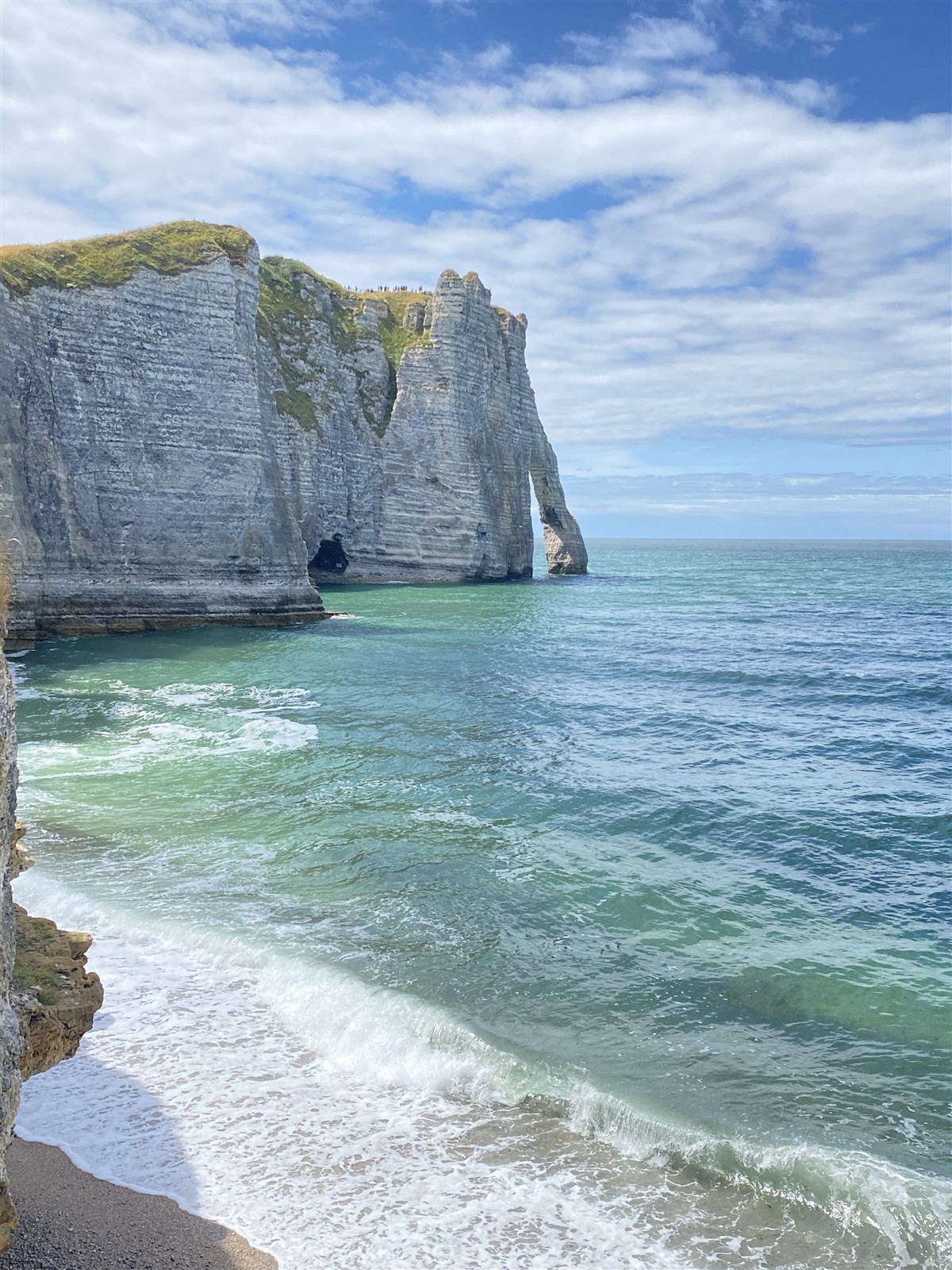
From the water’s edge, the cliff seems like an immense wall. Another angle reveals a natural opening in the rock. From above, the freestanding needle, arch and bay belong to a single composition. Even when the subject is the same, the photograph changes: the position of the viewer alters the balance of rock and sea, while clouds redraw the light across the surface.
These formations are among the defining sights of the Alabaster Coast. Étretat inspired painters and writers including Claude Monet and Guy de Maupassant. Comparing the light across this album makes that connection easier to understand. The landscape does not remain still like a postcard; it changes in front of the observer.
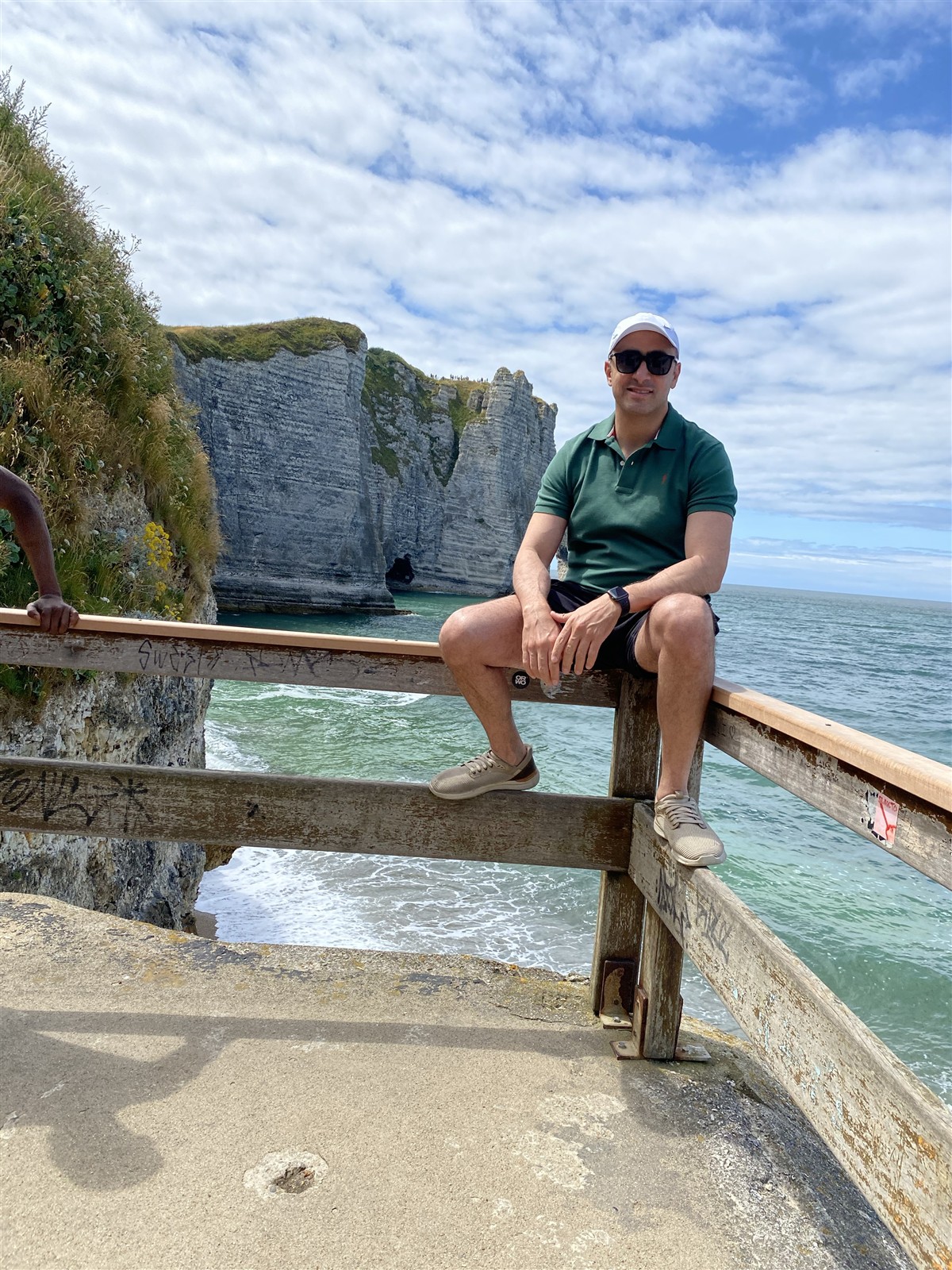
The two personal photographs give the cliffs a human scale. The journey becomes more than a record of a famous place: it is a moment worth keeping because, for a little while, someone became part of that immense view. The best souvenir is one made from a safe, permitted viewpoint.
Birds, fields and the Normandy beyond the shoreline
In the cover photograph, a seabird crosses the lower part of the view, adding movement to the geometry of the cliffs. Inland, fields and trees suggest a Normandy beyond the shoreline. Between birdwatching and discovering rural life, a nature lover can build a journey around curiosity rather than a compulsory list of landmarks.
Nature lovers can extend a stay with a farm open to visitors, a locally organised rural activity or a guided birdwatching outing. Opportunities depend on place and season, so check access and booking conditions. Observe animals at a suitable distance and respect private fields and farm entrances.
Normandy and the Second World War: another coast, another story
It can be difficult to reconcile a sea this peaceful with Normandy’s place in the Second World War. On 6 June 1944, Allied forces landed on five sectors known as Utah, Omaha, Gold, Juno and Sword. Exploring the landing sites adds a human and historical dimension to the beauty of the region.
The Étretat beach photographed here is not Omaha Beach or one of the five D-Day landing beaches. Those sites lie farther west, in Calvados and Manche. Readers interested in this history should consider a separate day or more around Bayeux or Caen, rather than squeezing the remembrance sites and Étretat’s cliffs into a hurried excursion.
At cemeteries, museums and memorials, the pace of the journey changes. A place becomes more than a background for a picture. It invites time with individual names and stories, and reflection on the ordinary coastal life visible today.
How to reach Étretat from Paris and give it enough time
The local tourist office describes a rail journey from Paris Saint-Lazare to Bréauté-Beuzeville, followed by the 504 coach to Étretat. Connections are also available from Le Havre. Check the timetable for your actual date, especially the return connection. This guide does not promise a direct train to the beach or a fixed transfer time. Official access information.
For a short trip, make Étretat the focus: town, beach and an authorised viewpoint, depending on trail conditions, with time for a meal. For a slower experience, consider two or three nights combining countryside and coast, plus a separate day for the landing sites if they interest you. This is an editorial suggestion for allocating time, not a priced tour.
When choosing a rural stay, confirm the actual address, access, parking, breakfast, mobility requirements and cancellation. For a chauffeur day, agree the route, waiting and return in writing; a single transfer quotation is not the same as a full-day service.
Leave the landscape beautiful for the next visitor
Stay on permitted paths, away from cliff edges and the base of the rock, where falls can occur. Do not climb or sit on barriers for a photograph. The tourist office states that access to the Trou à l’Homme cave and tunnel is prohibited; old pictures are not evidence that an access is still open. Leave the beach pebbles where they belong and take litter away. Official site guidance.
The lasting image of this visit is not only the famous arch. It is also the grass outside a house, bread around a bright table and the distance between a busy routine and a sea that can finally hold our attention. One of Normandy’s most generous gifts may be this invitation to stop for a while.
Questions for your own visit
Where is Étretat?
In Seine-Maritime, within the Normandy region of France, on the English Channel coast.
Is Étretat one of the D-Day landing beaches?
No. The five landing beaches are in Calvados and Manche; they are not the beach shown in this album.
Is one day from Paris enough?
A day can focus on Étretat after checking connections, but combining coast, countryside and the landing sites comfortably needs longer.
When is the best time to visit?
Choose around weather, daylight and transport. Early morning or less busy periods can favour quiet observation, without guaranteeing an empty site.
Is Normandy suitable for a family trip?
A rural stay can be combined with the beach and an age-appropriate farm or nature activity. Check paths, mobility, transport and weather before visiting.
Read also: Honfleur and Normandy
Official information for planning
- Normandy Tourism — Étretat
- Le Havre Étretat Tourisme — Falaises
- Le Havre Étretat Tourisme — Accès / Access
- Normandie Tourisme — Nature
- Normandie Tourisme — Fromages AOP
- Normandy Tourism — D-Day Landing Beaches
Add OUISTARS Travel as a preferred source on Google
Tourist office video: reading on Étretat beach
Le Havre Étretat Normandie Tourisme presents “Lire à la plage à Étretat avec Méloé”. This is a separate tourist-office film, not footage from the magazine’s visit. Le Havre Étretat Web TV.