



OPINION · Facts checked 21 October 2026
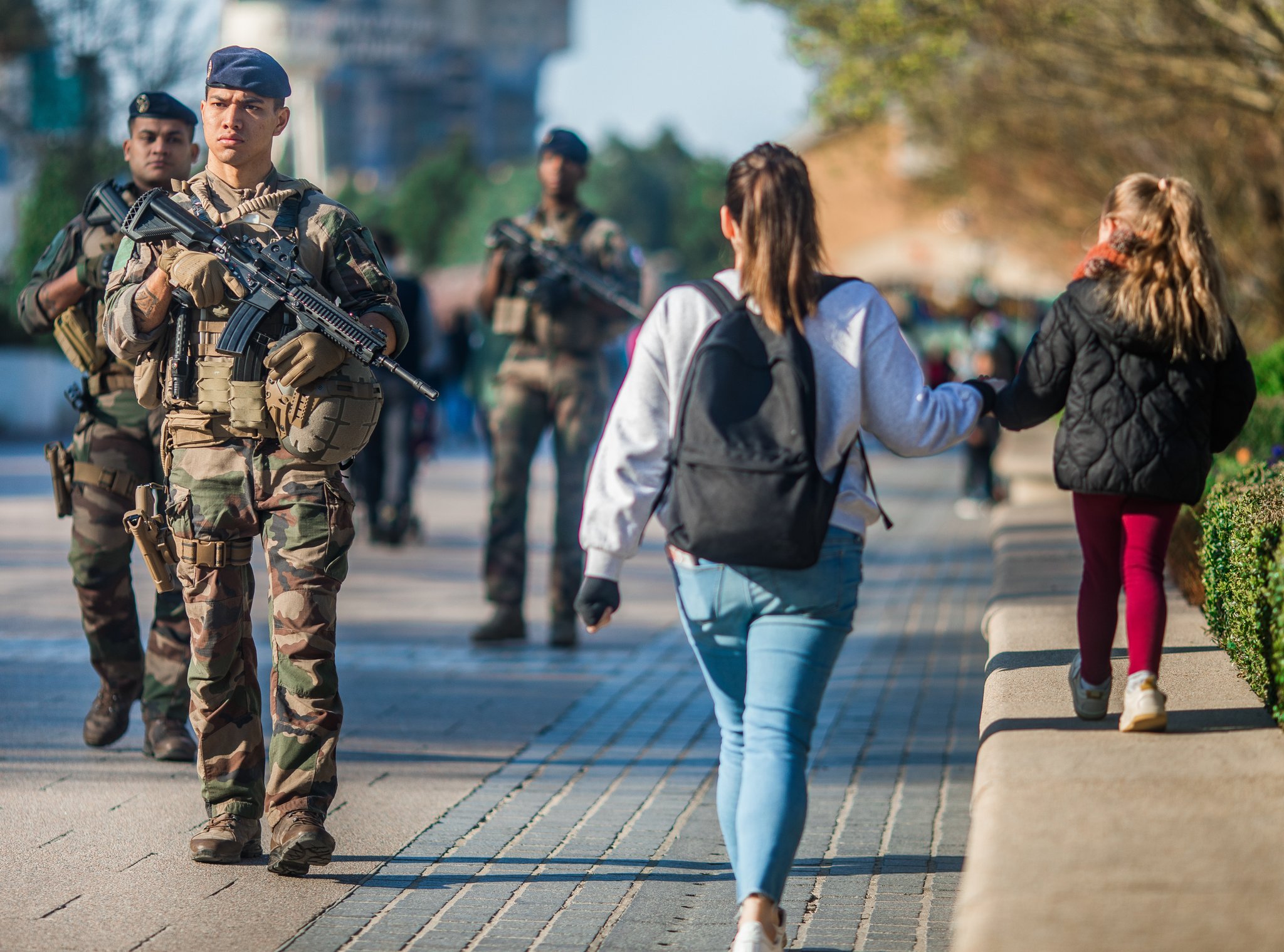
Archive photograph of the army
Public officials, give visitors a clear answer: should the tourists expected on Friday, Saturday and Sunday come to France or cancel? Who will answer them? Who will protect businesses? Who pays if violence reaches the streets? The safety of people and the livelihoods of those who work here cannot be treated as secondary concerns.
What has been announced
A public call advertises a gathering at Place Jussieu in Paris on Saturday, October 24, 2026, at 2 p.m., stating social and institutional demands. It confirms an announcement, not an approved route or an attendance figure. This article does not establish a final police order covering every weekend gathering. Applicable decisions must be checked with the Paris Police Prefecture. A changing operational situation requires dated information, not a permanent headline presented as live advice.
Protest is a right. Looting and frightening passers-by are not.
Say it plainly: no political demand gives anyone the right to burn, steal, smash a business, damage a public building or terrify a family. A hotelier is not a political target. A restaurant should not pay for being on a route. Visitors, children, older people, workers and peaceful protesters all deserve protection. Destroying someone else’s livelihood does not defend a wage. We call for firm prevention, identification of perpetrators and a judicial response based on conduct. The stated purpose of a gathering and any offences committed must remain distinct. An effective response begins with facts, not collective suspicion.
Friday 23, Saturday 24, Sunday 25: should they come or not?
Ministers and public authorities: what should we tell visitors? “Come and enjoy Paris, its streets, the Seine, museums, restaurants and river cruises”? Or “Do not come this weekend”? Should arriving guests cancel their reservations? Can departing passengers reach their station? Who will advise people who have paid for several connected services? We are asking for an answer, not a slogan. If restrictions are confirmed, publish the areas, times, alternatives and contacts. If services remain accessible, identify them. Leaving travel professionals to shoulder the uncertainty alone is unacceptable. Declaring a demonstration never authorises a crime; public decisions must therefore be matched by protection and information adequate to the situation.
Gare du Nord, Saint-Lazare and Montparnasse: real journeys, real people
Start with people who have already paid. Visitors travelling from London by Eurostar arrive at Paris Gare du Nord. Journeys between Paris and Normandy use, among other services, Saint-Lazare and routes serving Rouen, Le Havre and Caen. At Montparnasse, passengers depart for Bordeaux or arrive from it. These travellers have connections, luggage, children and deadlines. A train may operate while the transfer to a hotel becomes difficult; a road restriction does not necessarily mean a station is closed. So how will they reach their accommodation, next train, museum or appointment? This article announces no closure of these three stations. It demands useful answers for the people travelling through them before they set off.
Who will bear the real cost—and for how long?
Does France have a bottomless account? Can the state indefinitely pay for repairs, security operations, business support and the consequences of interrupted trade? When the public purse bears a cost, who ultimately carries it? These questions deserve an answer. Saying “insurance will pay” is not enough. There are excesses, coverage limits, delays and losses that extend beyond a window. Who gives a restaurant back the meals it did not sell? A worker the day thrown into confusion? A hotel the booking that went to a competitor? How often must this happen again? This article establishes no total loss figure for the coming weekend. But waiting for the invoice before recognising the risk would be poor judgment. Prevention deserves as much attention as repairs.
Uncertainty can cost money before property is damaged
Consider a hypothetical agency abroad checking with its hotel, transfer company, restaurant and cruise supplier. Its customer asks whether to confirm, move or cancel. That is a decision scenario, not evidence that all agencies are already cancelling French trips. It illustrates how uncertainty consumes staff time and can influence orders before a physical incident occurs. An unused restaurant table or hotel room cannot always be sold retrospectively. However, there is no demonstrated formula making one disrupted Saturday equal to a month’s revenue. Strong criticism should expose a real mechanism, not invent a multiplier.
The livelihoods behind France’s visitor economy
Atout France reports 102 million international arrivals and €77.5 billion in international tourism receipts in 2025. Those national figures do not measure losses for October 24, a day that has not yet happened. They establish the scale of the wider economic interest. Receptionists, cooks, guides, cleaners, drivers and suppliers work behind the destination’s prestige. Their ability to fulfil reservations depends on access, reliable information and functioning services. Protecting tourism means taking those everyday conditions seriously, rather than treating the industry as a collection of postcards that can be replaced after a crisis.
What does another interruption mean to an already fragile business?
Do public decision-makers understand what it means to ask a business owner who survived earlier crises to wait yet again? The yellow-vest movement began in November 2018; a 2019 parliamentary report documents consequences for trade and hotels. The France Stratégie chronology identifies successive lockdowns in 2020 and 2021 within a pandemic that disrupted businesses. There were not two continuous years of blanket national closure. Yet reopening a door does not instantly rebuild cash reserves. Professionals whose financial buffers remain thin need to be heard, without pretending that this article contains a verified count of their current debts. They need customers, working access and the ability to plan.
A reputation crosses borders in seconds
A clip can travel worldwide before a hotel has answered its first enquiry. It may show a genuine incident, old footage or a misleading edit. An artificial image does not prove that a corresponding real event happened: a scene can be fabricated without an original incident. Responsible coverage must therefore check location, date, provenance and context. Recycling a scene from 2018 as evidence of next Saturday would damage the very reputation we seek to defend. Equally, verified violence should be documented without minimisation. Accurate reporting is part of public confidence, not an obstacle to it.
A street may reopen while the images keep circulating
Does the damage necessarily stop on Sunday evening? No. Footage of violence can be reposted, shared, searched for and shown long after the street is cleaned. It can influence a visitor’s decision for weeks or even months: that is a reputational risk, not a measured forecast of losses for October 24. A customer in London or elsewhere may not know the district or the distance between an incident and their hotel. They see “Paris”, they see “France”, and they hesitate. The agency asks suppliers for updates. Suppliers try to reassure. Meanwhile, the customer may choose somewhere else. Who counts the cost that never appears on the window repair invoice?
Firm prevention must remain lawful
French public demonstrations generally operate under a prior-declaration system; that never authorises criminal damage. The Conseil d’État requires a prohibition to be suitable, necessary and proportionate, as a last resort under judicial oversight. There is no universal “one per cent risk” threshold that automatically permits a ban. Our argument is for prevention based on concrete evidence: workable coordination, protected access for residents and emergency services, justified restrictions and action against offences. Explaining the reasons and boundaries of a decision is part of responsible authority. It makes expectations clearer for organisers and for everyone outside the gathering.
Who bears the cost afterwards?
Cleaning the street does not settle the balance sheet. Insurance excesses, damaged stock, repairs, wages and lost revenue may fall under different conditions. Article L211-10 of the Internal Security Code establishes state liability for certain damage caused by collective violence; it is not a promise here to reimburse every cancelled booking. Affected businesses need evidence, the terms of their insurance and advice on the relevant claim. Asking for transparent compensation arrangements and timelines is legitimate.
The information businesses should receive before the weekend
We call for a public briefing identifying affected areas and times, alternative access, closures where actually ordered and a usable business contact. Hotels and operators should then confirm their own services, rather than issue blanket guarantees for Paris. Separate what is established from what may change. Afterwards, measure any impact using documented cancellations, postponements, turnover, closure days and physical damage. This would help distinguish genuine losses from dramatic but untested claims. A precise operational message is more useful than either denial or an indiscriminate warning against an entire country.
Travellers need decisions about their itinerary
UK travel advice recommends monitoring information and following the authorities, while noting that most demonstrations are peaceful. An announced gathering alone proves neither a nationwide shutdown nor the availability of every service. Check the prefecture, RATP traffic updates, your carrier and booked venues before departure. Ask for written cancellation or rescheduling terms. Do not approach a disturbance to film it. These are practical precautions, not an individual safety guarantee. The answer to “come or cancel?” must reflect the actual itinerary, official instructions and the service provider’s confirmed position.
Media and public officials: calm the situation or inflame it?
To broadcasters and journalists reporting calls to take to the streets, we ask another question: does your role end at announcing a date, or should it include questioning organisers and authorities about protecting people, businesses and access routes? Should the media extinguish the sparks or fan them? Should public officials resolve uncertainty through clear decisions and information, or leave it to feed tension? Reporting a demonstration is not incitement to violence. But headlines, context and presentation can calm or inflame. We want journalism that conceals no facts and does not turn a possible confrontation into an anticipated spectacle. Ask about prevention, the traveller, the shopkeeper and the next day’s bill as well. Learn from our own mistakes and from countries caught in cycles of unrest, without reducing their complex histories to a single demonstration. A snowball can grow as it rolls downhill: escalation needs to be addressed early through facts, prevention, dialogue and enforcement of the law. Act before repairing the damage becomes harder than preventing it.
Act now: stop the losses and set a real reform agenda
We must act before losses accumulate and move beyond waiting for the next Saturday towards solutions that build the country. We want a clear reform agenda: what are people demanding? What can be delivered now? What needs funding or legislation? Who is responsible, and by when? Listen to citizens, examine their demands, deliver what is justified and achievable, and explain the obstacles publicly. Do not let anger accumulate and then hand the bill to businesses, workers and travellers. Building a state requires decisions, services, jobs and accountability; promises and weekly crisis management are not enough. Our position is clear: when demonstrations turn into repeated obstruction and violence, they hinder the country’s functioning and its solutions rather than build it. Peaceful demands must find a hearing and lead to measurable commitments. Publish the actions, named responsibilities, deadlines and progress reports showing results, delays and their causes. Build the country seriously and protect livelihoods seriously: preventing losses, delivering reform and listening to citizens are inseparable responsibilities.
Who counts the strain on the police? Protection is not free
Has anyone considered the strain on police officers and gendarmes? They spend hours on the streets, facing risks of assault, injury and accidents; they also have families, health and lives beyond that deployment. Add travel, meals, overtime, vehicle maintenance, equipment wear and supplies. These resources are not free. The parliamentary report on the yellow-vest movement discusses several of these costs. We call for transparent reporting of the additional expense of each major deployment, distinguished from normal operating expenditure and without double counting. What was spent? What was used? What effect did deployment have on rest and other duties? We announce no cost for a future demonstration and no unconfirmed injuries. Yet the absence of a final total does not make the human risk or financial burden zero. Protecting the public is a duty; protecting those who protect it is a duty too.
OUISTARS Travel proposes peaceful digital participation—with an answer
Taking to the streets simply for the sake of doing so is no programme. Anyone with a demand should have a clear way to submit it and track its treatment. In an age of digital public services, make participation easier from home. OUISTARS Travel calls on the state, institutions and organisations to develop an accessible process: “I object to this; here is my request”, followed by verified support, a tracking number, a responsible office and a response deadline. France already has petition platforms at the National Assembly, Senate and CESE. The task is to make participation clearer and its treatment visible. Signing a petition does not automatically enact a law: we want a serious institutional route to examination, a response and warranted action. Propose an experimental €10,000 cap for a simple initial prototype, then seek quotations specifying what it can actually deliver. This is a proposed budget, not a verified price for a complete secure government platform: participant verification, personal data protection, accessibility and maintenance carry ongoing costs. Publicly compare a measurable pilot with documented disruption, security and repair costs. Provide offline assistance, and make this an additional channel that respects the right to peaceful assembly. Technology should bring citizens closer to decisions and ensure their requests receive an answer.
Do not destroy with your own hands what earlier generations built
A destination, a business and public trust take time to build. A single night can damage years of work; rebuilding then requires money, effort and time. Do not let violence impose that bill on people who simply want to live and work. We want a state that explains its decisions, acts firmly against offences and takes responsibility for protecting people under the law. Security must be a priority. We repeat: security must be a priority. Being able to sleep at home, work and walk without fear is an essential demand. And to travellers at Gare du Nord, Saint-Lazare, Montparnasse and across France asking “should we come or not?”, answer before they begin their journey.
A question for readers
Travellers and businesses: what specific information do you still need to decide about this weekend?