Fact-checked: 2 August 2026, Paris time.
Paris Event Economy | By Osama Samaha, Editor-in-Chief, OUISTARS Travel Magazine
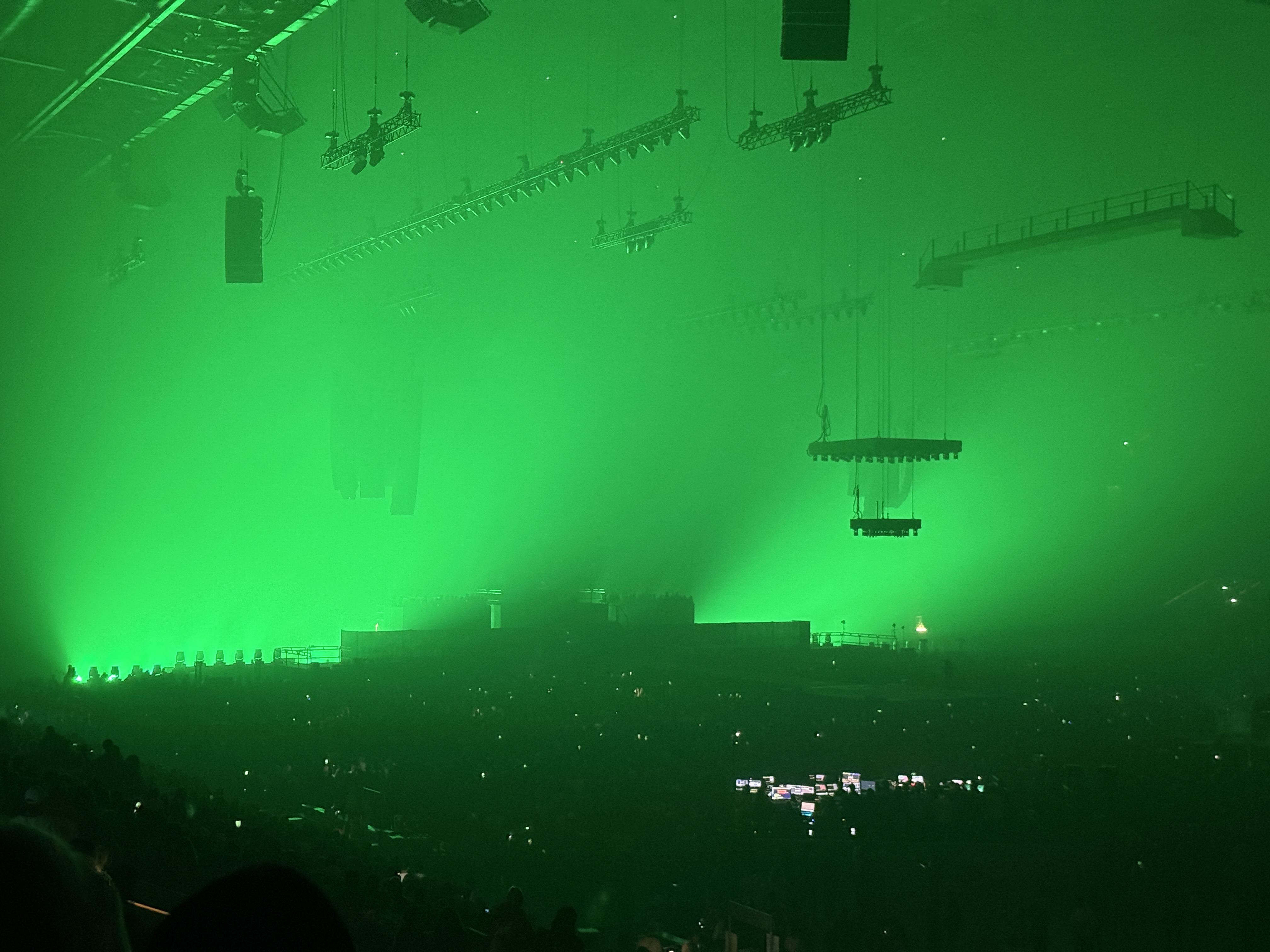
At 11 p.m., the encore ends. Tens of thousands of fans reach for their phones, hotels prepare late arrivals, restaurants turn tables, Metro platforms fill and private drivers wait outside the venue. The artist earns from the stage, but the city earns from the journey around it.
Paris increasingly treats major concerts as tourism infrastructure. That does not mean every sold-out show creates a fortune or that every forecast should be repeated as fact. OUISTARS examined official tourism barometers, air bookings, hotel occupancy and venue calendars to identify what the concert economy really changes.
The short answer
A major concert can lift hotel occupancy, air arrivals, restaurants, transport and local retail, especially when the audience travels from abroad or stays overnight. Paris je t’aime says Greater Paris hotel occupancy rises by about five points during the biggest Stade de France and La Défense Arena concerts. The effect is real, but it is concentrated by date, venue, artist and visitor origin.
Evidence from Beyoncé
Before Beyoncé’s three Stade de France dates in June 2025, Paris je t’aime reported sharp increases in international air bookings: 37% on 18 June, 45% on 19 June, 25% on 20 June and 23% on 21 June. North American bookings for 21 June were up 49%.
The figures show travel demand around the concerts, not the artist’s isolated causal impact. Calendar effects, other events and normal market growth can overlap. Still, the timing strongly supports the argument that global artists create destination travel.
The hotel effect
The tourism office’s April 2026 barometer states that Greater Paris hotel occupancy increases by an average of about five points during the largest concerts at Stade de France or La Défense Arena. In late May 2026, hotel occupancy approached 95% during a period supported by Roland-Garros and concerts by Damso and Aya Nakamura.
This illustrates an important rule: cities often benefit most when concerts are combined with sport, exhibitions or holidays. It also makes attribution harder.
The Céline Dion forecast: powerful, but still a forecast
Paris je t’aime projects that a 16-show Céline Dion residency in 2026 and 2027 could attract nearly 460,000 spectators, lift hotel occupancy by 5%, increase tourist numbers by 12% and generate almost €265 million in additional hotel revenue.
Those numbers should not be reported as money already earned. They are forward-looking estimates published by the destination’s tourism organisation. OUISTARS will compare them with actual occupancy, rates, visitor volumes and tax data after the concert periods.
Where the money moves
| Sector | Immediate effect | What should be measured |
| Hotels and rentals | More room nights and higher rates | Occupancy, ADR, RevPAR, length of stay |
| Restaurants and bars | Pre-show and post-show demand | Sales by venue radius and time |
| Transport | Peak passenger volume and late-night demand | Ridership, waiting times, missed trips |
| Air and rail | Fans travel into Paris | Incremental arrivals by origin |
| Retail and merchandise | Event-linked spending | Local sales versus venue-only spending |
| Employment | Temporary and operational work | Hours, wages and local recruitment |
| Public services | Security, cleaning and crowd management | Public cost as well as private revenue |
Who gains most?
Hotels can gain twice, through occupancy and room rate. Restaurants near the venue gain if fans arrive early or remain after the show. Airlines and rail operators benefit when the artist has an international following. Chauffeur and taxi demand rises when public transport closes, crowds peak or groups value a planned return.
The benefit is not evenly spread. An arena may sell every seat while neighbouring streets capture little spending if gates open late, food is consumed inside and transport moves fans away immediately.
The costs behind the success story
- Extra policing, security, cleaning and crowd-management costs.
- Transport congestion and long queues after simultaneous departures.
- Room-rate spikes that displace ordinary leisure and business travellers.
- Noise and pressure on residents around repeated shows.
- Temporary work that may not create durable careers.
- Carbon emissions from long-haul fan travel.
- Ticket fraud and unofficial resale that damage visitor trust.
What a city should do before a major show
- Publish one official multilingual arrival and departure plan.
- Extend or reinforce late-night transport where demand justifies it.
- Coordinate venues, police, hotels and mobility operators in real time.
- Direct visitors towards restaurants and districts ready to receive them.
- Display official ticket channels and anti-fraud warnings.
- Measure public costs, not only private revenue.
- Release a post-event impact report using occupancy, spending and transport data.
OUISTARS Concert Economy Scorecard
| Measure | Weight | Paris score | Finding |
| International drawing power | 20 | 18 | Global artists generate destination travel |
| Venue capacity and calendar | 20 | 18 | Strong stadium and arena ecosystem |
| Hotels and visitor spend | 20 | 16 | Measurable uplift, attribution needs care |
| Transport and crowd operations | 15 | 10 | Capable system with severe peak pressure |
| Neighbourhood value distribution | 15 | 8 | Benefits remain uneven |
| Transparency of economic impact | 10 | 6 | Forecasts are visible, audited post-event data limited |
| Total | 100 | 76 | Powerful event economy, incomplete public accounting |
OUISTARS editorial analysis
A sold-out concert is not only a cultural event. It is a temporary tourism market with its own airport arrivals, hotel nights, restaurant peaks, transport shortages and security costs. Paris should celebrate the revenue, but publish the full account. The best event economy is not the loudest forecast; it is the one that proves who benefited, what the city spent and whether visitors and residents would welcome the next show.
OUISTARS Travel Magazine
For travellers, the practical lesson is simple: book the hotel and return journey as seriously as the ticket. When tens of thousands leave together, improvisation becomes expensive.
Continue with our France events calendar for 2026 and 2027 and our analysis of why Paris remains a world tourism capital.
Methodology and sources
This article uses official Paris je t’aime tourism barometers and destination event material, with current venue information checked to 2 August 2026. Forecasts are labelled as forecasts. Correlation is not presented as proof of isolated causation.
Frequently asked questions
Paris je t’aime reports an average uplift of about five points during the biggest concerts at Stade de France or La Défense Arena.
Hotels, restaurants, transport, airlines, rail, retail, venues and temporary employment can benefit.
No. It is a forward-looking estimate published by Paris je t’aime and should be tested against actual results.
Large audiences leave at the same time, creating pressure on Metro, taxis, ride-hailing and private-car availability.
Not automatically. Local value depends on visitor dwell time, nearby hospitality, transport patterns and venue operations.
Editorial disclosure: OUISTARS provides travel and private-transport services, including event journeys. No artist, venue, hotel or transport operator funded this analysis.
OUISTARS travel planning: Travellers arranging a trip in France can review OUISTARS private chauffeur and luxury transportation services for airport meet-and-greet, hotel transfers and tailored journeys.