Fact-checked: 2 August 2026, Paris time.
Global Tourism Capitals | By Osama Samaha, Editor-in-Chief, OUISTARS Travel Magazine
Rome owns layers of history. London has global scale. New York sells spectacle. Yet Paris still performs a rare tourism trick: it places monuments, museums, fashion, gastronomy, luxury, neighbourhood life, business events and one of the world’s most recognisable identities inside a city visitors can understand in a single glance and keep rediscovering for years.
Calling Paris the world’s tourism capital is not an official title. It is an editorial claim that must be tested. OUISTARS examined demand, hotel nights, economic weight, international reach, cultural density, transport, events and resilience. The evidence explains why Paris remains exceptional, but also why its leadership is not guaranteed.
The verdict
Paris remains the strongest all-round urban tourism brand in 2026 because no single competitor combines its concentration of globally recognised attractions, premium hospitality, cultural production, luxury economy, business tourism and year-round demand at the same level. Its weakness is the cost of success: affordability, crowding, resident pressure, security perception, mobility disruption and climate adaptation.
The numbers behind the image
Paris je t’aime estimated 37.3 million tourists in Greater Paris in 2025. INSEE recorded 41.944 million hotel nights inside Paris, up from 38.553 million in 2024 and above the 2019 level of 38.022 million.
Across the Paris Region, collective tourist accommodation reached 89.7 million nights in 2025, an 8.2% increase. During winter 2026 alone, Paris generated 14 million nights and added almost 400,000 compared with the previous winter, confirming that the city is not merely a summer destination.
The economy is equally important. Paris je t’aime reports that tourism supports almost one in ten jobs in the capital, hotel turnover approaches €4 billion annually, and trade fairs and congresses generate more than €5 billion in economic benefits.
1. A unique density of world icons
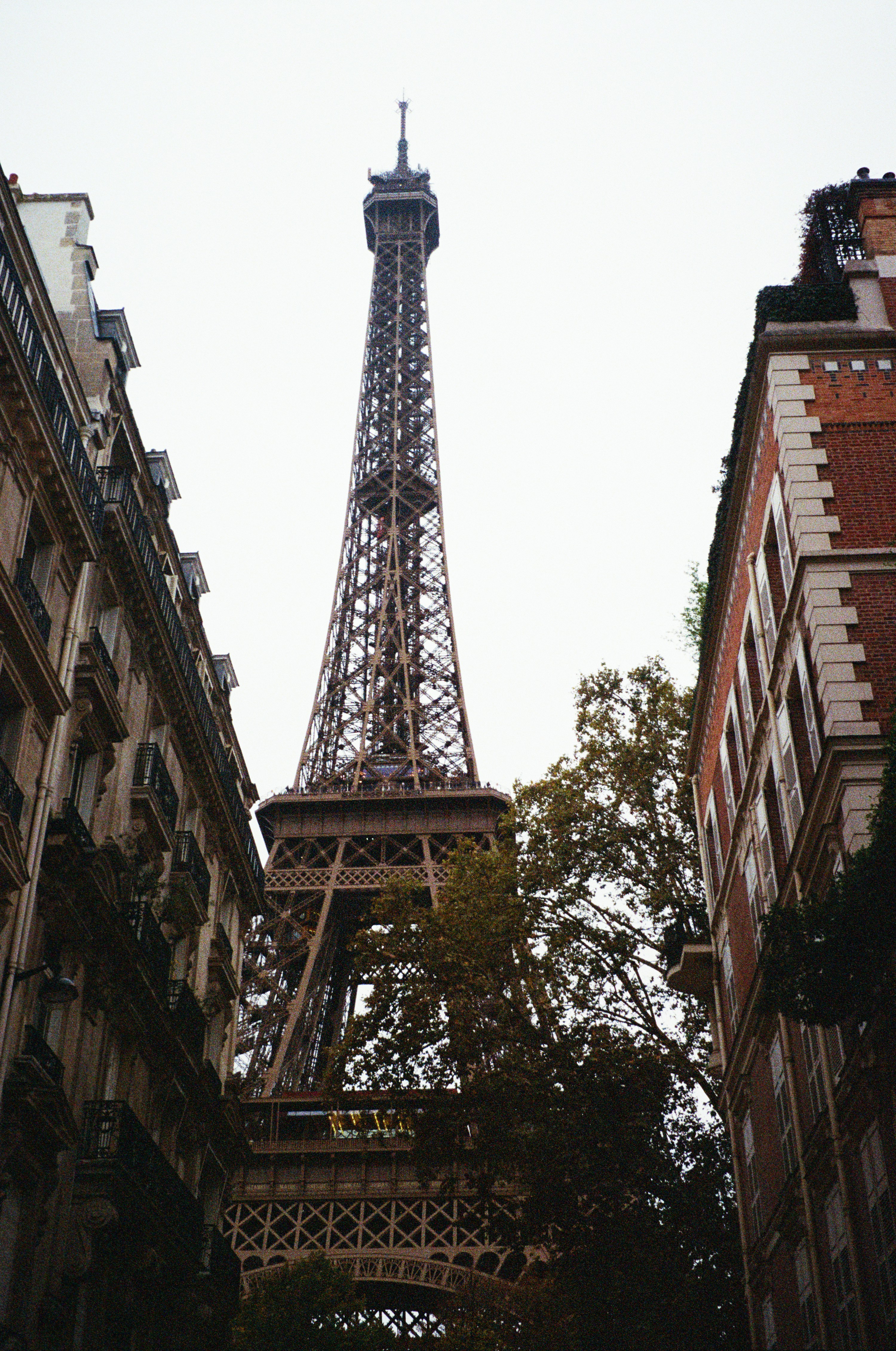
The Eiffel Tower, Louvre, Notre-Dame, Arc de Triomphe, Seine, Montmartre, Opéra Garnier and Champs-Élysées are not scattered across a vast territory. They form a legible network that can be experienced by foot, Metro, river and short transfers.
This density increases the value of a short stay. A first-time visitor can recognise Paris immediately, while a repeat visitor can move into architecture, design, food, contemporary art, neighbourhood markets or specialist museums.
2. Culture that does not survive only on the past
Paris has inherited extraordinary monuments, but it continues to produce culture. Major exhibitions, fashion, cinema, performing arts, galleries, music and design keep the destination current. Notre-Dame’s reopening demonstrated how a historic symbol can become a global contemporary event.
The city’s advantage is therefore not only the size of its collections. It is the continuous conversation between heritage and new creative production.
3. Luxury is an ecosystem, not a shopping street
Paris links fashion houses, jewellery, department stores, palaces, gastronomy, art, private services and global brand headquarters. Avenue Montaigne, Place Vendôme, Rue Saint-Honoré and the grands magasins are commercial destinations, but their influence reaches hotels, restaurants, events, craftsmanship and investment.
That ecosystem attracts high-spending leisure travellers and business clients, helping Paris convert cultural prestige into economic value.
4. Gastronomy works at every price point
The Paris food story includes Michelin-starred dining, historic brasseries, neighbourhood bistros, contemporary bakeries, markets and immigrant cuisines. This range matters because food is not an optional attraction. It structures mornings, shopping breaks, business meetings, evenings and social-media memory.
5. Air, rail and local transport multiply demand
Charles de Gaulle and Orly connect Paris to global markets. Eurostar and high-speed rail make the capital accessible from London, Brussels, Amsterdam and major French cities. The Metro, RER, buses, walking routes and the Seine distribute visitors once they arrive.
Connectivity does not eliminate friction. Strikes, works, luggage handling, accessibility gaps and peak-event congestion can damage the experience. But the underlying network remains one of Paris’s biggest competitive advantages.
6. Business tourism fills the calendar
Congresses, trade fairs, corporate events and incentive travel support hotels and restaurants beyond traditional holiday peaks. Their estimated economic benefits exceed €5 billion, although INSEE notes a continuing decline in the share of business demand in parts of the urban hotel market.
This is both strength and warning: Paris has an elite meetings brand, but hybrid work and stronger European competition mean it cannot rely on reputation alone.
7. Events turn the whole city into a stage
Sport, concerts, fashion weeks, festivals, exhibitions and national celebrations generate international attention throughout the year. The 2024 Olympic and Paralympic Games expanded the city’s operational experience and global visibility. The post-event test is whether public-space, accessibility and transport improvements remain useful.
OUISTARS will examine this event economy separately, including the way a single stadium concert can lift hotel demand, restaurant spending and transport pressure.
8. The hotel market covers almost every ambition
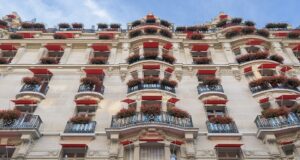
INSEE counted 2,326 hotels and 155,277 rooms in the Paris urban unit at the start of 2026, including 124 five-star hotels. This breadth supports luxury, groups, business travellers and more price-sensitive visitors.
The shift towards higher categories is economically attractive, but it creates a policy question: can middle-income families still stay near the city they came to visit?
9. Paris keeps attracting across seasons and markets
European visitors provide a resilient base, the United States remains a leading long-haul market, and demand from Canada and parts of Asia continues to evolve. Paris also draws domestic visitors, students, shoppers, medical travellers, families, couples and corporate groups.
A destination dependent on one market or one season is fragile. Paris’s broad portfolio is one reason it recovers quickly from shocks.
The OUISTARS Global Tourism Capital Index
This index is an editorial comparison framework, not an official international ranking. It scores the factors that make a city a complete tourism capital.
| Criterion | Weight | Paris score | Assessment |
| Global brand and icon density | 20 | 19 | Immediate recognition and exceptional concentration |
| Culture and creative relevance | 20 | 18 | Heritage reinforced by active contemporary production |
| Hospitality, gastronomy and luxury | 15 | 13 | Deep premium ecosystem, affordability pressure |
| Connectivity and visitor mobility | 15 | 12 | Excellent reach, recurring friction and accessibility gaps |
| Events and business tourism | 10 | 9 | Year-round calendar and major meetings economy |
| Economic depth and investment | 10 | 8 | Large, diverse market with high costs |
| Liveability, sustainability and trust | 10 | 6 | The decisive weakness |
| Total | 100 | 85 | World-leading range, with success-management risks |
What could cost Paris its crown?
- Prices that exclude middle-income visitors or shorten stays.
- Overcrowding that weakens resident support and the quality of public space.
- Security incidents or a perception that transport hubs and tourist districts are poorly managed.
- Climate stress, heatwaves and pressure on water, energy and shaded public space.
- Transport disruption and incomplete accessibility for disabled visitors and families.
- A business-travel offer that fails to adapt to new meeting formats.
- Too much dependence on famous icons and too little distribution to Greater Paris neighbourhoods.
OUISTARS editorial analysis
Paris is not the world tourism capital because it receives the largest possible number of visitors. It holds that position because it converts history, culture, luxury, mobility, business and imagination into one unusually complete urban experience. Its next era of leadership will depend less on attracting more people than on managing value, trust, access and quality of life better.
OUISTARS Travel Magazine
Our score is 85 out of 100. Paris leads on range and global meaning. It loses points where its success becomes a burden.
What Paris must do by 2030
- Publish a public visitor-value dashboard covering spend, length of stay, satisfaction and neighbourhood distribution.
- Protect affordable accommodation and improve transparency around short-term rentals.
- Design heat-resilient routes, shaded spaces and accessible transport around major attractions.
- Strengthen visible visitor protection at airports, stations, transport interchanges and crowded districts.
- Use major events to direct demand towards Greater Paris and less-visited cultural sites.
- Measure resident sentiment as seriously as visitor volume.
Continue with our analysis of France’s €100 billion tourism strategy, the France events calendar for 2026 and 2027, and our editorial on security as the invisible foundation of tourism.
Methodology and sources
OUISTARS used official data from INSEE and Paris je t’aime, including 2025 and winter 2026 accommodation figures and the official Paris tourism outlook. The analysis is current to 2 August 2026. The OUISTARS index is an editorial model whose criteria and weights are disclosed above.
Frequently asked questions
Paris je t’aime estimated 37.3 million tourists in Greater Paris in 2025.
INSEE recorded 41.944 million hotel nights inside Paris in 2025.
It combines globally recognised landmarks, culture, luxury, gastronomy, transport, hotels, events and business tourism at exceptional density.
No. Congresses, trade fairs, corporate events, education, shopping and other specialist travel markets add year-round demand.
The central risk is poor management of success, including affordability, crowding, security perception, accessibility and resident pressure.
Editorial disclosure: OUISTARS operates travel and private-transport services in France. No organisation named in this article funded the analysis or influenced the score.
OUISTARS travel planning: Travellers arranging a trip in France can review OUISTARS private chauffeur and luxury transportation services for airport meet-and-greet, hotel transfers and tailored journeys.