











Millions of tourists photograph the Eiffel Tower every year. Almost no one photographs the people who make that moment possible. Before the hotel check-in, the museum ticket, the airport arrival or the concert encore, there is a less glamorous promise: the destination must function, respond and protect.
OUISTARS editorial feature, updated 2 August 2026. This article does not claim that France is crime-free. It examines how public security and emergency institutions underpin tourism confidence, while distinguishing official facts from editorial analysis.
A €77.5 billion success story rests on trust
France welcomed 102 million international visitors in 2025 and recorded €77.5 billion in international tourism receipts, according to the French economy ministry, drawing on Atout France and Banque de France data. Domestic tourism consumption reached €222 billion. France therefore remained the world’s most visited country while pursuing a 2030 objective of €100 billion in international receipts.
Landmarks explain desire. Safety explains whether desire becomes a booking, whether families return, whether an airline expands capacity and whether an investor trusts the destination. Security is not the whole tourism product, but it is the floor beneath every part of it.
Security is an ecosystem, not a single uniform
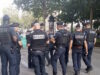
The protective system visible to a visitor is larger than the police patrol in a square. It includes the Police nationale, Gendarmerie nationale, municipal police, firefighters, emergency medical teams, civil-security services, border authorities, customs, airport security, transport operators, museum security, private guards and crisis-coordination centres.
Their missions differ. Police and gendarmerie prevent and investigate crime; firefighters and medical services rescue people; civil security prepares for fires, floods, heat and major incidents; airport and transport security control access and protect flows. Success depends on coordination, not on one institution claiming the entire result.
What tourists rarely see
- Hotels and restaurants: local patrols, prevention advice, emergency response and security audits help businesses protect guests and staff.
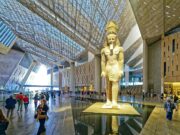
- Museums and monuments: access control, evacuation planning, crowd management and police coordination allow culture to remain open.
- Airports and stations: screening, border checks, patrols, baggage systems and incident response protect high-volume international gateways.
- Luxury retail: visible and intelligence-led policing supports districts where valuable goods and international customers concentrate.
- Public transport: operator staff and law-enforcement teams manage theft risks, disorder, suspicious items and major crowd movements.
- International events: accreditation, perimeters, traffic plans, anti-drone capacity and emergency medicine turn a spectacle into an operable city.
Paris 2024 proved that security is economic infrastructure
During the Olympic Games, about 35,000 police and gendarmerie officers were mobilised each day, according to the Gendarmerie’s official account, within a much larger public and private safety system. For the opening ceremony, the Interior Ministry planned 45,000 police and gendarmerie officers along the Seine route.
The lesson is not that every tourism day requires an Olympic deployment. It is that the visitor economy can function at extraordinary scale only when risk assessment, transport, accreditation, emergency response and communication are designed together. Paris 2024 demonstrated a capacity that can inform festivals, congresses, concerts and future mega-events.
The summer force behind the postcard
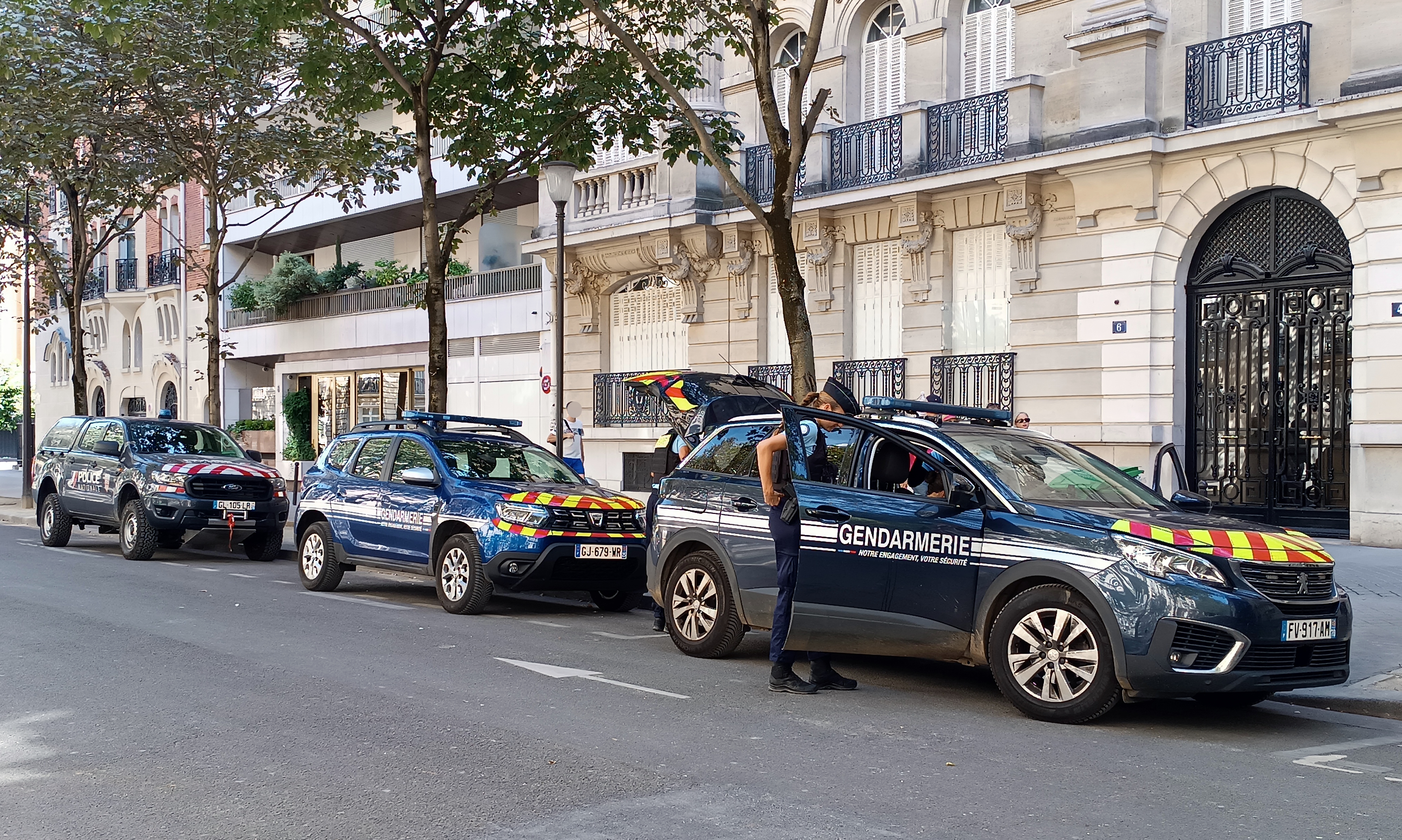
In July 2026, the Gendarmerie announced 2,200 reinforcements for its summer population-protection deployment in high-attendance areas. Its stated missions included road-flow control, reassuring and deterrent patrols, contact with residents and businesses, judicial investigations and prevention. Nearly 400 personnel were assigned as extra-zonal reinforcements across several defence zones, with mixed patrol cooperation involving European partners to assist foreign tourists.
The deployment matters to coastal resorts, rural heritage sites and mountain destinations as much as to Paris. France’s tourism leadership is geographically dispersed; protection must be, too.
Airports: the invisible queue before the visible journey
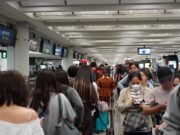
Groupe ADP’s 2025 universal registration document says approximately 250 Aéroports de Paris employees perform security functions directly, while nearly 5,000 employees of specialised contractors carry out passenger and baggage screening under the state’s framework and control. Border police, customs, aviation gendarmerie and airport operators add distinct responsibilities.
Passengers mostly experience this system as a queue. Economically, it is a licence to operate: without credible screening, border control and emergency capability, global connectivity cannot be sustained.
Civil security protects seasons, not only emergencies
Tourism risk now includes extreme heat, wildfires, storms and floods. In July 2026, France’s civil-security directorate published an ORSEC doctrine for extreme heat after summers including 2025 and 2026 saw temperatures above 40°C in several regions. Prevention, alerts, evacuation and rescue capacity protect visitors, residents and the continuity of destinations.
A beach, festival or hotel cannot be marketed separately from the fire, heat and medical plan that keeps it viable.
Security does not mean pretending crime does not exist
The Interior Ministry’s 2025 crime report tracks 18 principal indicators recorded by police and gendarmerie. Those data deserve precise reading: recorded offences can rise or fall for different reasons, including reporting behaviour and enforcement activity. A premium destination should neither minimise incidents nor sensationalise them.
Paris police provide 24-hour reception in the 20 central district police stations, bilingual officers in tourist areas and the SAVE system for complaints by foreign victims. The same official tourist guidance warns about pickpocketing, false petitions, unlicensed street selling and three-card monte. Honest advice strengthens confidence because it gives visitors practical control.
What tourism businesses owe their guests
- Communicate risk without drama: provide verified advice before arrival in the guest’s language.
- Design secure arrivals: explain the exact meeting point, identity of the driver or guide and emergency contact.
- Train frontline staff: hotels, restaurants and tour operators should know reporting routes and basic crisis procedures.
- Protect data and payments: cybersecurity and booking fraud are now part of visitor safety.
- Plan for heat and disruption: alternatives, water, shade and accessible transport should be operational, not promotional.
- Report patterns: repeated scams or dangerous bottlenecks should be shared with operators and authorities.
What travellers should do
Use licensed transport and official ticket channels, keep valuables closed and in sight, verify anyone claiming to be an assistant, and agree prices before accepting a service. Store copies of essential documents separately. In an emergency in France call 112; police can also be reached on 17, fire and rescue on 18, and emergency medical services on 15.
Security is shared behaviour, not fear. Most trips take place without serious incident; preparation reduces exposure and helps authorities respond faster when something does happen.
OUISTARS Editorial Analysis
No security, no tourism. No confidence, no durable economy. This is not a slogan for more visible uniforms everywhere. It is an argument for professional, accountable, proportionate institutions that prevent harm, assist victims, enforce the law and preserve the freedom to travel.
France’s 102 million international visitors and €77.5 billion in receipts are credited to culture, hospitality, connectivity and enterprise. They should also remind us of an invisible workforce: police officers, gendarmes, firefighters, emergency clinicians, civil-security personnel, border and customs officials, airport screeners, municipal teams and private guards.
OUISTARS thanks the women and men who serve in France’s security and emergency institutions. Their work does not decorate the tourism economy; it makes the economy possible. The standard must remain high: humane treatment, lawful enforcement, multilingual assistance, transparent data and constant adaptation to new risks.
Before the Eiffel Tower, before the Louvre, before the room key and the restaurant bill, there is trust.
Frequently asked questions
Is France safe for tourists?
France receives very large numbers of visitors safely, but no destination is risk-free. Visitors should follow official advice, particularly around valuables, scams, transport hubs and major crowds.
How does security support tourism?
It protects people and infrastructure, enables airports and events to operate, supports rapid emergency response and strengthens traveller and investor confidence.
What help is available to foreign tourists in Paris?
Paris police provide 24-hour reception points, bilingual officers and the SAVE multilingual complaint system.
What are France’s emergency numbers?
Call 112 for the European emergency number, 17 for police, 18 for fire and rescue, and 15 for emergency medical services.
Did security contribute to Paris 2024?
Yes. Official sources describe a coordinated system with around 35,000 police and gendarmerie officers mobilised each Olympic day, alongside other public, military, municipal and private-security personnel.
Official sources
- French economy ministry — 2025 tourism results
- Gendarmerie nationale — 2026 summer protection deployment
- Paris Police Prefecture — tourist support and safety guidance
- Interior Ministry — Paris 2024 security system
- Civil Security — ORSEC extreme-heat doctrine, 2026
- Interior Ministry — recorded crime indicators for 2025
Read the OUISTARS guide to getting around Paris safely and efficiently.
OUISTARS travel planning: Travellers arranging a trip in France can review OUISTARS private chauffeur and luxury transportation services for airport meet-and-greet, hotel transfers and tailored journeys.