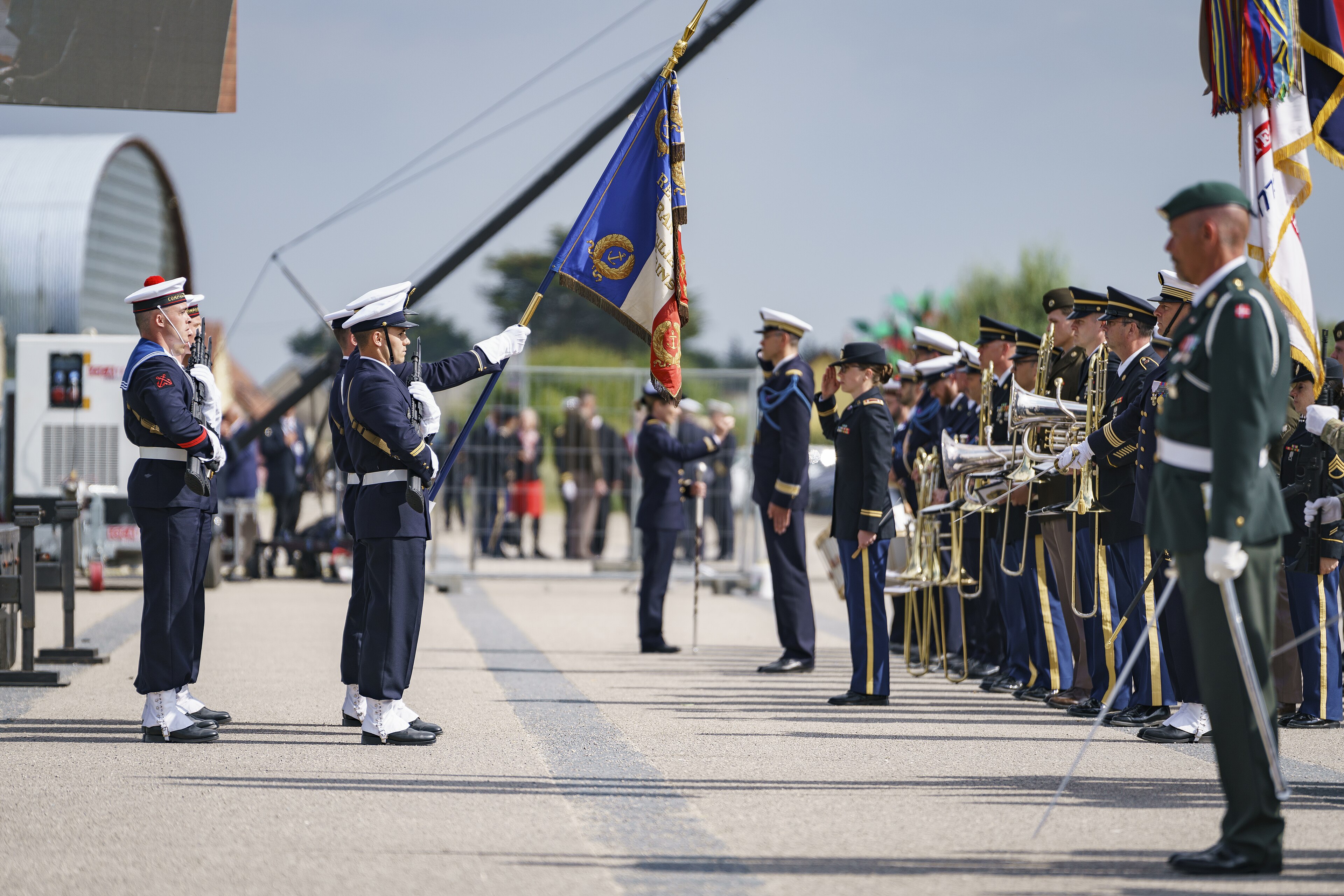
Normandy does not sell nostalgia. It holds a debt of memory. Yet the generation that could say “I was there” is disappearing, just as the D-Day coast enters a new global era. In 2026, UNESCO inscribed the Beaches of the D-Day Landings on the World Heritage List. That recognition is a triumph—but it is also a warning: the world will look more closely at how Normandy protects truth, dignity and place when living testimony can no longer correct the story.
The central question is no longer whether people will come. They already do, in millions of visits, admissions, nights and excursions. The harder question is what visitors will encounter: evidence or entertainment, history or mythology, remembrance or a product designed for rapid consumption.
OUISTARS editorial position: tourism can finance preservation, education and local employment. It must never turn sacrifice into spectacle.
A 2026 UNESCO inscription—and a new responsibility
UNESCO’s property, officially titled Beaches of the D-Day Landings, Normandy, 1944, was inscribed in 2026 under criterion (vi). It is a serial site composed of six parts along roughly 80 kilometres of coastline: Utah, Omaha, Gold, Juno and Sword beaches, plus Pointe du Hoc.
The designation covers 4,228.68 hectares, protected by a buffer zone of 294,749 hectares. It includes surviving Atlantic Wall structures, battlefield traces, equipment and major commemorative landscapes, including the Normandy American Cemetery at Colleville-sur-Mer. This is not a decorative heritage label. It recognises a place directly associated with events of exceptional universal significance.
The inscription therefore creates obligations. Public authorities, museums, guides, tourism businesses and visitors now share a higher duty to preserve the physical coast and the moral meaning attached to it.
What the numbers really say
Memory tourism is Normandy’s leading theme for visits to attractions. The regional inventory identifies 94 remembrance places: 44 museums, 21 memorial or natural sites and 29 cemeteries. Another regional overview reports 16.4 million visits across responding visitor attractions, including 5.5 million associated with the D-Day and Battle of Normandy theme.
The latest detailed Normandy Tourism study gives a more precise 2025 picture for the D-Day Beaches area:
- 10.2 million tourist nights, down 1.2% from 2024; 58.4% were French and 41.6% international.
- 12.8 million excursions, also down 1.2%, representing 10.9% of all excursions recorded in Normandy.
- 5.9 million admissions across 33 responding remembrance sites, down 16.1% on a constant scope compared with the exceptional 80th-anniversary year of 2024.
- Eleven participating sites received more than 150,000 admissions.
- Remembrance sites accounted for 26.7% of admissions to all visitor sites and attractions measured in the regional study.
These figures must not be merged or presented as one visitor total. A tourist night is not a unique person. An excursion is a day movement, not necessarily a museum visit. An admission may be one person entering several sites. And the 5.9 million admissions cover 33 respondents, not all 94 places in the regional inventory.
The 16.1% fall in admissions is likewise not evidence that memory tourism is collapsing. It compares an ordinary year with 2024, when the 80th anniversary produced exceptional international attention. Honest analysis requires that context.
The economy of remembrance
The D-Day story sustains museums, memorials, accredited guides, hotels, restaurants, coach operators, taxis, publishers, conservation specialists and seasonal jobs. During the D-Day Festival, from 31 May to 15 June 2025, the territory recorded 672,600 tourist nights and 871,100 excursions. International visitors represented more than half of both measures.
That economic value matters because preservation is expensive. Concrete fortifications decay, salt and erosion reshape the coast, archives require conservation, exhibitions need renewal, and small institutions need skilled staff. Revenue can keep memory accessible—but only if a meaningful share returns to conservation, interpretation and local communities.
Normandy should therefore seek greater value, longer stays and deeper learning, not a race for maximum volume at the most photographed locations.
When the last witnesses are gone
For decades, veterans and civilians acted as a human safeguard against simplification. Their voices carried hesitation, contradiction, fear and personal consequence. Once those voices survive only in archives, institutions will decide how future generations hear them.
The urgent work is clear: record remaining testimony to archival standards; digitise letters, diaries, photographs and local collections; preserve original-language versions; document provenance; and give schools reliable, multilingual teaching resources.
Digital tools can expand access, but they also create new risks. A virtual reconstruction must distinguish documented fact from visual inference. An AI-generated voice must never be presented as a veteran’s authentic recording. A synthetic character should not be allowed to replace a real person whose testimony exists.
Memory is wider than a single heroic narrative
The Allied landings were decisive, and the courage of those who fought deserves unequivocal respect. But a credible interpretation must also include civilians under bombardment, the French Resistance, medical personnel, women, colonial troops, displaced families, prisoners, forced labour, occupation and the complex routes through which liberation unfolded.
It must also distinguish between explaining German military positions and trivialising Nazism. Historical context is essential; fetishised symbols, costume entertainment and uncritical merchandise are not.
Nor should Normandy be flattened into an exclusively American story. The United States’ role was immense, but British, Canadian, French and other Allied forces, together with civilian populations, belong to the same landscape of memory.
Where commemoration becomes spectacle
Re-enactment can teach when it is carefully researched, contextualised and separated from sacred places. It becomes harmful when death is staged as amusement, cemeteries become social-media sets, or uniforms and weapons are stripped of consequence.
Every operator should apply simple red lines:
- No theatrical combat in cemeteries or at sites of mass death.
- No fabricated quotation attributed to a named witness.
- No merchandise that glamorises totalitarian symbols or reduces victims to decoration.
- No filming that obstructs ceremonies, mourners or access routes.
- No dramatic claim presented without a source visitors can verify.
Managing a coastline, not a theme park
Pressure is concentrated at famous places such as Omaha Beach, Pointe du Hoc and the American Cemetery. Yet the UNESCO property extends across six components and the wider remembrance ecosystem contains dozens of museums, cemeteries and landscapes.
Better management means distributing visits across the coast, encouraging two- or three-day itineraries, coordinating coach times and parking, improving accessible routes, and giving smaller sites digital visibility. Bayeux, Caen, Arromanches, Sainte-Mère-Église and communities around the five beaches can share economic benefit without turning every place into the same retail experience.
Transport remains part of the preservation question. Poor coordination pushes traffic into sensitive villages and coastal areas. Timed coach access, park-and-ride options, seasonal shuttles and realistic information about limited public transport can protect both residents and visitors.
A proposed OUISTARS Memory Integrity Standard
OUISTARS proposes a transparent 100-point framework that museums, tours and commemorative experiences could publish voluntarily:
- Historical truth — 20 points: claims are sourced, dated and corrected when evidence changes.
- Human dignity — 20 points: victims, combatants, civilians and cemeteries are treated with restraint.
- Source transparency — 15 points: visitors can distinguish archive, testimony, reconstruction and inference.
- Plural voices — 15 points: the interpretation reflects the multinational and civilian history.
- Site protection — 15 points: visitor flows, transport and behaviour protect the landscape.
- Local benefit — 10 points: qualified guides, local suppliers and preservation work share the value.
- Accessibility — 5 points: physical, linguistic and educational access is planned, not improvised.
The goal is not another badge. It is a public promise that remembrance will not be weakened for convenience or sales.
What tourism businesses should do now
- Museums: measure learning, return visits and school engagement—not admissions alone.
- Tour operators: employ qualified guides, publish sources and limit sensational language.
- Hotels: build multi-day, off-peak cultural itineraries with independent sites rather than selling a single photo stop.
- Retailers: adopt ethical merchandise rules and reject Nazi kitsch.
- Technology companies: label reconstructions and synthetic media clearly, with permanent links to evidence.
- Public authorities: align parking, landscape protection, accessibility and business licensing across the coastline.
- Schools and universities: treat Normandy as a documented historical landscape, not a simplified patriotic excursion.
How to visit respectfully
- Allow at least two days if possible; rushing five beaches in one day reduces history to checkpoints.
- Book museums and guided visits in advance during June and major commemorations.
- Use quiet voices in cemeteries, follow photography restrictions and never climb on fragile remains.
- Choose guides who identify their sources and explain uncertainty.
- Support local museums and conservation projects, including the less famous sites.
- Read before arriving, then leave time for silence rather than filling every minute with commentary.
Travellers planning around major commemorations can also consult the OUISTARS France Tourism Events Calendar 2026–2027.
OUISTARS Editorial Analysis
UNESCO inscription is not a trophy for a tourism campaign. It is an obligation to future generations. OUISTARS believes Normandy can remain a world-leading destination for remembrance only if growth is measured by knowledge, dignity, preservation and local benefit—not by footfall alone.
The region should resist two easy mistakes: freezing the coast into a lifeless monument, or commercialising it until the place loses moral weight. The stronger model lies between them: living education, rigorous evidence, protected landscapes, viable local businesses and space for personal reflection.
The best memory tourism does not send visitors away with a perfect photograph and a finished answer. It sends them away more informed, more respectful and less certain that history was simple.
Frequently asked questions
Are the D-Day Beaches now a UNESCO World Heritage Site?
Yes. UNESCO inscribed the serial property Beaches of the D-Day Landings, Normandy, 1944 in 2026. It includes six components along approximately 80 kilometres of coast.
How many remembrance sites are there in Normandy?
The Normandy Region identifies 94 remembrance places: 44 museums, 21 memorial or natural sites and 29 cemeteries.
Did 5.9 million people visit Normandy’s D-Day sites in 2025?
Not exactly. Normandy Tourism recorded 5.9 million admissions across 33 responding remembrance sites. Admissions are not the same as unique visitors, and the figure does not cover every site.
Why did remembrance-site admissions fall in 2025?
Admissions fell 16.1% on a constant scope compared with 2024, an exceptional year driven by the 80th anniversary. The fall should not be described as a collapse without that context.
What is the most respectful way to visit?
Allow sufficient time, use qualified guides, respect cemeteries and fragile remains, avoid intrusive photography, and choose experiences that identify their sources.
Official sources
- UNESCO World Heritage Centre — Beaches of the D-Day Landings, Normandy, 1944
- Normandy Region — Memory tourism in Normandy
- Normandy Region — Normandy, a global destination
- Normandy Tourism — 2025 remembrance-tourism attendance
- Normandy Region — UNESCO inscription announcement
OUISTARS private touring: Travellers planning a Normandy journey can explore OUISTARS chauffeur options for Normandy for a private vehicle, long-distance comfort and an itinerary tailored to the day.