Fact-checked: 2 August 2026, Paris time.
Paris 2030 | By Osama Samaha, Editor-in-Chief, OUISTARS Travel Magazine
The project most likely to change Paris tourism by 2030 is not a new museum, luxury hotel or observation deck. It is a transport network capable of turning places visitors currently describe as “outside Paris” into connected parts of one metropolitan journey.
Grand Paris Express is designed first for residents, workers and students. Tourism is not its central justification. Yet 200 kilometres of new automated lines, airport connections and new interchange stations could redraw where visitors sleep, meet, invest and spend. If the tourism industry prepares for that shift, Greater Paris may gain a second map. If it does not, travellers may simply pass through unfamiliar stations without creating local value.
The verdict
Grand Paris Express is the strongest candidate for the most consequential Paris tourism project of the decade. Its impact will come from time saved and places connected, not from spectacle. It can link Orly, Versailles, Saint-Denis, Le Bourget, the exhibition district, Saclay and many eastern and western communities more directly. But infrastructure alone does not create a destination.
First, correct the calendar
The official Grand Paris Express timetable states that lines 15, 16, 17 and 18 will open in phases from 2026 to 2031. Line 18 is scheduled between Massy-Palaiseau and Christ de Saclay in 2026, then to Orly in 2027 and Versailles Chantiers in 2030. Sections of lines 16 and 17 follow in 2027, 2028 and 2030. Line 15 South is scheduled for 2027, while the eastern and western sections are listed for 2031.
Any article claiming the entire network will be finished by 2030 is therefore outdated. The meaningful tourism transformation starts before 2030 and continues beyond it.
Why transport can change tourism more than another attraction
Visitors do not experience distance in kilometres. They experience it in transfers, stairs, uncertainty, luggage, waiting time and the fear of missing a flight or reservation. A destination that becomes easier to reach becomes more viable for hotels, conferences, restaurants and itineraries.
Grand Paris Express could convert peripheral locations from alternatives into deliberate choices. That is a much bigger structural change than adding one more attraction to central Paris.
1. Orly can become a metropolitan gateway
The Line 14 extension to Orly has operated since June 2024. Line 18 is intended to connect Orly with Massy-Palaiseau in 2027 and Versailles Chantiers by 2030. Île-de-France Mobilités projects a 30-minute journey between Orly and Versailles Chantiers once the full line is complete.
For tourism, that creates new combinations: airport, business districts, Saclay, Versailles and regional hotels without routing every trip through central Paris.
2. Versailles gains another international corridor
Versailles is already one of France’s strongest visitor magnets. A direct corridor towards Orly can support earlier arrivals, later departures, conferences and multi-night stays in the western region.
The opportunity is not to send more day-trippers through the palace gates. It is to build longer itineraries around heritage, gastronomy, gardens, nearby towns and professional events.
3. Saint-Denis moves from event site to destination
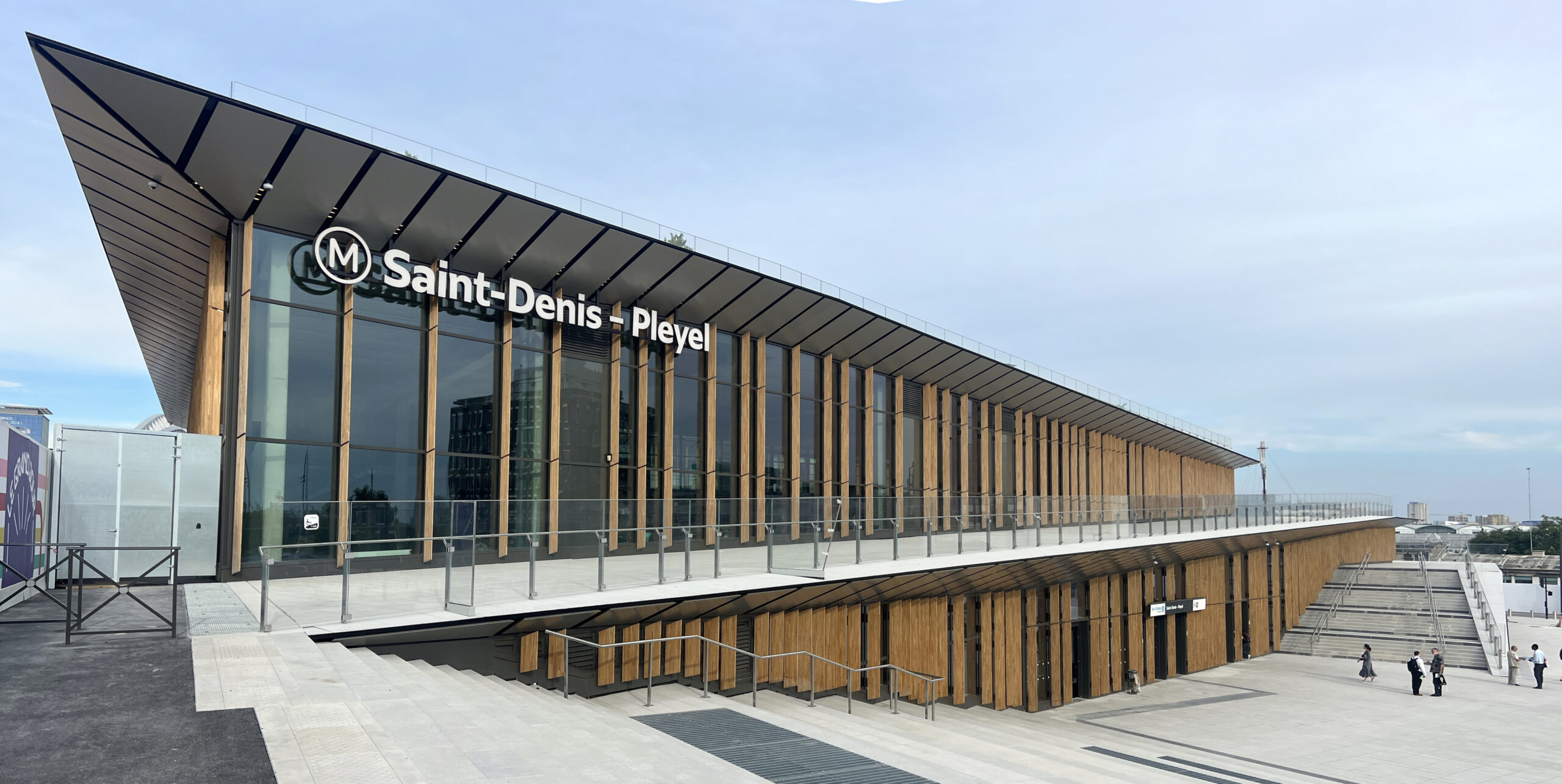
Saint-Denis-Pleyel is a major interchange on the new network. The surrounding territory combines the Stade de France, the Basilica of Saint-Denis, Olympic legacy sites and rapidly changing business districts.
Better connections can help visitors stay, eat and explore instead of arriving for one event and leaving immediately. That requires multilingual information, safe and legible walking routes, hospitality investment and coordinated evening transport.
4. Le Bourget and the exhibition economy become easier
Lines 16 and 17 are planned to connect Saint-Denis-Pleyel with Le Bourget Airport from 2027, with Line 17 extending to Parc des Expositions in 2028 and onward by 2030. This corridor serves aviation heritage, major trade shows, events and airport-related activity.
For business tourism, reliability between hotels, exhibitions, airports and meeting districts can be worth more than a glamorous campaign.
5. Greater Paris hotels can compete differently
A visitor who can reach an attraction or meeting in 25 minutes may choose a hotel outside the historic centre. That can spread demand, encourage new investment and give price-sensitive travellers more options.
It can also accelerate property pressure around stations. Local authorities need hotel strategies that protect housing, street life and neighbourhood services rather than producing isolated hospitality zones.
6. New stations can become cultural gateways
The network’s stations are architectural projects, but a beautiful station is not automatically a visitor experience. Each tourism-relevant interchange needs a clear local story: what can be reached within 15 minutes, what is open, how tickets work, where luggage can go and how visitors return safely at night.
Tourism offices, museums, hotels, event organisers and transport operators should build this information before each opening, not after travellers become confused.
The investment opportunity
Choose Paris Region says more than €30 billion has been committed to mobility, led by Grand Paris Express, and describes 140 square kilometres being reconfigured around the network. Tourism investment may follow transport, but it should be assessed against real demand.
The strongest projects will combine hotels, food, culture, meetings, public space and local use. A hotel built only because a map shows a future station is speculation, not strategy.
The risks the promotional story rarely mentions
- Opening delays that make hotel and event forecasts obsolete.
- Poor multilingual wayfinding between the new network and existing Metro, RER and rail services.
- Fare or ticketing complexity that discourages occasional visitors.
- Safety concerns around unfamiliar stations and late-night routes.
- Incomplete step-free access or difficult luggage transfers.
- Property inflation that displaces residents and everyday businesses.
- Stations that move people efficiently but fail to create local spending.
- Tourism marketing that promotes places before the visitor experience is ready.
OUISTARS Tourism Infrastructure Impact Index
This is an editorial assessment of potential impact, not an official project rating.
| Criterion | Weight | Score | OUISTARS assessment |
| Scale and network reach | 20 | 19 | A metropolitan project of exceptional size |
| Airport and rail connectivity | 20 | 17 | Major new corridors, dependent on phased delivery |
| Ability to spread visitor value | 20 | 15 | High potential, no automatic local benefit |
| Hotel, events and investment effect | 15 | 12 | Strong opportunity with speculation risk |
| Visitor usability and accessibility | 15 | 10 | Outcome depends on wayfinding, ticketing and last-mile design |
| Liveability and sustainability | 10 | 7 | Low-carbon mobility benefit, development pressure |
| Total | 100 | 80 | Transformational potential with a demanding execution test |
OUISTARS editorial analysis
Grand Paris Express could do what decades of tourism promotion have struggled to achieve: make Greater Paris feel like one connected destination. But a metro line moves passengers, not value. The value appears only when stations lead to safe streets, clear information, good hotels, local restaurants, cultural reasons to stay and transport that works after the event ends.
OUISTARS Travel Magazine
Seven actions before the next lines open
- Create one multilingual visitor map covering the new lines and nearby experiences.
- Publish realistic airport, hotel and attraction journey times with luggage.
- Audit safety, lighting and late-night routes around tourism-relevant stations.
- Coordinate opening calendars with hotels, museums, venues and convention organisers.
- Protect housing and local commerce around high-pressure station districts.
- Make step-free access and ticketing intelligible to occasional users.
- Measure local visitor spending and resident sentiment after every major opening.
For the wider context, read why Paris remains a world tourism capital and our guide to France’s 2026 and 2027 event calendar.
Methodology and sources
OUISTARS used the official Grand Paris Express opening timetable, Île-de-France Mobilités information for Line 18 and current regional investment material from Choose Paris Region. Facts are current to 2 August 2026. Project dates remain subject to operational change.
Frequently asked questions
Not entirely under the current official timetable. Several sections are due by 2030, while Line 15 East and West are listed for 2031.
It could shorten airport and cross-region journeys, widen hotel choices and make destinations outside central Paris easier to include.
The official schedule lists the Christ de Saclay to Versailles Chantiers section for 2030.
No. Local value also requires clear information, safety, hospitality, cultural offers and good last-mile connections.
The main risk is a fragmented experience involving confusing transfers, ticketing, wayfinding or poorly prepared station districts.
Editorial disclosure: OUISTARS provides travel and private-transport services in France. No project body, authority or investor funded this analysis or influenced its score.
OUISTARS travel planning: Travellers arranging a trip in France can review OUISTARS private chauffeur and luxury transportation services for airport meet-and-greet, hotel transfers and tailored journeys.







[…] and metropolitan transport have the same multiplier effect. The Grand Paris Express can alter access to business districts, exhibition grounds, stadiums and outer-Paris destinations. […]