
















oui stars Travel Intelligence · Data reference · Airport arrivals
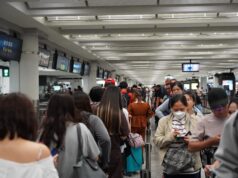
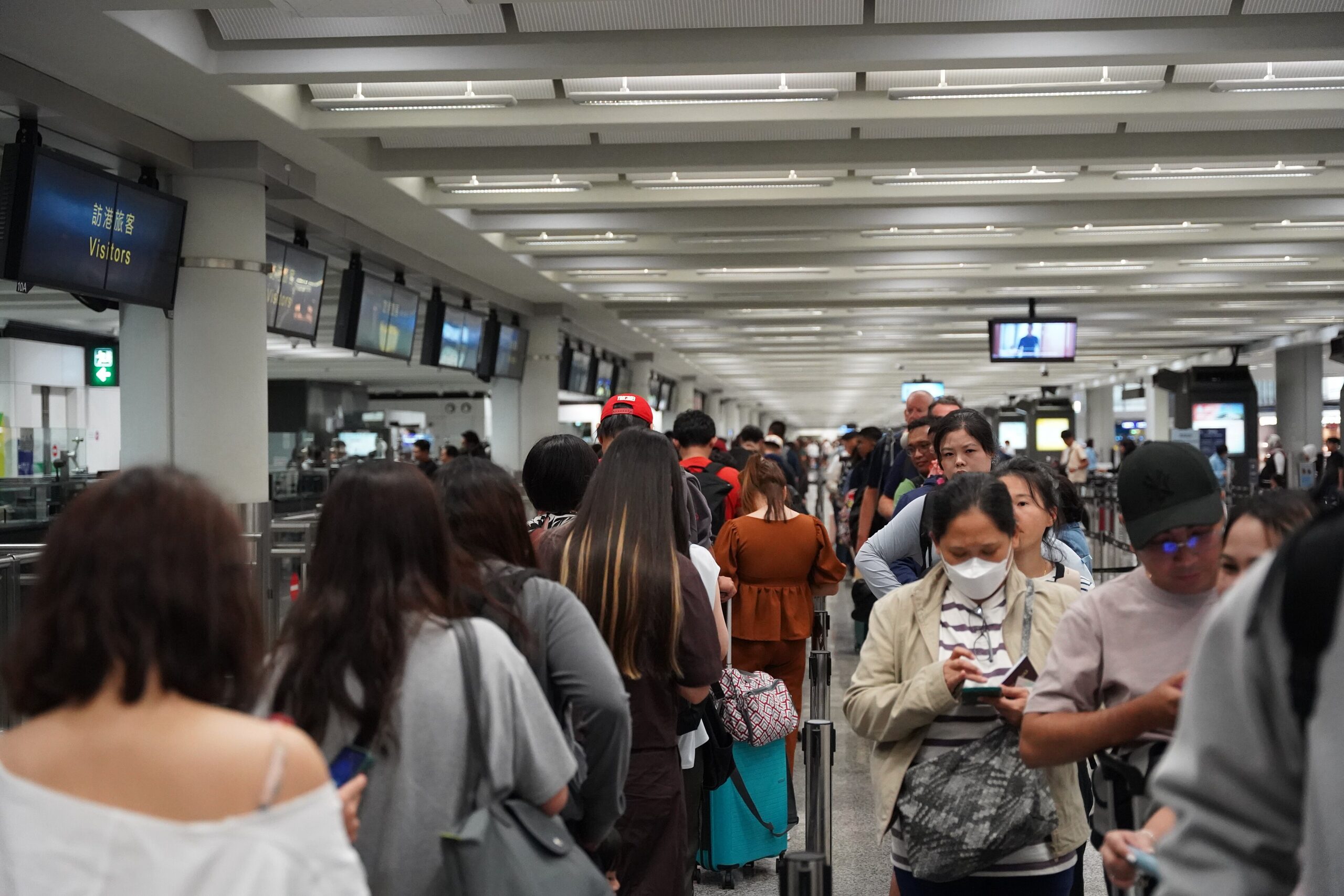
The world’s airports talk about five-second gates, twenty-minute targets and “seamless” borders. Those numbers often measure different things. This atlas separates the queue, the identity transaction, baggage and the complete arrival—then prints the gaps where airports do not publish comparable evidence.
The finding
There is not enough comparable official evidence for an honest global “fastest airport” ranking. Dubai, Singapore, Doha and Los Angeles have published very fast biometric transactions for defined users; Paris, Heathrow, Japan and the United States publish forms of queue performance; many other major gateways publish eligibility but no result. A five-second identity match is not a five-second arrival.
First, five clocks—not one
These clocks overlap. Bags are moving while passengers walk and wait at immigration. A traveller from a domestic or Schengen origin may not face an external border at all. A citizen, resident, short-stay visitor and trusted traveller can enter the same hall but follow different channels. Secondary examination is a separate, exceptional path and is not represented by a normal queue metric.
Methodology. We searched airport authorities, border agencies, ministries and official open-data portals current to 8 September 2026. We record the authority’s own unit, traveller population, period and threshold. We do not convert a maximum into an average, a transaction into a queue, or a target into achieved performance. Where a stable headline figure would go stale—especially the US CBP dashboard—we link the living dataset rather than select a convenient hour. “Comparable” means the definition, population and period are sufficiently alike to support the comparison being made.
The evidence table: what each gateway actually publishes
| Airport | Country | Traveller type | Official immigration metric | Published time/performance | Biometric gates | What the number measures | Data period | Official source |
|---|---|---|---|---|---|---|---|---|
| Dubai DXB | UAE | All arriving passengers in queue KPI; Smart Gate only for eligible registered UAE citizens/residents, GCC nationals and eligible visa-on-arrival visitors with biometric passports | Arrival passport-control queue percentile; separate Smart Gate transaction claim | 95.48% under 13 min; Smart Gate ≈5 sec | Yes; face/iris, system eligibility and successful match required | 13 min = B queue. 5 sec = A/C automated border transaction. Neither is door-to-exit. | Queue: 2022. Gate claim: current official guidance accessed Sep 2026 | Dubai Airports; GDRFA |
| Paris CDG | France | Measured border passengers; EU/EEA/Swiss versus EES short-stay third-country nationals follow different routes | Share waiting ≤20 minutes at border control | 95% ≤20 min at CDG | PARAFE for eligible biometric-passport users; EES kiosks assist first registration but guard validates | B border queue only; pre-EES benchmark, not 2026 door-to-hall | 2024 achieved result; EES fully operational 10 Apr 2026 | Groupe ADP; French Interior Ministry |
| London Heathrow | United Kingdom | EEA and non-EEA queues, reported separately by terminal | Share within 25 min (EEA) / 45 min (non-EEA), 95% target | EEA 99.08–99.72%; non-EEA 82.03–93.46% across T2–T5 | eGates for eligible passports/status; from 8 Jul 2026 accompanied children 8+ and ≥1.2m | B queue compliance, not processing or full arrival. Non-EEA missed 95% in every terminal. | July 2026 | Heathrow MTI; UK Border Force |
| Singapore Changi | Singapore | Residents on passportless arrival; all foreign visitors can use automated arrival lanes with passport if eligible to enter | Average passportless clearance transaction | 10 sec average, down from 25 sec | Yes; face/iris. Foreign visitors still present passport on arrival; no prior enrolment for automated lanes | A/C transaction for passportless users, not hall queue or baggage | Fully rolled out 30 Sep 2024; eligibility page updated May 2026 | Singapore ICA; automated-lane rules |
| Doha Hamad | Qatar | Qatari citizens and residents using activated ID/passport route | eGate transaction; usage count | ≤10 sec; 865,000 uses in Q1 | Yes; fingerprint or iris | A/C transaction. Historical, limited population; not current queue or total arrival. | Q1 2017 | Qatar Ministry of Interior |
| Amsterdam Schiphol | Netherlands | EU biometric-passport users; selected visa-exempt low-risk non-EU passengers; EES short-stay visitors | No stable public arrival-queue performance located | Comparable official public data not found | eGates; 161 EES self-service kiosks installed | Infrastructure and eligibility, not elapsed time | EES current from 10 Apr 2026 | Schiphol EES implementation; passport control |
| Frankfurt FRA | Germany | EU/EEA/Swiss 12+; holders of German residence permits; registered US/Hong Kong/Korean/Taiwanese/UK RTP users | No public arrival-queue result located | Comparable official public data not found | EasyPASS; 255 lanes across eight German airports, not Frankfurt alone | Eligibility and national infrastructure count, not airport time | Rules current after EES, Apr 2026 | German Federal Police |
| New York JFK | United States | US citizens and non-US citizens by terminal; Global Entry members separately use trusted-traveller route | Hourly average/max passport-control wait and passenger counts, terminal/date selectable | Living dataset; no single honest airportwide 2026 number | Global Entry touchless portals; Mobile Passport Control for eligible travellers | B queue to clear passport control; explicitly excludes baggage and airport navigation | Rolling historical window up to three years | US CBP Airport Wait Times; Global Entry portals |
| Los Angeles LAX | United States | US/non-US by terminal in AWT; pre-approved Global Entry members in expedited route | Same CBP hourly dataset; separate historical Global Entry transaction claim | Dashboard varies; Global Entry <6 sec after modernisation | Yes; Simplified Arrival and Global Entry facial comparison | B queue in dashboard; A/C trusted-traveller transaction in 2020 claim | Dashboard rolling; transaction claim 2020 | US CBP Airport Wait Times; CBP/LAWA |
| Tokyo Haneda | Japan | Foreign short-stay arrivals in wait reporting; Japanese returnees use facial gates; registered TTP foreigners have a separate route | Monthly share within 20 min, maximum wait, and ≥60-min share on busiest day | On 1 May 2025, 13.87% of Haneda short-stay foreign arrivals waited ≥60 min (T3: 15.42%; T2: 0%) | Facial gates for Japanese returns; joint immigration/customs kiosks introduced from Apr 2025 | B queue; deliberately selected official stress-day indicator, not an average | 1 May 2025; monthly series listed through Feb 2026 | Japan ISA wait series; stress-day table |
| Seoul Incheon | South Korea | Korean nationals on automated route; foreign nationals at staffed counters in published comparison | Average time by route | Korean automated route ≈2 min; foreign staffed route 24–35 min | Smart Entry Service; eligibility differs for citizens, registered foreigners and short-stay visitors | Official route-level arrival time comparison; wording does not establish door-to-hall | Published Sep 2025 | Incheon Airport Corporation; SES rules |
| Madrid MAD | Spain | EU, Icelandic, Norwegian and Swiss citizens, 18+, with electronic passport/ID for ABC; EES visitors follow third-country route | No published comparable arrival wait located | Comparable official public data not found | Police-supervised ABC | Eligibility and process only | Current page accessed Sep 2026 | Aena arrivals |
| Rome Fiumicino | Italy | EU and expanding eligible third-country eGate populations; EES short-stay arrivals | No current queue KPI located; historical eGate transaction | ≈20 sec for eligible US departure users in 2018; no current comparable arrival result | Yes; arrival eligibility expanded to Argentine and Brazilian passports in May 2025; EES kiosks for eligible biometric passports | A/C historical gate check, not arrival queue or total | 20 sec: 2018; eligibility: 2025–26 | ADR eGate metric; ADR EES |
| Istanbul IST | Türkiye | Automated-gate access is not documented in a clear current public eligibility matrix for all traveller classes | System description; no current arrival time series located | Comparable official public data not found | i-Gate system publicly described at opening with passport, fingerprint and face checks | Infrastructure, not performance | Opening description 2018; checked Sep 2026 | Istanbul Governorate; Migration Management |
| Cairo CAI | Egypt | Egyptian citizens, residents and foreign tourists use distinct document/visa routes; clear public eGate eligibility not found | No public passport-queue KPI; official baggage statement exists | Comparable official public data not found for immigration. First bag ≤20 min and last ≤40 min stated in Jan 2026. | Electronic gates referenced officially; passenger-facing eligibility/performance not published clearly | D baggage target/performance statement, not immigration or full arrival | Jan 2026 baggage statement; digital-arrival reforms Apr–Aug 2026 | Egypt SIS / Civil Aviation; Ministry of Civil Aviation |
Reading rule: a blank ranking is not a failure of analysis. It is evidence of a disclosure gap. Service interruptions, secondary checks, inadmissibility procedures and exceptional flights sit outside the ordinary metrics above.
THE FASTEST VERIFIED ARRIVAL SYSTEMS
The evidence supports a verified comparison—not a Top 10.
Fast biometric transactions, for defined users
- Dubai: roughly five seconds for an eligible registered Smart Gate traveller. The strongest current speed claim in this review, but only for the transaction.
- Singapore: ten seconds average for passportless clearance, chiefly Singapore citizens and residents on arrival; foreign visitors use automated arrival lanes with their passport.
- Doha: no more than ten seconds for citizen/resident eGate users in the 2017 official report. Important historically, too old for a 2026 crown.
- LAX: under six seconds for pre-approved Global Entry members after the 2020 kiosk modernisation. A narrow trusted-traveller metric, not the general visitor line.
- Fiumicino: around twenty seconds in a 2018 eGate report for eligible US departure passengers. It demonstrates machine capability, not current arrival performance.
Published queue outcomes
Dubai’s 2022 result (95.48% under 13 minutes), Paris-CDG’s 2024 result (95% within 20 minutes) and Heathrow’s July 2026 25/45-minute compliance are all credible official measures. They are not a league table: the thresholds, years and traveller populations differ. Within Heathrow’s one methodology, EEA queues exceeded the 95% target in all terminals, while non-EEA queues did not.
Why Japan deserves attention
Japan’s Immigration Services Agency publishes something many peers avoid: monthly success within 20 minutes, daily maximums and the share of short-stay foreign arrivals waiting at least an hour on the busiest day. The 1 May 2025 Haneda result—13.87% airportwide at or above an hour—should not be mistaken for a normal day, but its publication makes stress visible and reform measurable.
Dubai’s Five Seconds: What Does It Actually Mean?
GDRFA’s Smart Gate compares an eligible registered passenger’s live face/iris with the identity held by the system. The traveller looks at the camera; the automated border transaction is described as taking about five seconds. In 2024, GDRFA recorded 25,004,901 Smart Gate transactions, plus 76,435 Smart Corridor transactions. That scale matters: this is not a laboratory demonstration.
But the airport clock starts earlier. An arriving passenger must leave a wide-body cabin, walk or take internal transport to immigration, reach the gate, then continue to baggage and customs. The 2022 airport KPI found 95.48% of arrival passport queues under 13 minutes and 92% of bags delivered within 45 minutes. The correct statement is therefore: Dubai can compress a qualified identity transaction to seconds and has published a strong, albeit dated, queue distribution. It has not published a universal five-second aircraft-to-exit journey.
Europe: one biometric system, many airport disclosures
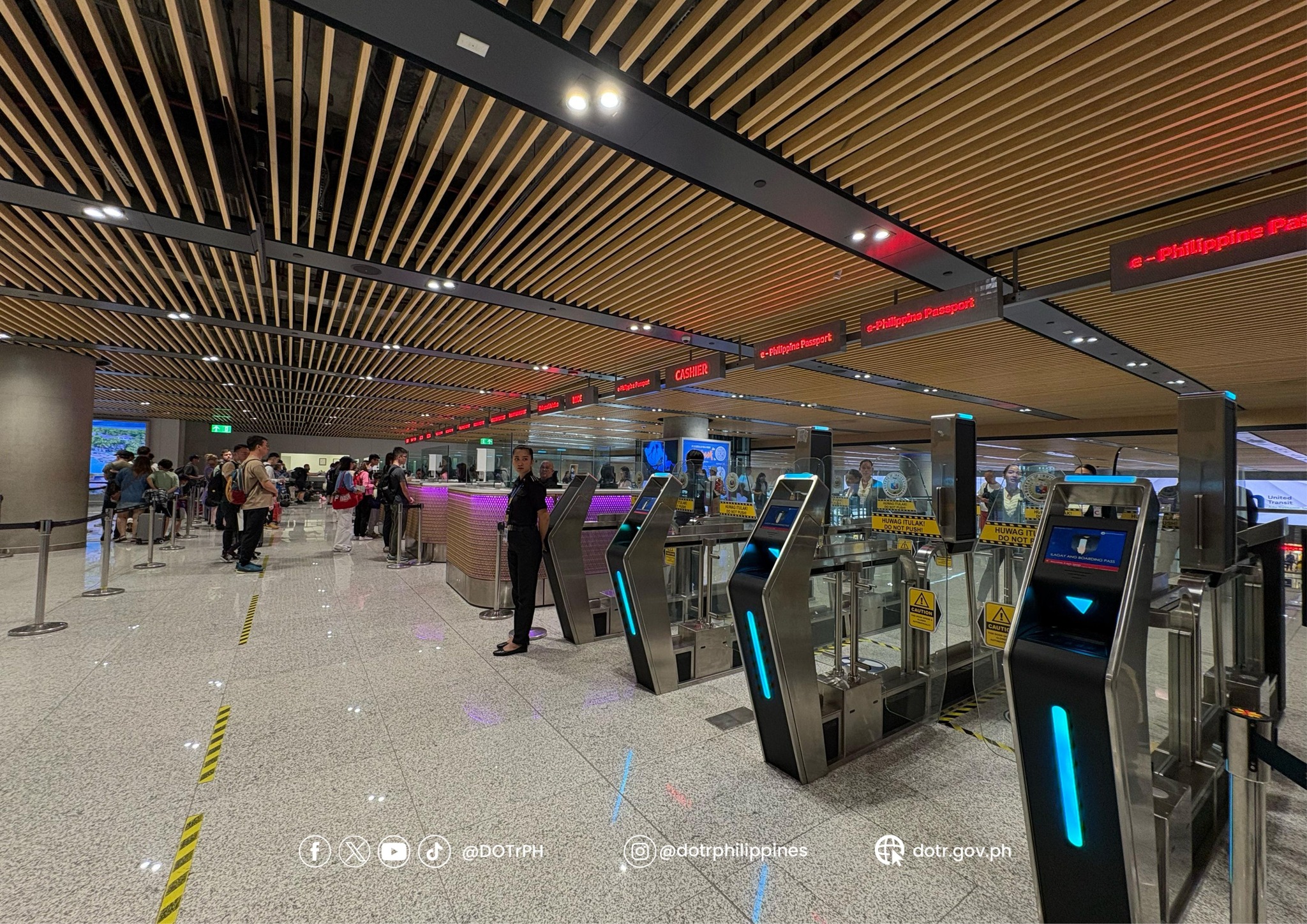
EES has been fully operational since 10 April 2026 for short-stay third-country nationals crossing Schengen’s external borders. The first registration can include passport data, facial image and fingerprints; later journeys verify the stored record. Citizens of the EU/EEA/Switzerland and qualifying residence-permit or long-stay-visa holders are outside that short-stay registration route.
Technology is not uniform disclosure. CDG provides a historical border percentile through Groupe ADP. Schiphol documents 161 EES kiosks and eGate access but not a stable public arrival result. Frankfurt publishes EasyPASS eligibility, not Frankfurt wait performance. Madrid explains ABC access, and Fiumicino documents eGate expansion and EES, yet neither supplies a current arrival queue distribution comparable with CDG. For travellers, “EES installed” says what data will be captured; it does not say how long the line will be.
The UK: a performance system that exposes failure
Heathrow’s monthly MTI reports are valuable because the airport publishes the target and the achieved terminal result. In July 2026, between 99.08% and 99.72% of EEA passengers were inside the 25-minute standard. For non-EEA passengers, only 82.03% to 93.46% were inside 45 minutes, below the 95% target in T2, T3, T4 and T5. That is meaningful accountability, although it still stops at the border desk and does not include walking, baggage or customs.
eGate eligibility is expanding: from 8 July 2026, accompanied children aged eight and over who meet the 1.2-metre height requirement can use the gates where their nationality and immigration status qualify. A failed gate or a category requiring a passport stamp still means an officer.
Asia’s biometric leaders do different things
Singapore’s advantage is breadth: all foreign visitors, regardless of nationality, can use automated arrival lanes without prior enrolment if they meet entry requirements and hold an ICAO-compliant passport; they still present the passport. Singapore citizens, permanent residents and long-term pass holders can use passportless face-and-iris arrival. The ten-second result belongs to the passportless transaction, not every tourist queue.
Incheon’s official 2025 comparison is unusually direct: around two minutes for Korean nationals using automated immigration versus 24–35 minutes for foreign nationals at manned counters. Korea expanded arrival automation eligibility in June 2026, but conditions and enrolment still matter. Haneda’s facial gates primarily streamline Japanese returns; foreign visitor entry uses officer/joint-kiosk processes unless the traveller qualifies for a registered trusted route. “Biometric airport” is therefore not a single product.
The United States: the best raw queue portal, not one headline number
CBP’s Airport Wait Times service publishes historical hourly results for major airport terminals, including JFK and LAX, split between US and non-US passengers. It reports average and maximum passport-control wait with passenger volumes. CBP explicitly warns that the figures exclude baggage retrieval and navigation through the airport.
That portal is more useful than a fixed annual “average” because arrival banks change by terminal, hour and season. The honest evergreen treatment is to link the live official query and ask readers to select their terminal and comparable dates. Global Entry touchless portals and Mobile Passport Control create faster routes for eligible travellers, but they do not represent the ordinary foreign-tourist population.
Cairo: reforms without a public arrival clock
Egypt has digitised real steps. From 11 April 2026, Egyptian passengers at Cairo no longer complete the paper passport card; from 1 August, the first phase of QR-based visa-on-arrival automation began. The Ministry of Civil Aviation also references electronic passport gates. Yet no current public table defines who can reliably use those gates on arrival or publishes immigration queue percentiles by citizen, resident and tourist.
The January 2026 official statement that the first bag reaches the belt within 20 minutes and the last within 40 is useful—but it is a baggage statement, not a passport metric, and the source does not supply a terminal-by-terminal audited distribution. Cairo’s next competitiveness gain is not only another device. It is publishing the outcome.
What Airports Should Publish
We propose a common five-stamp arrival record for every international flight and passenger route:
Airports should publish monthly medians, 80th, 95th and 99th percentiles by terminal, arrival origin, citizen/resident/visitor route, automated/manual control and checked-bag status. They should label outages and exclude secondary inspection only if its incidence is separately reported. Anonymised flight-level open data would let journalists and researchers test seasonality without exposing individuals.
This matters commercially. A destination cannot price premium tourism, court investment or promise frictionless business travel while leaving the first hour statistically invisible. Transparency identifies whether the constraint is border staffing, walking distance, late bags or customs—not merely whether a new camera was installed.
Traveller-useful conclusions
- Use official eligibility rules, not a generic “biometric airport” label. Age, height, nationality, residence status, passport chip and prior registration can all change the route.
- For JFK and LAX, query CBP by terminal and comparable dates; do not treat an airportwide blog average as official.
- For EES travel, distinguish first registration from later verification and keep residence documents ready if exempt from short-stay registration.
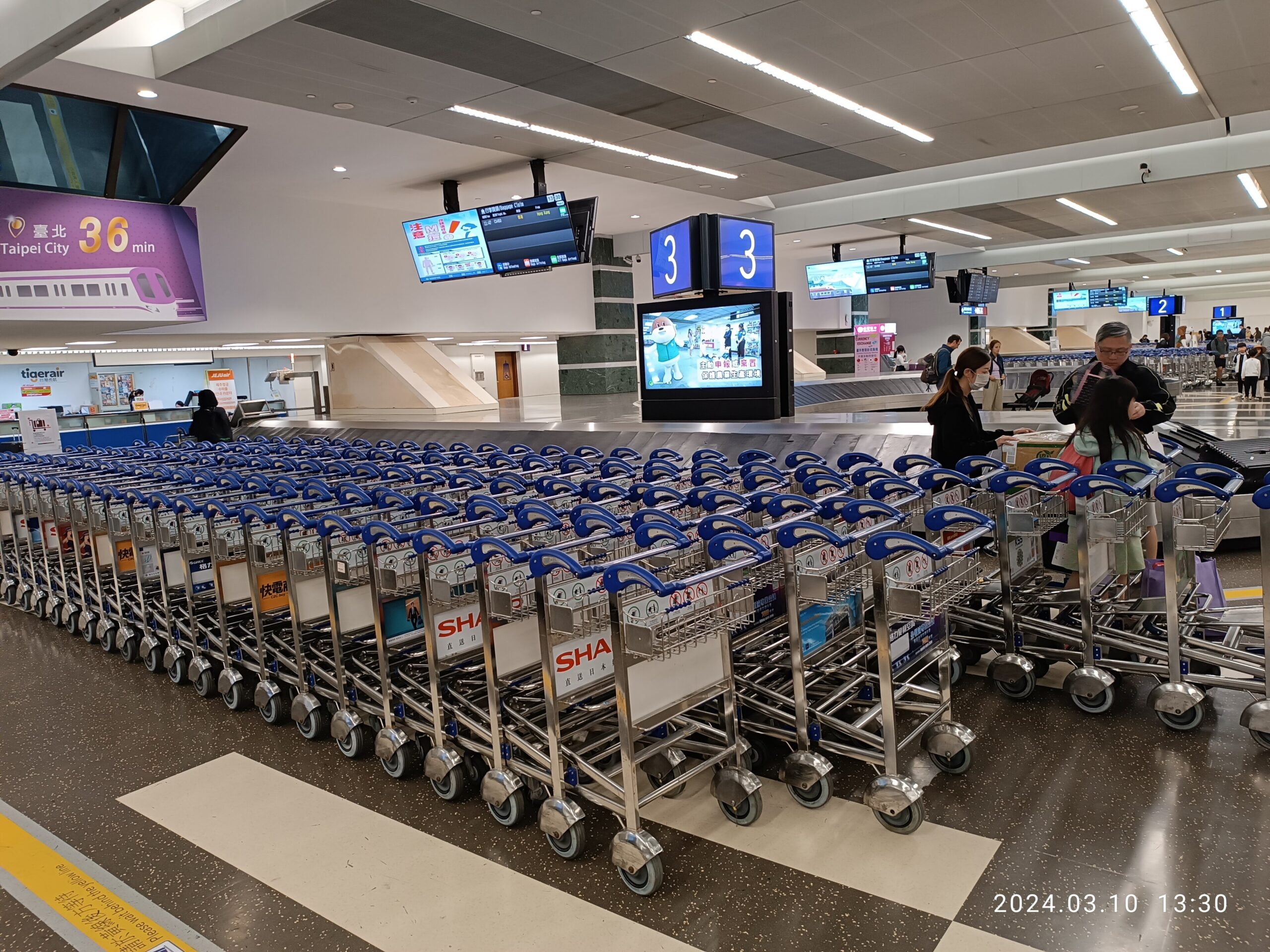
- Checked baggage often sets the floor after a fast border. A five-second gate cannot make a bag leave the hold faster.
- Build connection plans around the 80th/95th percentile where published, never the best advertised transaction.
For a route-by-route examination of three contrasting gateways, read our Paris–Dubai–Cairo arrival investigation. For the system beneath the carousel, see what really happens to checked luggage. Europe-bound visitors should also consult our EES explainer.
oui stars Travel verdict
Dubai demonstrates extraordinary transaction speed at real scale. Singapore offers the broadest automated-arrival access found in this review. Heathrow exposes monthly success and failure against explicit thresholds. Japan publishes uncomfortable stress-day evidence. CBP offers deep terminal-level raw data. The central weakness is global: almost nobody joins border, baggage and customs into the door-to-hall number travellers actually experience.
FAQ
Which airport is officially the fastest for international arrivals?
No defensible global winner can be named from the available official data. The published metrics, populations and periods are not equivalent.
Does Dubai immigration really take five seconds?
The official claim refers to the Smart Gate biometric border transaction for an eligible registered traveller. It excludes the queue, walk, baggage and customs.
Can every foreign visitor use an automated gate?
No. Singapore is unusually broad, but even there foreign arrivals present a compliant passport. Eligibility elsewhere may depend on nationality, age, height, residence status or enrolment.
Does a biometric gate remove immigration control?
No. It automates identity and database checks under border-authority supervision. A traveller can still be referred to an officer.
Why not estimate the missing airports?
Because estimates would disguise the disclosure gap and create false precision. This reference uses the label “Comparable official public data not found” instead.
What does EES change at European airports?
It digitally records short-stay third-country nationals at Schengen external borders, including biometrics. First registration and later verification are different workloads; it is not a published queue time.
Primary-source ledger
- Dubai Airports 2022 queue and baggage KPIs; GDRFA 2024 open statistics
- Heathrow monthly MTI reports; UK Border Force transparency data
- Singapore ICA passportless clearance
- Japan ISA airport wait-time series
- US CBP Airport Wait Times
- Incheon Airport route comparison
- European Commission EES status; national airport/border sources linked beside each table row
Corrections and updates. This is an update-ready dataset. Figures are preserved with their original period rather than silently replaced. If an authority releases a newer comparable series or corrects a definition, oui stars Travel will update the row and the “Last updated” date. Send documentary corrections through the site’s contact channel, identifying the airport, metric definition, period and primary-source URL.