








THE STORY BEHIND THE HOTEL · PARIS, EPISODE 3
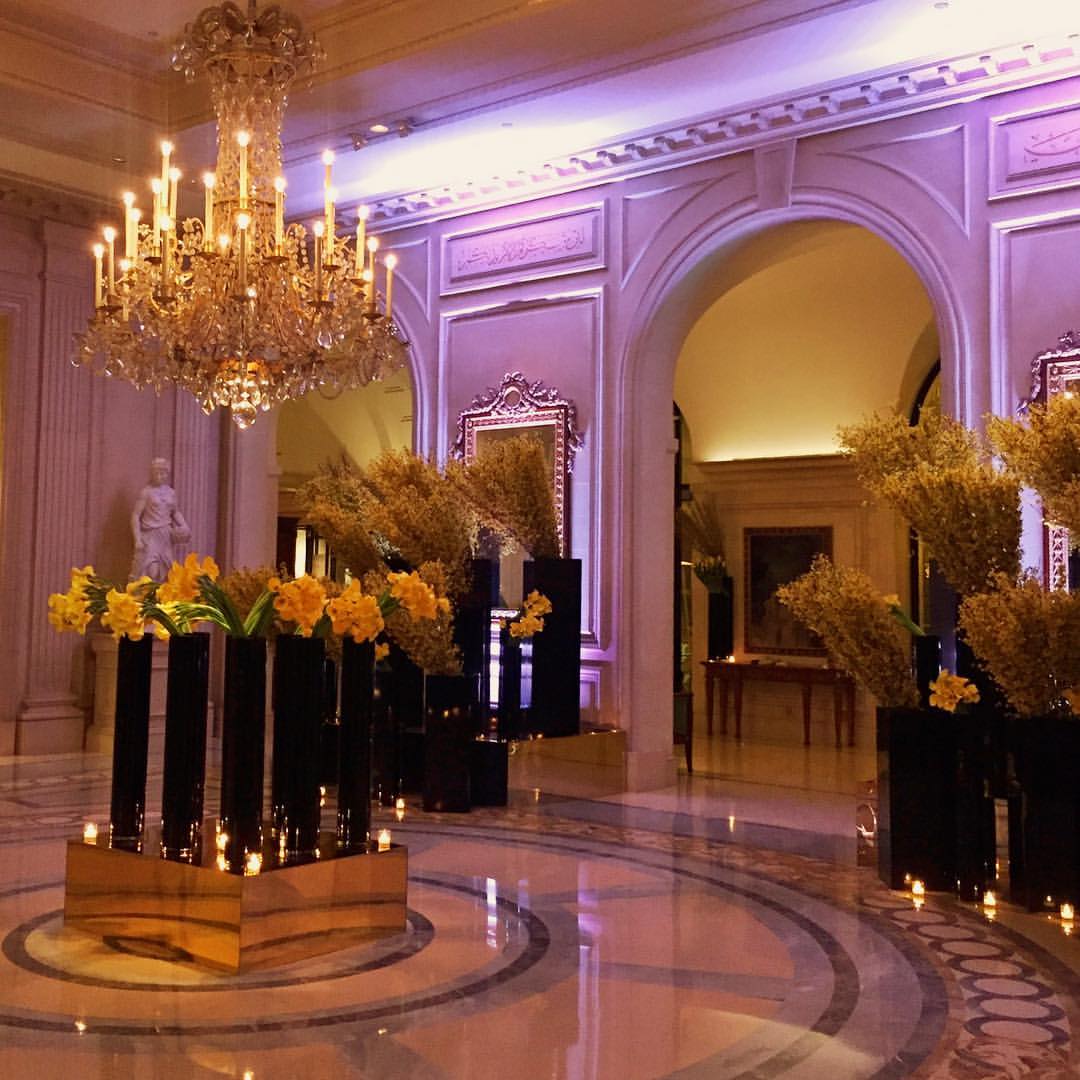
Above ground, flowers turn the lobby into theatre. Fourteen metres below Avenue George V, a limestone vault keeps a wartime secret. Between them lies the story of a Paris palace designed for a new, fast, transatlantic age.
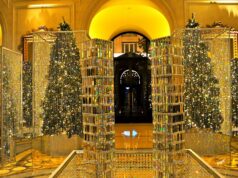
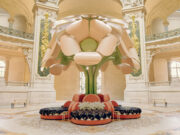
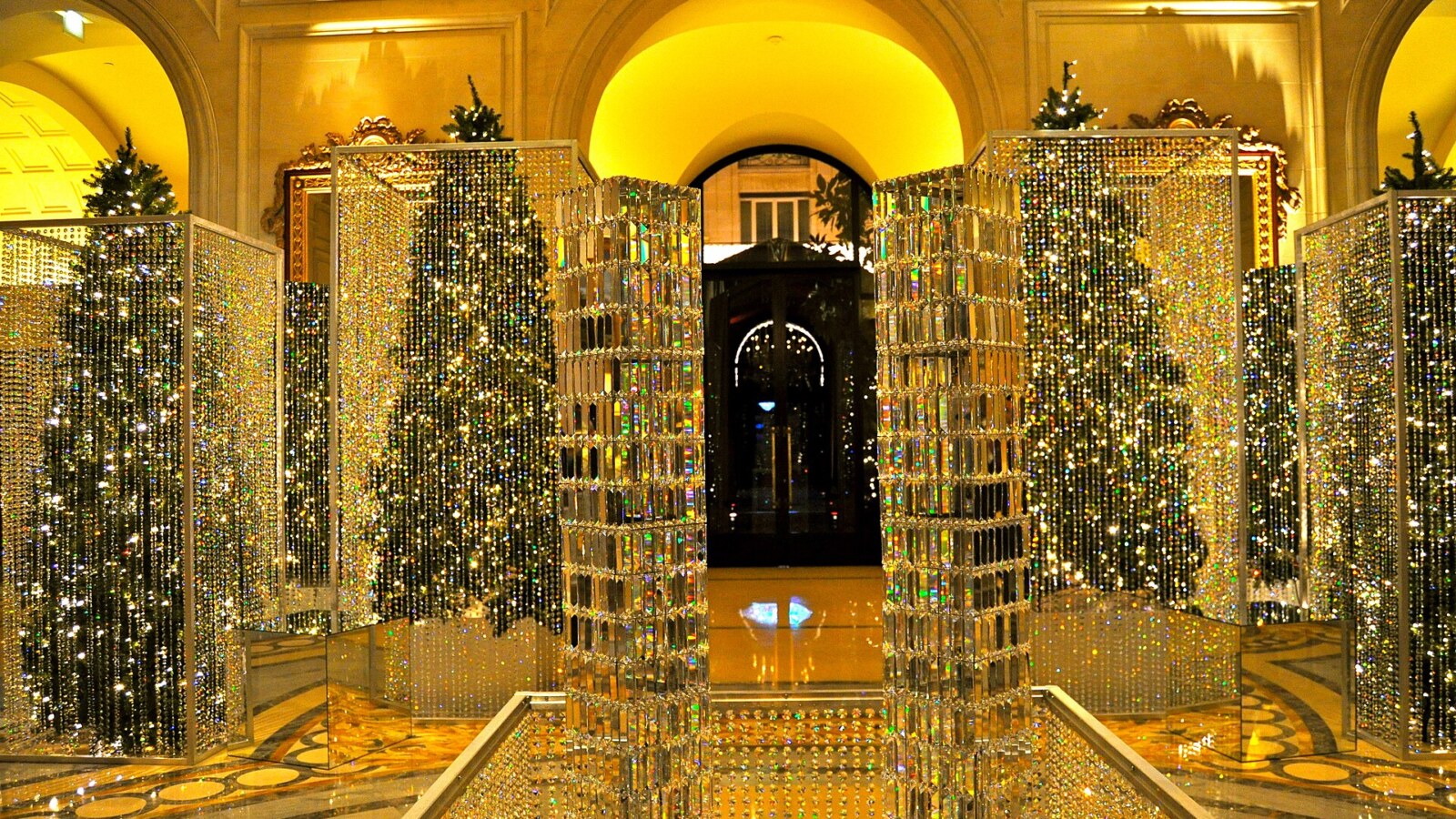
Walk into the Four Seasons Hotel George V today and the first thing you notice is not silence, marble or ceremony. It is colour. Flowers rise like sculpture beneath chandeliers, changing the emotional temperature of a room built almost a century ago. Yet the hotel’s most revealing space is invisible from the lobby: a cellar cut into an old Paris quarry and sealed at the outbreak of the Second World War. The George V has always lived between display and discretion.
Born for the transatlantic age
The hotel officially opened in 1928, at the high-water mark of the Années folles. American businessman and architect Joel Hillman financed the project; French architects Lefranc and Georges Wybo shaped the building. Wybo already understood architecture as spectacle through projects including the Casino de Deauville and the rebuilt Printemps Haussmann.
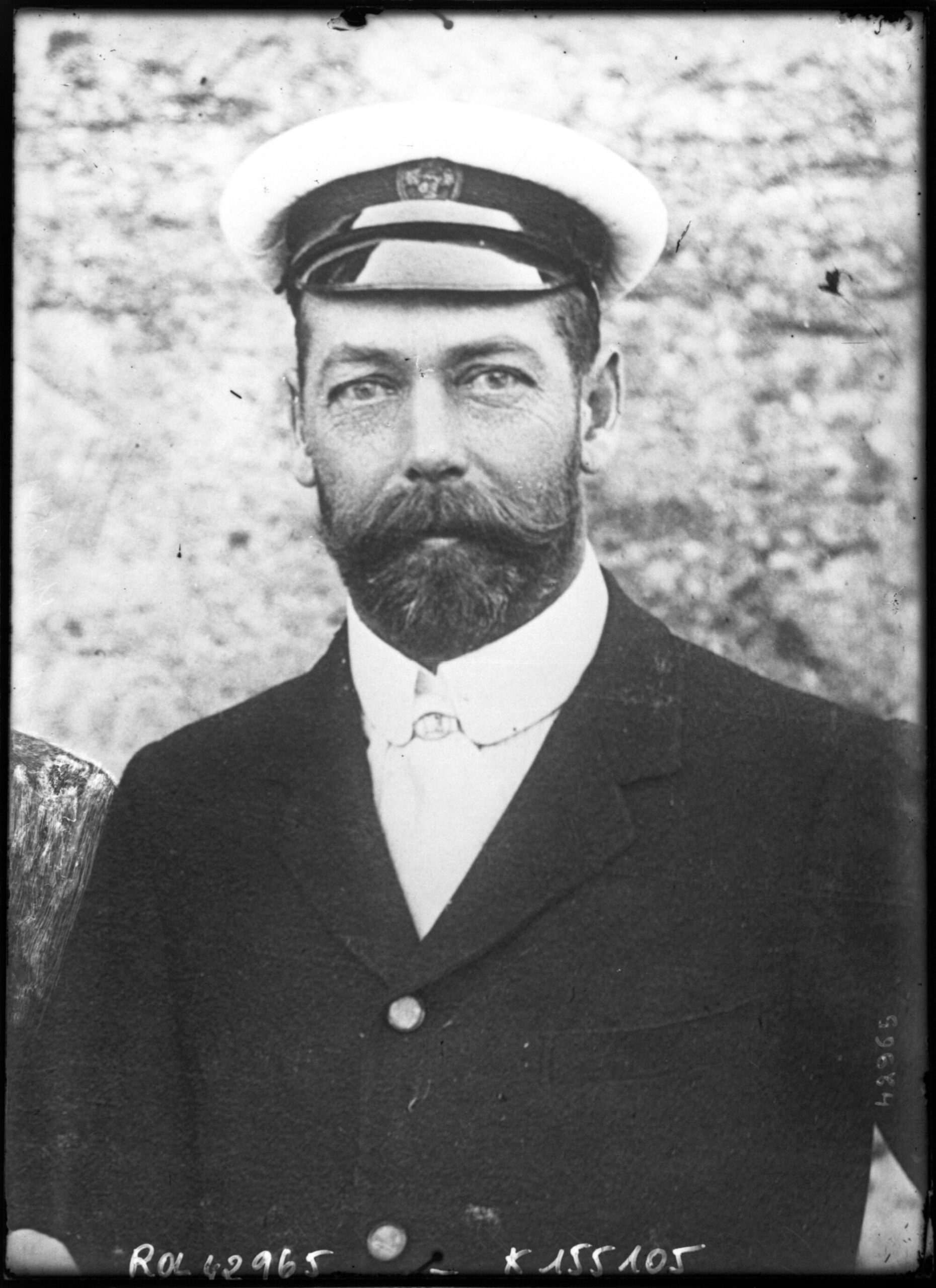
The name was a diplomatic gesture: George V honoured the British king and the close relationship between France and Britain. The target audience, however, was emphatically international. Wealthy Americans arrived in Cherbourg on ocean liners, and the hotel maintained a presence at the port to meet them. In 1930 it even promoted air-taxi links to London, Berlin and Madrid aboard a three-seat Farman. This was not a palace looking backward. It was a machine for the modern traveller.
Art Deco without the shout
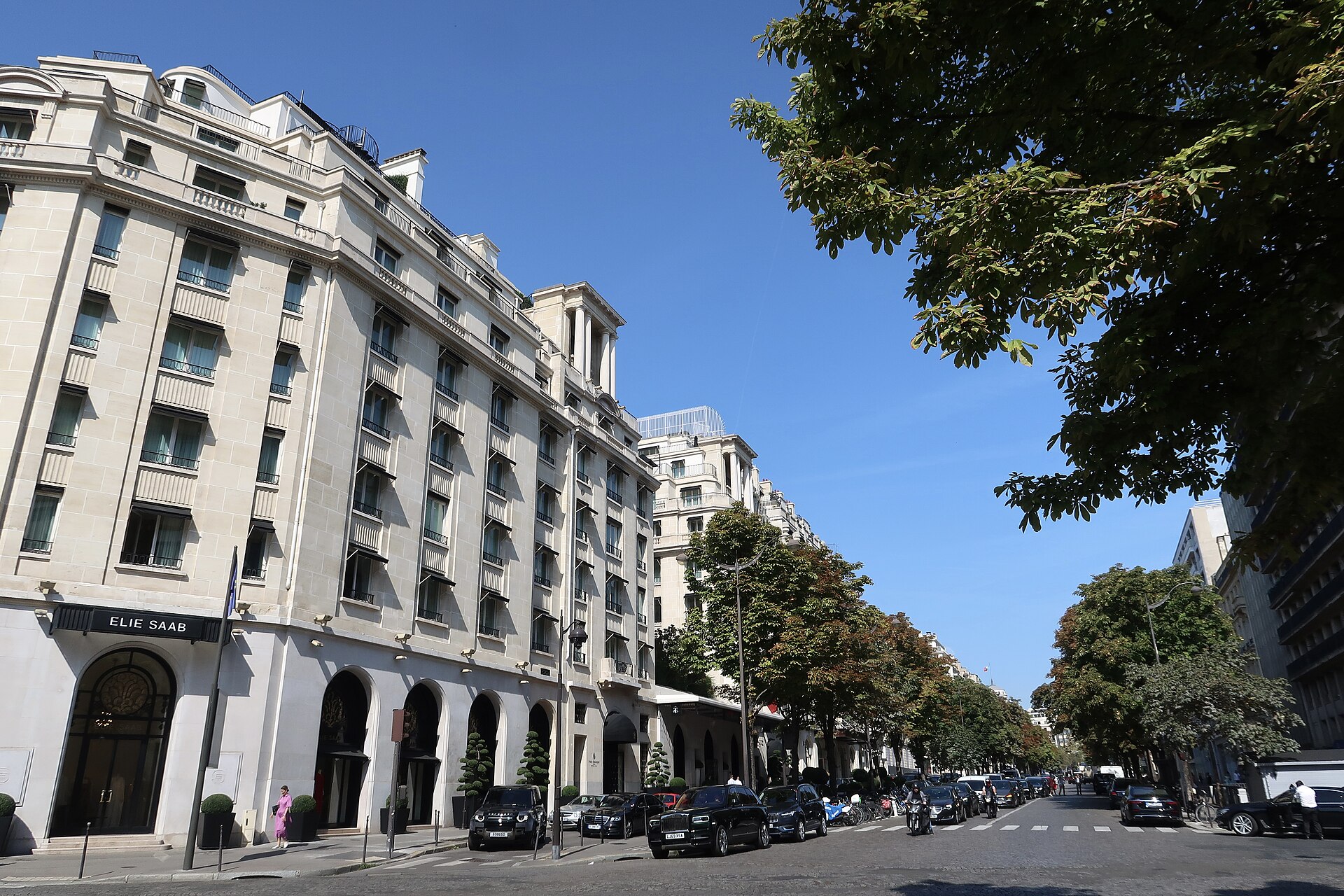
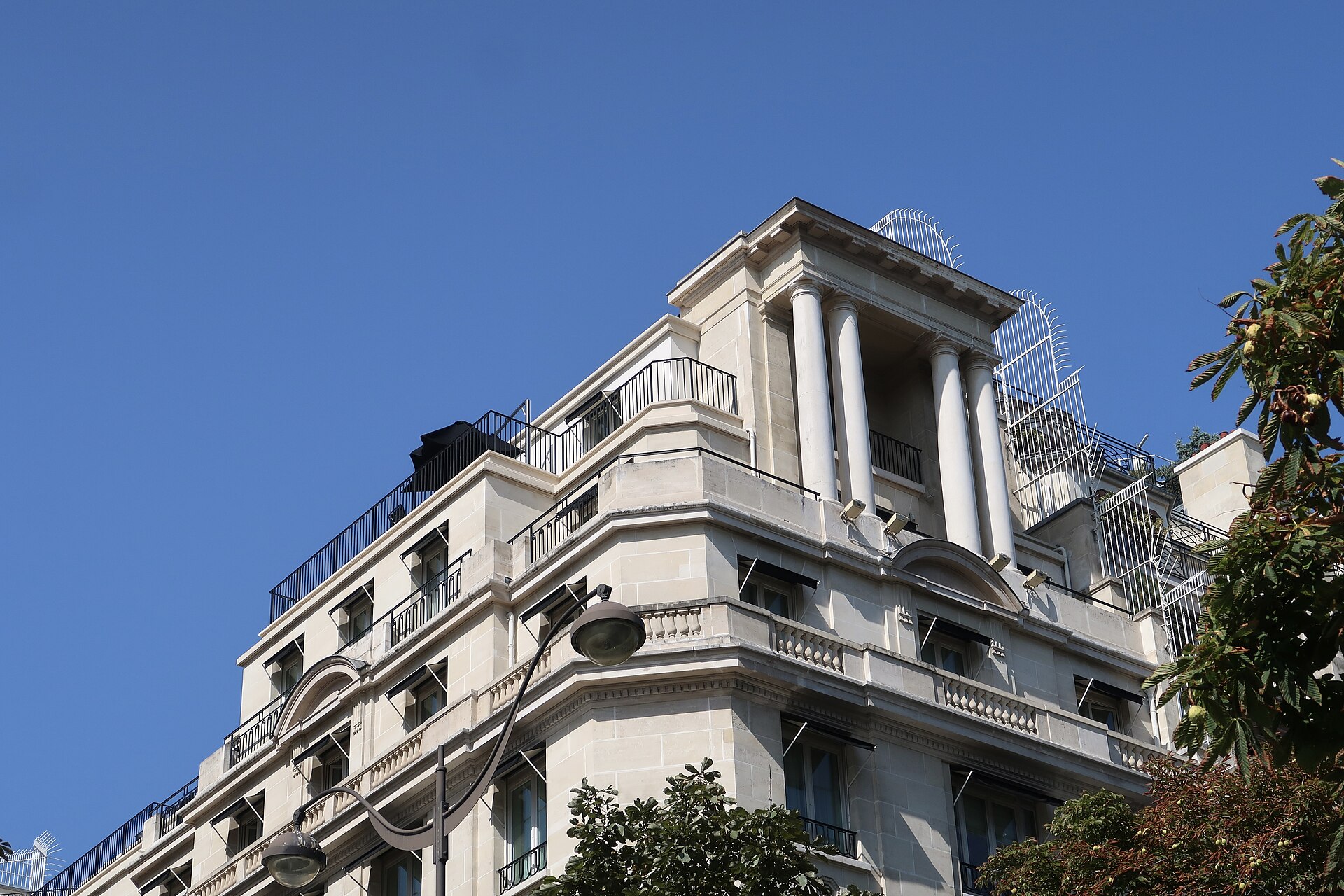
The exterior is disciplined rather than flamboyant: pale stone, strong horizontal lines, measured bays and a corner that meets the avenue with urban confidence. Its Art Deco identity is clearest in proportion and geometry, not applied ornament. Inside, the original programme aimed at residential ease. Period material preserved in the hotel’s press archive describes technological innovations, service lifts intended to separate luggage circulation, and rapid room-service systems. The George V presented luxury as frictionless movement.
A palace meets the crash
The optimism did not last untouched. The 1929 Wall Street crash destabilised Hillman’s project, and the hotel passed to creditors. In 1931 financier and art collector François Dupré acquired it. He commissioned a new residential wing and enriched the interiors with art, tapestries and furniture. The hotel’s difficult first transition therefore changed its character: the American idea of modern hospitality acquired the atmosphere of a cultivated Parisian residence.
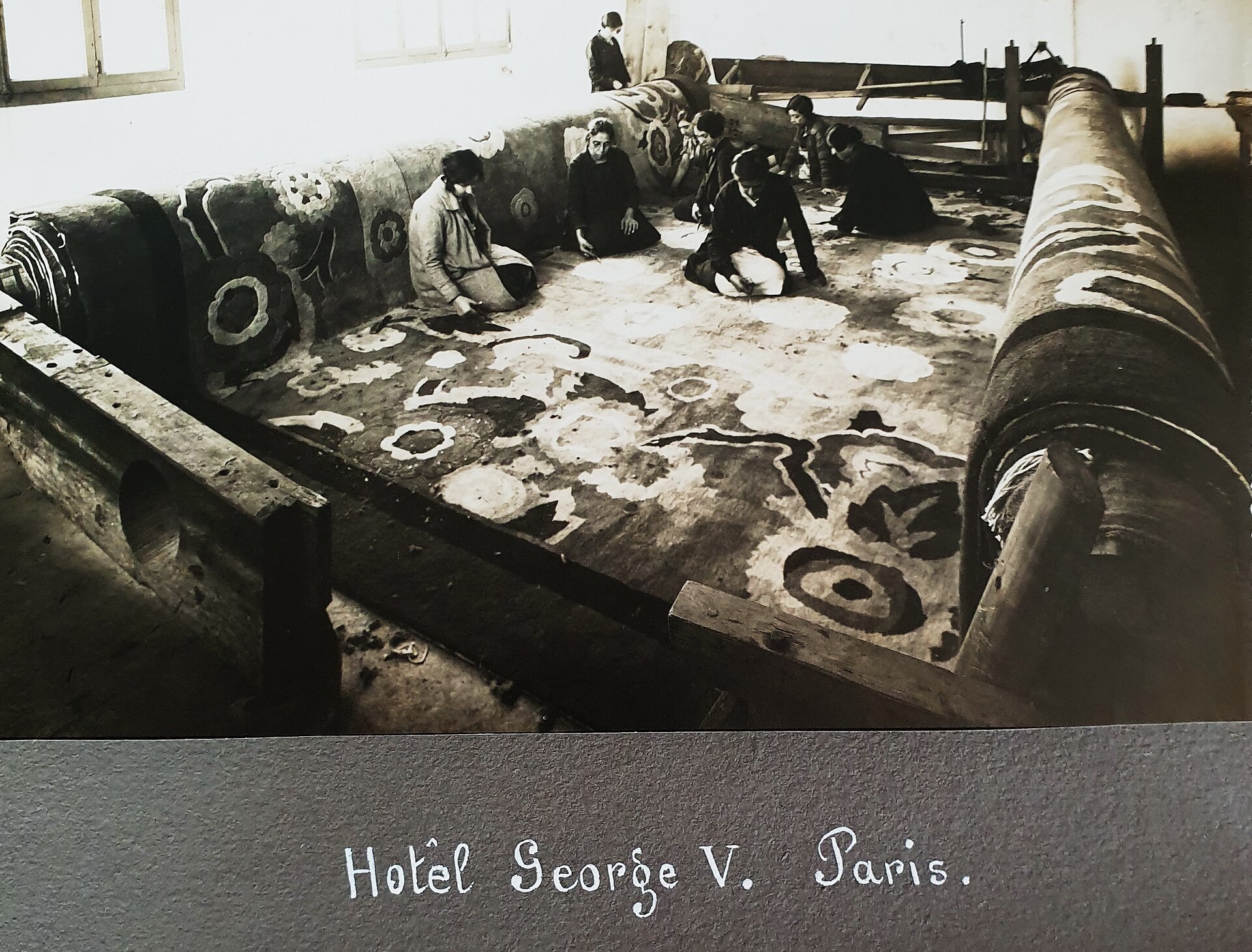
IF THESE WALLS COULD TALK: the cellar that was sealed
Fourteen metres beneath the hotel is Cave Roc. Its limestone vaults rise roughly six metres high inside a former quarry. Four Seasons records that stone from this underground landscape was used for the Arc de Triomphe. When war came, the cellar was walled up to prevent enemy intrusion.
That decision turned a working wine cellar into a time capsule. During the 1997 renovation, the vaults were deliberately preserved. Today they hold part of one of Paris’s notable hotel wine collections. The most dramatic survival story at the George V is therefore not in a salon but under the pavement: hospitality protected by masonry, waiting in darkness for normal life to return.
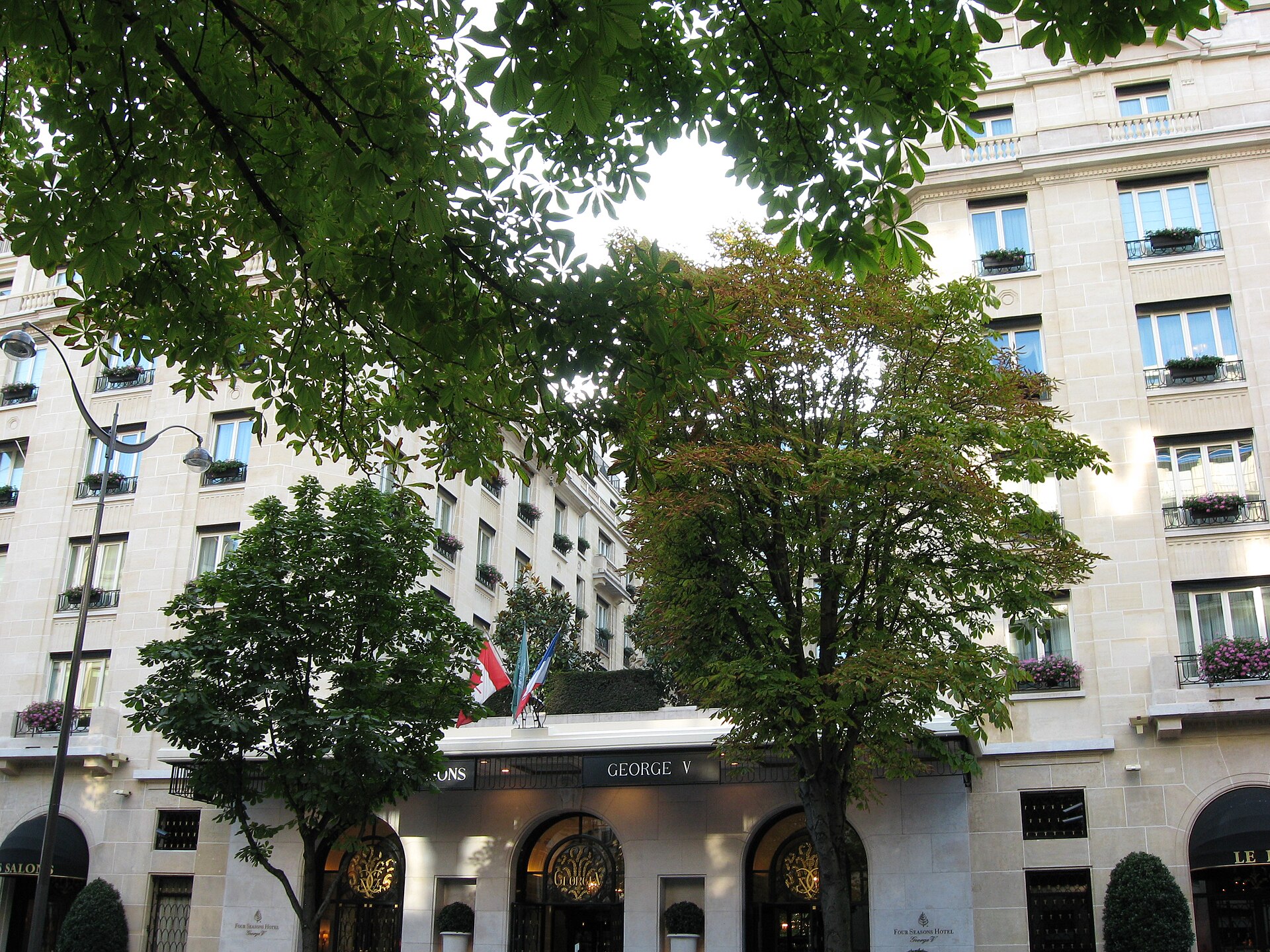
Guests who became part of the record
The documented guest list reflects the hotel’s international ambitions. Comité Colbert records Greta Garbo, Elizabeth Taylor, Gary Cooper, Sophia Loren and John Wayne among the major names associated with the address. The most vivid episode came in 1964, when the Beatles made the hotel their Paris base during their French tour. Hotel and Comité Colbert histories state that “I Feel Fine” took shape in a suite; photographer Harry Benson’s images of the group’s pillow fight turned private hotel time into pop-cultural memory.
Celebrity names are often inflated in hotel mythology. Here they matter because they trace a shift: from ocean-liner society and Hollywood glamour to the global youth culture of the 1960s.
The two-year reinvention
Kingdom Holding acquired the George V in the 1990s. The hotel closed in 1997 for a two-year renovation and reopened in 1999 under Four Seasons management. Interior designer Pierre-Yves Rochon developed a language that joined classical French rooms, antiques and art with modern systems and operational precision. The result did not erase 1928; it reframed it.
That reopening also introduced a new visual signature. Jeff Leatham arrived while the building was still under renovation. His own Four Seasons profile recalls an early impact of 14,000 flowers in the lobby. Today a nine-person team changes themes, colours and vase positions every three weeks, with three deliveries a week from growers in Amsterdam. The flowers are not a decorative afterthought. They are a living installation—and a reason returning guests never encounter precisely the same lobby twice.
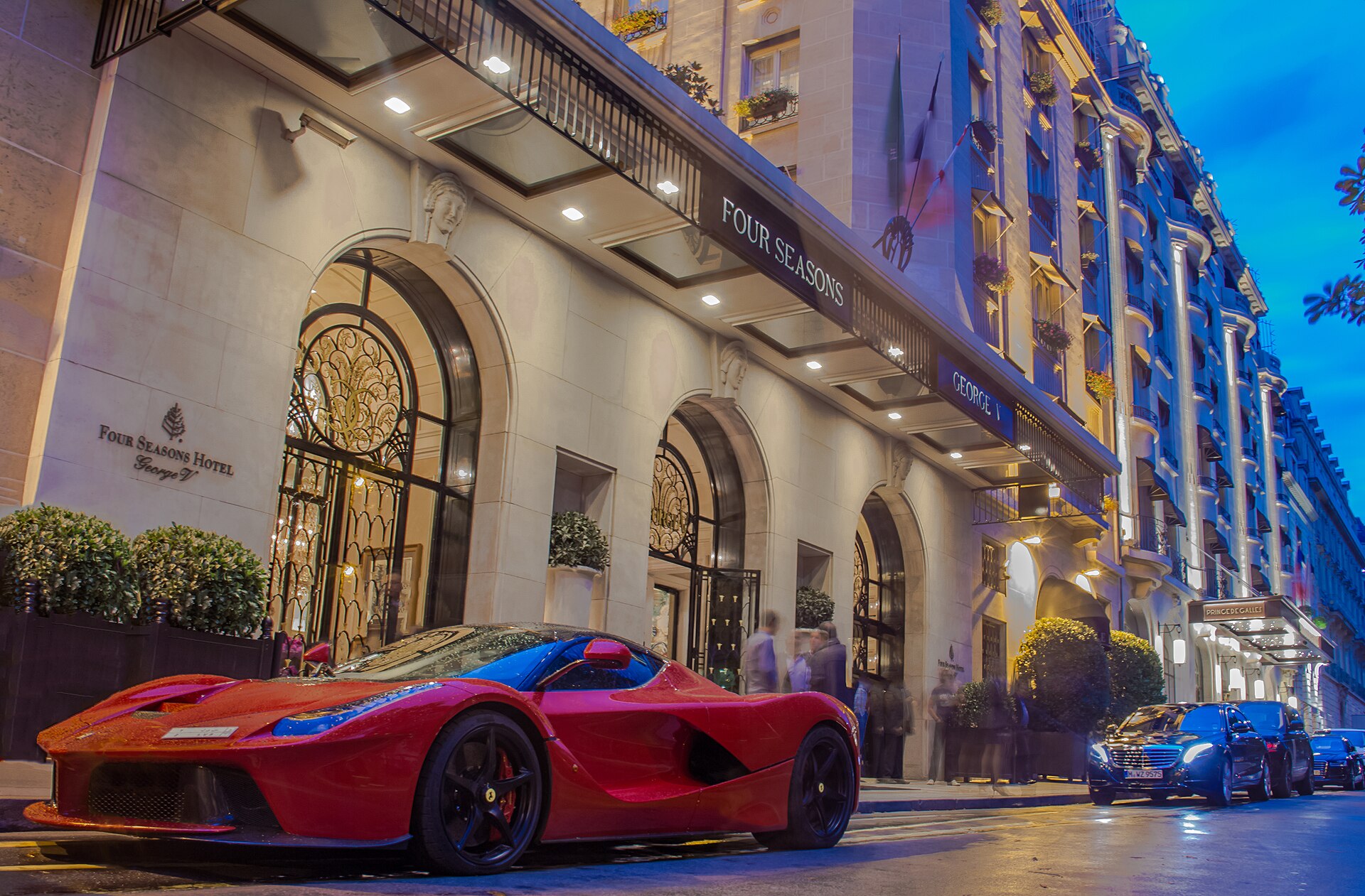
The 2025 transformation: Paris as part of the room
In September 2025 the hotel announced the completion of a three-year renovation of all 243 rooms and suites—the first complete overhaul of the accommodation collection since the 1999 reopening. Rochon treated them as private Parisian apartments rather than generic hotel rooms. New openings and French doors draw in more daylight; planted balconies make the city part of the interior.
The Penthouse was recast around three terraces and a framed Eiffel Tower view. The new Eiffel Parisian Suite connects a principal suite with two bedrooms, offering the scale and privacy of a family apartment. Materials and references remain deliberately Parisian: Versailles parquet, Carrara and Calacatta Oro marble, Baccarat crystal fittings, Lalique lights, restored furniture and restrained contemporary technology.
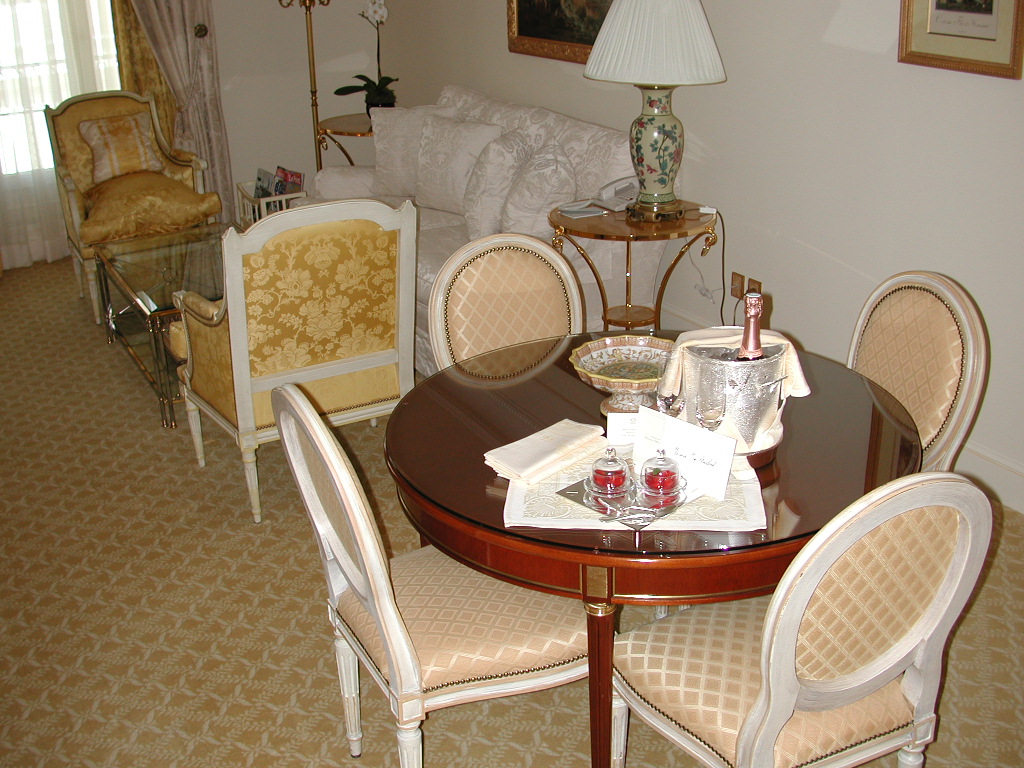
The hotel today
The George V has 243 rooms and suites and holds France’s official Distinction Palace. The 2026 Michelin Guide lists Le Cinq with three stars, L’Orangerie with two and Le George with one—six stars across three restaurants. Le Cinq remains chef Christian Le Squer’s stage for technically exact modern French cooking; Le George brings Simone Zanoni’s Mediterranean Italian register; L’Orangerie works beneath a glass canopy overlooking the marble courtyard.
Le Spa, opened in its present form in 2018, includes six treatment rooms and a long indoor pool. The hotel’s cultural role is also expanding: for the 2026/2027 season it is a patron of the Paris Opera. These details matter because the George V is no longer important merely as a preserved 1928 building. Its relevance depends on active reinvention.
Why travellers still choose it
Some come for the Golden Triangle location, a short walk from the Champs-Élysées and the couture houses of avenue Montaigne. Others come for restaurants, the spa, family-scale suites or terraces that make the Eiffel Tower feel close. Many return for something harder to quantify: the choreography of service, flowers and space.
The George V succeeds when its history is felt without becoming a museum. The façade belongs to the age of ocean liners; the cellar remembers war; the lobby changes every three weeks. It gives travellers both continuity and surprise.
Practical location
Address: 31 avenue George V, 75008 Paris, France.
District: 8th arrondissement, in the Golden Triangle formed by avenues George V, Montaigne and the Champs-Élysées.
Nearest Métro: George V, Line 1.
Best for: travellers prioritising central Right Bank access, highly serviced suites, destination dining and a strong sense of occasion.
Watch: George V in motion
Film by Juhani Sarglep, hosted on YouTube. Embedded from the original publisher; not downloaded or rehosted.
Editorial independence: This story was selected and produced independently by oui stars Travel. It does not imply sponsorship, partnership, a complimentary stay or endorsement.
Research note: Key facts were checked against Four Seasons hotel facts and historical releases, Comité Colbert, Atout France and the 2026 Michelin Guide. Image licences are stated in every caption.
Continue the Paris season: Hôtel de Crillon · Ritz Paris
Osama Samaha
Editor-in-Chief — oui stars Travel