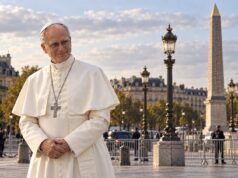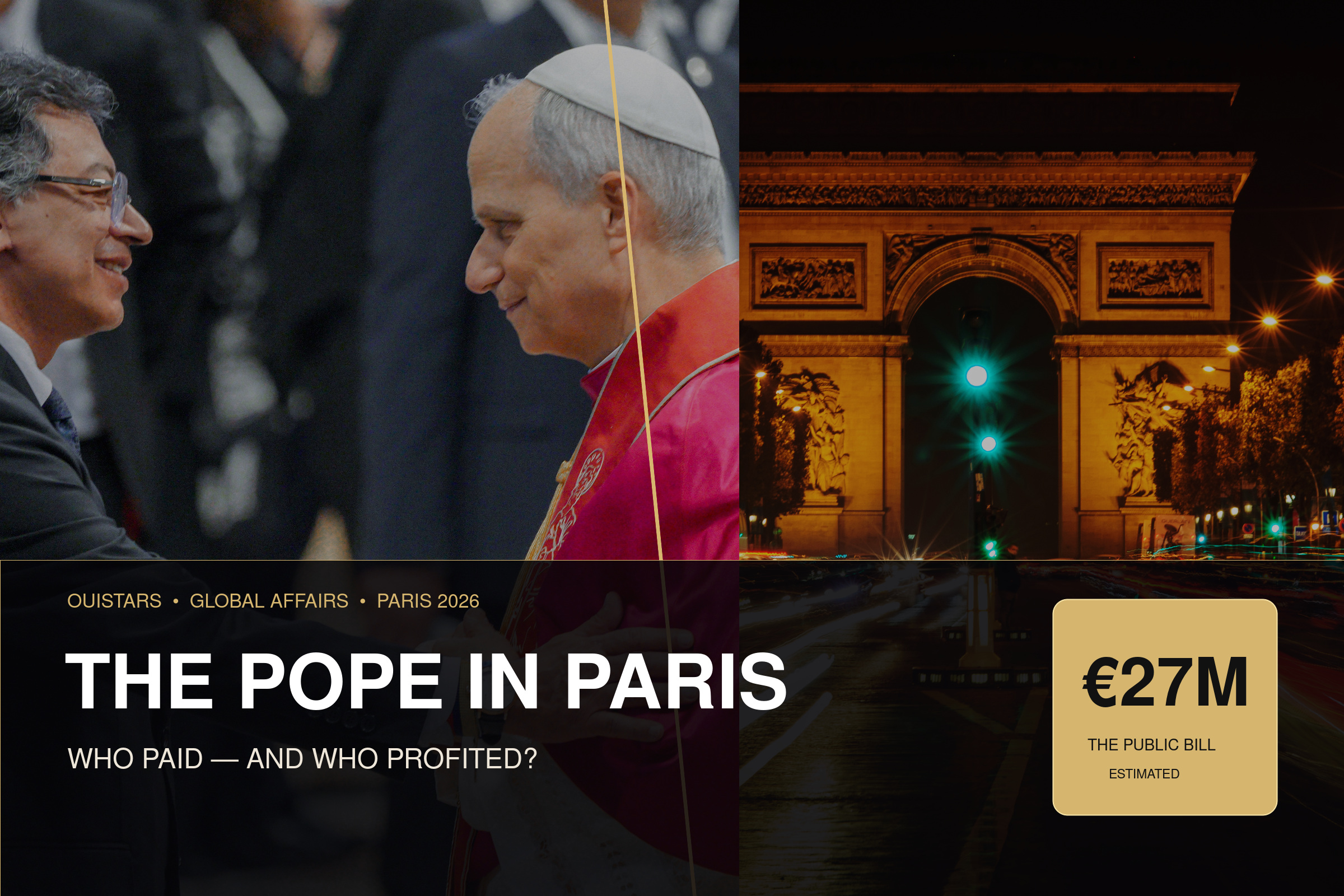
Pope Leo XIV’s visit to Paris comes with two separate bills: a €27 million budget for organising the four-day trip across France, and a public-security cost the French government has not yet disclosed. The economic return is equally fragmented—spread among hotels, restaurants, transport operators and retailers rather than collected in one account.
That distinction matters. The Church is financing most of the event logistics, while the state is paying for public security. Business turnover, meanwhile, is not the same as tax revenue. So did Paris earn back what was spent? The honest answer, while the visit is still under way, is that no audited figure can yet prove it.
The short answer
- €27 million is the official budget for the entire French visit—Paris, Lourdes and Metz—not for Paris alone.
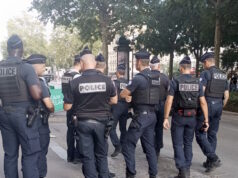
- France is paying for public security. The Interior Ministry said 15,000 personnel would be mobilised in Paris on 25 and 26 September, including roughly 14,000 police officers, gendarmes and soldiers, plus 2,500 firefighters.
- Hotels and restaurants near the route saw strong demand, but citywide tourism data do not show a dramatic surge that can be attributed solely to the papal visit.
Who is paying the €27 million?
The budget covers the practical organisation of the trip from 25 to 28 September 2026: crowd facilities, staging, sound systems, screens, barriers, technical crews, private security, cleaning and services for participants and the press.
The Catholic Church in France—not Paris City Hall and not the Vatican—is the principal organiser and funder. On 7 September, the official visit website reported that its public appeal had raised about €5.5 million. It said the remaining resources would come from individual donations, major donors, corporate sponsorship, merchandise and, if needed, Church funds allocated to pastoral gatherings.
There is also a potential indirect cost to the public purse. Eligible donations in France normally qualify for a 66% income-tax reduction within statutory limits. This does not mean taxpayers automatically financed two-thirds of the visit. The real tax expenditure depends on how much eligible money was donated and on each donor’s tax position—data that are not yet public.
The security bill is still missing
The Interior Ministry expected around one million worshippers and visitors in Paris over two days, including some 600,000 people for the outdoor Mass at Place de la Concorde and the Champs-Élysées. The operation involved intervention units, bomb-disposal teams, snipers, anti-drone measures, road and station closures, screening areas and emergency services.
That deployment has a measurable cost: overtime, transport, equipment, accommodation and staff diverted from other duties. Yet the government had not published a final, standalone security bill when this article was reviewed. Any headline claiming to know the “total cost” is therefore premature.
Paris has said that installation, dismantling, cleaning and repairs to public spaces should be borne by the organiser. Protection of the pope and the crowds falls to the state, as the visit is both pastoral and diplomatic: the pope is also head of Vatican City State.
Where the money was made
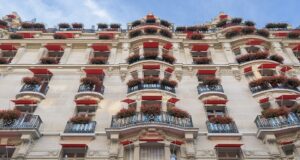
The clearest immediate winners are private businesses. Visitors pay for rooms, meals, taxis, public transport, shopping and souvenirs. Reporting by Le Parisien found hotels full or nearly full close to the papal route, while some local shopkeepers were more cautious because closures and access restrictions could also keep ordinary customers away.
The citywide picture is less spectacular. Paris je t’aime, the official tourism body, forecast September hotel occupancy to be only about one percentage point higher than in 2025. The month already included major concerts, trade fairs and conferences. A sold-out hotel near Notre-Dame is evidence of local demand; it is not proof of a citywide boom.
Three figures must not be confused:
- Turnover: everything visitors spend with businesses.
- Value added: the economic value left after operating inputs are deducted.
- Public revenue: VAT, tourist tax and other taxes or charges received by government.
If a visitor spends €300, the Treasury does not receive €300. Comparing the Church’s €27 million budget with gross tourism sales and calling the difference “profit” would be misleading.
Did Paris recover the cost?
There is no single balance sheet. The Church must close the organisational budget it financed. The French state must compare any additional tax and transport revenue with the cost of security and public services. Paris City Hall may gain tourist-tax receipts and economic activity while also dealing with congestion and disruption.
A serious assessment will require figures for additional room nights, average room rates, visitor spending, transport revenue, tax receipts and the final cost of policing. Until those numbers are available, claims of a definitive net gain remain projections rather than findings.
Editorial view: the larger return is confidence
OUISTARS believes the visit’s most durable value may lie beyond one weekend’s sales. Managing huge crowds around one of the world’s most protected public figures allows Paris to project a simple message: the capital remains open and capable of running a major international event safely.
That message has economic relevance, but it should not be converted into fictional precision. Television pictures cannot be assigned an exact euro value, nor can anyone credibly say how many future travellers they will generate. Safety does, however, influence tourists, airlines, conference organisers and investors. Following the operational experience of the 2024 Olympics, a well-managed papal visit strengthens Paris’s reputation—even if that benefit will not appear as cash in the next day’s accounts.
Travellers can also read our practical guide: Is Paris safe? What visitors should know in 2026.
The political return
This was never only a tourism event. The Élysée meeting, the UNESCO visit and the public Mass placed France at the centre of international coverage combining religion, diplomacy and the country’s continuing debate over secularism. The pope’s dual role as religious leader and head of state explains why the French state was involved in protocol and protection.
France gained a platform for messages about peace and European unity; Paris gained another test of its organisational capacity. Those are gains in influence and reputation, not accounting profits, and they should be described as such.
Verdict
What is known is straightforward: a €27 million national organisational budget, a vast public-security operation whose final cost is not yet published, and extra business for parts of the tourism economy. What remains unknown is how much of that spending was genuinely additional, how much tax it generated and how the figure compares with the public bill.
The sound conclusion is therefore measured. Paris benefited from a burst of commercial activity and valuable international exposure. It is too early to claim that the visit paid for itself.
Editorial note: This article was comprehensively reviewed on 26 September 2026 while the visit was still in progress. Final economic-impact figures were not yet available.