















The degree title on a hospitality student’s résumé matters. The specialization beneath it can matter even more.
France offers an unusually broad career laboratory: palace hotels, destination agencies, airports, convention venues, tour operators, restaurants and luxury brands all recruit from the tourism ecosystem. Some specializations lead quickly to operational jobs; others reward analytical skill, commercial judgment or field experience.
This OUISTARS Travel Magazine guide compares the tourism and hospitality specializations in France with the strongest career potential. Salary figures are indicative gross amounts before tax—not promises—and vary by employer, region, language ability, work pattern and experience.
Table of Contents
- Why the French market remains attractive
- Career opportunity comparison
- The ten leading specializations
- How to choose the right path
- Frequently asked questions
Why France Still Offers Serious Hospitality Career Opportunity
France Travail reported 63,000 unfilled tourism positions at the end of 2024. Its 2025 outlook counted more than 320,000 recruitment projects in hotels and restaurants. Employers increasingly seek multilingual managers, revenue specialists and commercially minded operators.
High vacancy numbers do not make every graduate instantly senior. Strong careers combine a relevant degree with internships, operational credibility, languages, digital competence and flexible working hours.
Career Opportunity Comparison
| Specialization | Demand outlook | Indicative early-career pay | Strongest career advantage |
|---|---|---|---|
| Revenue Management | Very high | €36,000–€40,000 | Data and pricing expertise |
| Hotel Management | Very high | €26,000–€35,000; management rises higher | Clear operational promotion ladder |
| Luxury Hospitality | High | €25,000–€35,000 | International luxury-brand mobility |
| Event Management | High | About €24,000–€35,000 | Paris MICE and corporate events |
| Culinary & Hospitality | Very high | Often €33,000–€35,000 in specialist benchmarks | Persistent operational demand |
| Aviation & Airport Services | High | About €22,400–€30,000 | Large transport ecosystem |
| Travel Business | Moderate to high | €25,000–€32,000 | Commercial and product pathways |
| Tourism Management | Moderate to high | €25,000–€35,000 | Broad private-sector mobility |
| Destination Management | Moderate | About €22,500–€26,400 | Territory strategy and public-private networks |
| Luxury Tourism | High but selective | €30,000–€42,000 | High-value clients and bespoke travel |

The Top Tourism and Hospitality Specializations in France
1. Revenue Management: The Strongest Analytical Bet
Revenue management sits where hospitality, finance, technology and consumer behavior meet. Specialists forecast demand, control inventory and adjust pricing to improve occupancy and revenue per available room. A 2025 remuneration study hosted by Onisep lists revenue managers among the sector’s most sought-after profiles and indicates €36,000–€40,000 for zero to two years in the role, rising to €45,000–€60,000 with five to ten years. The Apec role profile emphasizes data analysis and real-time pricing—skills increasingly transferable to airlines, rail, attractions and serviced accommodation.
2. Hotel Management: The Broadest Promotion Ladder
Hotel management remains the most versatile specialization. Graduates can enter rooms division, food and beverage, sales or operations before progressing to leadership. Onisep places a beginning hotel director at roughly €2,400 gross per month, while the 2025 benchmark ranges from €26,000–€27,000 for reception to €32,000–€35,000 for a front-office manager and €39,000–€42,000 for a new hotel director. The last figure is a management-role benchmark, not a graduate salary. Read our guide to the best hospitality and tourism schools in France.

3. Luxury Hospitality: Service Precision with Global Portability
Luxury hospitality adds guest psychology, cultural fluency and discretion to operational management. Paris and the Riviera offer a concentrated training ground, but recruitment is selective. Early roles include guest relations, concierge, reservations and luxury sales. Benchmarks range from €25,000–€27,000 for concierge positions to €40,000–€43,000 for concierge leadership or key-account sales.
4. Event Management: France’s MICE and Cultural Advantage
France’s conferences, exhibitions, fashion events, festivals and corporate meetings create work for planners, venue teams, production agencies and hotel banquet departments. Onisep gives about €2,000 gross monthly as a starting point for an event project officer. Hospitality benchmarks put conference-and-catering project roles at €33,000–€35,000 and conference directors at €42,000–€45,000 in their first two years at that senior level. Budget control, supplier negotiation and calm execution are decisive.
5. Culinary & Hospitality: Demand Meets Craft
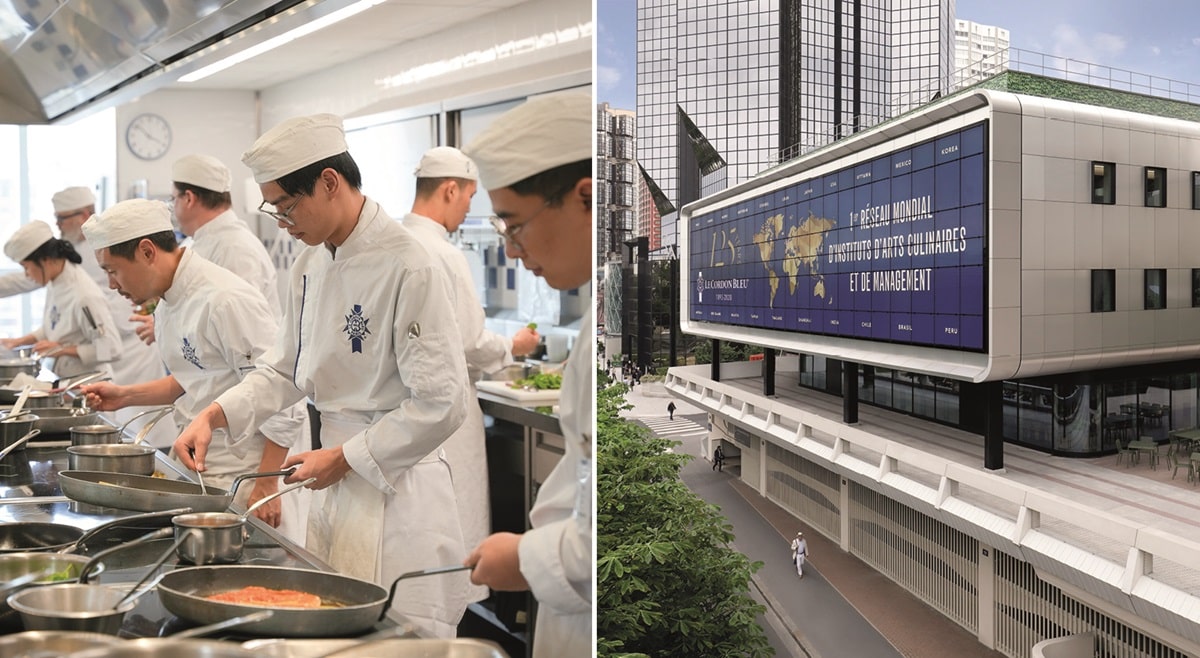
This route is strongest for students who want both business knowledge and credible food-service technique. Career paths include restaurant operations, culinary entrepreneurship, banqueting, purchasing and food-and-beverage direction. France Travail describes hotels and restaurants as a major recruitment market. The 2025 salary study places chef de partie roles around €33,000–€35,000 and executive chefs at €55,000–€60,000, although pay varies sharply by establishment, hours, brigade responsibility and region. Practical training is essential; prestige alone does not replace kitchen discipline.
6. Aviation & Airport Services: A Career Built Around Flow
Airports require customer-service agents, flight dispatchers, supervisors, lounge teams and operations coordinators. Onisep lists ground and passenger-relations agents from about €2,000 gross monthly, plus shift supplements, and aviation operations agents at roughly €1,867–€2,500. Airlines and ground handlers often use apprenticeships as a recruitment channel. Language skill, security compliance and composure during disruption matter as much as a tourism diploma.
7. Travel Business: From Adviser to Product and Commercial Leadership
Travel business covers agencies, tour operators, corporate travel, distribution and product design. Basic booking roles face automation pressure, but complex travel rewards human expertise. Benchmarks indicate €25,000–€26,000 for advisers, €29,000–€32,000 for production specialists and €28,000–€30,000 for travel managers at zero to two years. Product managers need destination knowledge, negotiation and margin control.
8. Tourism Management: The Flexible Commercial Degree
Tourism management is useful when the curriculum includes finance, marketing, digital distribution, sustainability and project work—not tourism theory alone. Graduates move into sales, product, partnerships, visitor attractions and hotel commercial teams. Salary outcomes therefore span widely: approximately €25,000–€26,000 in entry travel sales, €32,000–€35,000 for product marketing benchmarks and €38,000–€42,000 for early-career development or key-account roles.

9. Destination Management: Building Places, Not Just Trips
Destination management suits students interested in territories, visitor flows, culture, sustainability and stakeholder coordination. Employers include tourism offices, regional agencies, local authorities, attractions and DMCs. Onisep cites about €1,880 gross monthly for a starting tourism development officer and €2,200 for a tourism-office director, a position normally requiring advanced study and experience. The commercial private-sector path can pay more, but relationship management is central in every version of the job.
Specialist DMCs illustrate the operational end of this field: companies such as oui stars coordinate premium mobility and tailored destination support in France. Students should view such firms as examples of how itinerary design, suppliers, logistics and guest experience meet—not as substitutes for formal career research.

10. Luxury Tourism: High Value, High Expectations
Luxury tourism combines bespoke travel design, relationship management, private experiences and premium supplier networks. Roles appear in high-end agencies, concierge companies, DMCs, hotels and luxury transport. Account-management benchmarks begin around €30,000–€34,000, while sales and development roles can reach €38,000–€42,000 early in the position. The field rewards languages, destination authority and discretion, but reputational trust is earned slowly.
How to Choose the Right Specialization
- Choose revenue management if you enjoy data, pricing and commercial decisions.
- Choose hotel or luxury hospitality if you want operational leadership and direct guest contact.
- Choose events if deadlines, suppliers and live execution energize you.
- Choose aviation if you can handle procedures, shifts and disruption calmly.
- Choose destination or tourism management if you prefer strategy, partnerships and place development.
- Choose culinary hospitality only if you value practical craft as much as management.
Before applying, compare teaching language, internship volume, apprenticeship eligibility, graduate outcomes and the real cost of study. Our guides explain how international students apply to French hospitality schools and the professional skills hospitality employers expect.

Frequently Asked Questions
Which hospitality specialization pays the most in France?
Revenue management has one of the strongest early-career salary ranges, while senior hotel operations, commercial leadership and executive culinary roles can eventually pay more.
Which tourism specialization has the best job demand?
Operational hotel and restaurant roles generate the largest recruitment volume. Revenue management, multilingual service, sales and project leadership offer particularly valuable specialist skills.
Can international students work in French hospitality?
Yes, subject to the work rights attached to their immigration status. Strong French and English, internships and a recognized qualification materially improve employability.
Is luxury hospitality better than hotel management?
Neither is universally better. Hotel management provides broader operations training; luxury hospitality adds premium-service, discretion and high-value guest expertise.
Are French hospitality salaries higher in Paris?
Paris often offers more luxury and head-office opportunities, but salary premiums must be weighed against substantially higher housing and daily costs.
The OUISTARS Verdict
The best specialization is not the fashionable one; it is the one that turns your strongest ability into a skill employers cannot easily replace. For analytical students, that may be revenue management. For natural operators, hotel management. For persuasive organizers, events or destination development. France offers the stage—but internships, languages and professional discipline determine who advances.