












Reference guide | Airports of France — Paris
Last verified: 24 September 2026. Airline allocation is indicative and may change; always check the flight on the day of travel.
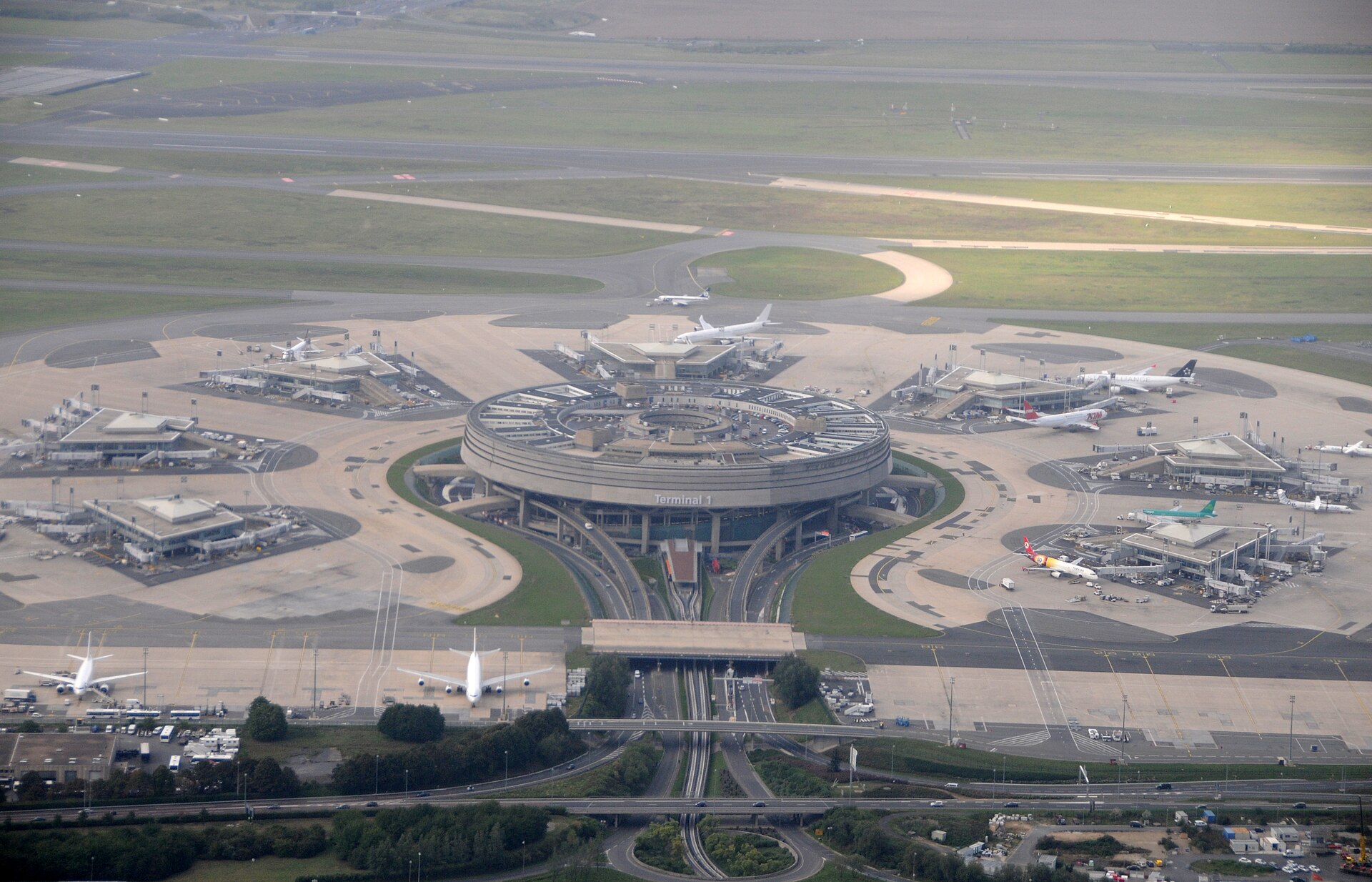
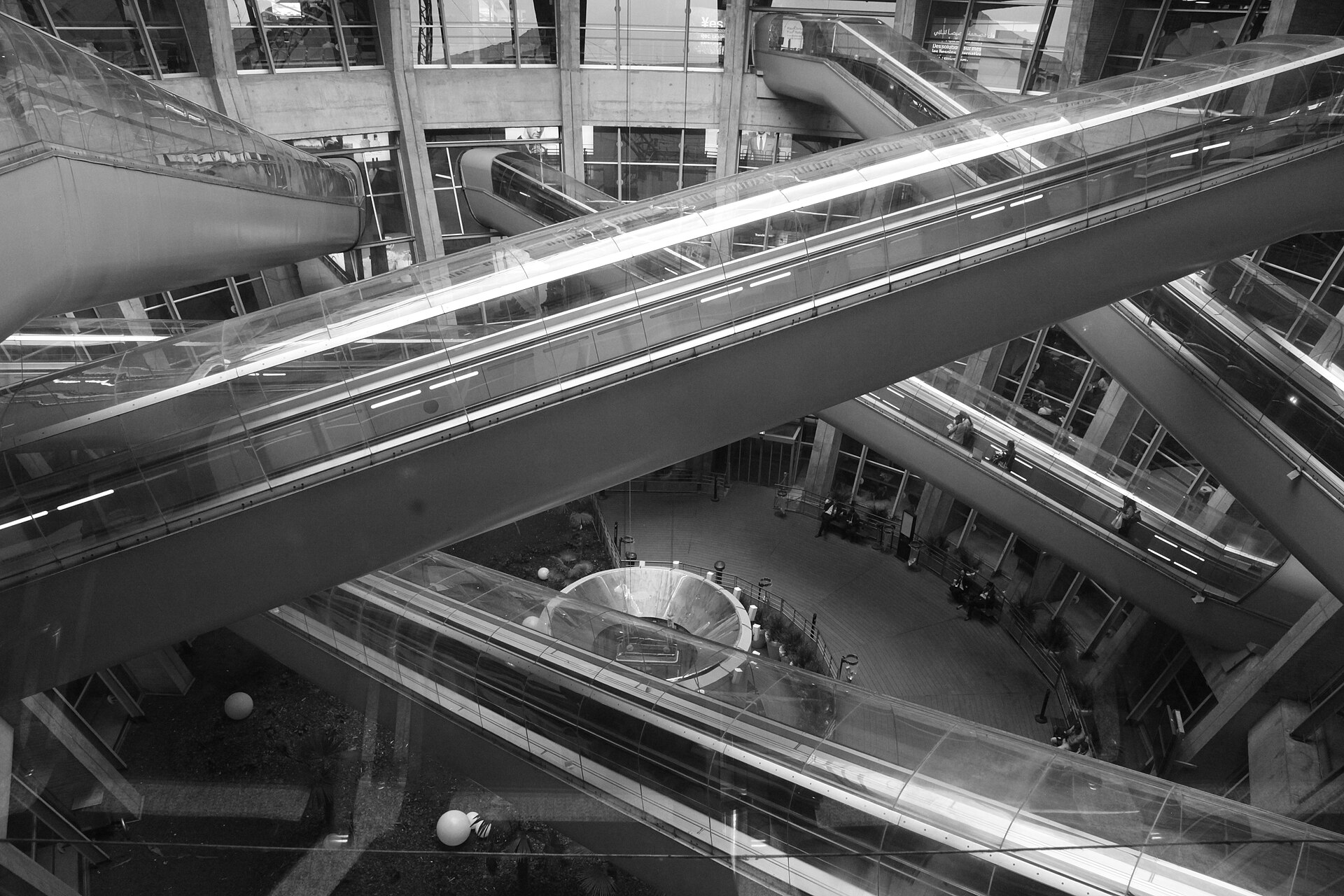
From the air, Terminal 1 at Paris–Charles de Gaulle looks like an idea drawn with a compass: a concrete cylinder surrounded by seven satellite buildings. Inside, transparent moving walkways cross the central void while passengers travel in different directions above and below one another. The design was not simply theatrical. It was a late-1960s French attempt to separate airport functions vertically inside one unmistakable object.
More than half a century later, the terminal remains an emblem of France’s technological imagination. Yet it has not been frozen as an architectural monument. It underwent a long renovation, reopened after the pandemic with a new international passenger route and became the first full “Premium” expression of Groupe ADP’s Extime hospitality concept. The challenge is now to preserve an icon while making it perform as a contemporary airport every day.
Key facts
| Item | Verified information |
|---|---|
| Airport | Paris–Charles de Gaulle (CDG) |
| Official opening | 8 March 1974; first commercial arrival on 13 March 1974 |
| Architect | Paul Andreu |
| Original composition | A ten-level central body and seven boarding satellites |
| Declared annual capacity | 10.2 million passengers |
| Role | Schengen and international flights, with a strong Star Alliance presence |
| Major recent extension | A 36,000 m² connector linking satellites 1, 2 and 3, including a 5,600 m² boarding lounge |
| 2027 naming | Terminal 1 keeps its name; boarding halls become R and S |
Why is the airport named after Charles de Gaulle?
During planning, the project was known as Paris-Nord. Its site near Roissy-en-France explains why French travellers still say “Roissy”. When the airport opened in 1974, it received the name of Charles de Gaulle, leader of Free France during the Second World War and first president of the Fifth Republic, who died in 1970.
The choice did more than honour a person. In the French political imagination, de Gaulle is associated with sovereignty, state continuity and the restoration of national stature. Naming the new global gateway after him presented the airport as the front door of a modern, outward-looking state. The initials produced the code understood by the aviation world: CDG. The airport therefore has three useful names: Roissy describes the place, Charles de Gaulle supplies the national symbol, and CDG is the operational language of aviation.
Paul Andreu and the building as machine
Construction began in 1968 under the young French architect Paul Andreu. Baggage processing occupied the lower level; arrivals, departures, parking and offices were stacked above it. Aircraft were distributed around seven satellites connected to the centre by passages. The signature element is the network of moving walkways suspended within the cylindrical atrium. What now looks cinematic was an operational proposition: moving people between levels without a long chain of conventional corridors.
Exposed concrete, the central opening and the intersecting movement created an image used repeatedly in film and photography. But the clarity of the object from the outside did not eliminate challenges inside. Security and border procedures grew, aircraft became larger and passengers expected more daylight, intuitive wayfinding, retail and comfortable waiting. Preserving the original idea eventually required redesigning the movement around it.
The morning the circle became an airport
Prime Minister Pierre Messmer officially opened the airport on 8 March 1974. At 7:30 a.m. on 13 March, TWA flight TW800 arrived from New York. The aircraft carried special wording celebrating the first American service to Charles de Gaulle. Two years later, the airport became closely associated with the commercial age of Concorde. Andreu’s circle and the supersonic airliner became two expressions of the same 1970s confidence in technology.
From restoration to the “crowning” of Terminal 1
A major renovation began in 2004 and the central body was renewed by 2009. The pandemic closed the terminal to passengers on 30 March 2020. That interval was used for flooring, LED lighting, digital signs and a reorganisation of passenger queues. The central building reopened on 1 December 2022 and the new international route followed on 5 December.
The decisive intervention was a 36,000 m² connector between satellites 1, 2 and 3. It replaced four international checkpoints with one route, enlarged the space before and after security and introduced self-boarding gates. Groupe ADP describes it as the first stage in “crowning” the satellites—a development of an idea discussed with Andreu during his lifetime.
Airlines at Terminal 1
Terminal 1 is the clearest Star Alliance base at CDG, but it is not exclusively reserved for the alliance. Indicative allocations verified in August–September 2026 include the following:
| Group | Principal airlines commonly using Terminal 1 |
|---|---|
| Star Alliance — Europe | Lufthansa, SWISS, Austrian Airlines, Brussels Airlines, TAP Air Portugal |
| Americas | United Airlines; some Air Canada operations may vary |
| Asia | ANA, Singapore Airlines, EVA Air, Asiana Airlines, Thai Airways, Air India and Air China, subject to flight allocation |
| Middle East and Africa | Turkish Airlines, EgyptAir and Ethiopian Airlines |
| Other long-haul carriers | Qatar Airways, Saudia and other operators according to season and operational needs |
Passenger rule: this is not a permanent legal list. An airline may use more than one terminal. The boarding pass, airline notification and live Paris Aéroport information remain authoritative.
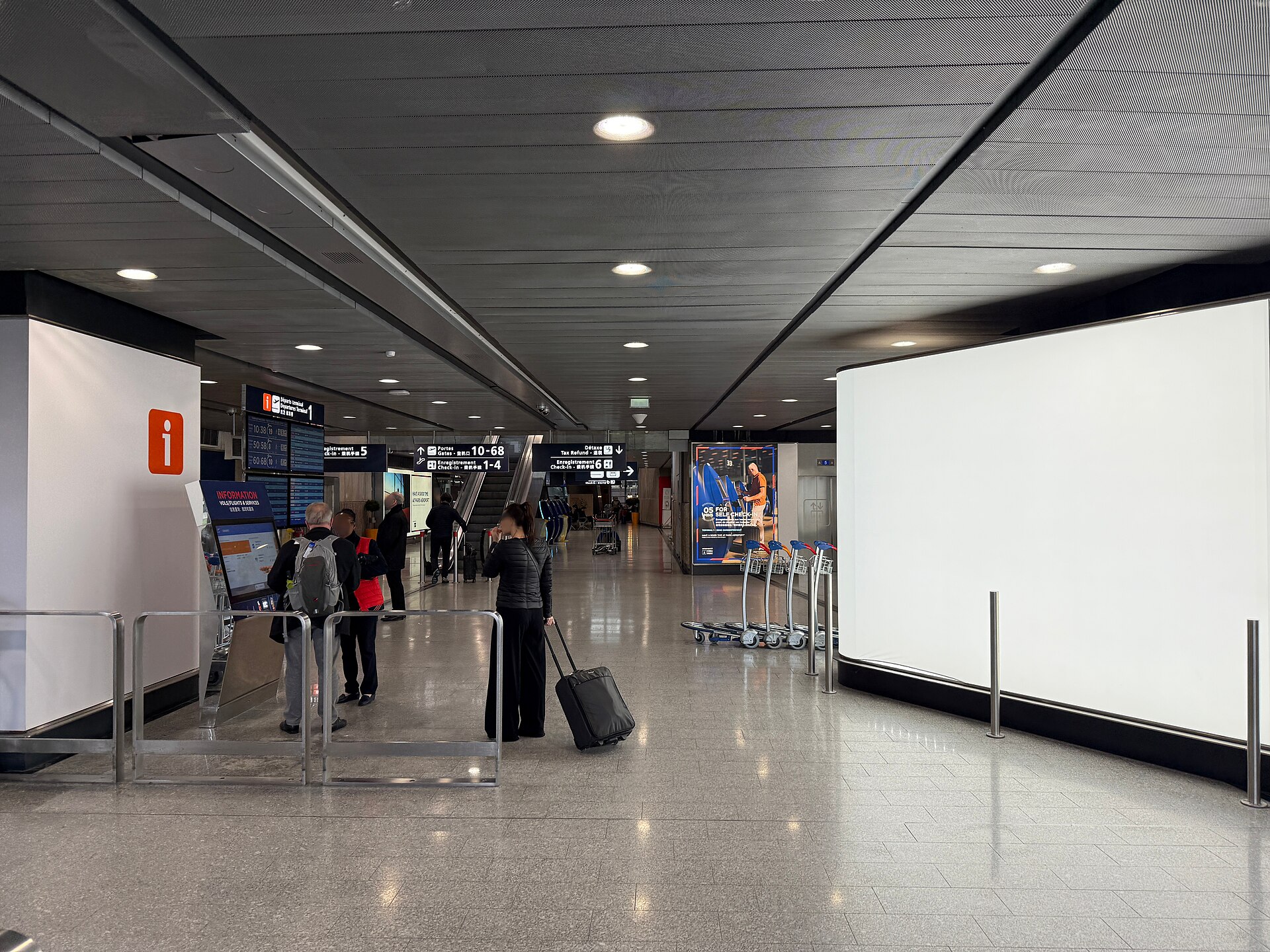
This diversity explains the investment in common-use automation. At reopening, the terminal had roughly 130 self-service check-in kiosks, about 90 automated bag-drop positions and 124 shared check-in desks.
How passengers move through the terminal
The original principle is vertical separation: baggage on level 1; departures, check-in and public services mainly on levels 2 and 3; transfer towards boarding on level 4; arrivals on level 5; technical and administrative functions above, followed by parking and offices. It is a useful mental map, not a substitute for signs. The correct check-in area depends on airline and flight number, and the post-security route may lead to the modern connector or an original satellite.
Services and passenger experience
Lounges
The Star Alliance lounge opened in October 2023 with roughly 1,300 m² for eligible First and Business Class passengers and Star Alliance Gold members travelling on participating flights. It includes work and relaxation areas, a welcome bar, wine space and tea salon. Other multi-airline facilities operate within the Extime ecosystem; access rules must be checked for the individual ticket or membership.
Food, shopping and culture
Terminal 1 is the first complete Extime Premium environment. Retail, dining and waiting are combined in a Paris-themed hospitality space rather than treated as isolated rows of shops. Brands and opening hours change, so an enduring guide should describe functions and link to the live directory. The 2022 project also integrated cultural displays, including material on Paris and Paul Andreu, turning waiting time into part of the terminal’s narrative.
Families and accessibility
Groupe ADP documents baby-care and children’s areas alongside assistance for passengers with disabilities or reduced mobility. Assistance should normally be requested through the airline within its stated advance-notice period. ATMs, baggage wrapping, pharmacy, information points and sanitary facilities are distributed by zone and level.
Getting to Terminal 1
There is no RER station inside the terminal building. Passengers arriving on RER B use Aéroport Charles de Gaulle 1 / Roissypôle and transfer to the free CDGVAL shuttle for Terminal 1. CDGVAL also links the other terminals, rail stations and selected car parks. Drivers and taxis follow Terminal 1 and P1 signs.
Connecting passengers must check whether baggage is through-tagged and whether they remain airside or need to cross border control and security again. A transfer between Terminal 1 and Terminal 2 is not a short indoor walk. CDG Express is scheduled to begin in March 2027, but it must not be presented as an operating option for a 2026 itinerary.
What changes in 2027?
Terminal 1 is the least confusing part of the new CDG naming project because it keeps the number 1. Its two boarding halls become R and S. More than 3,000 signs are being replaced across the airport between September and December 2026 before their planned unveiling in March 2027. Tour operators should date printed material and tell clients to confirm the terminal on the boarding pass and live airport systems.
Professional assessment
The terminal’s greatest strength is identity: very few airport buildings can be recognised from a single interior view. Its challenge is that a visually simple circle conceals a multi-level system and potentially long transfers. Renovation has removed important bottlenecks and added common-use automation, but the quality of the journey still depends on knowing the correct level, allowing sufficient time and checking live operational information.
Reference video
Official Paris Aéroport reference video, published 5 December 2023.
Primary sources and verification
- Groupe ADP — Paris–Charles de Gaulle at 50
- Groupe ADP — Terminal 1 reopening and redevelopment dossier
- Groupe ADP — 2027 terminal naming system
- Star Alliance — new lounge at Terminal 1
- RATP — rail access to Paris airports
- Élysée — Charles de Gaulle biography
- Paris Aéroport — live Terminal 1 map
Transparency: this article was produced independently. The commercial spaces above are separate from the editorial text and did not influence the information or sources.
Osama Samaha
Editor-in-Chief, oui stars Travel