
















Executive summary: Delaying a booking can feel cautious, but it becomes a risk when your trip overlaps with Fashion Week, an international congress, a major concert or an official visit. Airfares and hotel rates may rise, the hotel you love may sell out, and the right chauffeured car may no longer be available when you land.
Editorial transparency: OUISTARS Travel is an independent travel magazine that also covers services connected with OUISTARS. Commercial links are clearly identified and do not change the purpose of this guide: helping travellers make better booking decisions.
Your flight lands. Mobile data is slow, your luggage is beside you and the hotel is confirmed—but the car was never booked because you thought, “I’ll decide later.” You open several apps and call transport companies. The suitable vehicles are already committed, the family van is unavailable, or the price that was possible a few weeks ago has disappeared.
This is not only about luxury. It is about managing the whole journey. Your airline seat, hotel room and airport pickup are one connected chain. Leaving one link until the last minute can affect the rest of the trip.
Hesitation does not always preserve choice
It is reasonable to pause before making an expensive commitment, especially when plans may change. But organised decision-making is different from leaving a booking without a deadline. In high-demand cities, availability narrows as the travel date approaches. The question changes from “What do I prefer?” to “What is left?”
- Flights: a seat may remain, but not at the time, in the cabin or on the route you wanted.
- Hotels: rooms may remain in the city, but not at your preferred hotel, in the right neighbourhood or in a suitable family category.
- Private cars: a vehicle may exist, but not the correct class for passengers and luggage, with the requested language or at your landing time.
The better question is not “Can I still book something?” but “Can I still secure a good option that truly fits my trip?”
Why demand changes throughout the year
Major cities still have finite capacity. During large events, thousands of visitors need flights, nearby rooms, airport meet-and-greet, chauffeured cars and evening transport at the same time.
There is no single “safe” period that applies to an entire year. From January to December, demand moves between Paris, Milan, Nice, Cannes and Monaco: fashion weeks, trade fairs, medical and technology congresses, film festivals, motor races, sporting events, concerts, yacht seasons, school holidays and New Year celebrations. An event may take place in one city while its guests stay or land in another. A major Monaco event can affect cars and hotels in Nice and Cannes; a Cannes festival can increase demand at Nice airport and across the Riviera.
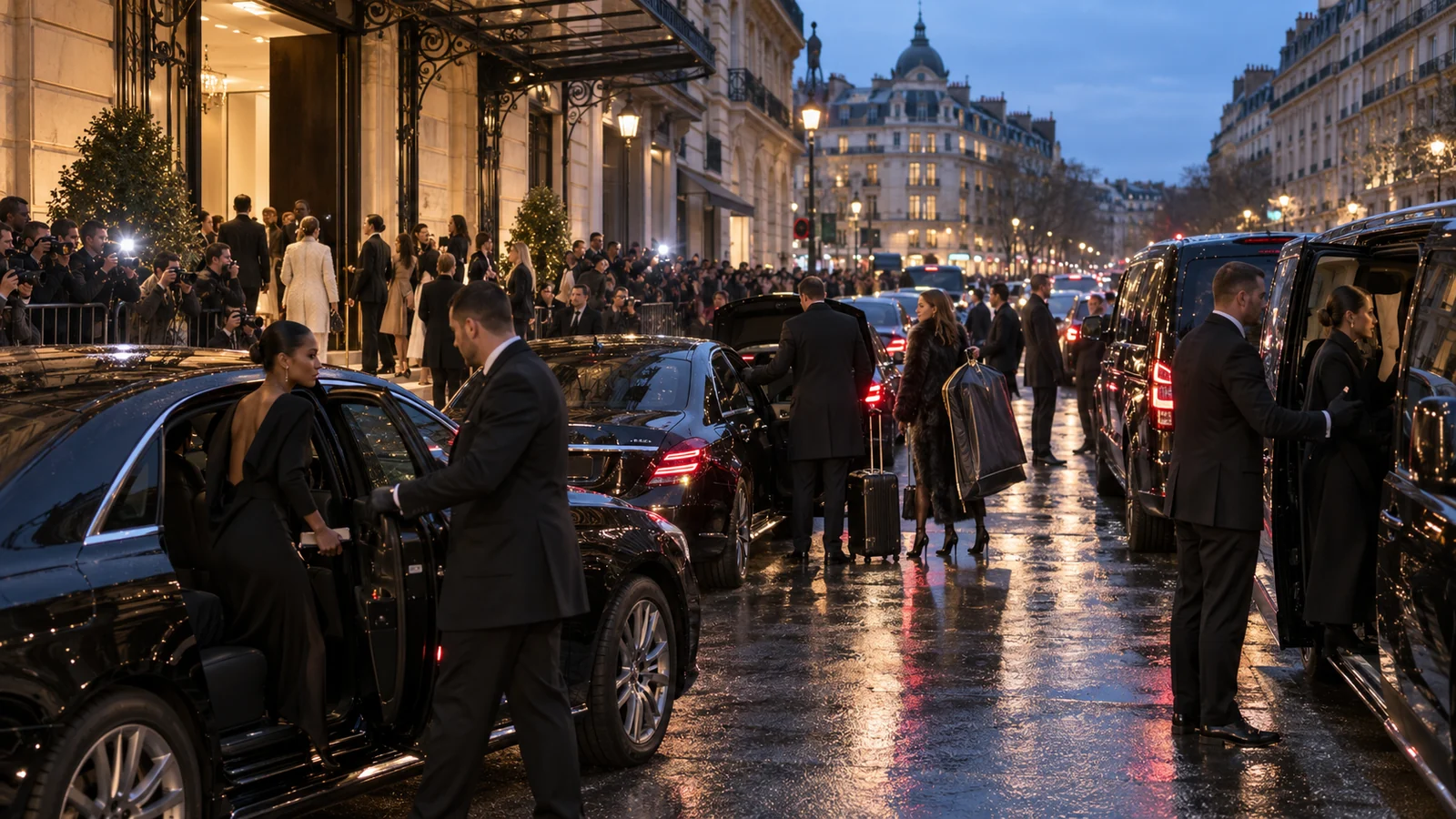
Fashion is only one example. A medical congress in Nice may overlap with an event in Monaco; a Cannes festival may coincide with a European holiday; a Milan trade fair may run alongside matches and concerts. Pressure then affects airports, hotels and transport fleets across a whole region—not only within one city. Always consult current official calendars for the destination, nearby cities and airports, because dates change from year to year.
Occasions that can increase demand at any time of year
- Fashion weeks and jewellery, watch, art and yacht shows.
- Medical, technology, finance, property and trade congresses.
- Film festivals, award ceremonies, premieres and major concerts.
- Formula racing, championships, major matches, ski seasons and beach seasons.
- Royal and presidential visits, summits, diplomatic delegations and corporate meetings.
- International weddings, private celebrations, group travel, yachts and private aviation.
- Public holidays, New Year, school breaks, long weekends, strikes and road closures.
One major visit can absorb hundreds of cars
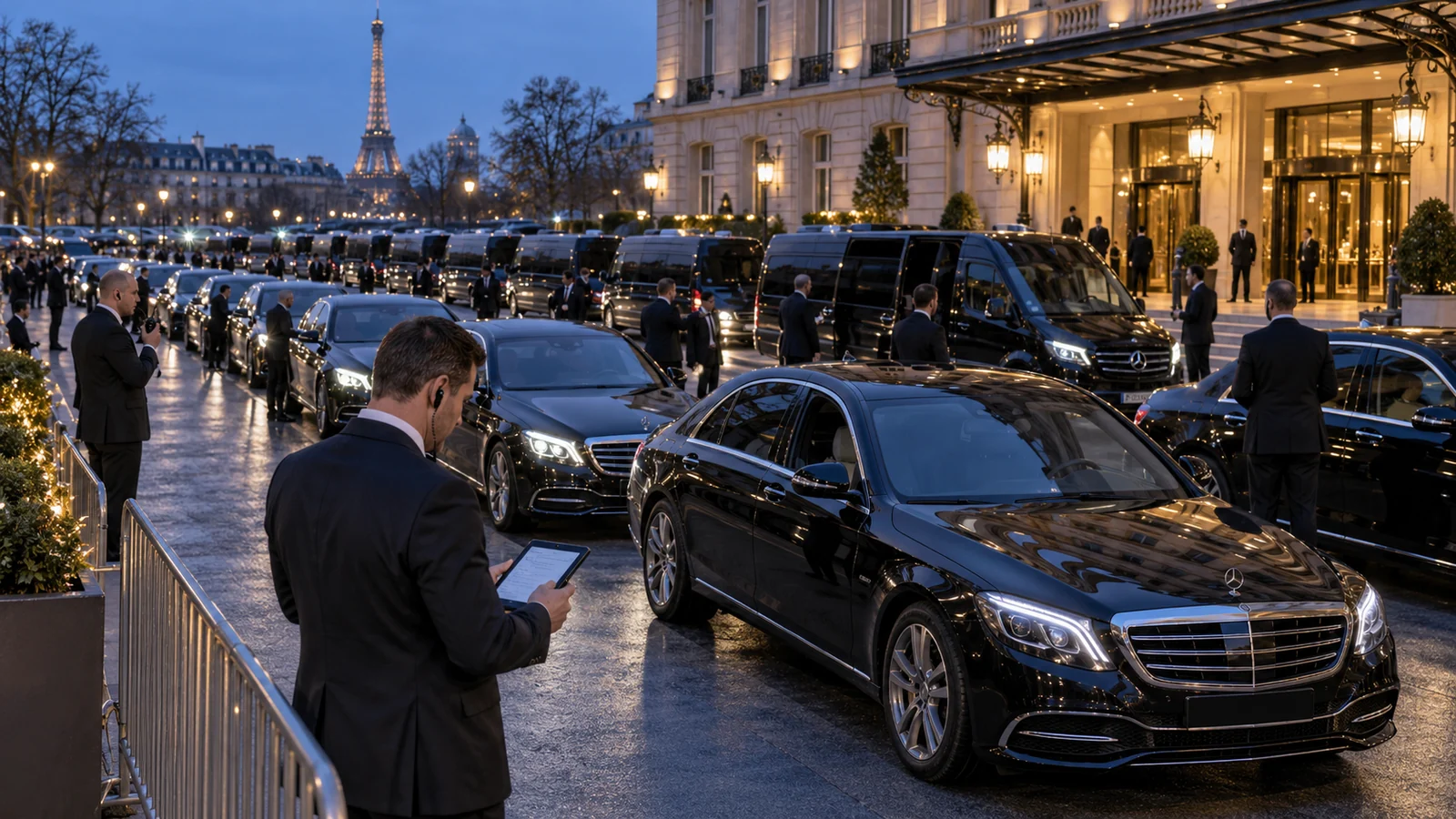
The market does not need dozens of events to tighten. A royal or high-level official visit, international summit or delegation spread across several hotels may require protocol cars, guest vehicles, advance-team transport, luggage vans, operational reserves and drivers working in shifts.
For a large operation, requirements can reach hundreds of vehicles—possibly around 300 or more across protocol, reception, security and logistics. This illustrates the potential scale; it is not a fixed figure for every visit. The practical lesson is that an event unrelated to your personal itinerary can suddenly take a significant share of the city’s qualified vehicles and drivers.
Why last-minute prices can look twice as high
The explanation is not always an arbitrary price increase. The standard vehicle or lowest fare may already be sold out, leaving only a more expensive category. A transport provider may need to reposition a car from another city, extend a driver’s shift or use a larger vehicle than you need.
The same pattern applies to flights and hotels: once lower-priced inventory is gone, you see the remaining options—not the price that existed a month earlier. What looks like a doubled price may simply mean that the lower-priced option no longer exists.
When should you book flights, hotels and a private car?
No timing rule fits every journey, but this framework reduces unpleasant surprises:
| Trip type | Flights and hotel | Private car |
|---|---|---|
| Normal dates and flexible plans | Once dates are stable, after comparing conditions | At least 7–14 days ahead |
| Holidays and peak tourism | Several weeks ahead, preferably with flexible cancellation | 3–6 weeks ahead |
| Fashion Week, congress or major concert | As soon as the date is confirmed | 6–8 weeks ahead; earlier for fleets or rare classes |
| Delegation or multi-car group | Within one coordinated travel plan | 8–12 weeks ahead or more, depending on size |
These are guidelines, not guarantees. Capacity can change within hours after a major event or official visit is announced. The answer is not always an early non-refundable payment, but a confirmed booking with clear amendment and cancellation conditions.
Booking a private car starts with trip details
Whether you need a chauffeured car in Paris, a transfer from Nice airport to Cannes or Monaco, or transport in Milan, provide the following from the beginning:
- Flight number, airport, terminal and actual arrival time.
- Number of passengers and children’s ages.
- Checked bags, cabin luggage and any special equipment.
- Hotel name, address and required stops.
- Preferred communication language and a phone available after landing.
- Whether you need an in-terminal meet-and-greet or only a driver at the meeting point.
A luxury saloon is not suitable if the luggage does not fit. A large van will not solve a poorly defined meeting point. Quality means matching the vehicle, driver and timing to the reality of the journey.
Do not book only the airport arrival
Some travellers secure the airport transfer but leave dinner reservations, shows, shopping days and the departure transfer until the same day. During major events, a morning arrival car may be available while no suitable vehicle remains for the evening—or only a three-hour service is possible instead of a full day.
Create a preliminary itinerary: arrival, hotel, fixed appointments, events, journeys between cities and the return to the airport. It lets you protect critical times while keeping the rest flexible.
A one-minute checklist before saying “I’ll decide later”
- Do my dates overlap with Fashion Week, a trade fair, congress, match or major concert?
- Is my preferred hotel genuinely replaceable, or is its location essential?
- Would an alternative flight still work for children, luggage and connections?
- Do I need a specific vehicle, child seats, a particular language or extra luggage space?
- Are amendment and cancellation conditions clear in writing?
- Who takes responsibility if the flight is delayed or the terminal changes?
If two or more answers are “yes,” postponing the decision is not neutral: you are accepting that the useful options may narrow.
The smart decision is an integrated booking
Do not book out of fear, and do not wait on hope alone. Secure the elements that are difficult to replace, choose flexible terms when the schedule is not final, and coordinate flight, hotel and transport in one file. If the flight changes, the driver knows; if the hotel changes, the route is updated; if a major event appears, the most important times can be protected first.
For coordinated airport arrivals, hotels, transport and experiences with a local operating team, visit OUISTARS.
Frequently asked questions
Should I book an airport car before travelling?
Yes if you need a specific category, have substantial luggage or children, or arrive during a major event. This applies to airports serving Paris, Nice, Milan and other high-demand destinations, especially when continuing to a nearby city such as Cannes or Monaco. Advance booking confirms the meeting point, vehicle and capacity, with a clear policy for flight delays.
How early should I book a chauffeur for Fashion Week?
Start around 6–8 weeks ahead, and earlier if you need several cars, a luxury van or an all-day chauffeur. Availability depends on the city and overlapping events.
Can the best hotels sell out even when rooms remain in the region?
Yes. Rooms may remain in another town or category, but not in your preferred hotel, neighbourhood or room type. On the French Riviera, for example, an event in Monaco or Cannes can affect hotels in Nice and neighbouring coastal towns. “A room” is not necessarily the right room for your trip.
Does a higher price mean the traveller is being exploited?
Not necessarily. The lower-priced category may be sold out, leaving a higher class or a solution requiring additional operations. Always request a written quote covering vehicle, hours, waiting time, parking and fees.