












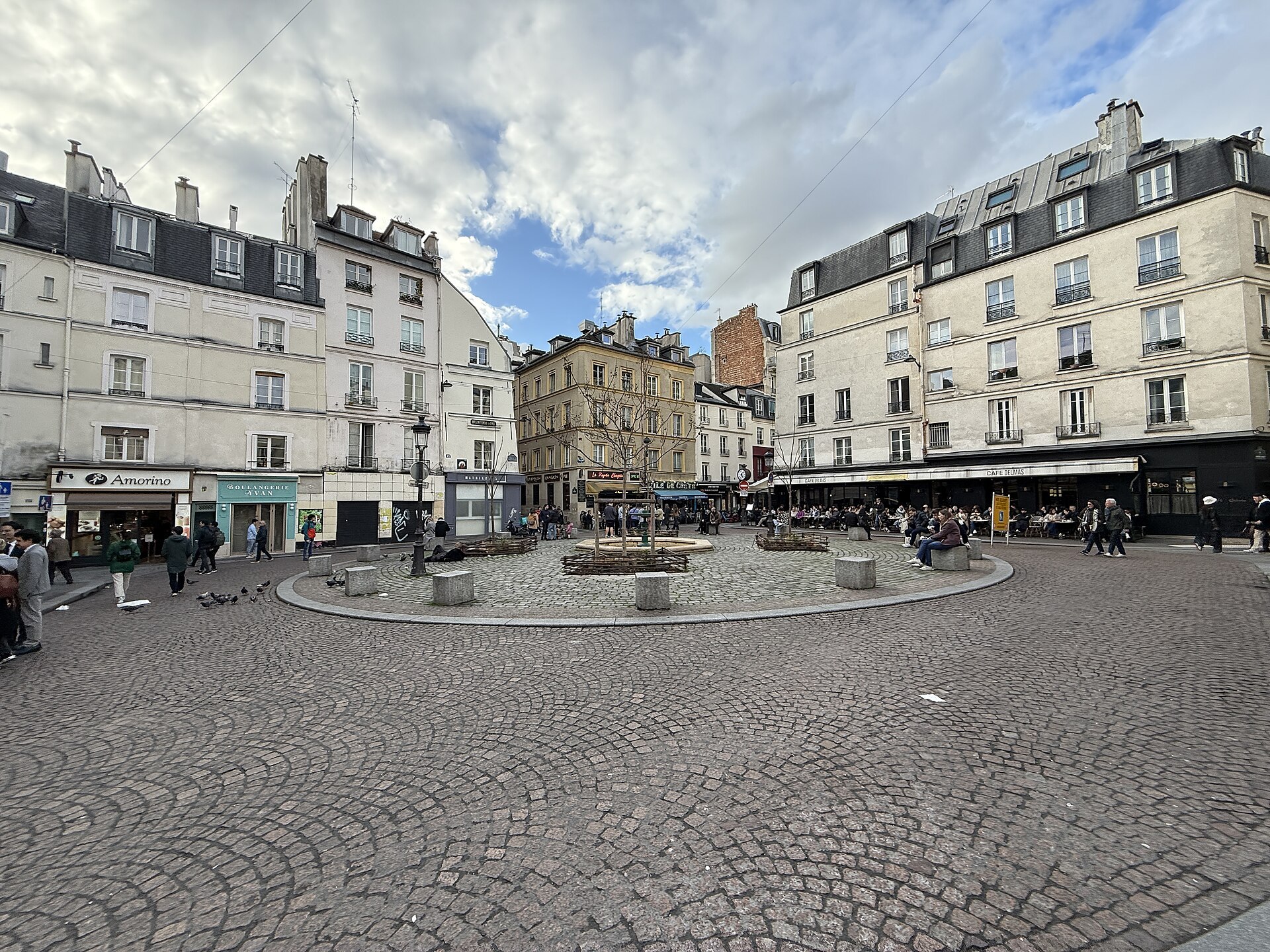
Story of a Street — Episode 5
The wall that opened two centuries late
In May 1938, workers were demolishing two unsafe buildings at 51 and 53 Rue Mouffetard. Inside an unremarkable wall they found old rolls. When opened, those rolls released 3,556 gold coins from the reign of Louis XV. This is not a tourist legend: the Monnaie de Paris calls it the most important treasure ever discovered in Paris.
Yet the best part of the story lies outside the wall. The gold had sat silent for almost two centuries, while people above it created another treasure every morning—bread, cheese, fish, conversation, music and recognition. Rue Mouffetard is therefore not merely a market street with a buried fortune. It asks what wealth does when it is hoarded, and what happiness does when it circulates.
The story in one minute
- A roughly 650-metre street, about seven metres wide, descending from Place de la Contrescarpe to Saint-Médard.
- Its line follows an ancient route associated with the Roman road leading south from Lutetia.
- The 1938 treasure was found inside a wall with documents connecting it to Louis Nivelle and his heirs.
- Food commerce shaped the street; Eugène Atget and later Agnès Varda preserved its people on camera.
- The best visit is a slow downhill reading of cafés, students, merchants, music and the church—not a race between famous addresses.
Louis Nivelle’s treasure: an inheritance that arrived two centuries late
According to the Monnaie de Paris, workers found parchment rolls holding 3,556 gold coins from Louis XV’s reign; more than eighty descendants eventually benefited. National Library catalogues later recorded auctions explicitly identifying coins from the “Rue Mouffetard treasure.”
The hoard is linked to Louis Nivelle, a royal official who concealed the money and left evidence that he intended it for his daughter. The secret died before reaching her and woke only under a demolition tool. Nivelle’s failure was not accumulating wealth. It was failing to communicate.
Before the treasure: a road older than modern Paris
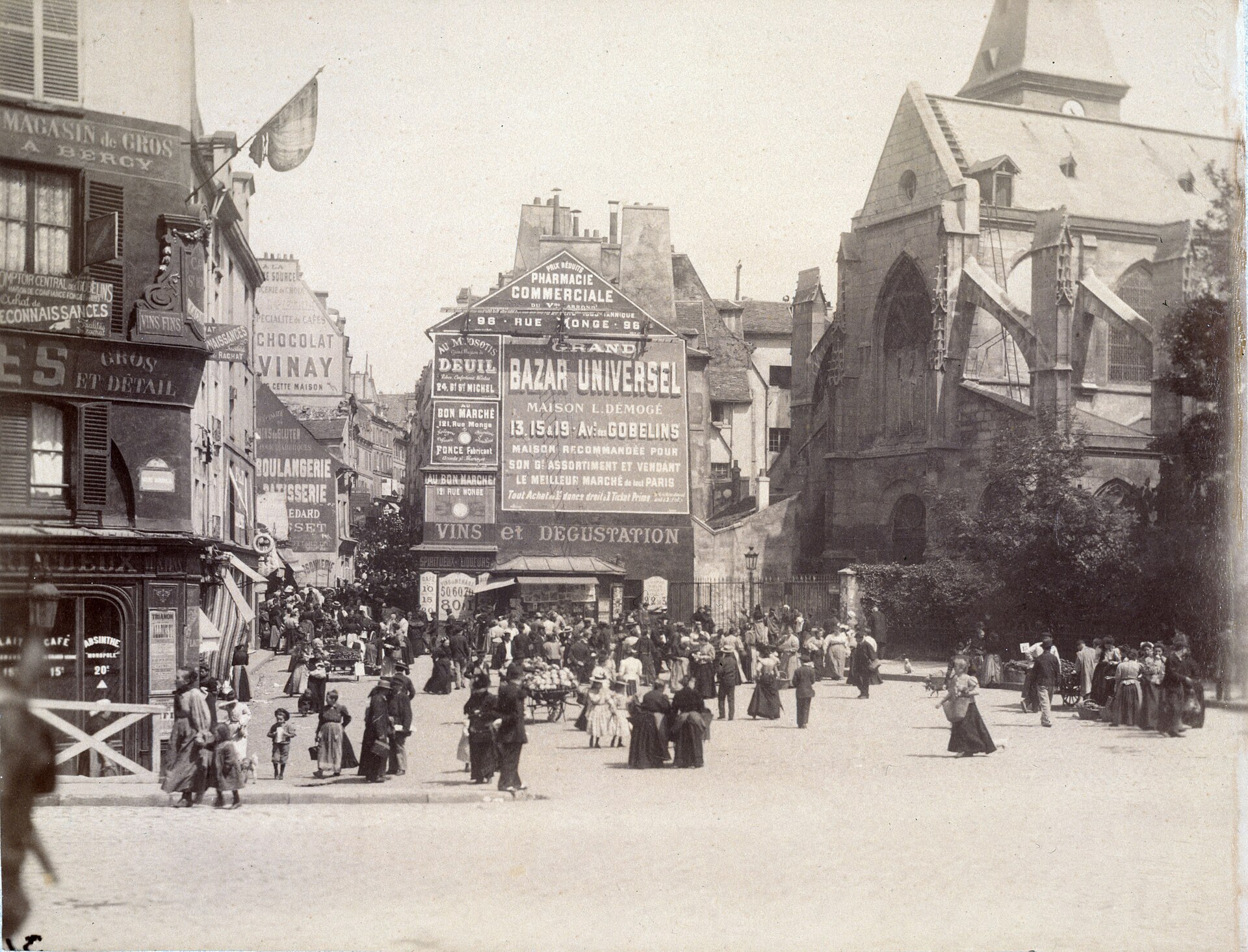
The Musée Carnavalet collection describes Rue Mouffetard as following the Gallo-Roman route that led south from Lutetia. Historians commonly connect its name to an old place called Mont Cétard or Mons Cetardus, altered through many spellings over centuries.
A historical study associated with the City of Paris and Carnavalet explains how the surrounding medieval street pattern survived, even as Rue Monge opened in 1859 and Avenue des Gobelins in 1869 covered the former southern extension. Mouffetard is a crooked memory preserved between the straight lines of nineteenth-century planning.
A market that refused to become scenery
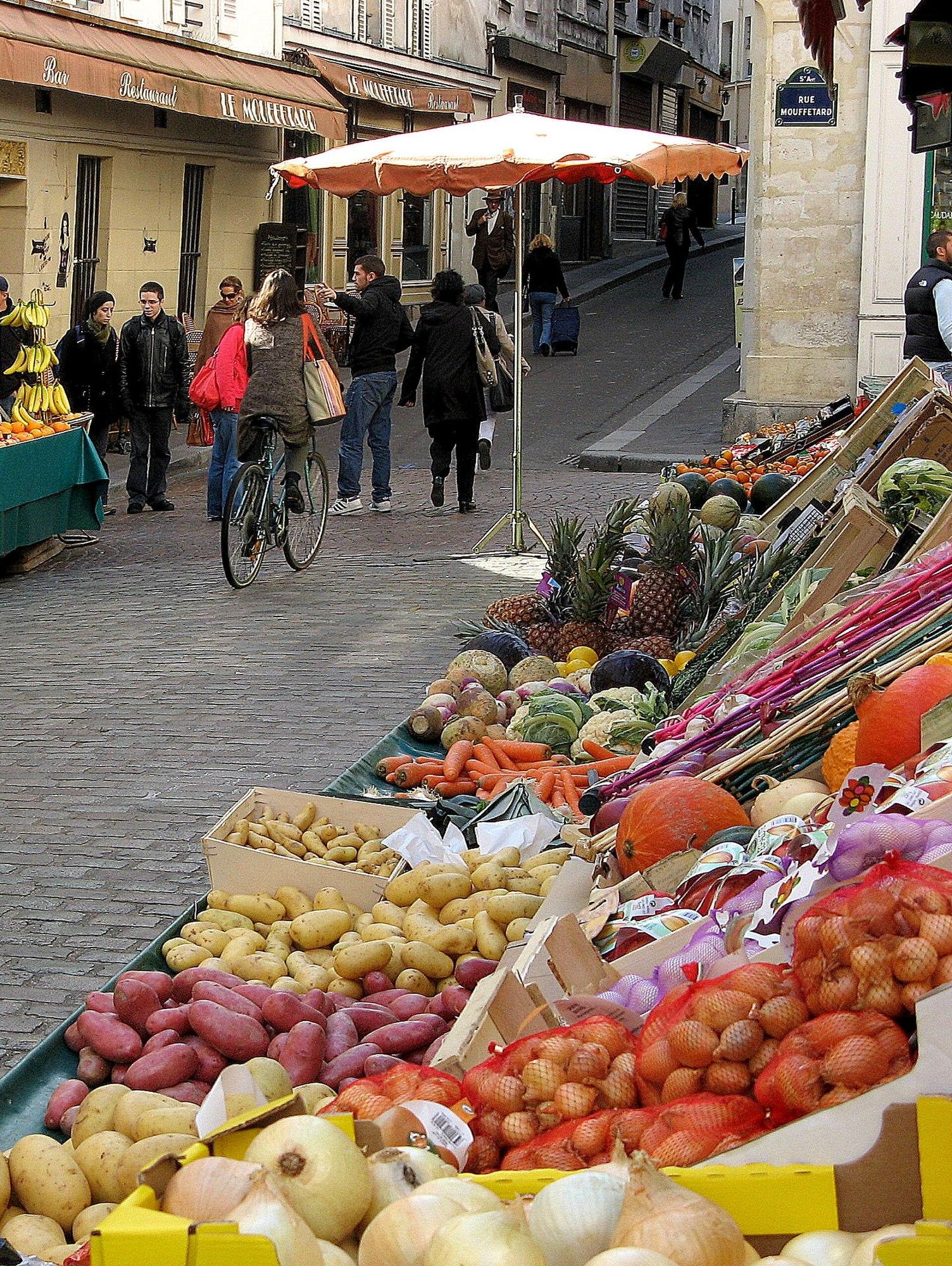
A 1908 description counted more than sixty wine merchants, caterers, roasters, restaurants and pastry shops, alongside grocers, fruit sellers, dairies and butchers. Authenticity was not a decorative theme; it was the supply system of a poor and crowded district.
Prices and residents changed. Students, visitors and international cuisines arrived. Yet the lower street still sells food as part of daily life. Produce, cheese, fish and bread are not props for photographs; they are why this place remains a street rather than an open-air museum.
Agnès Varda saw hope inside hardship
In 1957, Agnès Varda photographed the people animating the Mouffetard market. Pregnant, she returned to make L’Opéra-Mouffe in 1958. The Musée Carnavalet explains how the short film set food and her pregnant body against the poverty, age and alcoholism of the district—despair beside the possibility of birth.
Varda neither romanticised the street nor looked down on it. She watched people other passers-by barely saw. Her work changes the definition of history: kings and coins matter, but so do the tired seller, the hungry stranger and the woman waiting for a new life.
What to taste—and what to notice
| Stop | Look for | A useful rule |
|---|---|---|
| Bakery | A baguette, croissant or seasonal pastry | Choose what is fresh rather than chasing one famous name |
| Cheesemonger | Cheeses from different French regions | Buy a small portion and ask about ripeness |
| Produce | Seasonal fruit or vegetables for a picnic | Compare price and quality without blocking regular shoppers |
| Fishmonger | A classic market display | Observe even if you do not need to buy |
| Crêpes and global kitchens | Quick food at several budgets | Read menu and price before joining a queue |
| Coffee | Contrescarpe or a side street | The view does not require the most expensive table |
From Saint-Médard to a singer born in Alexandria
At the lower end stands Saint-Médard, whose main construction campaigns date to the fifteenth and eighteenth centuries. The French heritage register records its classification as a historic monument in 1906. The square in front has borne Georges Moustaki’s name since 2016.
The City of Paris naming document tells how Moustaki was born in Alexandria to Greek-Jewish parents, moved to Paris in 1951 and wrote songs of freedom and fraternity. It is a fitting ending for a layered street: Roman route, church, market, migrants, students and kitchens crossing borders.
A 75–100 minute Rue Mouffetard walk
- Begin on Place de la Contrescarpe and read the slope before descending.
- Pause near No. 53, where the treasure was found. There is no interior exhibition; respect residents and private property.
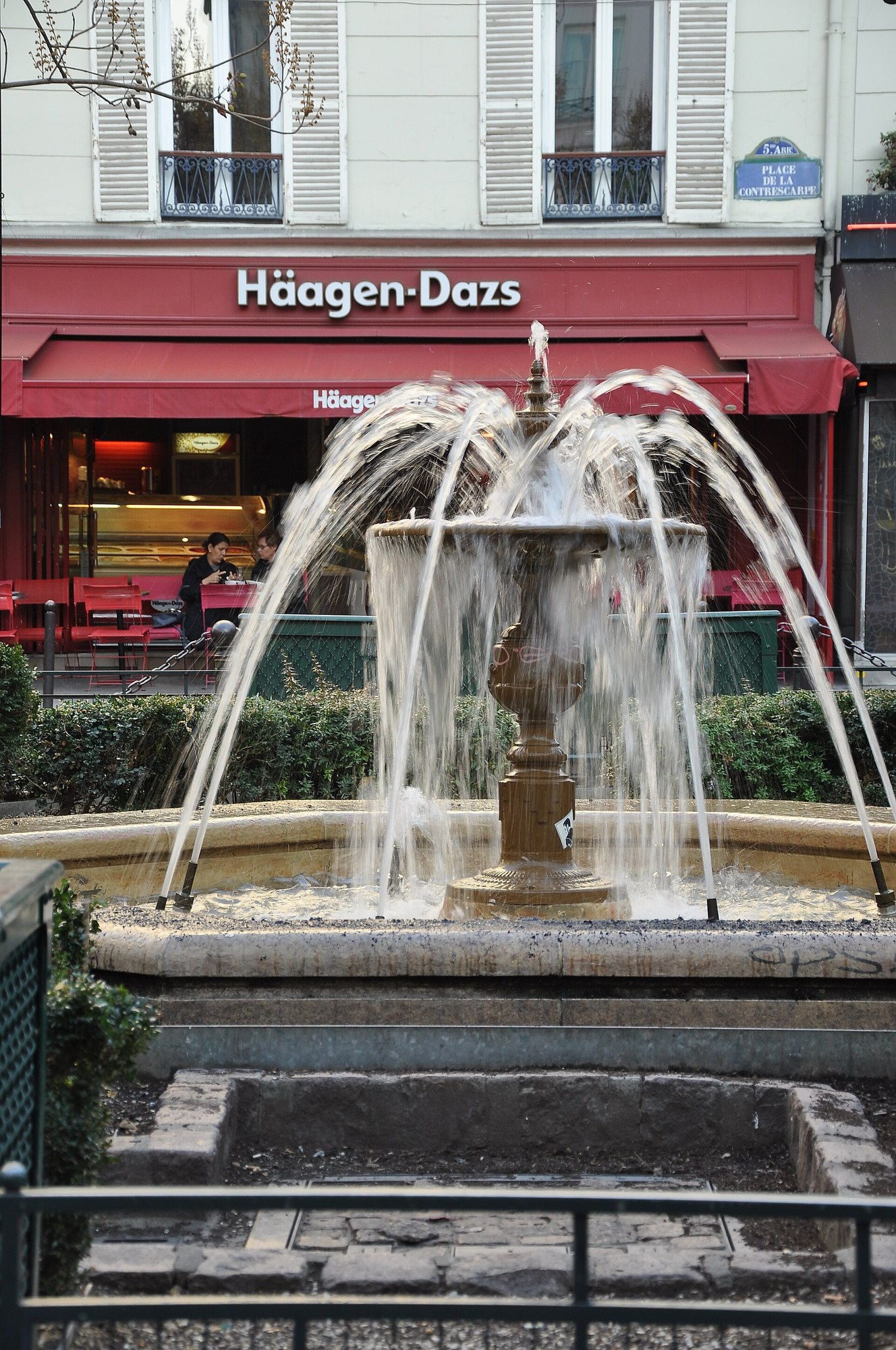
- Notice the Pot-de-Fer fountain at No. 60, an architectural detail many walkers miss.
- Continue past food façades and the theatre at No. 73, then slow down through the lower market section.
- Finish at Saint-Médard church and Place Georges-Moustaki, or continue towards Avenue des Gobelins.
Open the route in Google Maps. Metro line 7 at Place Monge or Censier–Daubenton works well for arrival or return.
The happiness key: let the treasure circulate
The gold stayed inside a wall for almost two centuries and helped nobody it was meant to reach. Outside, loaves, songs, greetings and stories moved from hand to hand and made a daily life. Money matters; but value that reaches no one remains an unfinished promise.
Try a simple Mouffetard exercise: buy one small thing from a merchant, ask one sincere question, sit with someone you care about and put the phone away for ten minutes. Happiness here is not a magical product. It is attention, exchange and presence.
See the street as it looks now
Filmed in summer 2026, this walk travels from Luxembourg Gardens to the Panthéon, Contrescarpe and Rue Mouffetard. The Mouffetard section begins at 46:31 and keeps the real city sound without narration.
Frequently asked questions
When should I visit the Rue Mouffetard market?
Morning—especially at the weekend—offers the strongest food-market atmosphere. But Mouffetard combines permanent shops, stands, cafés and restaurants with different closing days and hours. Check the specific business rather than trusting one timetable for the whole street.
Is Rue Mouffetard free?
Walking is free, and so is the church when open to visitors. A small food or coffee budget is enough; you do not have to turn every façade into a purchase.
Is it suitable for children?
Yes, with care on the slope, cobbles and busy lower section. Produce displays, music and the fountain often work better than a long history lesson.
Is the treasure still there?
No. The coins were divided and sold over time. No. 53 is a storytelling stop, not an excavation site or museum.
If you found the wall, what would you do?
Which story stays with you: the gold, Varda’s film, the food market or Moustaki’s journey from Alexandria? Tell us in the comments which one deserves a full film.
Share this article with someone you would walk with in Paris. Add this hook above the link: “A street hid gold for two centuries—but revealed a happier secret every morning.” A treasure story may become a plan to meet.
Travel service
Explore the Latin Quarter with OUISTARS
For a private walk or a comfortable transfer to the Latin Quarter, discover OUISTARS services. This commercial panel is separate from our sources and editorial choices.
Sources and method
This article uses official and archival sources checked on 4 October 2026. Its four images are real and licensed; no AI-generated image is used.
- Monnaie de Paris: the Rue Mouffetard treasure
- Rue Mouffetard and its shops — City of Paris/Carnavalet
- Musée Carnavalet: Agnès Varda and Mouffetard
- Musée Carnavalet: Atget’s Saint-Médard market
- French Ministry of Culture: Saint-Médard
- City of Paris: pedestrian and planting project
OUISTARS Travel
Editorial team