











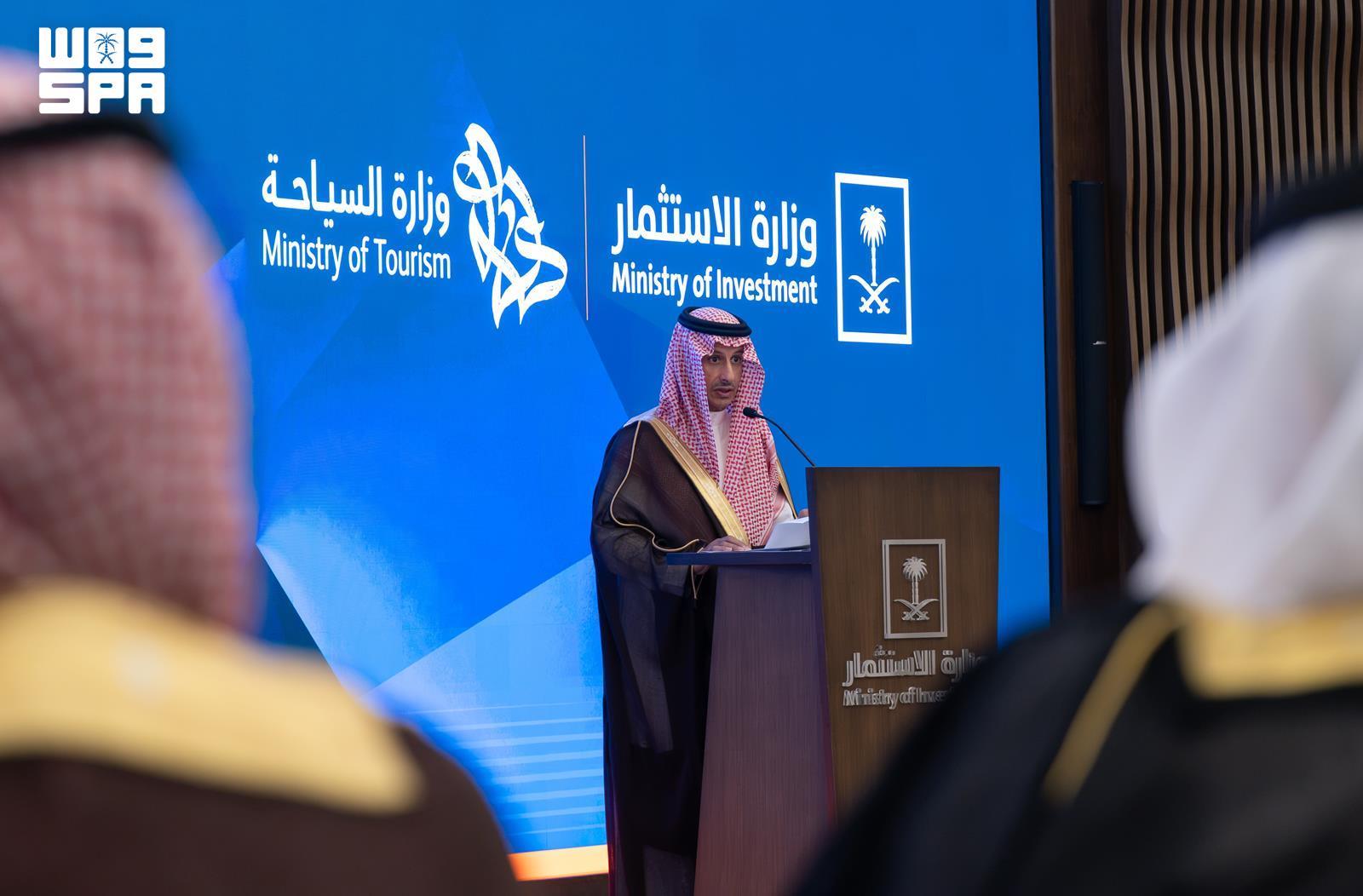

Cover photograph: Hospitality Investment Enablers projects announcement, 19 October 2026. Photograph: Saudi Press Agency (SPA).
Updated 20 October 2026
Saudi Arabia approved the first Hospitality Investment Enablers project batch on 19 October 2026: 19 projects in five destinations, with expected investment of SAR6.7 billion. The Riyadh announcement brought together Tourism Minister Ahmed Al-Khateeb and Investment Minister Fahad Al-Saif. For operators and suppliers, the next question is which identifiable assets progress from programme approval to finance, procurement and opening.
Where are the projects, and which companies are named?
Arab News’s 20 October 2026 coverage names Al-Baha, Al-Ahsa, Jeddah, Asir and the Eastern Province, with BSF Capital, Sedal, Rikaz and Jenan among participating firms. These details come from the additional newspaper report; SPA’s release does not provide a project-by-project map of locations, owners and operators.
Participation does not establish that a company is the hotel operator or that its assets are open to public investment. For a commercial approach, the next useful identifiers are the legal asset, owner, development stage and responsible project contact. This report does not establish an open procurement process.
| Hotel capacity | More than 3,000 rooms; approximately 40% in coastal destinations. |
|---|---|
| Employment | More than 17,000 jobs expected. |
| Economic contribution | Over SAR2.4 billion in annual direct GDP contribution by 2030. |
| Local content | More than SAR5.3 billion expected; the release does not label this an annual figure. |
| Opening timetable | First project by end-2026; final openings in 2029. |
What the programme does—and what remains undisclosed
SPA describes cooperation between the tourism and investment ministries to reduce operating costs for approved hospitality developments and improve project viability. Its announcement does not specify a support amount or disbursement mechanism for each asset. The aggregate investment should therefore not be described as a government cash grant or a fixed subsidy per hotel room.
The release also does not identify all 19 projects, the five destinations, developers or operating brands. Nor does it classify every room as luxury or five-star. These omissions matter to readers looking for a particular asset or commercial partner: programme-level approval is only the starting point for project-level research. Read the official announcement.
Why the coastal share and local-content figure matter
A substantial coastal component makes operating requirements central to assessing the pipeline. Our editorial interpretation is that resort maintenance, supply logistics and activities can differ from those of a city business hotel. A supplier’s useful proposition links products to a property’s use and location, with an explanation of service after delivery.
The announcement places restaurants, retail, entertainment and visitor services within the wider potential impact. Distinguish pre-opening fit-out, recurring hotel procurement and spending outside the property. Each has a different buyer, budget and contracting cycle. None should be presented as a tender already open simply because the programme exists.
A useful monitoring framework for 2026–2029
The first delivery measure is properties actually opening, followed by operational rooms, operator identity and services available. Employment, GDP and local-content expectations need subsequent implementation reporting before they become achieved outcomes.
Dividing SAR6.7 billion by the planned rooms would not establish a room price or investment return. Assets can contain different facilities and service components. The professional value lies in comparing each development’s scope with its delivery stage, then distinguishing a currently examinable opportunity from a forecast attached to future opening.
Questions for hotel operators
Identify the precise location, intended demand and proposed management or franchise structure. Room count alone does not determine brand fit. An urban business hotel and a seasonal resort can have very different operating economics despite similar capital budgets.
Before proposing terms, request the space programme, design stage, delivery schedule, operating budget and staffing plan. Programme approval does not replace demand analysis or give a particular operator commercial rights.
Where suppliers should begin
Find the developer and actual procurement decision-maker before sending a general offer. Separate pre-opening equipment from recurring operations: furnishing and installation require different delivery capabilities from software support, maintenance, training or consumables. Show warranty and after-sales capacity as well as price.
Verify a genuine tender or request for proposal, technical acceptance criteria and payment terms before assigning potential revenue. This article does not announce open tenders, offer referrals or establish a magazine relationship with the projects.
A preliminary investor checklist
Examine project documents, funding, available approvals and timetable commitments, then test occupancy, pricing, seasonality and service-cost assumptions. Ask for delayed-opening, cost-increase and lower-demand scenarios rather than relying on an ideal season.
These are preliminary analytical questions, not a purchase recommendation or return estimate. Appropriate advisers should assess the actual contracts and rules. Government programme approval does not establish capital protection or minimum profits.
Three paths to monitor
Our editorial scenarios are: financing and delivery progressing alongside demand; staggered openings with uneven destination performance; or delays and cost pressure affecting viability. These are not calculated probabilities or official forecasts.
Watch for named projects, operating agreements, financial close, construction progress and genuine reservation dates. Those milestones can provide more decision value than repeated headlines about the total announced investment.
Reader questions
Has SAR6.7 billion already been spent?
The announcement describes expected investment, not fully disbursed capital.
Can all the rooms be booked now?
No. Announced openings are phased through 2029; check each property.
Is this an investment offer or tender notice?
No. It is reporting and editorial analysis.
Read also: ILTM Cannes 2026
Sources
Related video
Al Ekhbariya archive, 1 May 2024: launch of the Hospitality Investment Enablers initiative. Programme background, not footage of the October 2026 projects announcement.