













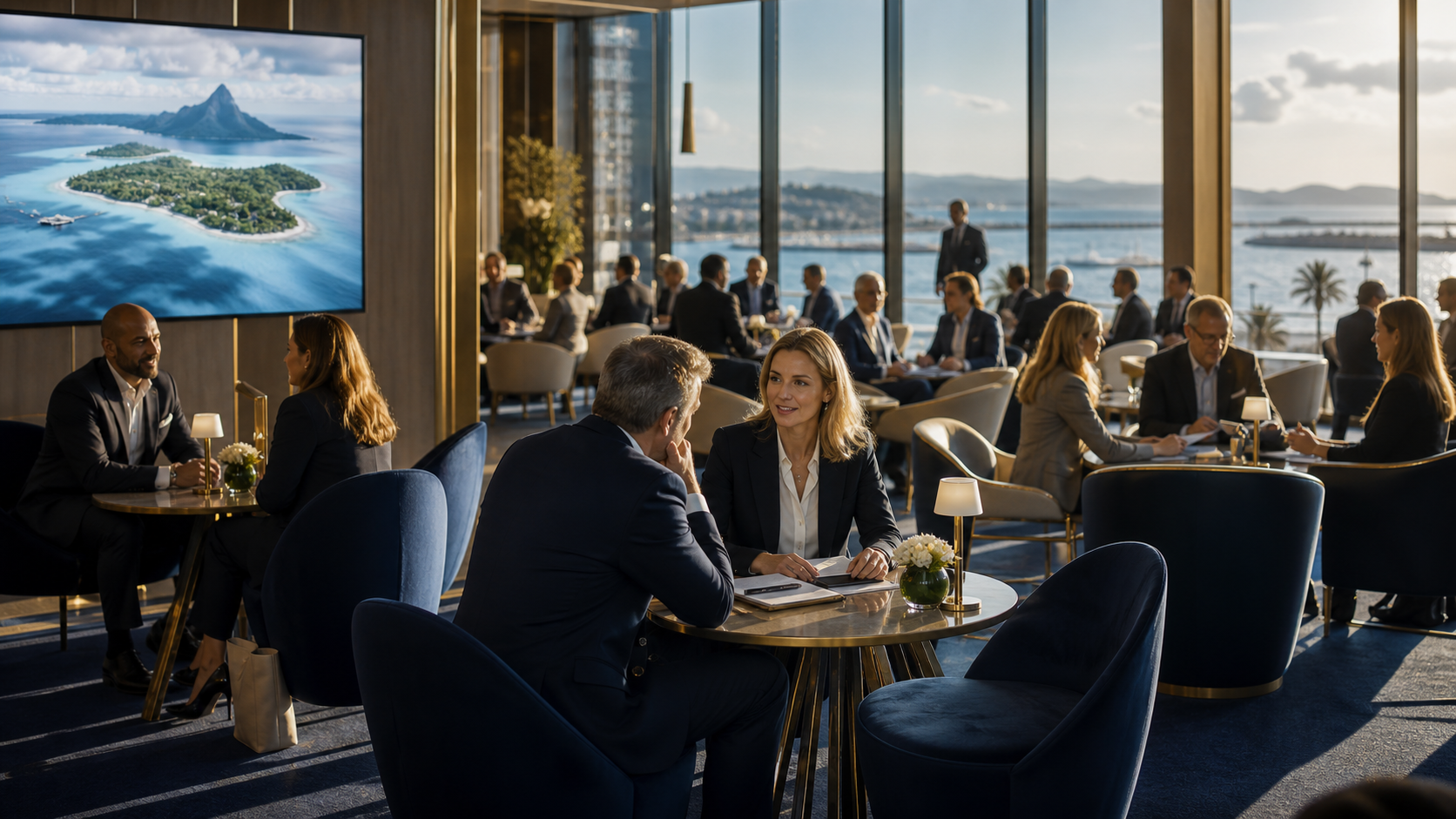
Luxury travel is built through relationships long before a guest arrives. From 30 November to 3 December 2026, ILTM Cannes turns the Palais des Festivals into a curated marketplace where hotel owners, destination leaders and exceptional travel providers meet the advisors who influence the world’s highest-value trips.
ILTM Cannes 2026: verified scale and dates
Official information says ILTM Cannes facilitates about 85,000 pre-scheduled meetings each year. More than 2,400 global luxury travel brands from over 80 countries participate, with reported year-on-year growth of 12%, alongside more than 1,850 travel advisors. The event runs Monday 30 November to Thursday 3 December.
Attendance is curated rather than casual. Hosted-buyer terms can include hotel or flight contributions and, for eligible participants, four nights of accommodation, reflecting the value placed on bringing qualified purchasing power to Cannes. Applicants should verify eligibility, appointments and updates on the official ILTM Cannes website.
Why an advisor still matters in a digital world
High-value travel contains expensive failure points: a missed private transfer, an unsuitable villa, security concerns, a family requirement or a celebration that cannot be repeated. A trusted advisor reduces that risk, understands preferences and can call the right person when plans change. Hotels therefore compete not only for media attention, but for professional confidence.
One productive advisor relationship can produce repeat bookings across several properties and years. That makes an ILTM meeting economically different from a consumer impression. The seller must communicate who the experience is for, what makes it defensible and how the operation protects the guest.
What 85,000 meetings are trying to achieve
A pre-scheduled diary forces both parties to qualify fit. Hotels seek inclusion in advisor portfolios, consortia programmes and preferred relationships. Advisors seek new openings, private access, dependable contacts and experiences their clients cannot assemble alone. Destinations seek longer stays and higher local spend.
Commercial discussions include rates, amenities, commissions, availability, cancellation, buyouts and response times. But the decisive factor is often operational trust. A beautiful suite cannot compensate for slow communication or inconsistent delivery.
The brands behind the luxury journey
The marketplace stretches beyond grand hotels. Private islands, safari camps, yachts, expedition ships, luxury trains, aviation, destination specialists, wellness retreats and tourism boards compete for itinerary space. The strongest products connect memorable design to a clear sense of place and reliable logistics.
New openings use Cannes to establish distribution before launch. Established groups use it to protect relationships and introduce renovations or destinations. Independent properties can compete when the owner story, service culture and access are genuinely distinctive, not merely expensive.
Where investors should pay attention
ILTM offers a live reading of demand before it appears fully in public data. Repeated advisor questions can signal interest in privacy, multigenerational villas, cool-climate summer destinations, longevity, conservation or culturally deep experiences. Investors can use those patterns to test hotel concepts, branded residences and specialist operators.
Due diligence must still examine seasonality, airlift, staffing, water and energy, renovation reserves and distribution cost. Luxury average daily rate can conceal high service intensity. The best assets combine pricing power with year-round reasons to visit and a labour model capable of delivering the promise.
Cannes gains a valuable winter season
ILTM arrives when Mediterranean leisure demand would normally be quieter. It fills premium rooms, restaurants, meeting salons and transport with international professionals. La Croisette hotels become showrooms; suites host breakfasts and presentations; nearby Antibes and Juan-les-Pins can absorb additional demand.
That winter timing matters to employment and suppliers. Florists, production teams, chauffeurs, interpreters, caterers and event agencies gain business outside the summer peak. Our analysis of Cannes’ festival economy explains how the city monetises a calendar, not only a coastline.
Paris, Monaco and the Riviera in the luxury network
Many advisors combine Paris, Provence, Cannes and Monaco in one high-spend itinerary. Paris supplies culture, shopping and gateway airlift; the Riviera adds resorts, villas, yachts and events. Investment opportunity lies in seamless links: luggage, private rail or road transfers, multilingual concierges, aviation and trusted access.
The wider context appears in our Paris tourism and luxury investment guide and Monaco Yacht Show 2026 analysis.
How to win after the appointment
Exhibitors should record client type, geographic reach, current demand and the exact next action. Advisors need concise rate and contact information, not piles of generic material. Follow-up should be personal, permission-based and supported by an operator who answers quickly when the first booking arrives.
Why ILTM Cannes 2026 matters
ILTM Cannes 2026 is where inspiration is converted into a trusted distribution relationship. Its 85,000 meetings influence hotel openings, destination visibility and millions in future guest spending. For Cannes, the marketplace is proof that a premium city can use professional travel demand to strengthen winter tourism and remain central to the global luxury economy.