













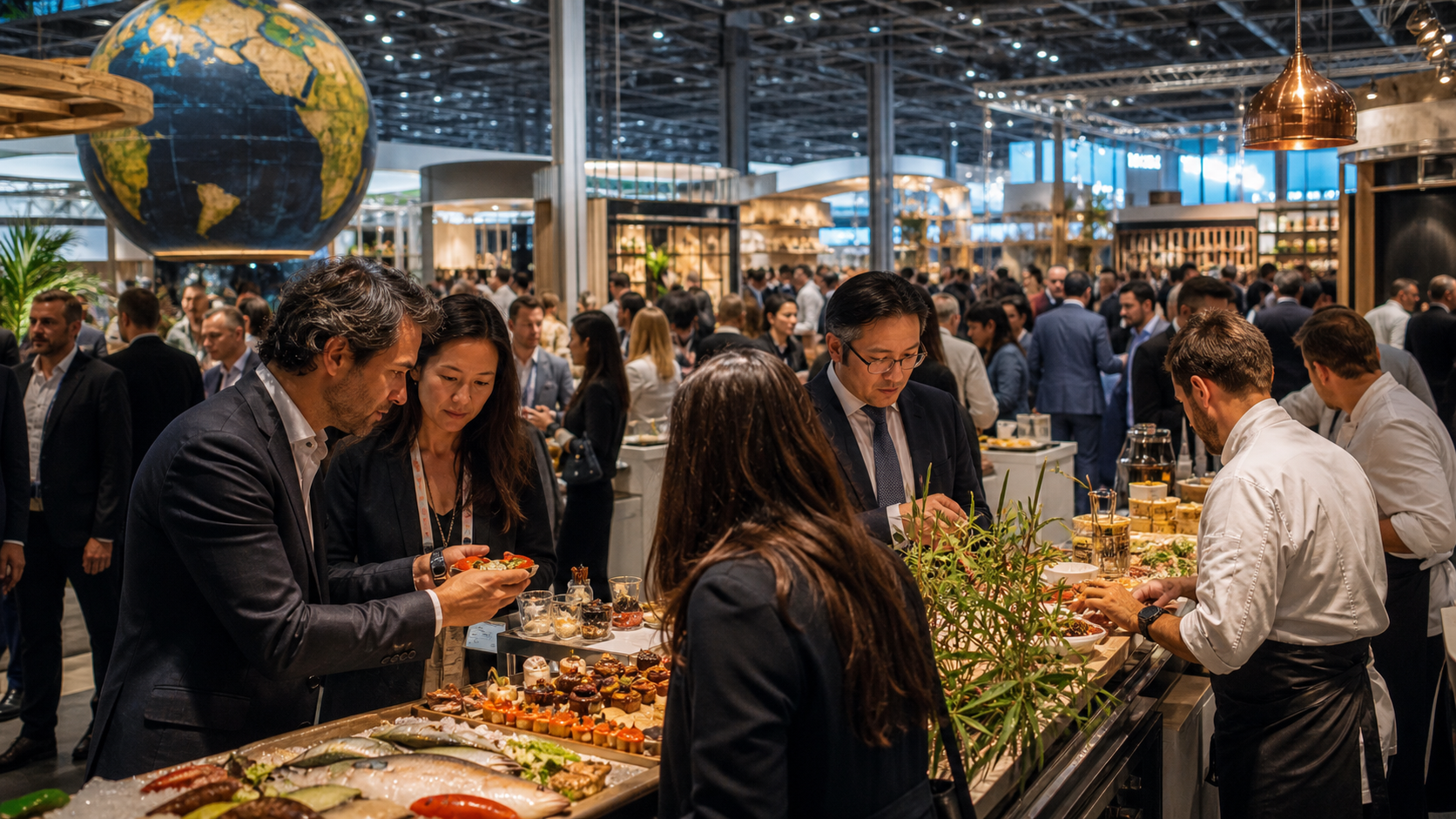
SIAL Paris is not simply a display of food; it is a machine for turning taste into contracts. From 17 to 21 October 2026, producers, retail buyers, importers, foodservice groups, chefs, investors and technology suppliers gather at Paris Nord Villepinte to decide which products will cross borders and reach shelves.
SIAL Paris 2026: verified scale
Official information positions the event across more than 130 countries, with 8,000 exhibitors and about 400,000 products. The organiser says each edition generates more than €10 billion in contractual value. Those figures explain why five days in Villepinte matter to farming regions, consumer brands, distributors and national export agencies.
The event runs Saturday 17 to Wednesday 21 October. Registration, opening hours and hall changes should be confirmed through the official SIAL Paris website. Travellers needing practical planning can use our separate SIAL Paris 2026 essential guide and hotel and transfer guide; this new feature focuses on deal economics.
How a tasting becomes a purchase order
A buyer’s first reaction may be sensory, but the contract is mathematical. Price, case size, shelf life, certification, promotional support, delivery reliability and retailer margin decide whether enthusiasm survives. Export deals add currency, customs, cold-chain and local labelling. A founder who cannot answer those questions is sampling, not selling.
Large retailers use SIAL to scan categories efficiently. Importers look for products that fill gaps in their territories. Foodservice buyers need consistency at scale. Private-label teams may value manufacturing capability more than consumer branding. Each requires a different pitch and evidence pack.
The categories shaping the next consumer
Health, convenience, pleasure and price rarely move in harmony. Products that reduce sugar or processing must still taste good; sustainable ingredients must remain available; premium foods must justify frequency or gifting value. Protein diversification, functional nutrition, fermentation, frozen quality and culturally specific convenience remain fertile areas.
Innovation does not have to mean a laboratory ingredient. It may be a packaging format that reduces waste, a recipe adapted for a new market, or logistics that make fresh quality viable farther from production.
The companies behind the booths
The 8,000-exhibitor scale includes multinational manufacturers, regional champions, agricultural cooperatives, start-ups, ingredient companies, equipment makers and national pavilions. Their goals differ. A major group may defend category share; a cooperative may seek an importer; a start-up may pursue a distributor or capital; a country pavilion may build export reputation.
Buyers should judge capacity, customer concentration, food-safety systems and recall readiness. Suppliers should research the buyer’s channels and price architecture. The strongest meeting begins with commercial fit, not a generic product story.
Where investors can find durable value
Attractive opportunities cluster around scalable demand and difficult execution: traceable ingredients, efficient cold chains, food-safety testing, reformulation, sustainable packaging, manufacturing automation and data connecting forecasts with production. Brands can create value, but factories and infrastructure may provide defensibility that marketing alone cannot.
Due diligence should include commodity exposure, energy, water, labour, retailer concentration and working capital. Fast sales growth can consume cash when inventory and payment terms expand. The best SIAL discovery is not necessarily the loudest stand, but a business with repeat orders and a credible route to capacity.
Paris and Villepinte share the visitor economy
Paris Nord Villepinte is close to Charles de Gaulle Airport, making it effective for international trade but creating concentrated demand for hotels, shuttles, catering and freight. Exhibitors arrive early for stand preparation and product handling; buyers add restaurants and central Paris hospitality to their schedules.
Hotels near the airport and exhibition centre capture convenience, while central properties capture executive dinners and city extensions. Translators, refrigerated logistics, customs specialists, temporary staff and private transport all participate. The fair’s economic footprint therefore stretches from warehouses to Michelin-level hospitality.
France’s strategic advantage
France combines agricultural production, food science, culinary authority, retail expertise and global tourism. Paris gives international products a stage associated with taste, while SIAL gives French companies direct access to distant buyers. That combination can attract food-tech capital, regional manufacturing and headquarters activity.
Our broader Paris tourism and investment map shows how major events support hospitality, logistics and urban services as well as the exhibition sector itself.
A disciplined plan for five days
Exhibitors should prioritise target accounts, prepare multilingual commercial sheets, record samples and qualify every lead. Buyers should map categories and leave space for discovery without surrendering the agenda. Both sides need agreed next steps, technical documentation and a follow-up date.
SIAL Paris 2026 matters because food demand is universal but commercial success is local and operational. The event’s €10-billion-plus contractual footprint reflects thousands of decisions about price, trust, culture and supply. For Paris, those decisions produce tourism revenue today and investment pathways for years.