


















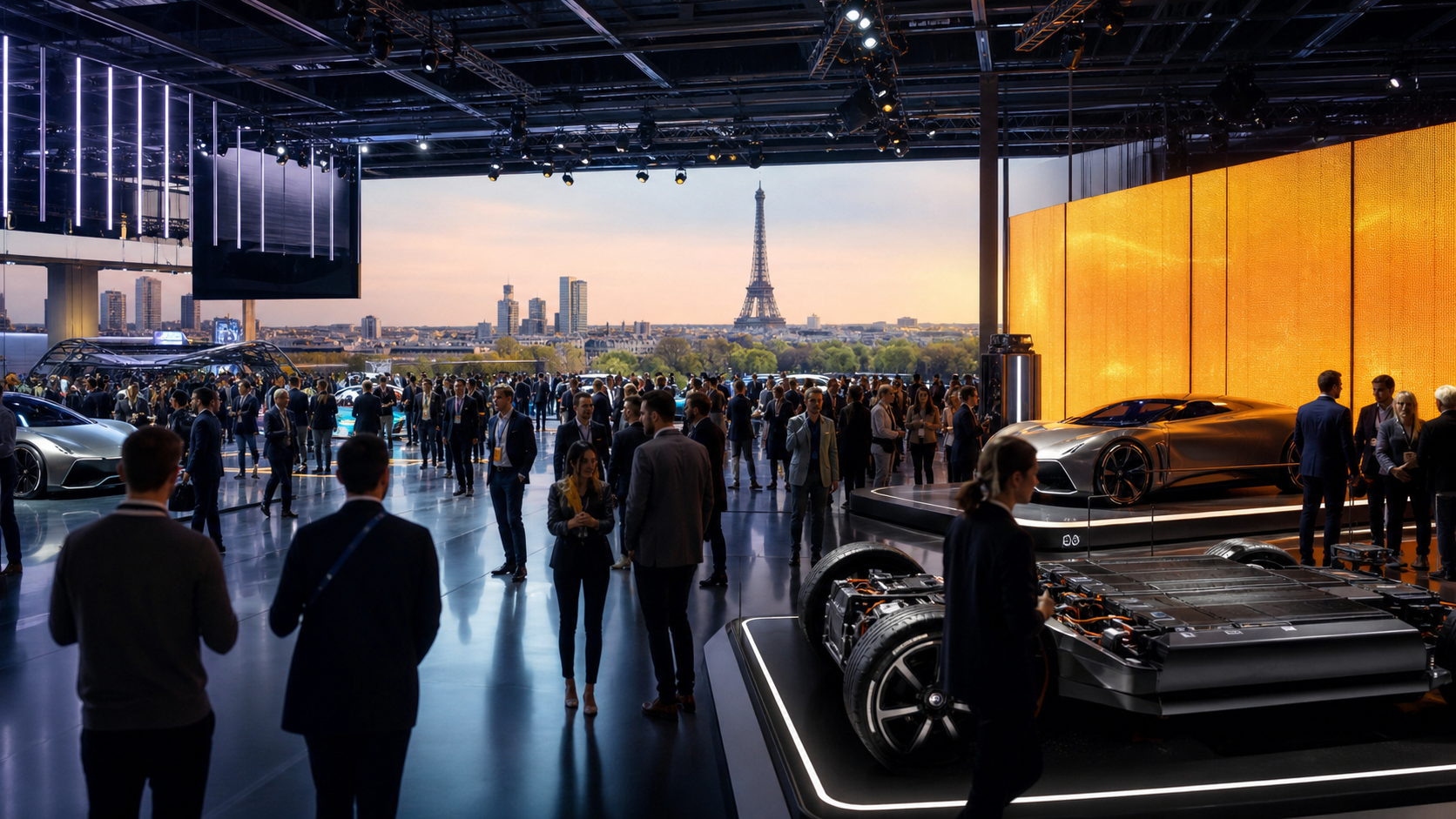
The Paris Motor Show returns from 12 to 18 October 2026 as Europe’s car industry confronts a new competitive map. Batteries, software, pricing and manufacturing scale now matter as much as horsepower. At Porte de Versailles, established European groups and ambitious Asian entrants will compete for consumers, distributors, talent and political attention.
Paris Motor Show 2026: verified essentials
The 91st Mondial de l’Auto opens to media on Monday 12 October, with public days from Tuesday 13 to Sunday 18 October at Paris Expo Porte de Versailles. The official exhibitor information already includes Audi, BYD, Capgemini, Alfa Romeo, Changan, Chery, Cupra, Dacia, DS, Fiat, Ford, GAC and Geely, among other participants. Opening details and tickets should be checked on the official Mondial de l’Auto website.
Europe meets a faster Chinese challenge
The show floor will make an industrial contest tangible. European manufacturers bring brand heritage, dealer networks, engineering depth and local production. Chinese groups bring rapid development cycles, battery integration, digital cabins and aggressive value. Consumers will compare range, charging, software quality, safety, financing and resale confidence, not nationality alone.
For policymakers, the questions include tariffs, local content, jobs, energy security and charging access. For manufacturers, the task is simpler to state and harder to execute: produce an electric vehicle customers desire at a price that earns an acceptable return.
The car is becoming a software and energy product
Value is migrating into battery management, power electronics, driver assistance, infotainment, cybersecurity and recurring services. That expands the supplier map beyond mechanical engineering. Semiconductor firms, cloud providers, mapping specialists, charging operators and recyclers now influence the ownership experience.
Capgemini’s inclusion illustrates the strategic role of digital transformation. Investors should distinguish software that creates durable switching costs from features consumers expect free. They should also examine warranty exposure, data governance and the cost of supporting vehicles for a decade.
Where the business opportunities sit
Charging at homes, offices, hotels and retail sites remains investable when utilisation and grid access are sound. Fleet electrification needs financing, depot planning and energy management. Battery repair, diagnostics, second-life systems and recycling can grow as the installed base ages. Used-EV valuation and battery-health certification could become essential infrastructure.
Distribution is changing too. Direct sales, agency models and online configuration must coexist with test drives, servicing and trusted local advice. Companies that connect customer data without alienating dealers can capture more lifetime value.
Visitors turn technology into purchase intent
Unlike a closed trade fair, the Mondial lets families, enthusiasts and fleet prospects sit inside cars and compare brands in one trip. That physical contact matters for unfamiliar entrants. Clear range claims, understandable charging and transparent finance will outperform futuristic theatre without ownership evidence.
The retail lesson connects with our analysis of NRF Retail’s Big Show Europe 2026: buyers expect digital convenience, but large purchases still require confidence built across physical and online channels.
Paris hotels and tourism capture a broad audience
Exhibitors, press and suppliers arrive before the public opening, while consumer visits extend demand across the week. Hotels in the 15th arrondissement, Issy-les-Moulineaux, Montparnasse and central Paris benefit from different budgets. Restaurants, taxis, public transport, stand builders, security and temporary staff share the spend.
The date also makes the show part of an attractive autumn city break. International visitors can combine the exhibition with design, gastronomy and luxury retail, increasing value beyond the ticket. Organisers and hotels can package transport and timed access without inflating image sizes or altering the event’s core experience.
Investment tests behind the concept cars
Investors should look past launch spectacle to gross margin, order conversion, inventory, homologation and service capacity. A strong prototype does not prove scalable manufacturing. Supplier contracts, battery sourcing, residual values and incentives can change the economics quickly.
Paris remains a centre for mobility capital, engineering, design and policy. Our Paris investment opportunity guide places mobility alongside tourism, luxury and urban technology.
Why the 2026 edition matters
The Paris Motor Show 2026 is where industrial strategy becomes a product a customer can touch. It will reveal which companies can translate electrification into affordability, trust and delight. For Paris, the event brings a mass audience and high-level business travel together, reinforcing Porte de Versailles as both a commercial stage and a tourism asset.