














At dawn, Ceuta’s border stopped being a line on a map and became a shockwave through a city of roughly 83,600 people. Within hours, roads, reception facilities and public services were confronting a movement of people on a scale that rivalled the Spanish enclave’s population. The political headline was immediate. The economic consequences were not.
Reporting cutoff: all facts and figures were verified up to 17:00 CEST on Friday, 31 July 2026. Counts remained subject to reconciliation between authorities.
49,000, 50,000 or 60,000?
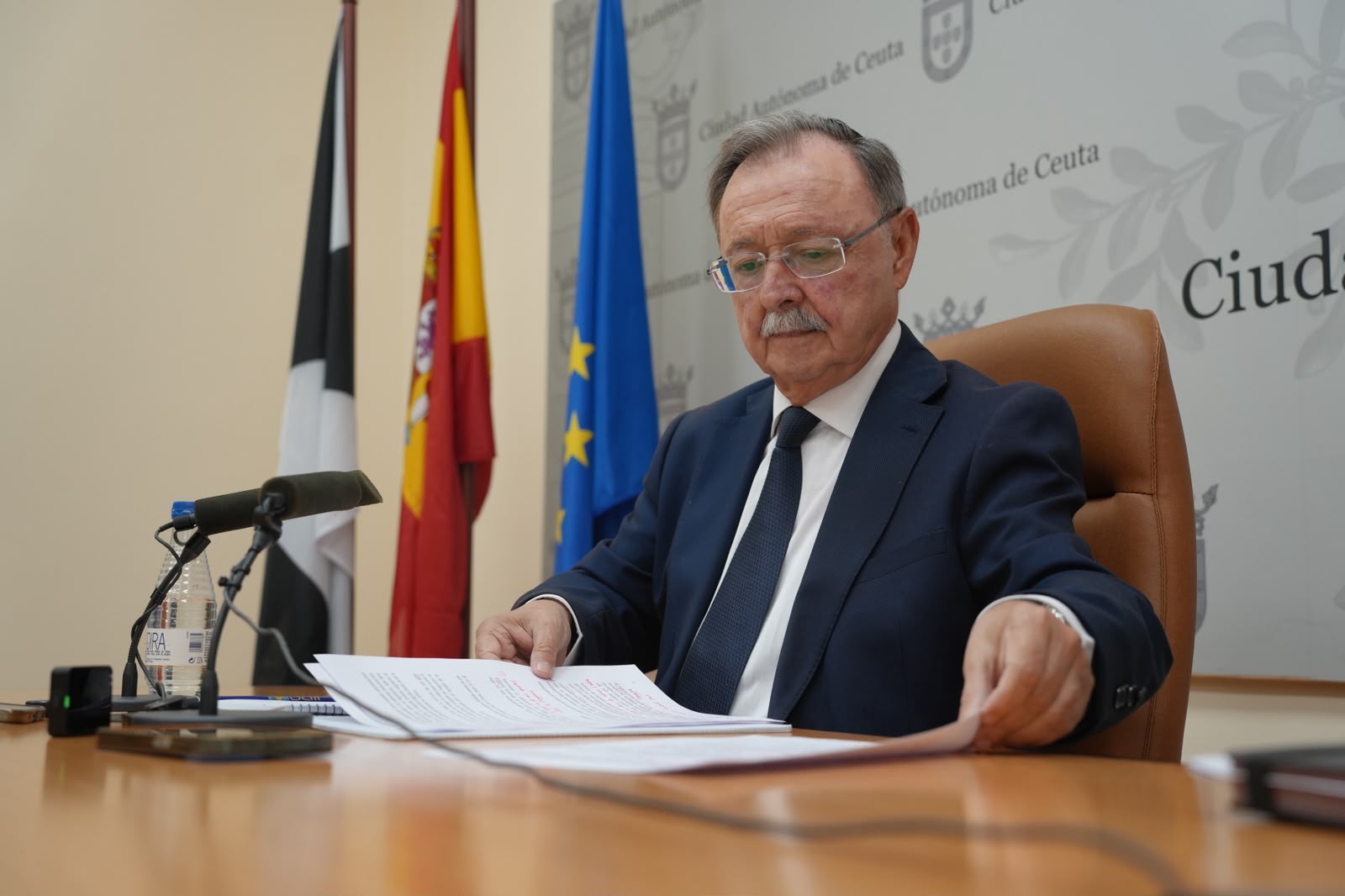
At the cutoff, Spain did not have one reconciled total. Cadena SER reported an initial central-government estimate of about 49,000 crossings, later rounded to 50,000 in operational updates. After meeting Prime Minister Pedro Sánchez, Ceuta president Juan Jesús Vivas estimated approximately 60,000—about 70% of the enclave’s population.
These were gross crossings, not the number still present. By 16:00, the government said more than 37,500 people had left Ceuta for Morocco. El País’s live coverage used a central count of roughly 50,000 while recording the higher local estimate. The headline’s 60,000 is therefore a clearly attributed estimate from Ceuta’s president, not a final audited Interior Ministry count.
The human toll was also changing. El País reported 57 deaths among people attempting the sea crossing by the afternoon; earlier international reports carried lower totals. Breaking-news numbers must be timestamped rather than treated as settled history.
A city already under pressure
The Interior Ministry’s latest published fortnightly balance recorded 2,826 irregular arrivals through Ceuta between 1 January and 15 July 2026. Two days before the mass crossing, the Ceuta government said reception resources were saturated: more than 1,500 sea arrivals in several days and 570 unaccompanied minors in care—around 1,600% of stated ordinary capacity.
The immediate task was to identify people, protect minors and vulnerable adults, provide shelter, sanitation and medical care, keep roads and commercial districts functioning, and restore orderly border control. Spain deployed additional police and military support, according to Associated Press.
None of this permits collective suspicion. The arrivals included young men, women, children and families with different nationalities, motives and legal circumstances. A lawful state screens individuals; it does not treat an entire population as criminal.

Documented facts versus business risk
Documented were overcrowding, acute reception pressure, large-scale returns, exceptional security deployments and visible disruption near border areas. Not documented were verified totals for hotel cancellations, restaurant revenue losses, retail damage, transport-booking declines or postponed investment. OUISTARS found no authoritative same-day loss estimate from Ceuta, Spain’s tourism authorities or the national statistics institute.
Ceuta has spent years developing tourism, services, sport and digital business. The city said its “Ceuta Emociona” travel programmes had attracted more than 21,000 visitors since July 2022 and generated an estimated €3 million in direct impact for local companies. In May 2026, Ceuta counted 25,236 Social Security affiliates and 8,495 registered unemployed people. In an economy of this size, a confidence shock can matter to hotels, restaurants, shops, taxis, ferry agents and tour operators.

How the shock can reach tourism
Tourism reacts to images and friction. If international coverage repeatedly shows unmanaged crowds, street sleeping, waste, confrontation or closed routes without context, visitors may not distinguish the Tarajal border from the marina, the Royal Walls or the beaches.
- Confidence: travellers postpone trips when safety information is unclear.
- Access: congestion raises the perceived cost of travel.
- Capacity: emergency demands can stretch health, policing and cleaning.
- Reputation: viral images may outlive the emergency.
- Investment: repeated unmanaged shocks increase risk premiums.
Emergency personnel and media crews may briefly raise room demand, but that is not evidence of a healthy visitor economy. OUISTARS has examined comparable confidence dynamics in reports on French wildfires and tourism, aviation disruption and European tourism and destination resilience.

Firm, individual and lawful screening
The EU Migration and Asylum Pact entered into application on 12 June 2026. Under the Commission’s screening framework, irregular arrivals undergo registration plus identity, security, health and vulnerability checks, normally within seven days at an external border.
That is how genuine criminal records or security risks should be identified: verified databases, biometrics, intelligence and due process—not nationality or rumour. Minors, trafficking victims and protection applicants require safeguards. Those with no right to remain need fast, dignified and enforceable decisions. Eligible applicants should not disappear into years of administrative limbo.
Operation Minerva 2026, led by Spain’s National Police with Frontex, had deployed 137 experts across Algeciras, Ceuta and Tarifa. This crisis tests whether that architecture can scale quickly.
What effective management requires
- Stabilise the border with coordinated command and rescue capacity.
- Register and screen quickly, individually and lawfully.
- Replace street sleeping with organised accommodation, sanitation and enforceable rules.
- Decide protection, transfer, return or residence cases rapidly.
- Protect public order without collective punishment.
- Provide language training, qualifications and legal work for eligible people.
- Fund hospitals, schools, cleaning and policing so residents do not carry the cost.
- Coordinate Spain, Morocco, the European Commission and EU agencies.
Labour-market integration is not an alternative to border control. For those legally entitled to remain, it prevents dependency and informal work. For those not entitled to stay, a fast appealable decision is more humane—and more credible—than years of delay.
Three economic scenarios
Rapid containment: crossings subside, returns and transfers proceed, streets remain orderly and the reputational shock is short-lived.
Prolonged pressure: reception stays overwhelmed and unmanaged camps become visible. Tourism demand could weaken and investment could be deferred. These are risks, not verified losses.
Institutional reset: Spain and Morocco restore coordination while the EU Pact supports screening, solidarity and lawful returns. Ceuta protects tourism districts and adapts reception capacity, demonstrating resilience.
OUISTARS Editorial Analysis
OUISTARS analysts believe that if a crisis of this scale is not managed immediately through effective border control, rapid identification, security screening, organised accommodation, public-order enforcement and labour-market integration for eligible individuals, the consequences could extend beyond migration policy and negatively affect tourism confidence, local commerce, hotel and restaurant activity, the city’s image and future investment.
This is an editorial risk assessment, not proof that tourism losses have already occurred. As of 17:00 CEST, no verified comprehensive tourism or business-loss figure had been published. Unmanaged disorder can damage a destination economy; professional, lawful and humane management can contain that damage.
The lesson extends beyond Ceuta. As our analysis of Tangier’s Mediterranean tourism ambitions showed, coastal investment depends as much on confidence and governance as on hotels and marinas.
Frequently asked questions
Did 60,000 migrants definitely enter Ceuta?
Sixty thousand was Ceuta’s president’s estimate. Central-government reporting indicated about 49,000 and later roughly 50,000. The totals were not reconciled by 17:00 CEST.
How many people remained in Ceuta?
The government said more than 37,500 had returned to Morocco by 16:00, so gross crossings are not the number still present.
Has the crisis caused proven tourism losses?
No comprehensive verified loss figure had been published by the cutoff.
Does screening treat migrants as criminals?
No. Screening must be individual, evidence-based and lawful, with safeguards for minors, vulnerable people and those entitled to protection.
OUISTARS travel planning: Travellers arranging a trip in France can review OUISTARS private chauffeur and luxury transportation services for airport meet-and-greet, hotel transfers and tailored journeys.