

















Independent editorial analysis · Information checked through 10 November 2026.
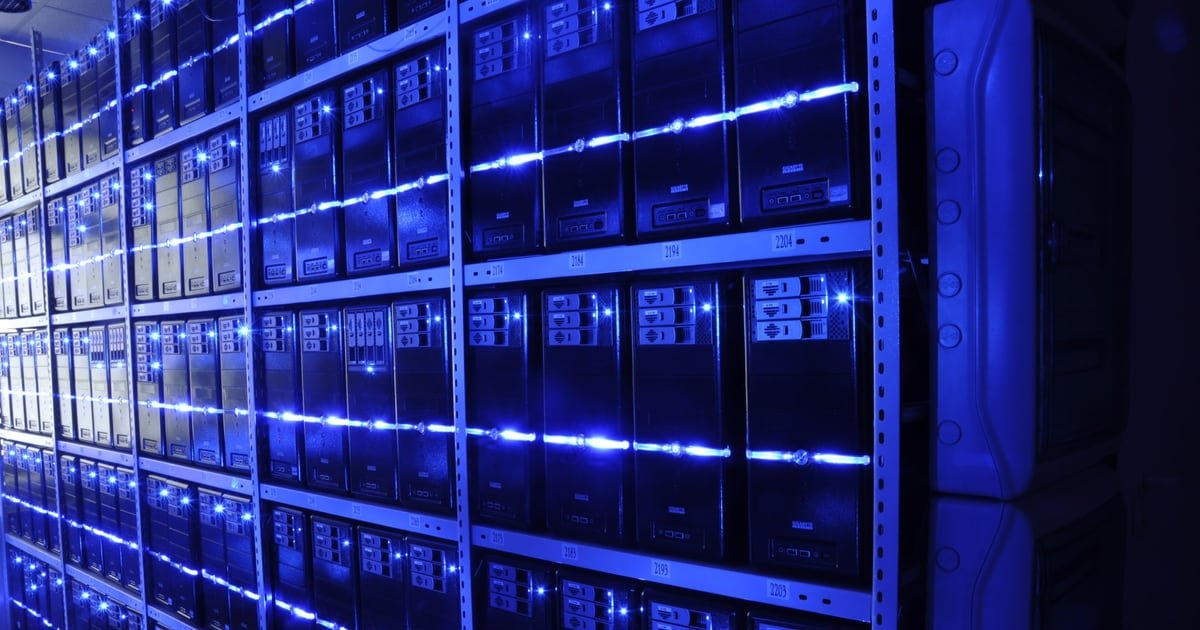
BalticServers.com · Wikimedia Commons · CC BY-SA 3.0
France wants to become a European AI power, but every model ultimately depends on buildings, electricity, cooling and land. Data centres are therefore a sovereignty issue and an environmental test at the same time. The question is no longer how many projects France can attract. It is which projects deserve scarce grid capacity, who pays for infrastructure and where the heat goes.
Investment headlines are not immediate demand
RTE estimates that France had about 300 data centres in 2026, consuming roughly 10 TWh. It had reserved close to 18 GW of connection capacity for around 80 projects by May 2026. A reservation, however, is not the same as immediate consumption: new facilities install processors progressively over many years.
The more useful signal is the central trajectory. RTE says the sector could use 23–28 TWh in 2035, around 4% of French electricity consumption. France’s advantage is a low-carbon power system and strong grid; its constraint is competition for land and connection points.
Sustainability is becoming an operating condition
French and EU rules require annual environmental and energy reporting from data centres with at least 500 kW of installed IT power. Large facilities must also examine waste-heat recovery. Competition is moving from broad green claims to measurable indicators: power efficiency, water use, flexible demand and useful heat.
Government and industry are testing grid flexibility
RTE’s DCFlex demonstrator at Data4’s Marcoussis campus, with Schneider Electric, tests whether data centres can adjust demand to support the power system. If proven, a facility can become a flexible consumer rather than a permanently rigid load. Flexibility does not remove the need for local transparency on water, noise, land and employment.
Good investors look beyond megawatts
Project quality is not defined by connection size alone. The strongest sites combine energy, fibre, security, heat-reuse potential and local acceptance. AI also increases rack density, making thermal design and equipment choices investment decisions rather than back-room engineering details.
What it means
Investors should model real utilisation rather than press-release capacity. Cities should demand credible plans for electricity, water, waste heat and employment before allocating land or support.
Frequently asked questions
Are French data centres automatically low carbon?
France’s electricity is relatively low carbon, but total impact includes equipment, construction, water and rising demand. Power supply alone is not enough.
Can waste heat always be reused?
No. It requires a nearby user, a heat network and viable economics, which is why feasibility studies matter.
Official sources

Cite this article
When citing the text or analysis, include the magazine, title, original URL and publication date. Preserve the stated attribution of statistics and photographs.
OUISTARS Travel — France’s Sustainable Data-Centre Bet: AI Growth Meets the Energy and Water Test
Published: