













Editorial analysis | Airports, institutions and the passenger experience
Last verified: 24 September 2026.
If you want to understand a country, do not look only at its monument or tourism slogan. Watch what happens at its airport when three flights arrive together, a lift stops, a traveller misses a connection and the information screen changes. An airport is the state working under time pressure.
It brings together borders, police, customs, transport, disability policy, digital identity, private contractors, retail and hospitality. No other everyday building compresses so many institutions into a journey measured in minutes. That makes the airport an unusually revealing place—not a complete verdict on a nation, but a live test of how its systems coordinate.
The airport is the state in limited space
A terminal turns abstract policy into physical experience. A border rule becomes a queue. A data policy becomes a biometric gate and a consent notice. Accessibility law becomes the distance between an aircraft seat and an adapted vehicle. Transport policy becomes the price, frequency and operating hours of the train to the city. Administrative culture becomes the clarity—or obscurity—of the answer when something goes wrong.
The marble matters less than the handover between institutions. A spectacular roof cannot compensate for contradictory signs, an inaccessible transfer or three agencies telling the same passenger to ask somebody else.
First question: can you understand where to go?
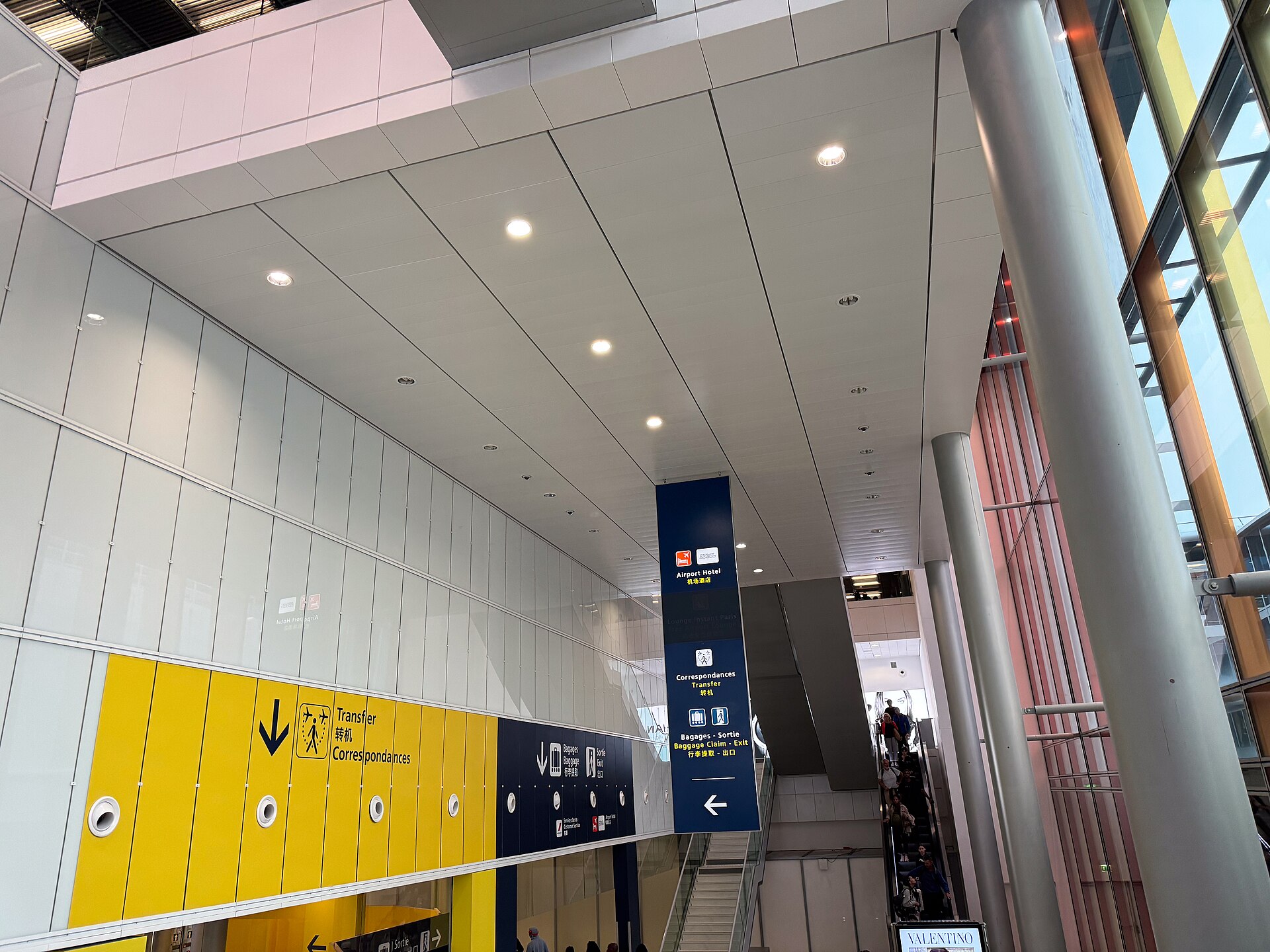
Wayfinding reveals whether a system was designed from the passenger’s point of view. Good signs establish a hierarchy: terminal, zone, process, gate. They repeat information before decisions, use contrast and symbols well and do not assume that every traveller understands the national language or aviation jargon.
Poor wayfinding exports institutional complexity to the public. The traveller is expected to know the airport’s internal organisation instead of the airport translating that organisation into a clear route. The result is not merely inconvenience; it creates congestion, missed flights and additional pressure on staff.
Second question: how does the state treat a different body?
Watch a wheelchair user, a family with a baby, an older passenger, a person who cannot hear the announcement and somebody who cannot read the local language. If the journey works only for the fast, able-bodied, experienced traveller with light baggage, the airport is not demonstrating efficiency. It is demonstrating a narrow definition of the human being.
Accessibility is not a desk added near the entrance. It is an unbroken chain: booking, kerb, check-in, security, border, boarding, aircraft, baggage reclaim and onward transport. One inaccessible handover breaks the whole promise.
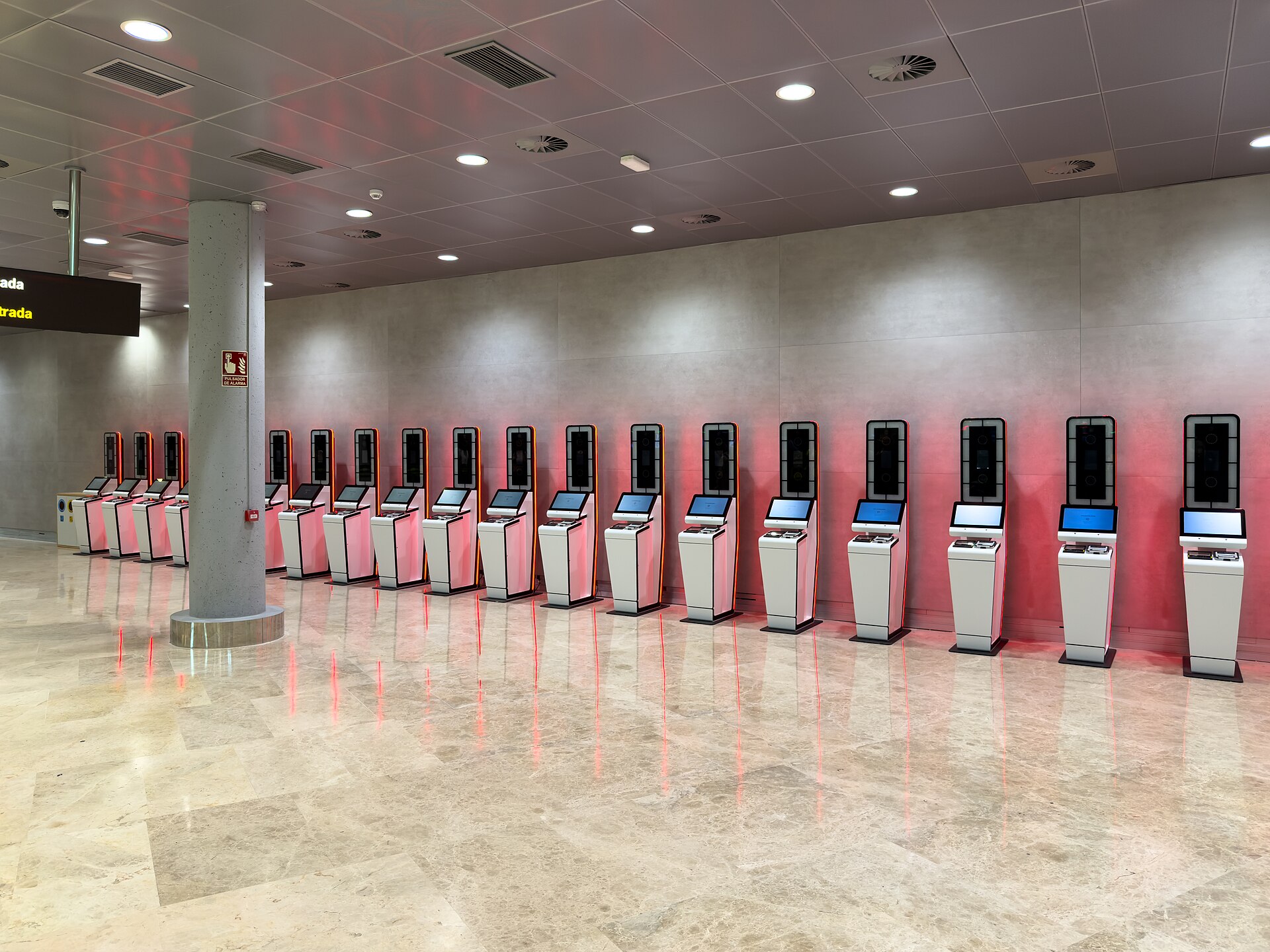
Third question: does technology serve you or collect you?
IATA and SITA research shows strong passenger demand for a faster, more digital journey, including identity-enabled processes. But acceptance is not unconditional. People also care about control, reliability, alternatives and the protection of personal information. The relevant question is not whether an airport has biometrics. It is whether travellers understand what is collected, why, for how long, who receives it and what route exists for those who cannot or do not wish to use the technology.
A smart airport is not the one with the most screens. It is the one where technology removes friction without removing accountability.
Fourth question: what happens when something fails?
Normal operation can conceal weak governance. Disruption reveals it. When a system fails, look for the speed of detection, one reliable source of information, humane treatment of stranded passengers, coordination between airport and airline, and a path to recovery that staff can actually explain.
Resilience is not the absence of problems. It is the capacity to prevent a local problem from becoming general confusion. Airports that communicate early may appear to report more disruption, but they often preserve more trust than airports that delay acknowledgement.
Fifth question: can you leave the airport without another examination?
The journey to the city is part of the airport experience. An affordable, frequent, accessible public connection indicates coordination between aviation and urban policy. A traveller who lands at night and finds only an expensive, poorly explained option learns something about infrastructure priorities before seeing the city.
Connectivity should be judged door to door: walking distance, lifts, ticket purchase, payment methods, operating hours, luggage space, disruption information and the final transfer. Advertising “twenty minutes to downtown” is incomplete if the train is difficult to find or does not serve the traveller’s arrival time.
Sixth question: does the place have a character—or only a larger shop?
An airport can communicate a country through materials, food, language, art and standards of welcome. The goal is not to turn the terminal into a theme park. It is to avoid a placeless commercial environment that could exist anywhere. Research on airport image and servicescape suggests that the terminal contributes to destination perception and passenger satisfaction.
Local identity is credible when it appears in design and operations together. A mural about hospitality cannot compensate for a hostile queue. Culture works best when the service behaves consistently with the story.
Seventh question: is the system offering a service—or expecting an unofficial tip?
Look beyond the promotional photographs: toilets, side corridors, waiting areas and transport exits. Is cleanliness managed as a clearly funded public service, or does somebody wait by the washbasin, hand over tissues and then pressure the traveller for a tip? Is a gratuity genuinely optional and transparent, or an informal price attached to a service that should be available to everyone? Are begging, persistent solicitation or unofficial intermediaries allowed to pursue passengers inside a space presented as controlled and safe?
This is not an invitation to judge poverty or blame low-paid workers. The institutional test is different: are workers properly paid and treated with dignity? Can a traveller decline a tip without embarrassment or loss of service? Is there a visible way to report pressure or harassment? A well-run airport separates hospitality from coercion and protects the dignity of worker and passenger alike.
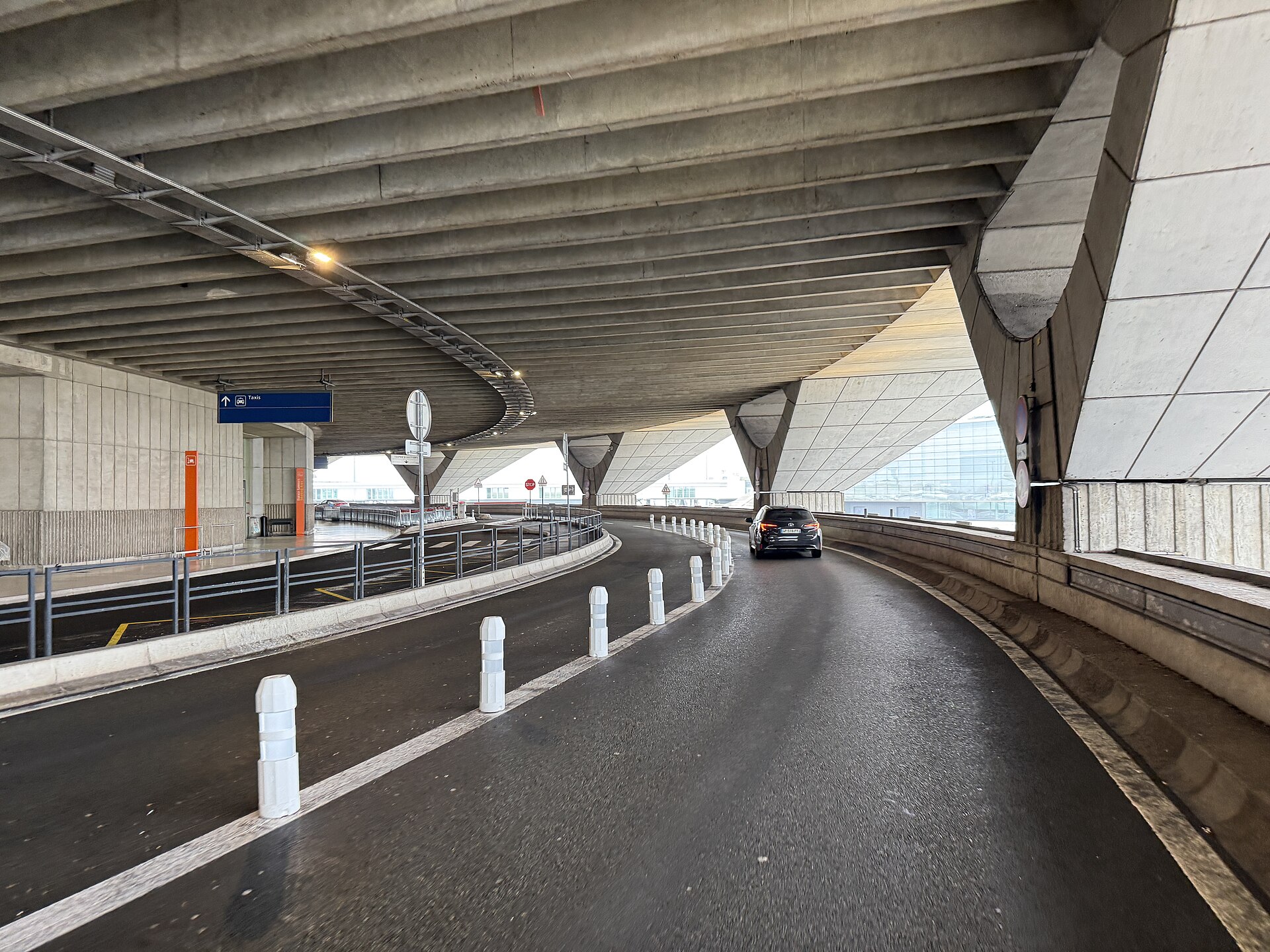
Eighth question: what do the roads say before you reach the gate?
The airport begins before the terminal door. Examine the external approach roads, internal links between terminals, shuttle buses, pedestrian routes, lighting, drainage, lane markings and drop-off areas. Does a driver understand the route before the final second? Can somebody with luggage or a wheelchair transfer safely? Are informal taxis, random stopping and preventable bottlenecks treated as normal?
A neglected road is more than an aesthetic failure. It reveals a gap between urban planning and airport operations. The state appears in small details: a clear line on the road, a usable pavement, a bus that arrives when promised, traffic rules applied consistently and maintenance that prevents a defect from becoming an accident.
Ninth question: what is the sound level—and what produces it?
Do you hear calm, intelligible guidance, or shouting between staff and passengers? Are fights, insults, fixers and talk of bribes exceptional events addressed immediately, or an accepted part of the atmosphere? Calm does not mean silence; airports are naturally busy. It means the reassurance of a system in which people know who is responsible and rules are not auctioned through personal negotiation, influence or cash.
Professional authority does not require humiliation, and visible security does not require acoustic chaos. When rules are understandable, complaint routes are trusted and employees are protected while doing their jobs, people are less likely to shout simply to make the institution acknowledge them.
The airport as a miniature social contract
People of many nationalities, languages, races, colours, religions and sects meet in one place. Their passports, destinations and purchasing power differ, yet they join shared queues, follow published processes and submit to the same operating law. This is one of the airport’s most compelling ideas: the diversity of the world is not erased, but it is organised without allowing difference to become disorder.
A good airport does not ask people to become identical. It asks them to respect a common rule and, in return, guarantees treatment that is clear, dignified and consistent. Reassurance then becomes a political and administrative measure: a stranger should not need a bribe, a personal connection or a raised voice to receive a right.
Four additional indicators for professional assessment
| Indicator | What to examine |
|---|---|
| Dignity of public space | Cleanliness, begging and harassment, optional gratuities versus pressure, and visible complaint channels |
| Roads to and within the airport | Safety, lighting, signs, pavements, inter-terminal transport and traffic discipline |
| Rule of law and civic calm | Bribery, influence, fights and noise—and consistent intervention without discrimination |
| Coexistence under a common rule | Respectful application of procedures across nationalities, languages, religions and racial backgrounds |
Tenth question: do you see security—or its effect?
In some airports, police, stops and checkpoints dominate the scene. In others, the visible presence is lighter while layers of monitoring, verification and response operate quietly in the background. More uniforms do not automatically mean greater safety, and fewer visible officers do not mean that security is absent. The professional question is whether the visible presence is proportionate and reassuring—and whether the system can identify and respond to risk without treating every passenger as a suspect.
A mature model combines approachable uniformed police, specialist teams that do not need to perform for the public, and procedures based on risk. Security professionals who work calmly and prevent an incident before the public notices create an impressive scene precisely because it is undramatic: people move freely and the law remains present without noise.
Are repeated inspections a sign of strength—or weak coordination?
A passenger may legitimately pass different controls because aviation security, immigration, customs and the airline gate have distinct legal purposes. But repeated requests for the same document or the same unexplained check can reveal that systems do not exchange information or that responsibilities overlap. Effective security is not the largest number of barriers; it is the lowest necessary friction that still achieves the required protection.
A strong process explains the purpose of a check, respects privacy and dignity, provides suitable routes for families and disabled travellers, trains staff well and offers review when a decision is wrong. Speed alone is not the measure—but needless complexity is not a security virtue.
Technology reduces error—but does not remove the human
Modern airports use CCTV, access control, automated document verification, baggage screening, biometric gates, data analysis and integrated alerts. Technology can perform repetitive tasks consistently, detect patterns that one person cannot watch continuously and direct trained staff towards cases requiring judgement and experience.
But “technology does not make mistakes” is a dangerous claim. An algorithm can create false alerts, data can be incomplete, systems can fail or be attacked, and encoded bias can scale discrimination. The stronger model is therefore human plus technology: automation reduces repetitive work; a trained professional reviews exceptions; a manual alternative exists during failure; systems are independently audited; and data protection is explicit.
How can the security scene be assessed without exposing tactics?
- Can a passenger locate a responsible officer or employee when help is needed?
- Is the visible presence proportionate and reassuring rather than theatrical or confusing?
- Are controls intelligible, or duplicated because of weak coordination?
- Does technology reduce queues and error while preserving human review?
- Are alternatives available when a gate fails or biometric identification is declined?
- Is the same rule applied respectfully across language, colour, nationality and religion?
Do not turn the airport into a lazy judgement on an entire people
An airport is revealing, but interpretation needs discipline. It may be managed by a private operator, constrained by an old building or experiencing exceptional disruption. One employee does not represent a country, and one journey is not a statistically valid ranking. Comparison should use stated criteria, comparable dates and more than one evidence source.
The useful conclusion is institutional, not stereotypical: “the transfer between rail and terminal is poorly designed” is evidence. “People in this country do not care about travellers” is prejudice.
A six-part professional scorecard
| Dimension | What to examine |
|---|---|
| Clarity | Signs, language, sequence of decisions and live information |
| Inclusion | End-to-end accessibility, family needs and non-digital alternatives |
| Trust | Security proportionality, privacy information and complaint routes |
| Resilience | Detection, communication, coordination and recovery during disruption |
| Connection | Public transport, price, frequency, hours and door-to-door usability |
| Identity | Local character expressed without sacrificing service quality |
Conclusion: do not look only at the ceiling
The airport’s true architecture is the sequence of decisions experienced by the passenger. Look at who receives help, who must ask twice, which institution takes responsibility and how quickly the system recovers. At that point, the airport becomes more than a gateway. It becomes a concentrated lesson in how a state understands order, time, the guest and the individual.
Image and video treatment
The conceptual cover is explicitly labelled as generated editorial artwork. A documentary gallery should use licensed, dated images from the airports being compared: wayfinding, an accessible route, a biometric gate with privacy information, rail connection and an operations or passenger-service team. An original two-minute video—“Six questions that reveal an airport”—should use the same six-part framework and avoid “best/worst” rankings without a published method.
Official video: how Europe’s Entry/Exit System works
Research and evidence
- IATA — Global Passenger Survey 2025
- SITA — Air Transport IT Insights 2025: Airports
- SITA — Passenger IT Insights 2025
- ACI World — ASQ Barometer 2025–2026
- ACI EUROPE — Airport punctuality report 2025
- Tourism Review — airport servicescape and destination image
- Journal of Air Transport Management — airport image and national identity
Transparency: this article was produced independently. The commercial spaces above are separate from the editorial text and did not influence the information or sources.
Osama Samaha
Editor-in-Chief, oui stars Travel