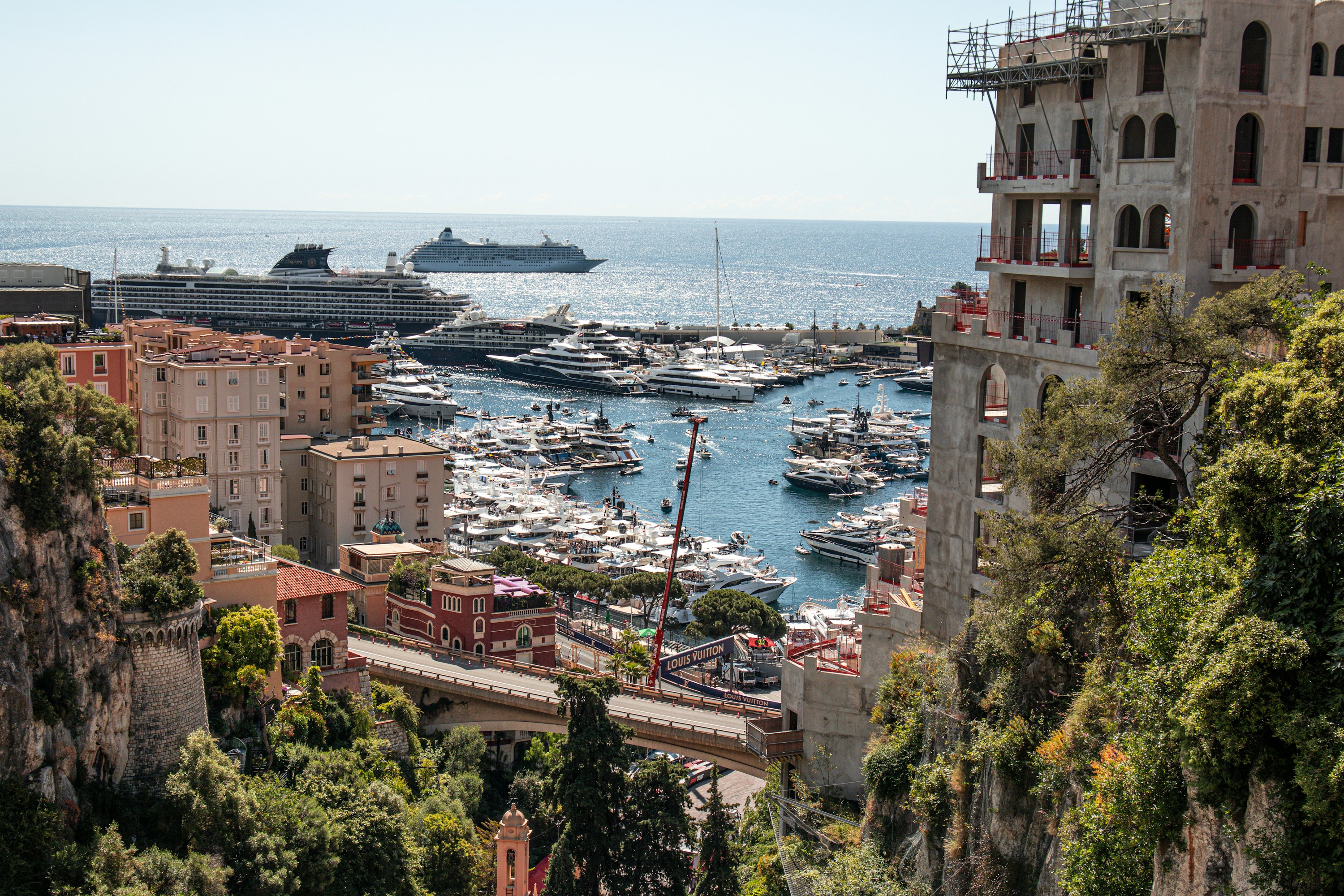
Monaco’s most valuable tourism asset is not a casino, a yacht or a palace hotel. It is scarcity. On 2.08 square kilometres, the Principality sells what global luxury increasingly struggles to provide: concentration, security, recognition, speed and access. A guest can move from a business meeting to a Michelin-starred table, a marina, a cultural performance and a five-star suite without leaving a territory smaller than many city neighbourhoods.
That compression has produced extraordinary value. Monaco Statistics reports that accommodation and food service generated €1.069 billion in turnover in 2024, a record. But the same scarcity that powers the model also raises its hardest question: can Monaco keep increasing value without allowing exclusivity to become exclusion, environmental ambition to become branding, or the city itself to become a museum for the wealthy?
OUISTARS thesis: Monaco’s future is not more luxury by volume. It is better luxury per square metre—measured by local value, service quality, cultural depth and environmental credibility.
The numbers behind the image
Official 2024 data reveal a compact but unusually productive hospitality economy:
- €1.069 billion in accommodation-and-food-service turnover, up 6.3% year on year.
- 306 establishments, 192 employers and 8,722 salaried jobs in the sector.
- €757.1 million in turnover from hotels and similar accommodation; restaurants and mobile food service generated €282.4 million.
- 13 hotels offering 2,499 rooms and 6,129 beds.
- 348,259 hotel arrivals and 895,354 person-nights, up 2.1% and 4.0% respectively.
- 61.5% annual room occupancy, based on 555,848 occupied room-nights out of 903,676 available.
- An average recorded stay of 2.57 nights.
These figures describe different things and should not be blurred. Turnover is not profit. Hotel arrivals do not include every day visitor, yacht guest or private-residence stay. Person-nights are not room-nights. The principality’s influence is far larger than its hotel count, but editorial accuracy begins by respecting the boundary of each dataset.
2025 kept the pricing engine moving
At the Tourism and Convention Authority’s March 2026 review, the official 2025 direction was reported as positive despite international uncertainty: hotel occupancy increased by 3%, average room rate by 6%, and revenue per available room by 11%. Business tourism’s share of overall activity rose by 3%.
Those are rates of change, not published absolute totals. They nevertheless indicate the model’s strength: Monaco did not rely solely on filling more rooms; it increased the value extracted from a deliberately limited inventory.
That distinction matters. A destination with only around 2,500 hotel rooms cannot compete with Paris, Dubai or Barcelona on capacity. It competes on yield, reputation and the ability to make a short stay feel consequential.
A luxury ecosystem, not a hotel market
Monaco’s premium economy works because its components reinforce one another. Grand hotels support restaurants, spas, boutiques and meeting spaces. The marina supports yachting services and events. The casino and cultural institutions create evening demand. International sport and business events compress global attention into a few streets.
The guest is not simply buying a room. The guest is buying coordination: a secure arrival, recognised service, proximity, privacy, reservations, logistics and the social assurance that the destination understands high expectations.
This is why service failure has an outsized cost. In a conventional destination, an average experience may be disappointing. In Monaco, where the premium is part of the promise, inconsistency damages the entire brand.
Real estate makes scarcity visible
Tourism is inseparable from Monaco’s property economy, even though property transactions are not tourism revenue. In 2024, the mean resale price reached a record €6 million, while the median reached €3.6 million. The mean resale price per square metre was €51,967.
New-build sales were even more exceptional: 101 flats generated €3.681 billion, with a mean transaction value of €36.4 million. The completion of Mareterra was central to that surge. The new district also expanded the Principality’s territory by roughly 3%, bringing its official area to 2.08 square kilometres.
Property wealth strengthens Monaco’s premium image and supports investment. It also creates pressure. Hospitality employees, independent retailers and younger professionals need viable access to the wider cross-border housing and transport system. If the people who deliver luxury spend too much of their lives commuting through congestion, the service model eventually pays the price.
The calendar is an economic machine
The Monaco Grand Prix, Monaco Yacht Show, Rolex Monte-Carlo Masters, luxury trade fairs, congresses, cultural seasons and charity events are more than publicity. They are demand-management instruments. Each attracts a different network and helps fill rooms, restaurants and venues beyond the traditional beach season.
Official capacity data show a business-events infrastructure designed far beyond the scale of the resident population. The main listed congress and event facilities provide combined maximum capacity of 14,362 people and 96,111 square metres of space. The Grimaldi Forum’s expanded footprint is central to the strategy.
The risk is calendar concentration. When the most valuable dates become prohibitively expensive, some loyal leisure guests move elsewhere. When several major events overlap, workers, transport, restaurants and public space operate under extreme pressure. Monaco’s objective should be a stronger year-round calendar, not simply a more expensive peak.
Who actually stays in Monaco?
France remained the largest hotel-arrival market in 2024 with 84,968 arrivals, or 24.4%. Italy followed with 43,355, then the United States with 38,949 and the United Kingdom with 32,544.
Measured by person-nights, the order changes: France recorded 168,042, the United States 105,975, Italy 101,580 and the United Kingdom 96,399. This illustrates why arrival counts alone are insufficient. Markets differ in length of stay and economic behaviour.
Visitors from outside the European Union represented 44.2% of hotel clientele in the 2024 economic bulletin. That international diversity is a strength, but also exposes Monaco to aviation disruption, currency movements, geopolitics and changes in luxury demand.
Cruise passengers: visibility without guaranteed value
Monaco recorded 114 cruise calls and 70,527 cruise passengers in 2024. Cruises contribute international visibility and spending, but a call is not equivalent to a hotel stay. The policy question is therefore not how to maximise disembarkations, but how to improve value, manage public space and protect the Mediterranean.
Monaco signed the 2025 Charter on Sustainable Cruising in the Mediterranean promoted by the French Government. The credibility test will be measurable: ship standards, waste, air quality, tender operations, visitor flows and the share of spending that reaches local businesses.
Can high-end tourism be sustainable?
The Principality has committed to reduce greenhouse-gas emissions by 55% by 2030 compared with 1990 and to reach carbon neutrality by 2050. VisitMonaco states that more than 75% of hotel rooms hold environmental labels or certifications.
These commitments are meaningful, but luxury tourism carries a structural contradiction. A destination can reduce hotel water and energy use while some guests arrive by private jet or superyacht. It can certify rooms while events generate freight, temporary installations and high mobility demand.
The answer is not to reject luxury. It is to measure the full journey honestly and use Monaco’s purchasing power to raise standards: rail-first regional access, lower-emission transfers, shore power, verified event footprints, food-waste reduction, water management and transparent hotel performance.
The danger of becoming a beautiful closed system
Exclusivity creates desire because not everyone can access everything. Exclusion damages a destination when ordinary public life disappears. Monaco remains compelling partly because it is not only a resort: it has residents, schools, gardens, markets, workers, heritage, sport and daily rituals.
A luxury city that loses independent cafés, affordable cultural access, authentic neighbourhood life and intergenerational continuity eventually becomes a showroom. The photographs remain perfect, but the emotional reason to return weakens.
The strategic challenge is therefore to protect a ladder of experiences: exceptional suites and tasting menus at the top, but also public gardens, coastal walks, museums, local food, accessible cultural programming and service at several price levels.
The OUISTARS Luxury Value Index
OUISTARS proposes that Monaco’s tourism success be assessed through a public scorecard rather than occupancy and room rate alone:
- Local economic value — 20 points: wages, qualified jobs, local purchasing and independent business participation.
- Length and distribution of stay — 15 points: longer visits and demand spread through the year.
- Service excellence — 15 points: training, multilingual capability, accessibility and complaint resolution.
- Environmental integrity — 20 points: measured emissions, water, waste, marine impact and transport.
- Cultural contribution — 15 points: heritage, museums, performance and public programming supported by tourism.
- Resident benefit — 15 points: mobility, public space and quality of life improve alongside visitor yield.
A destination can then grow in value even when physical volume has reached its sensible limit.
What Monaco should do next
- Publish annual absolute tourism indicators alongside percentage changes.
- Measure day visitors and cross-border flows without confusing them with hotel guests.
- Use events to strengthen shoulder seasons and avoid destructive date concentration.
- Make verified sustainability performance part of the luxury promise.
- Protect independent businesses and accessible cultural experiences.
- Invest in cross-border workforce mobility with France and Italy.
- Treat service training as infrastructure, not a private afterthought.
- Track how much cruise, event and hotel spending remains in the local economy.
Planning a Monaco stay
For travellers, the strongest itinerary is rarely a rushed day trip. Two nights allow time for Monaco-Ville, the Oceanographic Museum, Monte-Carlo, Larvotto, a cultural performance and a restaurant without reducing the Principality to the casino façade.
Book early for the Grand Prix, Yacht Show and major congress weeks. Compare the full stay cost, not the room rate alone. Rail from Nice is often efficient, while private transport becomes valuable for airport arrivals, luggage, late dinners and multi-stop Riviera itineraries.
Continue planning with the OUISTARS French Riviera 2026 guide and our guide to exceptional luxury travel in France.
OUISTARS Editorial Analysis
Monaco has already proved that a tiny territory can create a global tourism economy. Its next achievement must be proving that scarcity can produce responsibility, not only price.
The 2024 record turnover and 2025 hotel momentum are evidence of strength, not permission for complacency. High prices can conceal service shortages. Beautiful construction can conceal workforce strain. Certification can conceal the carbon intensity of the journey. A full calendar can conceal the loss of ordinary city life.
OUISTARS believes Monaco should not chase more visitors at any cost. It should become the world’s clearest example of high-value, low-friction and measurably responsible luxury—where visitors spend well, stay longer, respect the place, support culture and leave a stronger local economy behind.
Frequently asked questions
How large is Monaco?
VisitMonaco gives Monaco’s area as 2.08 square kilometres after the Mareterra extension increased the territory by approximately 3% at the end of 2024.
How much does Monaco’s hospitality sector generate?
Monaco Statistics reports €1.069 billion in 2024 turnover for accommodation and food service. This is sector turnover, not profit and not total tourism revenue.
How many hotel rooms does Monaco have?
The official 2024 statistical table lists 13 hotels with 2,499 rooms and 6,129 beds.
What was Monaco’s hotel occupancy in 2024?
Annual room occupancy was 61.5%, based on 555,848 occupied room-nights out of 903,676 available.
Is Monaco only for wealthy travellers?
Its premium hotels and events target high-spending markets, but public gardens, streets, coastal views and some cultural experiences remain accessible. A well-planned visit can combine both.
Official and primary sources
- Monaco Statistics — Monaco in Figures 2025
- Monaco Statistics — Accommodation and Food Service 2024
- Monaco Statistics — Real Estate Observatory 2024
- Tourism and Convention Authority 2025 review and 2026 strategy
- VisitMonaco — Sustainable Tourism White Paper
- Prince’s Government — Leisure and business tourism
OUISTARS Riviera travel: For airport, hotel and event journeys on the French Riviera, explore OUISTARS luxury transportation in Nice, Cannes and Monaco with professional chauffeurs and tailored routes.







[…] interpreters and restaurant access become part of the business journey. Read our analysis of Monaco’s hospitality economy and our French Riviera 2026 […]