















Museums & Culture | OUISTARS Museum Power Index 2026
The Museum Power Index 2026: Can Egypt’s Grand Egyptian Museum Challenge Paris, Berlin and America?
An original OUISTARS Travel Magazine comparison measures the museums capable of driving international tourism, extending visitor stays and reshaping the global cultural map.
For decades, Paris, London and New York dominated the global museum economy. Now Egypt has introduced an institution capable of changing the balance. The Grand Egyptian Museum is competing not only for visitors, but for flights, hotel nights, travel programmes and Cairo’s place on the cultural map.
This world museum ranking 2026 asks a harder question than “Which museum sells the most tickets?” Real power changes why people travel, how long they stay and what a destination means. Attendance matters, but so do a singular collection, an unforgettable building and the city beyond the exit.
How the OUISTARS Museum Power Index Works
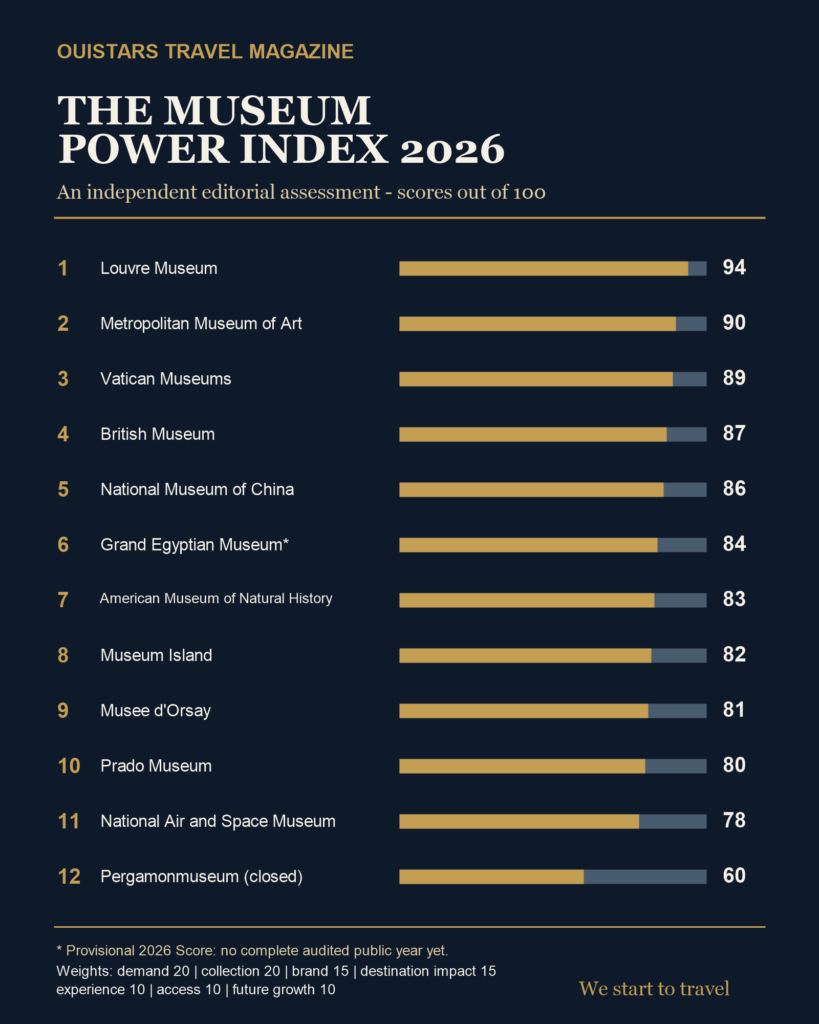
The OUISTARS Museum Power Index 2026 is an independent editorial analysis, not an official ranking, scientific study or audited dataset. Institutions receive up to 100 points: visitor demand (20), collection (20), brand (15), destination impact (15), architecture and experience (10), accessibility (10), and future growth (10).
Scores combine the latest verifiable attendance indicator with editorial judgement. Some institutions report calendar years, others fiscal years; the Met may aggregate two sites; Smithsonian counts visits rather than unique people; Museum Island is a UNESCO ensemble; and free museums are not directly comparable with timed-ticket institutions. The Grand Egyptian Museum has no complete audited public year, so its result is provisional.
The World Museum Ranking 2026
| Rank | Museum or complex | City | Latest visitor indicator | Collection and identity | Tourism influence | Growth | Score |
|---|---|---|---|---|---|---|---|
| 1 | Louvre Museum | Paris | 9.046m, 2025 | Universal art; Mona Lisa | Destination-defining | Strong, capacity-limited | 94 |
| 2 | Metropolitan Museum of Art | New York | 5.984m, 2025* | Global encyclopaedic collection | Anchor of New York culture | Strong | 90 |
| 3 | Vatican Museums | Vatican City | 6.934m, 2025 | Papal collections; Sistine Chapel | Global pilgrimage | Moderate | 89 |
| 4 | British Museum | London | 6.440m, 2025 | World cultures and archaeology | Major free London anchor | Moderate | 87 |
| 5 | National Museum of China | Beijing | 6.957m, 2024 | Chinese history; 1.4m+ objects | National cultural flagship | Strong | 86 |
| 6 | Grand Egyptian Museum | Giza | About 19,000 daily, opening week 2025 | Ancient Egypt; Tutankhamun | Emerging destination anchor | Exceptional | 84 provisional |
| 7 | American Museum of Natural History | New York | About 5m annually | Natural science; 34m specimens | Family and educational powerhouse | Strong | 83 |
| 8 | Museum Island | Berlin | No single comparable total | Five-museum UNESCO ensemble | Cultural-district power | Very strong | 82 |
| 9 | Musée d’Orsay | Paris | 3.785m, 2025 | Impressionism in a former station | Extends Paris museum stays | Moderate | 81 |
| 10 | Prado Museum | Madrid | 3.513m, 2025 | Spanish and European masters | Madrid’s cultural essential | Moderate | 80 |
| 11 | National Air and Space Museum | Washington, D.C. | 2.9m across two sites, 2025 | Flight and space exploration | Free family magnet | Very strong | 78 |
| 12 | Pergamonmuseum | Berlin | Closed; no current attendance | Monumental archaeology | Power suspended by renovation | Exceptional after reopening | 60 |
*The Art Newspaper’s 2025 Met figure uses its stated multi-site methodology. “About” figures are official institutional indicators rather than calendar-year totals.
Egypt’s Emerging Power: A Museum Built Beside Eternity
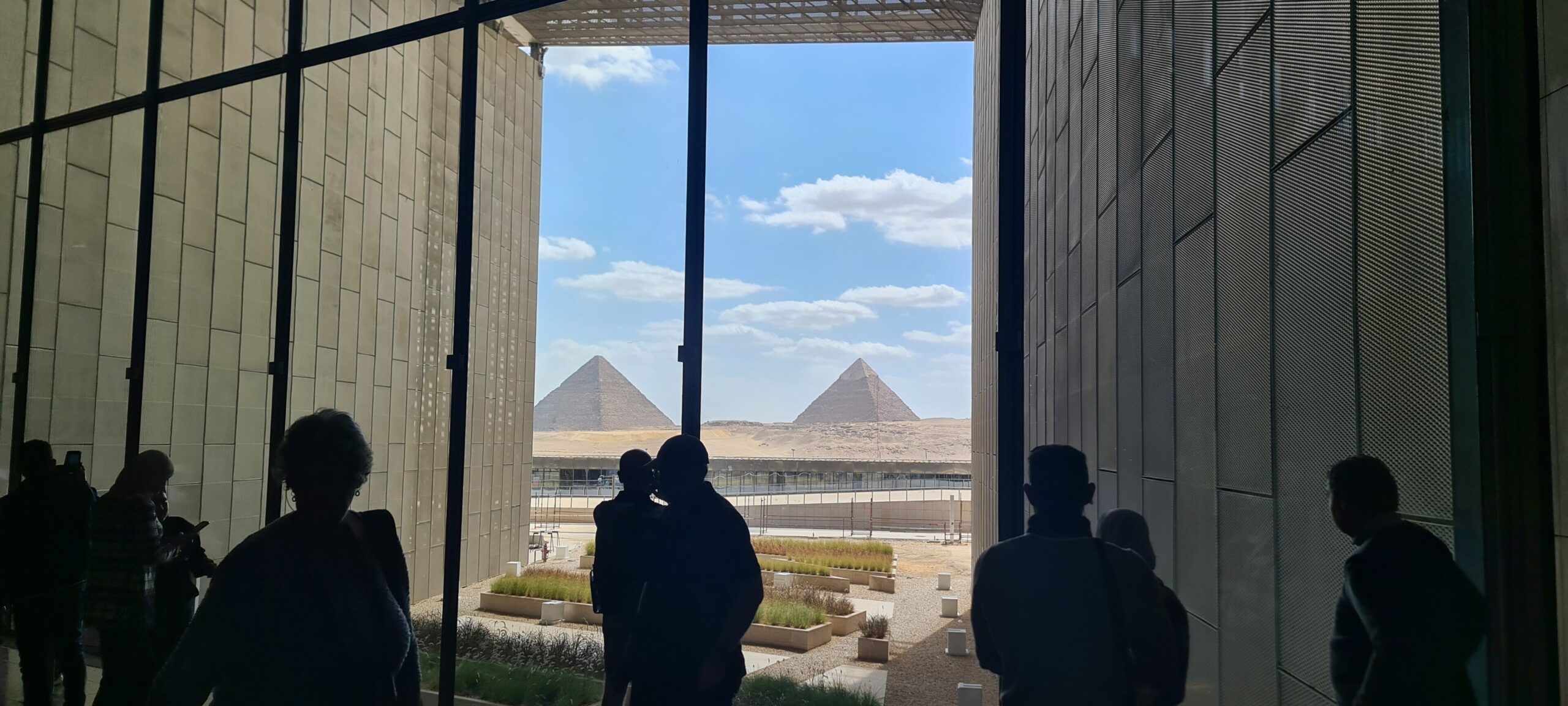
The Grand Egyptian Museum fully opened to the public on 4 November 2025, following its official inauguration three days earlier. Its position near the Giza Pyramids is more than scenic. The architecture establishes a visual conversation between a new cultural gateway and the ancient plateau, turning geography itself into part of the exhibition.
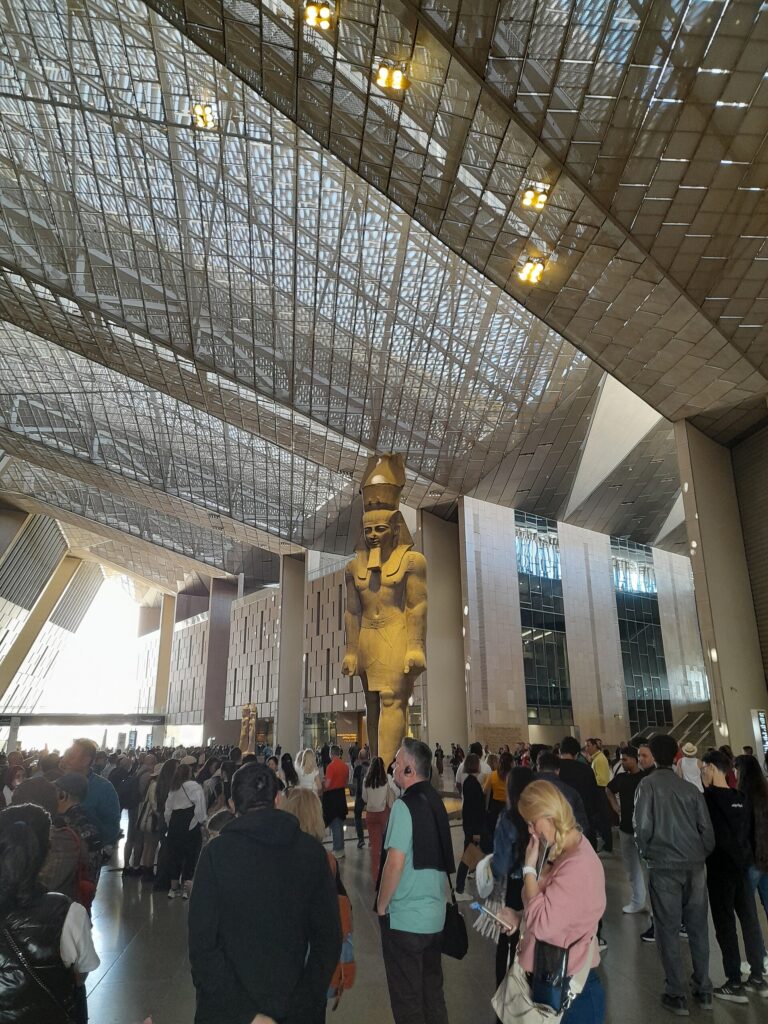
Inside, more than 100,000 objects narrate a single civilisation across millennia. More than 5,000 Tutankhamun objects have a dedicated place, while the colossal Ramses II receives visitors in the Grand Hall. No rival can reproduce that concentration; the GEM earns the maximum 20 collection points.
Demand is promising but must be described honestly. Egypt’s State Information Service reported an average of roughly 19,000 visitors a day during the first public week. The museum’s chief executive has discussed a seven-million-visitor annual ambition and a daily capacity around 20,000; that is a projection, not achieved annual attendance. With no full-year audited total, our 84 is a Provisional 2026 Score, not a coronation.
The opportunity is a new itinerary connecting Cairo, Giza, the GEM, Luxor and the Nile. One additional night in Greater Cairo affects hotels, airlines, restaurants, guides and retail. Our investigation into the Grand Egyptian Museum’s tourism challenge to the Louvre examines that wager in depth.
Could it challenge Paris? Yes—as a collection, architectural event and flagship brand. But marketing, ticketing, multilingual interpretation, guides, clean public space, security, connectivity, evening programming, restaurants and retail will decide whether curiosity becomes durable tourism value. Treasure is the beginning, not the whole product.
Why Paris Still Sets the Pace
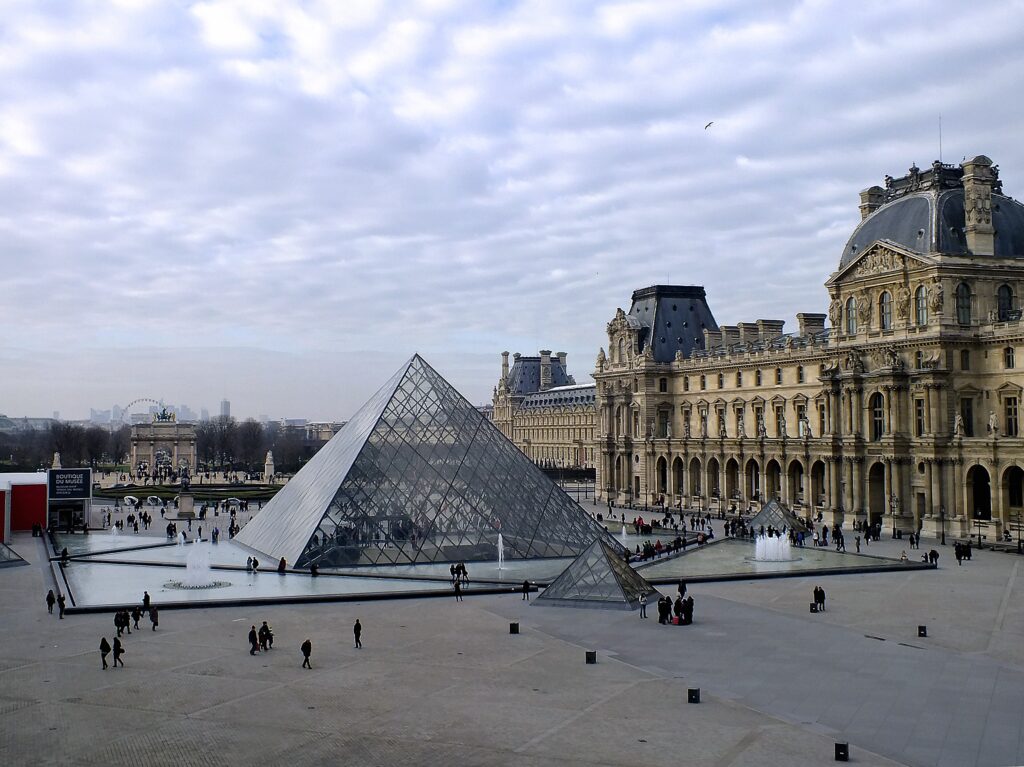
The Louvre is both museum and global shorthand. Its 9.046 million visits in 2025 led The Art Newspaper survey; the Mona Lisa remains a journey-making image. Paris’s deeper advantage is concentration: Orsay, the Orangerie, Rodin and specialist collections turn one booking into several museum days. Move from the Louvre and Paris’s defining landmarks to lesser-known Paris museums.
Hotels, two major international airports, high-speed rail, gastronomy, retail and walkable cultural sequences amplify each institution. The Centre Pompidou closed its main building in September 2025 for transformation through 2030, while its Constellation programme disperses activity across France and abroad.
Paris’s weakness is the cost of success. Crowding around the Louvre Pyramid and the Mona Lisa can reduce contemplation to queue management. The museum’s planned “Nouvelle Renaissance”—including a new Colonnade entrance and a dedicated presentation space for the Mona Lisa—acknowledges that visitor flow now shapes cultural power almost as much as collection depth.
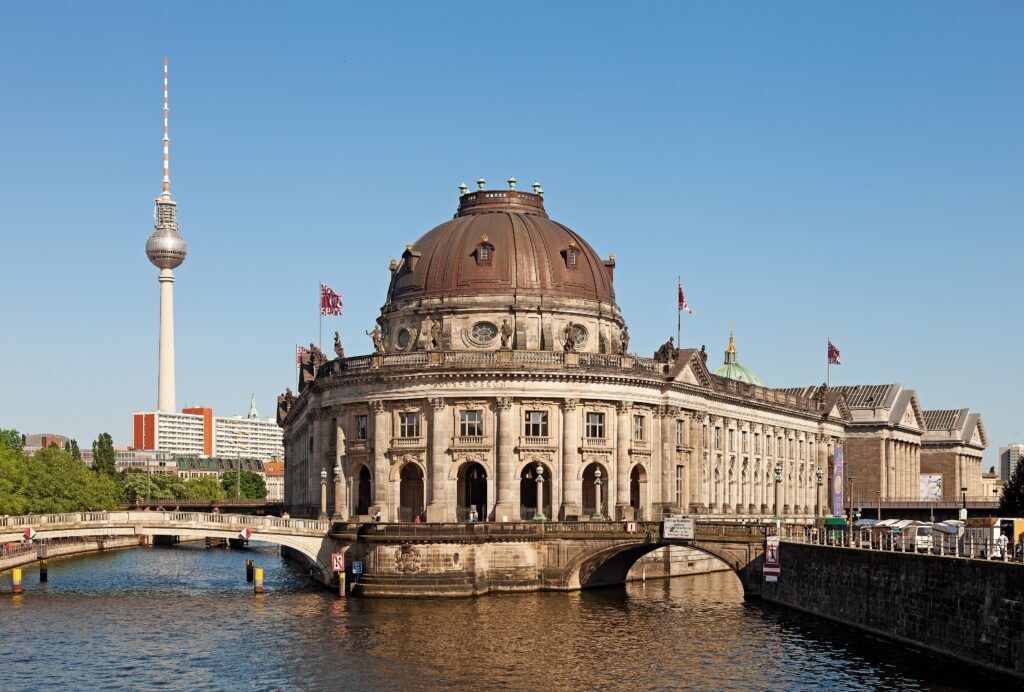
Berlin: A Cultural Archipelago in Mid-Restoration
Museum Island is ranked as a complex because UNESCO recognises the ensemble and its power lies in adjacency: the Altes Museum, Neues Museum, Alte Nationalgalerie, Bode-Museum and Pergamonmuseum form a cultural district. Repeat visitors combine them with history, architecture, galleries and nightlife.
The Pergamonmuseum has been closed since 23 October 2023. Its north wing and central section are due to reopen on 4 June 2027; full refurbishment is expected in 2037. Its separate 60 reflects an extraordinary collection, almost no present demand and exceptional future potential. Museum Island’s 82 recognises a system performing below its eventual strength.

America: Two Different Machines of Cultural Demand
New York Turns Museums into Membership Brands
The Met combines an encyclopaedic collection with exhibitions, fashion, membership and retail. The American Museum of Natural History, welcoming about five million people annually and stewarding some 34 million specimens, turns scientific authority into family ritual. MoMA adds modern-art power. New York’s hotels, air links and cultural calendar make museums reasons to visit and return.
Washington Makes Access the Advantage
Smithsonian museums are free, so admission revenue is not the measure. In 2025, Air and Space recorded 1.9 million visits downtown and 1.0 million at Udvar-Hazy; Natural History drew 3.3 million. These are visits, not unique people. Free admission, multiple buildings and timed passes complicate comparison but create extraordinary educational reach.
The Real Competition Is Not Inside the Museum
A museum may own the world’s greatest collection and still lose tourism revenue if the surrounding visitor experience is weak. The true contest is between destination systems: airports, hotels, restaurants, public transport, guides, digital booking, cleanliness, safety, visitor information, night-time activity, international promotion and professional hospitality.
This is where museum power becomes economic power. An exhibition can create an airline search, hotel night, restaurant booking, guided visit, school programme, conference or additional city stop. Destination-management companies such as oui stars see the chain as museum demand reshapes arrival plans, hotel choice and multi-city programmes. No universal multiplier fits every city, but the spending direction is unmistakable.
For Egypt, the implication is urgent: the GEM must feel connected to the pyramids and to Cairo, not isolated by friction. For Paris, flow and capacity are strategic. For Berlin, renovation communication and substitute itineraries matter. For New York and Washington, access, membership, temporary exhibitions and digital service sustain repeat demand.
The 2026 Winners—and the Risks Behind Them
Strongest Established Global Brand: Louvre Museum
No institution combines recognition, attendance and destination symbolism as completely.
Strongest Single-Civilisation Collection: Grand Egyptian Museum
Its ancient Egyptian narrative and Tutankhamun holdings are uniquely concentrated, although operations remain newly tested.
Strongest Museum City Ecosystem: Paris
The Louvre leads, but the surrounding network converts a museum visit into a citywide cultural stay.
Strongest Free-Access Museum Network: Smithsonian Institution
Scale, free entry and educational range give Washington unmatched public reach.
Strongest Future Growth Opportunity: Grand Egyptian Museum
Few new institutions can plausibly alter both a national tourism image and international itinerary design.
Institution Facing the Greatest Overcrowding Risk: Louvre Museum
Demand is an asset until congestion damages the experience; the planned new entrance is therefore strategic, not cosmetic.
Largest Gap Between Cultural Assets and Tourism Execution: Greater Cairo and Giza
The assets are incomparable. The opportunity is to make ticketing, interpretation, public realm, connections and hospitality equally memorable.
Conclusion: The Collection Is Only the First Promise
The Grand Egyptian Museum has given Egypt an asset capable of competing at the highest level. Its 84-point provisional result in this world museum ranking 2026 places it among the global leaders without pretending that an opening surge equals a mature annual performance. The Louvre remains number one because its collection operates inside an exceptionally complete tourism ecosystem.
The remaining question is whether the hospitality and visitor infrastructure around Giza can match what lies inside. Museum-economy winners will not necessarily possess the most artefacts. They will deliver the most complete journey—from the first search to the final evening in the city.
Frequently Asked Questions
What is the OUISTARS Museum Power Index 2026?
It is an independent editorial comparison using seven disclosed criteria. It is not an official, scientific or audited global ranking.
Is the Grand Egyptian Museum the world’s most visited museum?
No verified full-year attendance total is yet available. Early demand was strong, but projections must not be treated as achieved attendance.
Why does the Louvre rank first?
It combines the index’s strongest blend of visitor demand, collection, brand recognition and integration into a world-leading cultural city.
Is the Pergamonmuseum open in 2026?
No. It is fully closed for renovation. A partial reopening is scheduled for 4 June 2027, while completion of the whole complex is expected in 2037.
Why are Smithsonian museums difficult to compare by attendance?
Admission is free, the network spans many buildings and published totals count visits rather than unique visitors, so its access model differs from ticketed museums.










.jpg)
.jpg)

