

















Tourism Industry | OUISTARS Tourism Mobility Quality Index 2026
The Tourism Mobility Quality Index 2026: Why Vehicle Quality Shapes a Destination’s Image
An original OUISTARS Travel Magazine editorial report examining how taxis, chauffeur services, ride-hailing vehicles and tourism transport fleets influence visitor satisfaction before travellers even reach their hotel.
A traveller forms an opinion about a destination within minutes of leaving the airport. Long before the hotel lobby, the museum queue or the first memorable dinner, a quieter verdict has already begun: it is being formed inside the vehicle that welcomes them.
A clean cabin feels reassuring. A calm driver makes an unfamiliar city legible; a neglected vehicle or confused pickup sends the opposite message. Tourism transport quality is part of a destination’s identity.
Transport Is Part of the Tourism Product
Tourism is marketed through rooms, restaurants and landmarks. Yet every itinerary is joined by mobility: airport to hotel, hotel to conference, port to museum. When those links fail, the destination feels difficult even when its attractions perform beautifully.
Airports, hotels and tourism boards should design arrival transport as hospitality infrastructure, not an anonymous handoff. Our guide to a pre-booked CDG airport arrival shows how flight monitoring, meet-and-greet and luggage assistance turn movement into welcome.

The First Ten Minutes: What Travellers Actually Notice
Visitors read a vehicle instinctively: its age and exterior; the cabin’s cleanliness, smell and temperature; seat comfort; luggage capacity; charging points; digital payment; Wi-Fi where promised; and the driver’s grooming and manner. Families add child-seat readiness. Travellers with disabilities judge access and assistance. Business guests notice punctuality and privacy.
Fleet age matters, but is not a score by itself. A maintained older taxi can outperform a dirty new car. The test is consistency: did the passenger receive the safe, suitable service offered?
Five Cities, Five Mobility Lessons
Paris: Three Markets, Not One Luxury Fleet
Paris shows why categories must not be blurred. Taxis can accept street hails and use ranks; VTCs require advance reservations; premium chauffeur companies add their own hospitality standards. France’s Transport Ministry regulates access and operating conditions and explains how passengers can identify taxis and booked VTCs.
Modern Mercedes-Benz and BMW executive vehicles are conspicuous in the capital’s hotel, airport and event market, but that is an industry observation—not evidence that every Paris taxi or VTC is premium. The competitive advantage belongs to licensed operators that pair a suitable vehicle with dependable service. For large events, the same principle extends to coordinated chauffeur fleets in Paris.
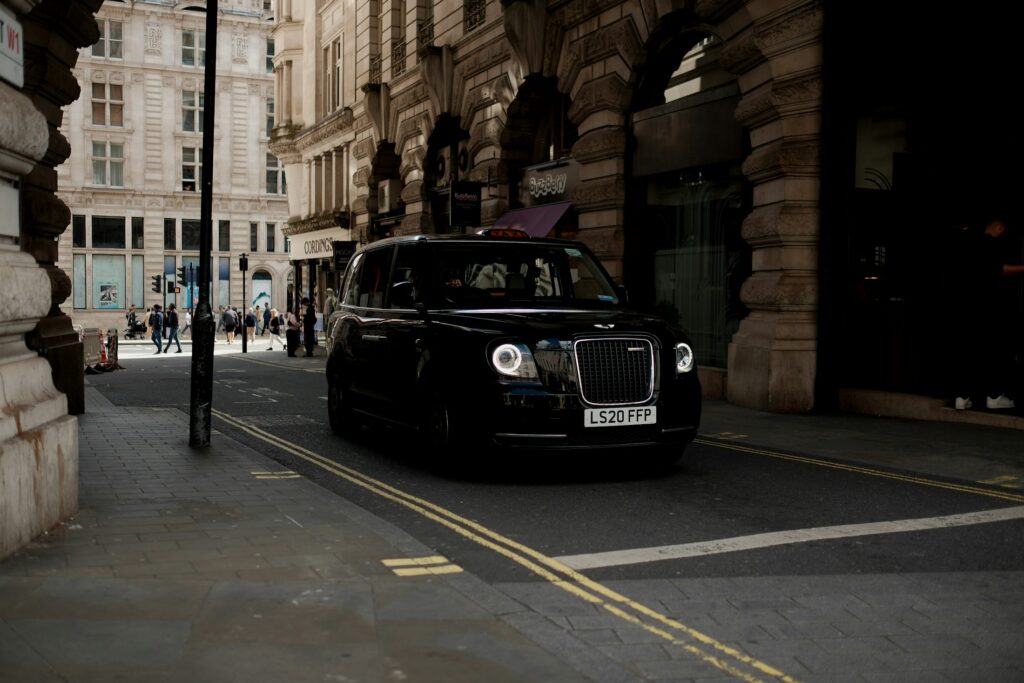
London: Accessibility as a Quality Standard
London’s black cabs make regulation visible. Transport for London says taxis are wheelchair accessible and accept card payments; drivers undergo background and medical checks. Private-hire vehicles must be pre-booked through a licensed operator, which provides identifying details. Trust improves when rules are understandable at the kerb.
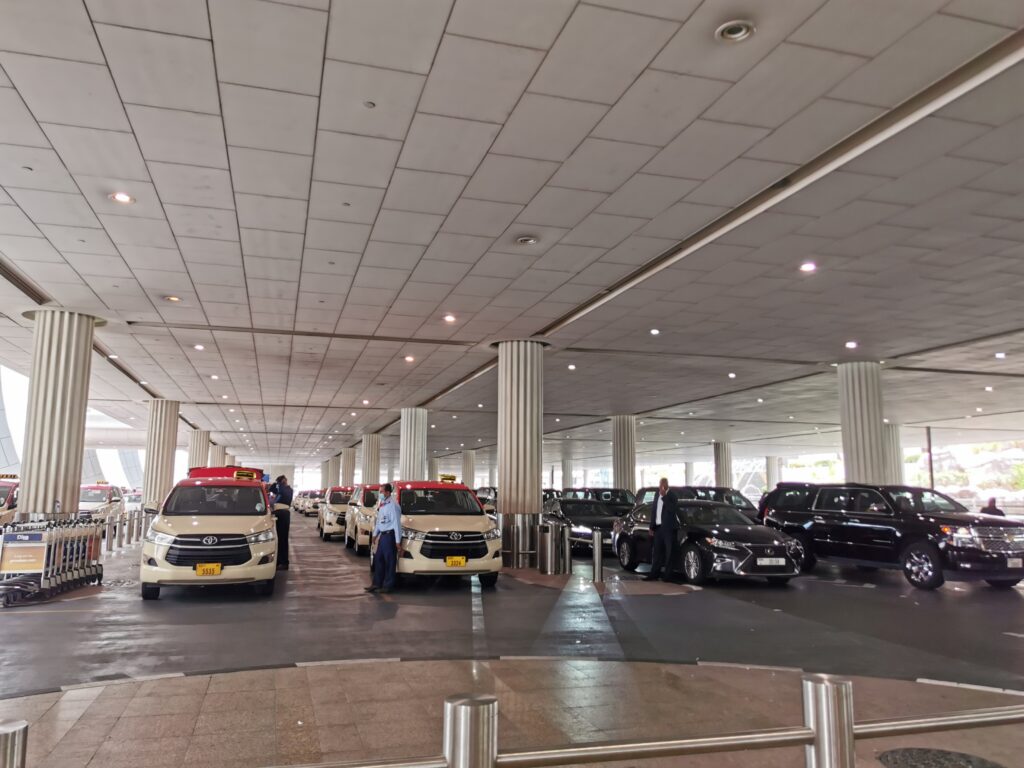
Dubai: Premium Ambition Backed by Permits
Dubai makes mobility part of its luxury proposition, with presentation supported by process. The Roads and Transport Authority requires professional permits for taxi, luxury-vehicle and tourist-vehicle drivers. Its process includes training and testing, with medical, police-clearance and English-language requirements.
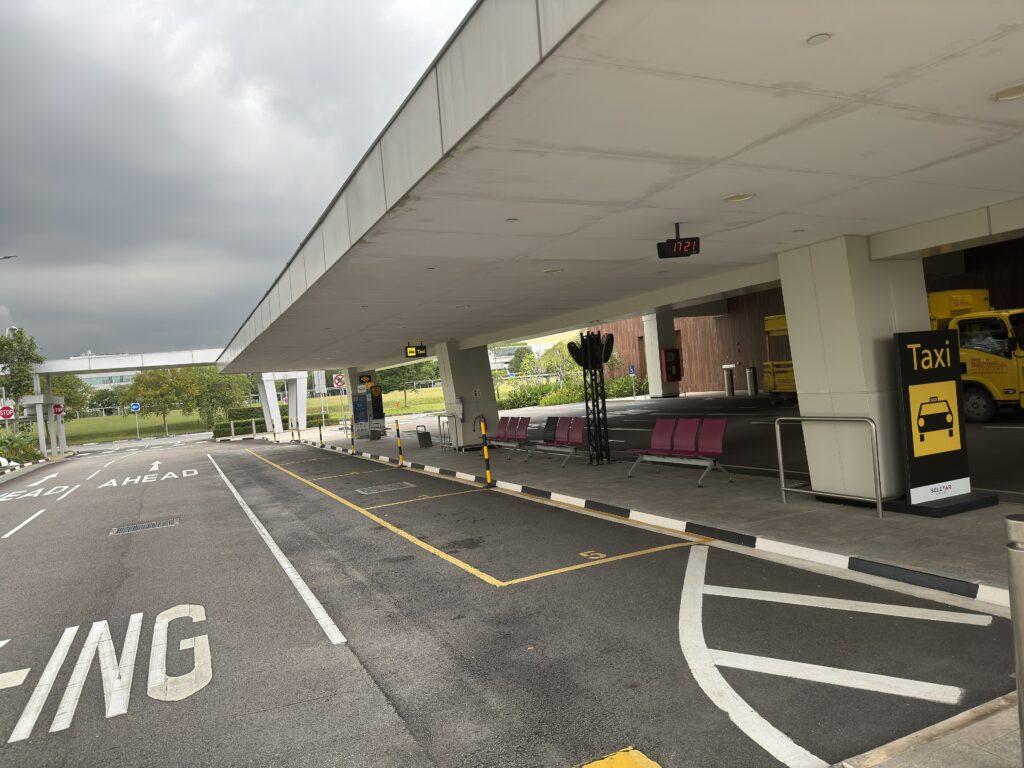
Singapore: Quality Through an Integrated Framework
Singapore separates street-hail and ride-hail services within a point-to-point framework. Its Land Transport Authority licenses operators and drivers and applies safety-focused quality standards. Visitors may never read the rules; what matters is the predictability they create.
Tokyo: Cleanliness, Trust and the Licensed Ride
Tokyo’s tourism guide highlights clean taxis, service, airport options and sightseeing taxis. Japan’s transport authorities warn against unlicensed vehicles and direct visitors to authorised taxis and pre-booked hire cars. Care for cabin and passenger is treated as professional pride.
Developing tourism markets should not be caricatured. Older fleets may reflect financing, import costs and fragmented regulation—not indifference. Improvement can begin with inspection, cleaning, driver training and cashless payment before expensive renewal.
Why Better Mobility Pays Beyond the Car
Transport affects the visitor economy. A reliable pickup reduces pressure on hotel reception. Delegates arrive on time, restaurants lose fewer reservations and cruise passengers trust tightly timed visits. Luxury and business travellers are more willing to add experiences.
The reverse is equally powerful. Poor pickup or inconsistent vehicles can colour a hotel review even when the hotel did not operate the ride. Privacy-focused travellers are especially sensitive, as our analysis of privacy as the new luxury in travel explains.
The OUISTARS Tourism Mobility Quality Index 2026
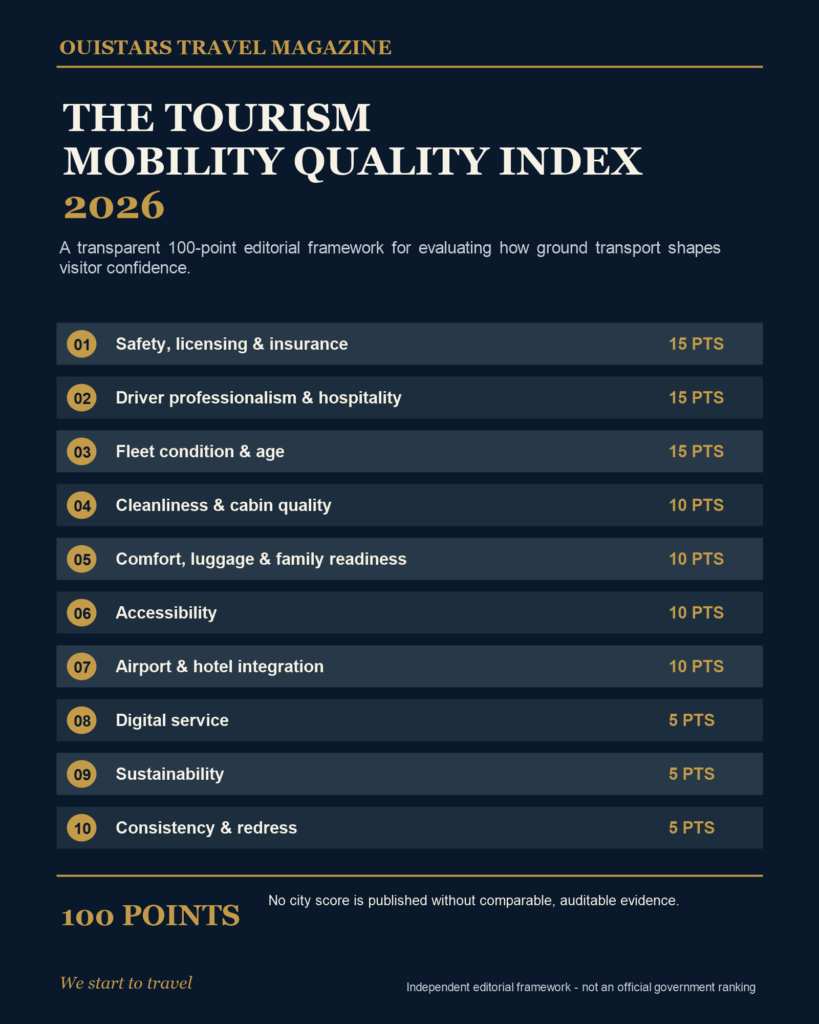
The OUISTARS Tourism Mobility Quality Index is an independent editorial framework, not a government ranking, certification or audited league table. We publish no city scores without comparable evidence.
| Criterion | Maximum | What evidence should show |
|---|---|---|
| Safety, licensing and insurance | 15 | Valid authorisations, inspections and accountability |
| Driver professionalism and hospitality | 15 | Training, conduct, language support and discretion |
| Fleet condition and age | 15 | Maintenance, roadworthiness and appropriate renewal |
| Cleanliness and cabin quality | 10 | Consistent interior, exterior and climate standards |
| Comfort, luggage and family readiness | 10 | Suitable capacity, child seats and journey comfort |
| Accessibility | 10 | Usable vehicles, information and trained assistance |
| Airport and hotel integration | 10 | Clear pickup, flight coordination and handoffs |
| Digital service | 5 | Booking, payment, receipts and passenger information |
| Sustainability | 5 | Credible low-emission transition and efficient dispatch |
| Consistency and redress | 5 | Service monitoring, complaints and corrective action |
| Total | 100 | A comparable evidence base, not perception alone |
Operators can use the framework as a self-audit: sample service categories at different times, review complaints and accessibility, and publish methodology. A flagship fleet should never disguise weak everyday provision.
The Professional Behind the Wheel
The best tourism chauffeur combines defensive driving with local knowledge, timing, grooming and discretion. They recover from delayed flights, closed roads or missing luggage without transferring stress to the guest. Confidentiality matters for executives; patience matters for families; cultural awareness matters for everyone.
These are hospitality skills, not decorative extras. Our reference guide to the skills every hospitality professional should master applies as much at an arrivals kerb as at a five-star reception desk. As one example, oui stars approaches destination management on the premise that transport is part of hospitality rather than merely a transfer service.
The Next Mobility Standard
Electric and hybrid fleets will expand, while hydrogen may suit selected markets. AI dispatch can match vehicles to flights, luggage and accessibility needs; digital booking can improve traceability; integrated airport data can shorten waiting.
Technology will not rescue poor operations. Winning systems will combine low-emission vehicles, accessible design, trained people and accountable platforms. That is the future of tourism transport quality: confidence made visible.
Conclusion: A Destination Begins at the Car Door
A destination’s reputation is built through small encounters. The first may last twenty minutes, yet frame everything that follows. Authorities that measure mobility as seriously as hotels and attractions protect trust—and turn more arrivals into return journeys.
Frequently Asked Questions
What is tourism transport quality?
It describes the safety, cleanliness, comfort, accessibility, professionalism and reliability of the vehicles and operators that move visitors.
Is the OUISTARS Tourism Mobility Quality Index an official ranking?
No. It is an independent editorial assessment framework, not a government ranking, certification or audited dataset. No city league table is published without comparable evidence.
Does an ageing taxi fleet damage tourism?
It can weaken comfort and perception when age is combined with poor maintenance or inconsistent standards. Age alone is not decisive: a well-maintained older vehicle can deliver a better journey than a neglected new one.
Why do luxury destinations invest in premium transportation?
Premium mobility protects time, privacy and reliability while connecting airports, hotels, events and attractions. It helps a destination deliver a consistent high-value experience.
How can a tourism authority improve local transport quality?
Start with licensing, inspection, cleanliness, training, accessibility, complaints and airport pickup design. Fleet renewal should follow a measured plan.