















BUSINESS OF TRAVEL | CULTURE AS ECONOMIC POWER
Could the Grand Egyptian Museum Overtake the Louvre? Inside Egypt’s Billion-Dollar Tourism Bet
With millions of visitors, some 100,000 ancient objects and the complete Tutankhamun collection, Egypt’s new museum is becoming one of the world’s most powerful cultural tourism businesses.
For decades, the Louvre stood almost unchallenged as the museum every international traveller dreamed of visiting. Now, beside the Pyramids of Giza, Egypt has opened a cultural giant designed not only to protect history—but to transform the economics of global tourism.
However, success is no longer the question. Its forecourt already receives crowds many national museums never reach. Could it pull millions of journeys and luxury itineraries toward Cairo—and challenge the Louvre?
In fact, the answer begins not with Tutankhamun’s gold but with scale, visitor flow and a national decision to turn cultural memory into economic infrastructure.
From Long-Delayed Project to Operating Giant
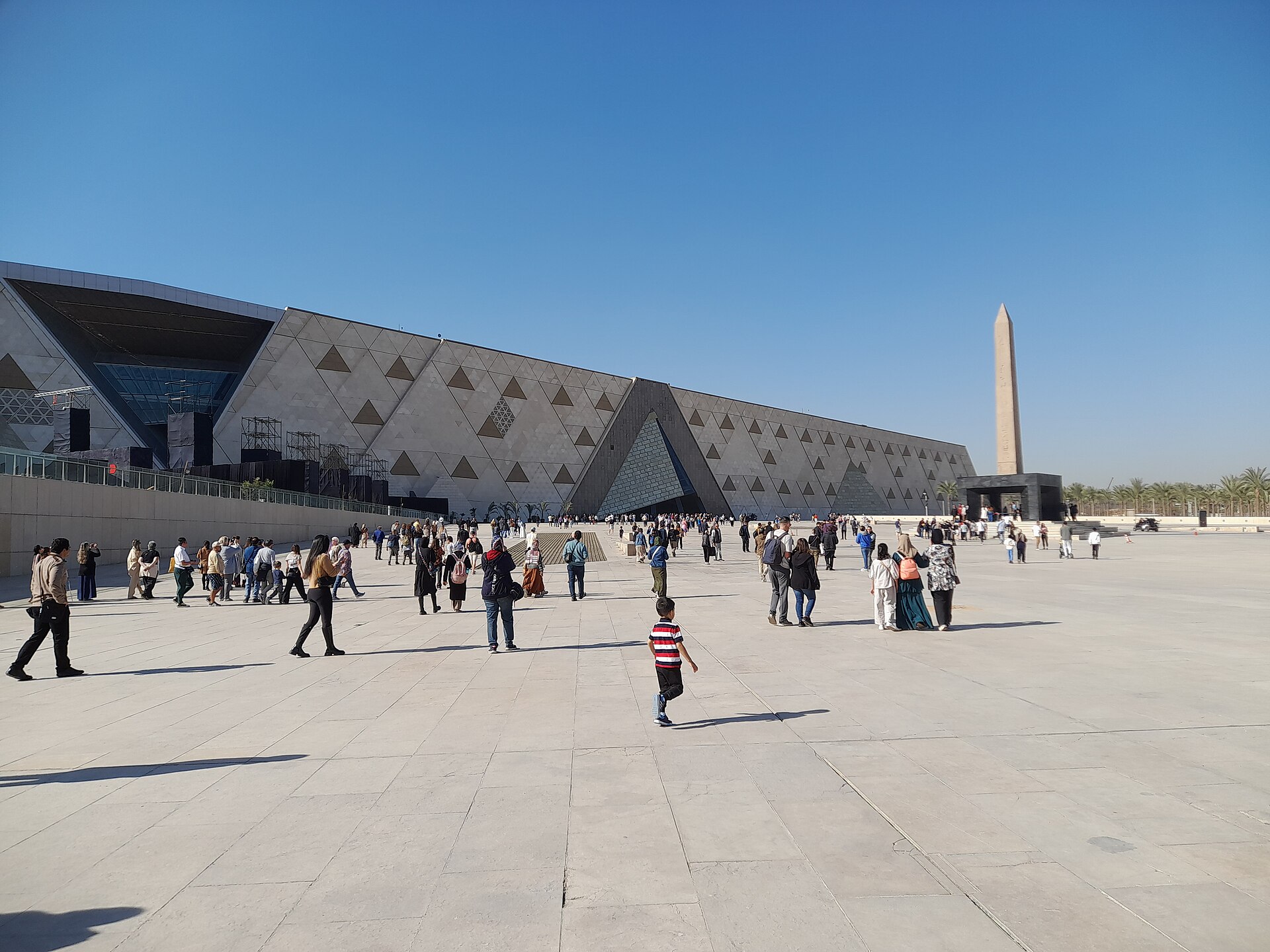
First of all, the status is finally unambiguous. Egypt inaugurated the Grand Egyptian Museum on 1 November 2025; full public admission began on 4 November after years of partial openings. The official history now records a destination, not a construction promise.
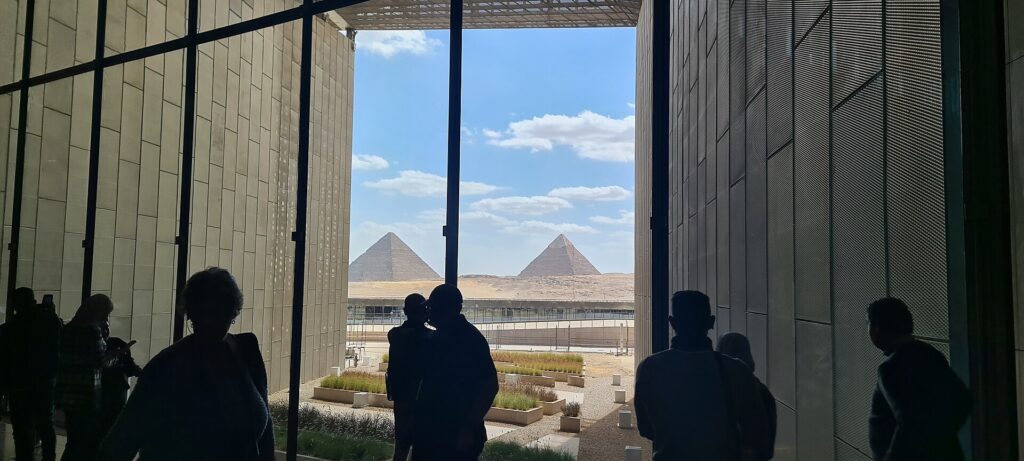
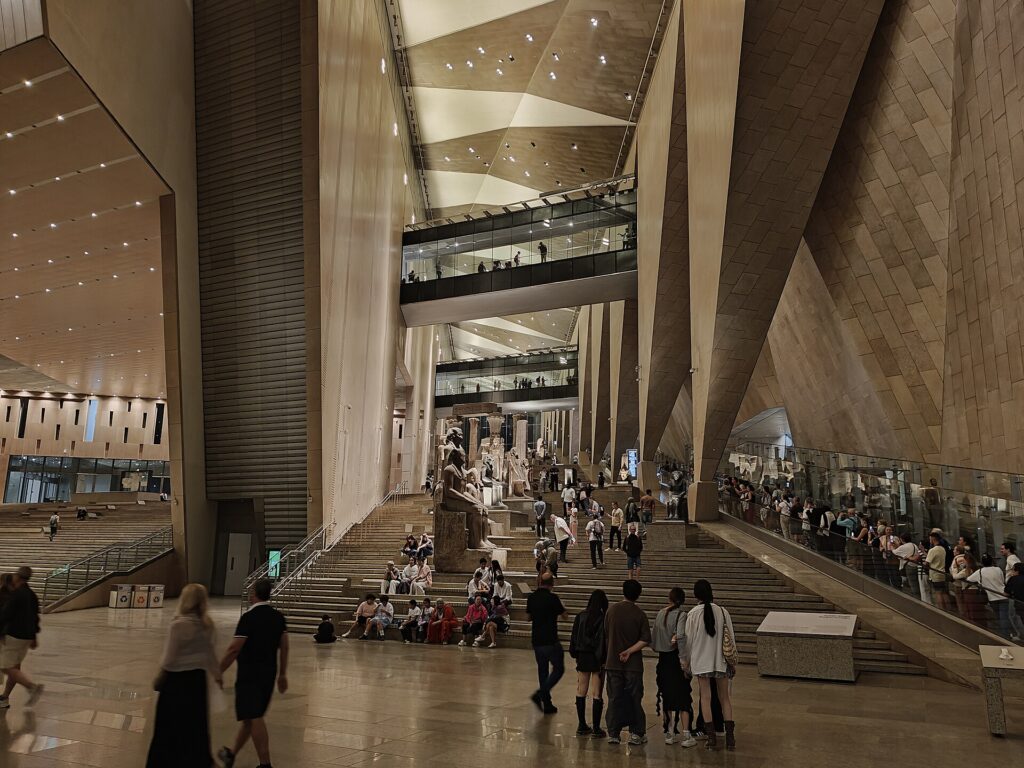
Meanwhile, the complex stands at El Remayah Square near the Giza Plateau. From inside, pyramids appear framed by contemporary glass and stone. In fact, few museums unite collection, landscape and founding civilisation in one sightline.
The Billion-Dollar Scale of Egypt’s Tourism Bet
Moreover, the 500,000-square-metre site cost more than $1 billion, backed by Egyptian resources and international cooperation, including Japan. In addition, its mandate covers some 100,000 objects—not all displayed simultaneously—plus conservation, education and commercial spaces.
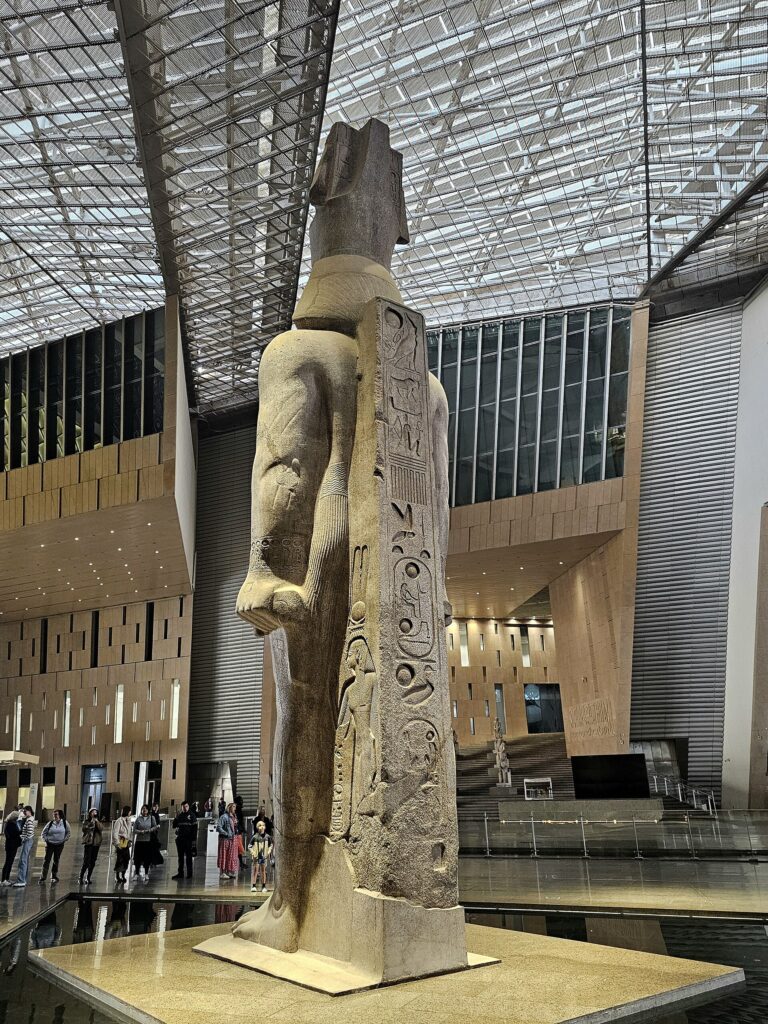
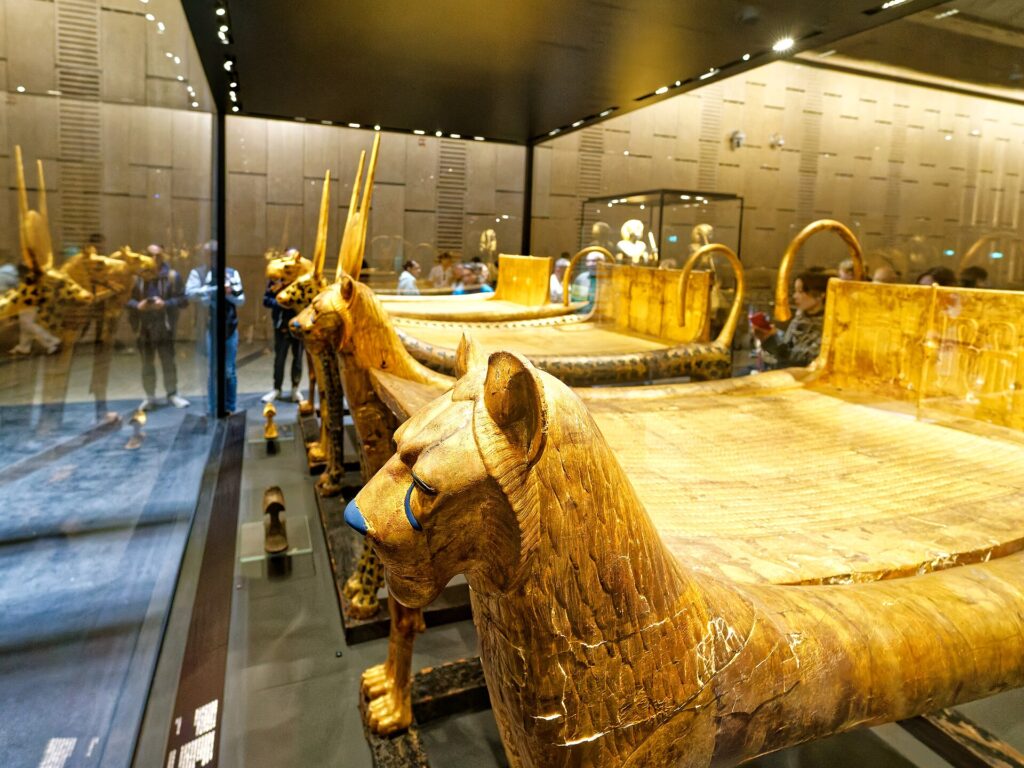
Moreover, its unmatched proposition is more than 5,000 objects from Tutankhamun’s tomb shown together for the first time. The official tour moves from Ramesses II and the Grand Staircase through twelve galleries to Tutankhamun. As a result, this is an immersive national epic beside the monuments that made it famous.
What Grand Egyptian Museum Visitor Numbers Reveal
For example, opening week averaged about 19,000 daily. By June 2026, the chief executive reported more than three million visits in seven months: 60 percent foreign and 40 percent Egyptian. Meanwhile, government reporting places recent attendance near 15,000 daily. Annualised, the seven-month total is roughly 5.1 million, but seasonality makes that context—not a forecast.
Nevertheless, management has discussed 7 million annual visitors, with capacity controls protecting the experience. However, the Louvre remains higher at 8.7 million visitors in 2024. Still, passing three million before a first anniversary is a remarkably fast entry into the global top tier.
Grand Egyptian Museum Revenue: Three Editorial Scenarios
As of July 2026, the official ticket portal lists adult admission at EGP 1,450 for Arab and other international tourists and EGP 200 for Egyptians. Therefore, using the reported 60/40 visitor mix produces a weighted adult list-price proxy of EGP 950 per visit.
| Editorial scenario | Annual visits | Illustrative gross ticket turnover |
|---|---|---|
| Conservative | 4 million | EGP 3.8 billion |
| Expected | 5.5 million | EGP 5.225 billion |
| High growth | 7 million | EGP 6.65 billion |
These are editorial illustrations, not forecasts or annual profit. They apply current adult list prices while excluding concessions, free admission, future changes, taxes and costs. Ticket revenue is turnover; profit requires non-public audited accounts.
The Larger Business Is Outside the Ticket Gate
Moreover, a visit can add a Cairo hotel night, Giza dinner, guide, transport, retail or Luxor flight. If the GEM draws Red Sea guests to Cairo—or extends two nights to three—its economic value may far exceed admission.
Consequently, this matters to hotels, restaurants, tour operators and transport companies. In addition, Egypt reported 19 million international tourists in 2025 and targets 30 million annually by 2030, while expanding aviation and accommodation. Therefore, the GEM strengthens Cairo’s case for higher-value cultural tourism.
As a result, employment follows across conservation, security, hospitality, guiding, retail, events and mobility. Yet no reliable public museum-specific multiplier supports a precise job number. Claiming one would confuse national tourism employment with jobs caused by the museum itself.
Is the Grand Egyptian Museum Really Coming for the Louvre?
Not in the simplistic sense. By contrast, the Louvre is a universal museum in a former royal palace, supported by Parisian fashion, gastronomy, hotels and the Seine. Its Pyramid, Mona Lisa and centuries of recognition give it extraordinary reach. Our guide to iconic Paris experiences shows the wider city-break proposition.
On the other hand, the GEM is the world’s largest museum dedicated to one civilisation: ancient Egypt, Tutankhamun and Giza. The Louvre offers breadth; Giza offers depth and geographic authenticity. Our feature on lesser-known museums of Paris shows the French capital’s other advantage—a cultural network beyond one flagship.
Nevertheless, both turn arrival into theatre. Paris has the mature luxury ecosystem; Cairo has novelty and immense social-media potential. Gold, pyramids and vast interiors read instantly on a phone screen, redirecting attention and budgets without surpassing Louvre attendance.
In conclusion, they are not identical competitors, but they compete for prestige, luxury itineraries, coverage and visitor time. The Louvre leads verified annual attendance; the GEM is the most credible new challenger in a generation.
What the Museum Changes for International Cultural Travel
Therefore, strong itineraries treat Cairo as more than a gateway: allow a substantial museum visit, separate Giza time and historic Cairo. Confirm timed entry officially. Compare how heritage shapes destinations in our Paris historic-monuments guide and analysis of Paris as a cultural brand.
For example, agencies, delegations and multi-city cultural programmes often require ground coordination beyond museum tickets. Destination specialists such as oui stars destination management can organise itineraries and group movements; its pages also describe international airport-transfer support and private chauffeur services for cultural visits. Interpretation inside Egypt should always be entrusted to appropriately licensed local guides.
In conclusion, Egypt’s billion-dollar bet is not that one building will replace Paris. It is that a museum can alter why people fly, where they sleep and how long they stay. Three million visitors suggest the bet is working. Whether the GEM ever overtakes the Louvre matters less than what has already changed: Cairo now belongs at the centre of the global museum economy.
Frequently Asked Questions
Is the Grand Egyptian Museum fully open?
Yes. It was officially inaugurated on 1 November 2025 and opened for full public admission on 4 November 2025.
How many visitors does the Grand Egyptian Museum receive?
More than three million visits were reported during the seven months ending in June 2026. Recent attendance has averaged about 15,000 visitors per day.
What are Grand Egyptian Museum ticket prices?
In July 2026, full adult admission is EGP 1,450 for Arab and other international tourists and EGP 200 for Egyptians. Check the official portal for concessions and changes.
Does the Grand Egyptian Museum publish an annual profit?
No audited annual profit figure was identified. Ticket turnover, wider visitor spending and projected economic impact are different measures and should not be presented as profit.
Can the Grand Egyptian Museum beat the Louvre?
The Louvre remains ahead on the latest verified annual attendance. The GEM is a different proposition, but it can compete strongly for visitor attention, cultural prestige and international travel spending.








.jpg)

.jpg)

