

















Business & Healthcare Travel
Turkey Turned Medical Tourism into a Billion-Euro Industry — Is France Missing a Major Opportunity?
Türkiye built an international patient journey around clinics, translators, flights and recovery. France possesses formidable medicine. What it lacks is an equally visible front door.
On a Monday morning in Istanbul, a patient can land, meet a bilingual coordinator and enter a clinic before lunch. Whether the procedure is a hair transplant, dental restoration or cosmetic operation, the larger product is certainty: one price, one contact and a plan for every movement.
France offers renowned specialists, research hospitals, rehabilitation and fertility expertise. Yet a patient may find an Istanbul, Bangkok, Seoul, Dubai or Delhi package easier to understand than treatment in Paris or Lyon. That is the uncomfortable question behind medical tourism France: can clinical excellence compete when the journey feels fragmented?
How Türkiye Built a Medical-Tourism Machine
The scale is no longer anecdotal. According to USHAŞ, Türkiye’s state-owned international health-services company, 1,506,442 people travelled to the country for healthcare in 2024, generating about US$3.023 billion. Türkiye’s Ministry of Trade also reported roughly 1.5 million health tourists and US$3 billion in revenue, alongside 42 Joint Commission International-accredited healthcare organisations.
Competitive pricing matters, especially for hair transplants, cosmetic surgery and dentistry. So do direct flights, procedure volumes and multilingual teams. Türkiye sells the surrounding journey—airport pickup, hotel, translation, treatment and follow-up—as one understandable itinerary.
Convenience does not remove clinical risk. High-volume marketing can blur the line between a licensed provider and an intermediary. France’s lesson is not “sell cheaper surgery,” but “make reputable care easier to identify and navigate.”

Thailand, India, South Korea and the UAE: Four Different Models
Thailand: medicine meets hospitality
Thailand pairs private hospitals with an established wellness and recovery economy. Its government’s 2025–2034 “Medical Hub” strategy spans medical services, wellness, training, products and conventions. Rehabilitation and restorative stays fit naturally into a destination fluent in hospitality.
India: specialist depth and value
India combines tertiary care, English-speaking teams and value in cardiology, orthopaedics, oncology, fertility and dentistry. The Indian Ministry of Tourism recorded about 635,000 medical arrivals in 2023, provisionally, and offers e-medical visas to nationals of 167 countries.
South Korea: technology and beauty culture
South Korea has made dermatology, diagnostics, plastic surgery and specialist treatment an organised export. The Korea Health Industry Development Institute counted 1.17 million foreign patients in 2024—almost 1.9 times the 2023 total—supported by technology and digital coordination.
Dubai: the frictionless premium hub
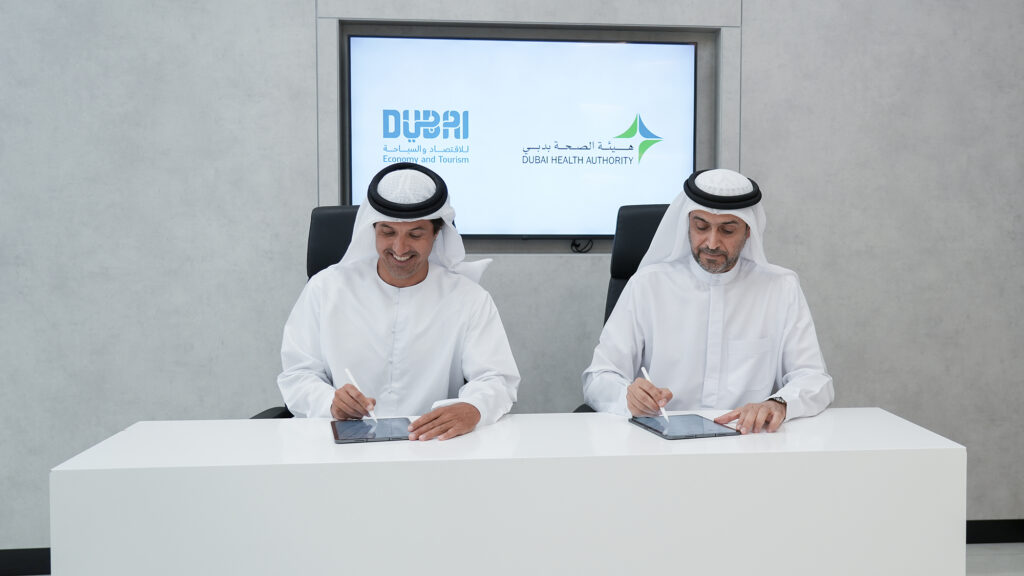
Dubai sells connectivity to affluent patients and families. The Dubai Health Authority reported 691,478 medical tourists in 2023, over AED1.034 billion in direct healthcare spending and AED2.305 billion in indirect revenue. Hospitals, aviation and hotels operate as one ecosystem.
Why Patients Travel Abroad
Price is only one motive. Patients cross borders to shorten waits, access a specialist or technology, protect privacy or obtain unavailable treatment. Fertility care is shaped by law as well as medicine. Rehabilitation needs time and support; cosmetic surgery, hair transplants and dentistry are easier to package around planned dates.
Winning destinations reduce uncertainty: Who reviews the records? Which clinician performs the procedure? What is included? Who handles complications after departure? The opportunity belongs to providers that communicate clearly without promising outcomes.
France’s Strength Is Medicine, Not Marketing
France begins with credibility. The OECD’s 2025 country note records life expectancy of 83 years, 5.4 hospital beds per 1,000 people and health spending equal to 11.5% of GDP. France has globally respected university hospitals, cancer centres, surgical teams, rare-disease networks, fertility services, thermal medicine and rehabilitation expertise.
Its proposition is high-trust specialist care combined with discretion and attractive recovery settings—from Paris and Lyon to the Riviera, Normandy and spa towns. That can appeal to families, executives and patients seeking second opinions or complex care.
France already permits voluntary hospitals to use flexible pricing for planned treatment of certain foreign patients not covered by French or coordinated insurance schemes, as the French Health Ministry’s billing guidance explains. The foundation exists. The international route into it remains difficult to see.

Where Medical Tourism France Loses the Patient
France lacks a unified gateway matching Korea’s facilitator system, India’s medical portal or Dubai’s platform. Pricing, response times and language support vary; visas, deposits, records, accommodation and transport may sit with different organisations.
Domestic capacity is another constraint. OECD data show only 60% satisfaction with the availability of quality healthcare in France, below the 64% OECD average, while 4.1% report unmet needs. International activity must not displace residents or create a two-speed system. The credible strategy is targeted capacity, transparent accounting and revenue reinvested in clinical teams—not queue-jumping disguised as luxury.
The Billion-Euro Opportunity Is Coordination
France could build a regulated national gateway listing accredited providers, specialties, languages, indicative prices and named international-patient contacts. Hospitals need multilingual response standards and secure record transfer. Hotels should understand reduced-mobility rooms and quiet recovery requirements. Travel agencies and medical-tourism facilitators need strict boundaries: they may coordinate journeys, but clinical decisions must remain with licensed professionals.
This is where specialised DMCs can add value without entering medicine. A company such as oui stars can arrange discreet airport reception, pre-booked airport transfers, accommodation movements and private chauffeur services in France. The role is operational continuity—not recommending treatment, interpreting clinical advice or guaranteeing results.
The same principle appears in our analysis of privacy as the new luxury and our tourism mobility quality index: the most valuable service often removes vulnerable handoffs. For agencies and facilitators, our examination of why human travel expertise still matters is equally relevant. Medical travel cannot be reduced to a booking engine.
A Safer Checklist for International Patients
- Verify the facility, clinician’s registration and who will perform the procedure.
- Request a written treatment plan, itemised quotation and complication policy.
- Ask how records, prescriptions and follow-up will reach your doctor at home.
- Allow recovery time; do not build tourism or a flight around an optimistic schedule.
- Confirm visa rules, accessibility, cancellation terms and an emergency contact.
- Check insurance and repatriation exclusions. France Diplomatie warns that medical and repatriation costs abroad can remain the traveller’s responsibility.
France is not missing medical talent. It is missing a coherent export strategy around that talent. If it protects ethics and domestic access while making international care legible, medical tourism France could become a high-value industry built on trust rather than volume. The country does not need to imitate Istanbul or Dubai. It needs to make French excellence travel-ready.
Frequently Asked Questions
Is France a medical-tourism destination?
Yes, France treats international patients and offers respected specialist care, but its medical-tourism pathway is less unified and visible than those of several leading destinations.
Why is Türkiye popular for medical tourism?
Competitive pricing, direct air access, high procedure volumes, multilingual coordination and packaged journeys make Türkiye especially visible for hair transplants, dentistry and cosmetic surgery.
Which treatments attract medical travellers?
Common categories include cosmetic surgery, hair restoration, dental care, fertility treatment, rehabilitation, wellness and specialist hospital treatment.
What should patients verify before travelling for treatment?
Patients should verify the clinician and facility, obtain a written plan and full quotation, understand complication and follow-up arrangements, and check insurance, visas and recovery timing.
What can a medical-tourism facilitator arrange?
A responsible facilitator can coordinate appointments, travel, accommodation, translation and mobility, but medical decisions and promises about outcomes must remain with licensed healthcare professionals.