Fact-checked: 2 August 2026, Paris time.
Tourism Accountability | By Osama Samaha, Editor-in-Chief, OUISTARS Travel Magazine
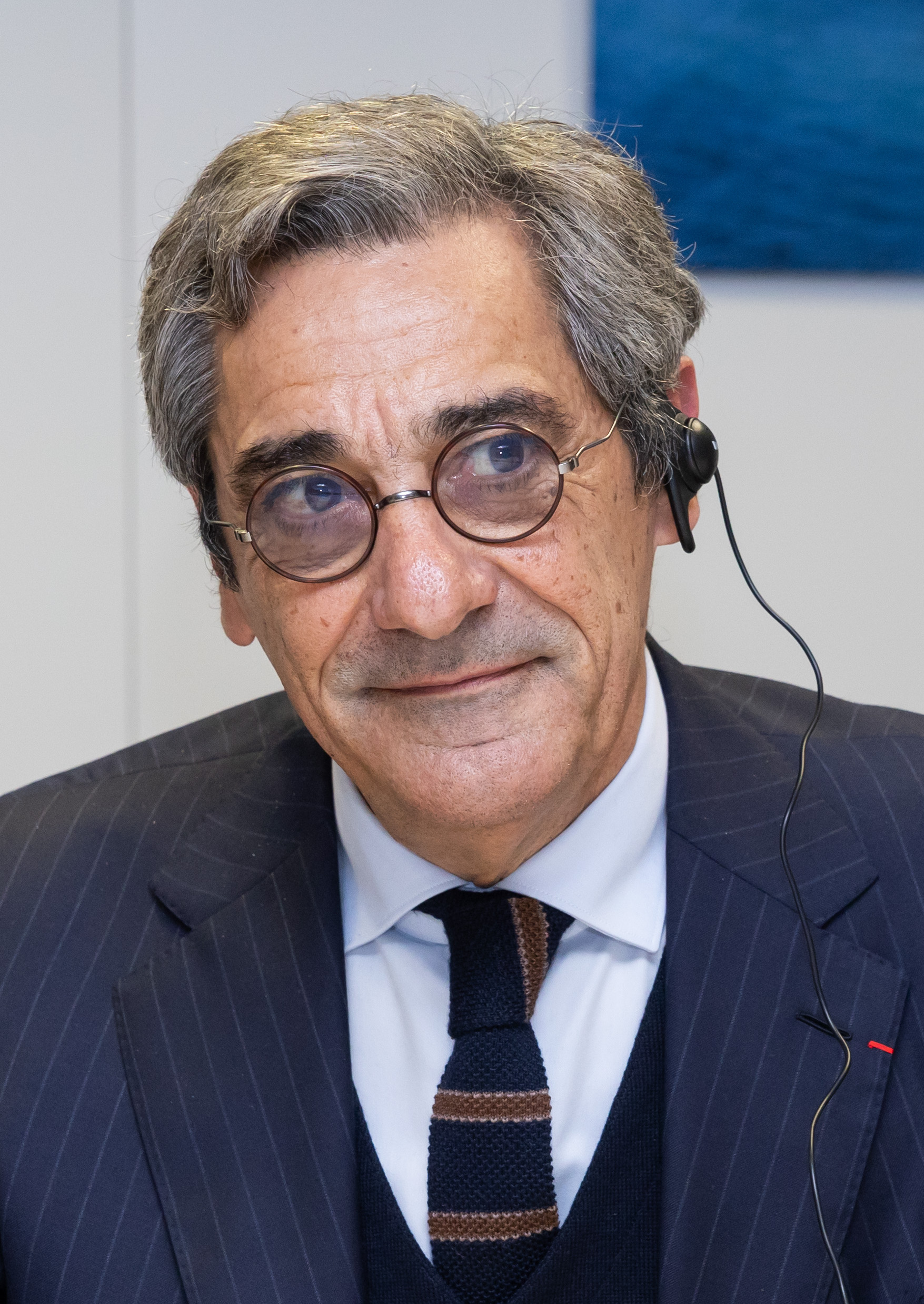
France has a tourism minister, but no single minister truly runs French tourism. The visitor economy is shaped by Bercy, Atout France, regional and local authorities, transport operators, cultural institutions, employers and thousands of independent businesses. So what can Serge Papin reasonably be held accountable for after his first ten months?
Papin became Minister for Small and Medium-sized Enterprises, Trade, Crafts, Tourism and Purchasing Power on 12 October 2025. He inherited record demand, a strong post-pandemic investment cycle and difficult structural problems: Spain still earns more from international tourism, four in ten French people remain distant from holidays by his own stated measure, recruitment is hard, and transport dominates tourism emissions.
This is not a final verdict. It is OUISTARS’ first evidence-based checkpoint on the promises, decisions and measurable delivery published so far.
The short answer
Papin has set a coherent direction: €100 billion in international receipts by 2030, tourism accessible to more residents, a wider geographical spread of visitors, stronger recruitment, simpler rules, faster innovation and leadership in sustainable tourism. Early actions exist. The weakness is not an absence of initiatives, but the limited amount of outcome data proving that they have changed traveller behaviour, jobs, access or regional value.
Who actually governs French tourism?
The minister sets political priorities and can influence regulation, budgets and cross-government coordination. The Directorate General for Enterprise develops and regulates tourism policy. Atout France promotes the destination, observes markets and operates programmes. Regions, departments, municipalities and tourism offices shape destinations locally. Transport, hotels, restaurants, attractions and platforms deliver the experience.
That division matters. A minister should not claim every good year as a personal victory, and should not be blamed alone for every local failure. OUISTARS therefore scores what was within Papin’s control: clarity, decisions, mobilisation, measurement and early delivery.
The baseline he inherited
Official figures published in February 2026 show that France welcomed 102 million international visitors in 2025. International receipts reached €77.5 billion, up 9%, and average spending rose 7% to €760 per trip.
Those results are encouraging, but almost all of 2025 preceded Papin’s appointment. They are the baseline for his mandate, not proof of his performance. The same official release shows Spain at about €105 billion in receipts and France’s ambition at €100 billion by 2030.
Promise 1: Reach €100 billion in receipts by 2030
Papin has made the target explicit and has correctly focused on value, not visitor volume alone. That is strategically sound. France already has global reach; longer stays, higher-quality experiences and a wider spread of spending matter more than chasing another headline arrival record.
Status: direction set, delivery not yet attributable. The 2025 record gives the policy a favourable start, but a credible score requires annual milestones by market, region, trip purpose and length of stay.
Promise 2: Make tourism accessible to everyone
In his February speech, Papin said four in ten French people remain distant from holidays and presented a single ANCV information portal intended to make assistance easier to find. Reducing fragmentation is practical and welcome.
Status: tool launched, social outcome unproven. The next test is public reporting: how many eligible households use the portal, how many additional departures it creates and whether the benefit reaches low-income families, disabled travellers and young people.
Promise 3: Diversify destinations and tourism sectors
Papin named industrial tourism, remembrance tourism, wine tourism and agritourism as growth areas. The logic is strong because it can distribute value beyond crowded icons and support local producers and crafts.
Status: a credible priority, but not yet a national result. France needs comparable regional indicators on overnight stays, visitor spending, seasonality and resident acceptance.
Promise 4: Recruit and retain talent
The government says the 2026 Tourism Jobs Week involved more than 2,000 events. Visibility helps, especially for a sector with international careers and entrepreneurial opportunities.
Status: mobilisation delivered, labour impact unclear. Event counts are inputs. The real measures are vacancies filled, retention after 6 and 12 months, training completion, wage progression and access to housing in high-cost destinations.
Promise 5: Turn sustainability into an advantage
Papin’s June campaign, Marquons les esprits, pas la planète, promotes lower-carbon travel with seven industry partners. The government notes that transport produces 69% of tourism’s carbon footprint. Cars account for 79% of holiday journeys and 53% of transport emissions, while aviation represents 6% of trips but 44% of emissions.
Status: communication active, behaviour change not yet demonstrated. A campaign should be followed by modal-shift data, rail accessibility, regional mobility indicators and measured emissions reductions.
Promise 6: Accelerate tourism innovation
Papin launched the fourth France Tourisme Tech intake in June 2026. The programme reports 35 supported companies, more than 55 experiments and 10 industrialised solutions across three previous cohorts, with a network of around 80 partners.
Status: measurable programme, modest national scale. The next edition expands towards deep tech and a European travel-tech ecosystem. OUISTARS will watch procurement, commercial revenue, jobs, exports and adoption by mainstream tourism businesses.
Promise 7: Simplify rules and unlock investment
Papin highlighted regulatory changes for outdoor accommodation and seasonal-rental deposits. He also announced a mission to examine investment trends over the next decade. France averaged €21 billion of tourism investment per year from 2022 to 2024, but 2024 fell to €18.7 billion as post-pandemic support faded and financing conditions tightened.
Status: targeted decisions, broader strategy pending. Simplification can help, but it needs safeguards for consumers, housing markets, landscapes and fair competition.
OUISTARS first checkpoint
This is a provisional delivery-readiness score, not a final ministerial grade. It uses published information available after roughly ten months in office.
| Measure | Weight | Score | Editorial finding |
| Strategic clarity | 20 | 16 | The 2030 revenue, access and sustainability goals are clear |
| Concrete decisions and programmes | 25 | 15 | Portal, campaigns, regulation and innovation work are visible |
| Measurement and transparency | 20 | 10 | More environmental data, but few outcome dashboards tied to promises |
| Territorial and social reach | 15 | 7 | Strong intent, insufficient proof of changed access or regional distribution |
| Jobs and business competitiveness | 20 | 11 | Mobilisation and simplification started; labour and investment outcomes remain early |
| Total | 100 | 59 | Promising architecture, limited proof of transformation so far |
OUISTARS editorial analysis
Serge Papin has diagnosed the right problems and chosen targets that matter. His first test is now to convert announcements into a public dashboard that measures value, access, jobs, emissions and territorial balance. France does not need another slogan about being number one. It needs evidence that leadership is becoming more profitable, more sustainable and more widely shared.
OUISTARS Travel Magazine
A score of 59 out of 100 is neither failure nor endorsement. It reflects a programme with visible machinery but not enough elapsed time or published results for a stronger verdict.
Five questions the minister should answer before the next scorecard
- What annual milestones will take international receipts from €77.5 billion to €100 billion?
- How many additional residents take a holiday because of the new ANCV portal and related assistance?
- Which regions are gaining overnight stays and spending without worsening local pressure?
- How many tourism vacancies are filled and retained because of government action?
- What measurable reduction in transport emissions and car dependence will be delivered by 2030?
What OUISTARS will verify next
The magazine will update this scorecard when new official data become available. We will separate inherited results from ministerial delivery, record changes to indicators, and seek responses before making any new factual criticism that requires clarification.
For the wider political context, read our linked analysis of France’s €100 billion tourism strategy and our editorial on security as an economic foundation for tourism.
Methodology and sources
Primary sources used here include the Ministry of Economy and Finance, Serge Papin’s official speech, the Directorate General for Enterprise, Atout France and the government’s France Tourisme Tech and low-carbon mobility releases. Facts are current to 2 August 2026. OUISTARS scores are editorial assessments, not government or academic ratings.
Frequently asked questions
Serge Papin has served as Minister for Small and Medium-sized Enterprises, Trade, Crafts, Tourism and Purchasing Power since 12 October 2025.
The government aims to reach €100 billion in international tourism receipts by 2030.
They include higher revenue, tourism for all, diversified destinations, recruitment, regulatory simplification, innovation and sustainable tourism.
It would be misleading to attribute the full-year result to him because he entered office on 12 October 2025. The 2025 figures are better treated as his baseline.
No. It is a transparent editorial checkpoint based on the weighted criteria shown in the article.
Editorial disclosure: OUISTARS operates in travel and private transport services. No institution or company mentioned funded this article or influenced its score.
OUISTARS travel planning: Travellers arranging a trip in France can review OUISTARS private chauffeur and luxury transportation services for airport meet-and-greet, hotel transfers and tailored journeys.