
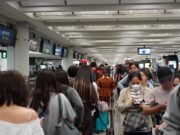








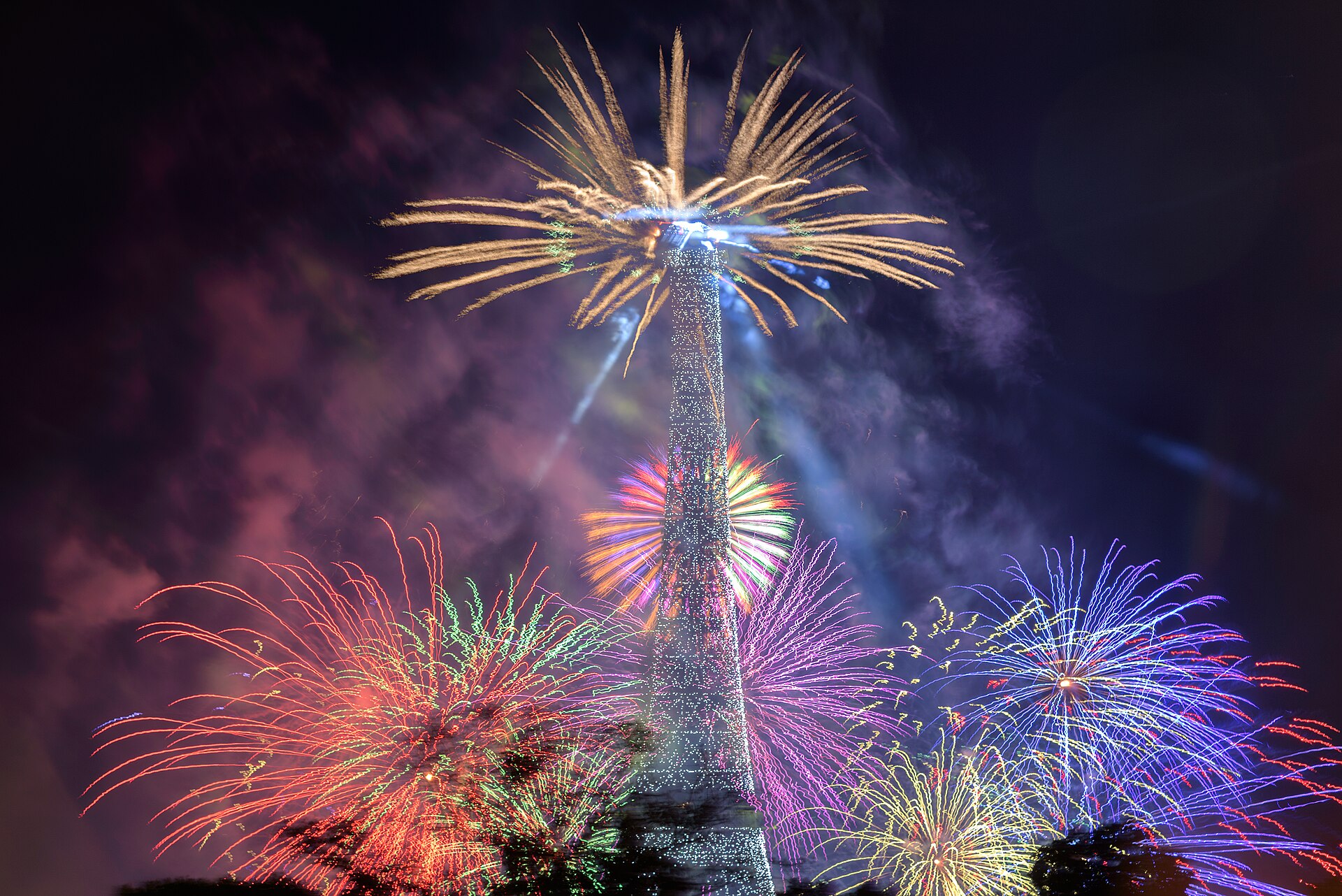
Paris does not merely host events. It absorbs them, translates them into city life, and sends their effects through hotel corridors, café terraces, railway platforms, showrooms, stadium gates and dining rooms. On a major-event morning, the choreography begins before sunrise: delegates emerge at Charles de Gaulle with lanyards still in their bags; buyers roll garment cases through hotel lobbies; production crews cross the périphérique; a sports crowd changes the colour and language of the metro. By evening, the event has escaped its venue. It is eating, shopping, meeting, travelling and staying overnight.
That is why the better question is not simply whether Paris has famous venues. It is this: how does one city repeatedly turn a temporary gathering into a visitor economy?
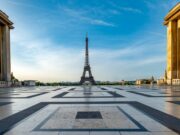
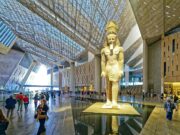
Hero photograph — archival view (2017): Joe deSousa / Wikimedia Commons, CC0 1.0.
What the numbers prove — and what they do not
The official 2025 balance sheet published by Paris je t’aime, the capital’s tourism and convention body, gives the clearest measured picture. Paris hosted 1,200 congresses across 317 venues. Congress activity generated an estimated €942 million in economic benefits. Business travel represented 33.46% of hotel nights in Greater Paris, or 18.7 million nights. In the ICCA 2025 city ranking, Paris placed second worldwide.
| Verified indicator | Official figure | What it measures |
|---|---|---|
| Congresses in Paris, 2025 | 1,200 | Meetings recorded by the destination body |
| Venues used | 317 | The breadth of the metropolitan venue network |
| Congress benefits | €942 million | Official estimate for congress activity, not every event in Paris |
| Business hotel nights in Greater Paris | 18.7 million | 33.46% of regional hotel nights in 2025 |
| Trade shows | More than 400 annually | Professional and mixed public/professional shows |
These figures matter precisely because they have boundaries. They do not justify adding concerts, fashion, sport and diplomacy into a speculative “total impact” number. No single official study captures every restaurant bill, shopping trip, taxi journey, technical supplier and extra night generated by all Paris events. The honest conclusion is therefore stronger than a fabricated headline: measured congress and business-travel activity is already substantial, while the wider event economy operates through observable, overlapping channels.
A city built for more than one kind of gathering
Paris succeeds because it can host several scales and several worlds at once. A medical congress may fill a convention centre while Fashion Week occupies palaces, museums and private showrooms; a technology fair may animate Porte de Versailles as a sold-out concert draws tens of thousands west to La Défense; an OECD ministerial meeting can proceed behind controlled access while visitors queue for an exhibition nearby.
The offer is not one building. It is a network: airports and international rail stations, public transport, dense hotel inventory, restaurants at every price point, cultural landmarks, corporate headquarters, universities, production companies and specialist suppliers. The destination itself becomes part of the delegate proposition. A meeting in Paris can be followed by a museum, a client dinner, a luxury purchase or a weekend extension without changing cities.
Paris je t’aime’s “one-stop” service for gatherings above 500 participants reveals another competitive advantage: large events are treated as city operations. Venue sourcing, institutional coordination, transport, security, sustainability and visitor welcome are connected rather than left as unrelated problems.
Congresses and summits: knowledge travels, then spends
Paris hosts more than a thousand congresses in a typical year, and the official convention calendar notes that almost half attract an international audience. Medicine, science, technology, finance, mobility and the creative industries generate journeys that are rarely limited to the plenary room. Researchers bring teams; associations organise dinners; exhibitors ship equipment; sponsors reserve hospitality space; some delegates arrive with partners or remain for leisure.
This is the “delegate economy”: a high-value visitor chain that begins with registration but extends to aviation, rail, accommodation, catering, translation, audiovisual production, security, floristry, temporary staffing and local experiences. Its geography spreads well beyond central Paris—from the airport corridor and Villepinte to La Défense, Porte Maillot, the Left Bank and Versailles.
The diplomatic layer deepens that role. UNESCO’s headquarters, inaugurated in Paris in 1958, hosts conferences, ceremonies and exhibitions. The OECD operates its Paris headquarters and conference centre at La Muette. The Paris Peace Forum returns for its ninth edition on 11–12 November 2026. State visits, multilateral meetings and ministerial gatherings may be smaller than trade shows, but their requirements—protocol, protected movements, interpreters, secure hotels and exact timing—make them unusually intensive logistical events.
Trade shows: temporary cities inside the city
At Paris Expo Porte de Versailles, Viparis currently lists 169,400 square metres of exhibition space, 28 conference rooms and 48 meeting rooms. The operator reports more than 5.5 million visitors and 200 events a year. Four hotels located on or beside the site add 1,101 rooms, turning the district into a walkable event ecosystem. The complex is being modernised through 2028, so future configurations should not be confused with today’s capacity.
Paris Nord Villepinte, France’s largest exhibition centre, offers 243,515 square metres across nine halls and its own RER station, about 15 minutes from Charles de Gaulle Airport. Scale and airport access make it essential for international shows whose exhibitors arrive with people, freight, samples and complex build schedules.
The calendar shows the variety. VivaTech marked its tenth anniversary at Porte de Versailles from 17–20 June 2026. Maison&Objet ran at Villepinte from 10–14 September 2026, alongside the citywide Paris Design Week; the organiser listed 1,700 brands from 49 countries. SIAL Paris, the biennial food-industry gathering, is scheduled for 17–21 October 2026. IFTM, NRF Europe and Big Data & AI Paris add travel, retail and technology communities to the mix.
These are not interchangeable crowds. A design buyer, an AI founder and a food importer create different spending patterns. But all need beds, meals, local movement and places to meet after the doors close.
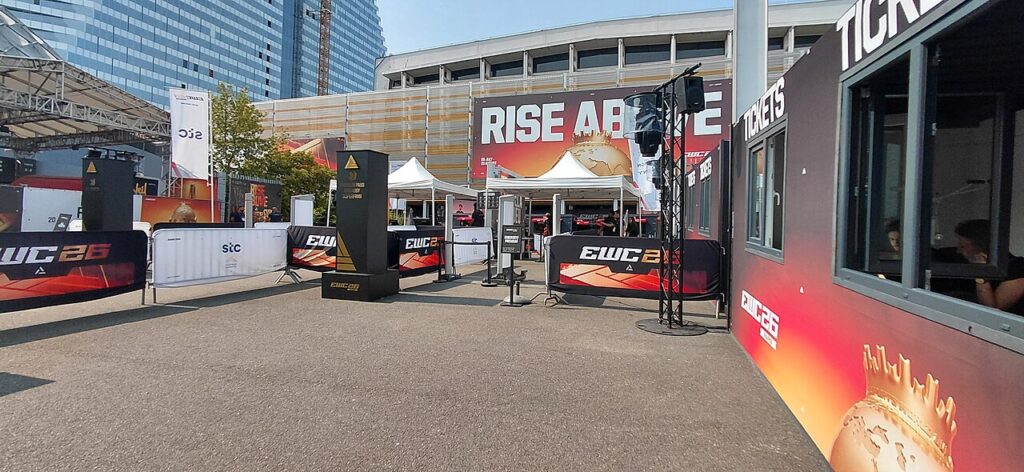
Source file · Licence: CC0 1.0
Paris Fashion Week: when the venue is the city
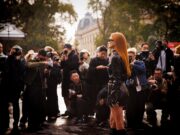
The Fédération de la Haute Couture et de la Mode dates Paris Fashion Week to 1974 and coordinates four ready-to-wear calendars each year—two womenswear and two menswear—alongside Haute Couture Week. The official runway is only the visible centre of a much larger operation.
Fashion’s economic geography is dispersed. Suites become showrooms. Historic buildings become stages. Casting, fittings, beauty teams, photographers, publicists, security staff and drivers work across long days and late nights. Buyers move between appointments; international press dine close to their next call time; brands host presentations and private dinners; clients combine attendance with luxury shopping.
That dispersion is Paris’s advantage and its challenge. Fashion Week does not arrive at a single gate. It moves through the city in timed waves. A ten-minute delay can unpick a sequence of shows, and the value of mobility lies not only in the vehicle but in route knowledge, curb access, communication and calm.

Source file · Licence: CC0 1.0
Sport and music: the crowd becomes the spectacle
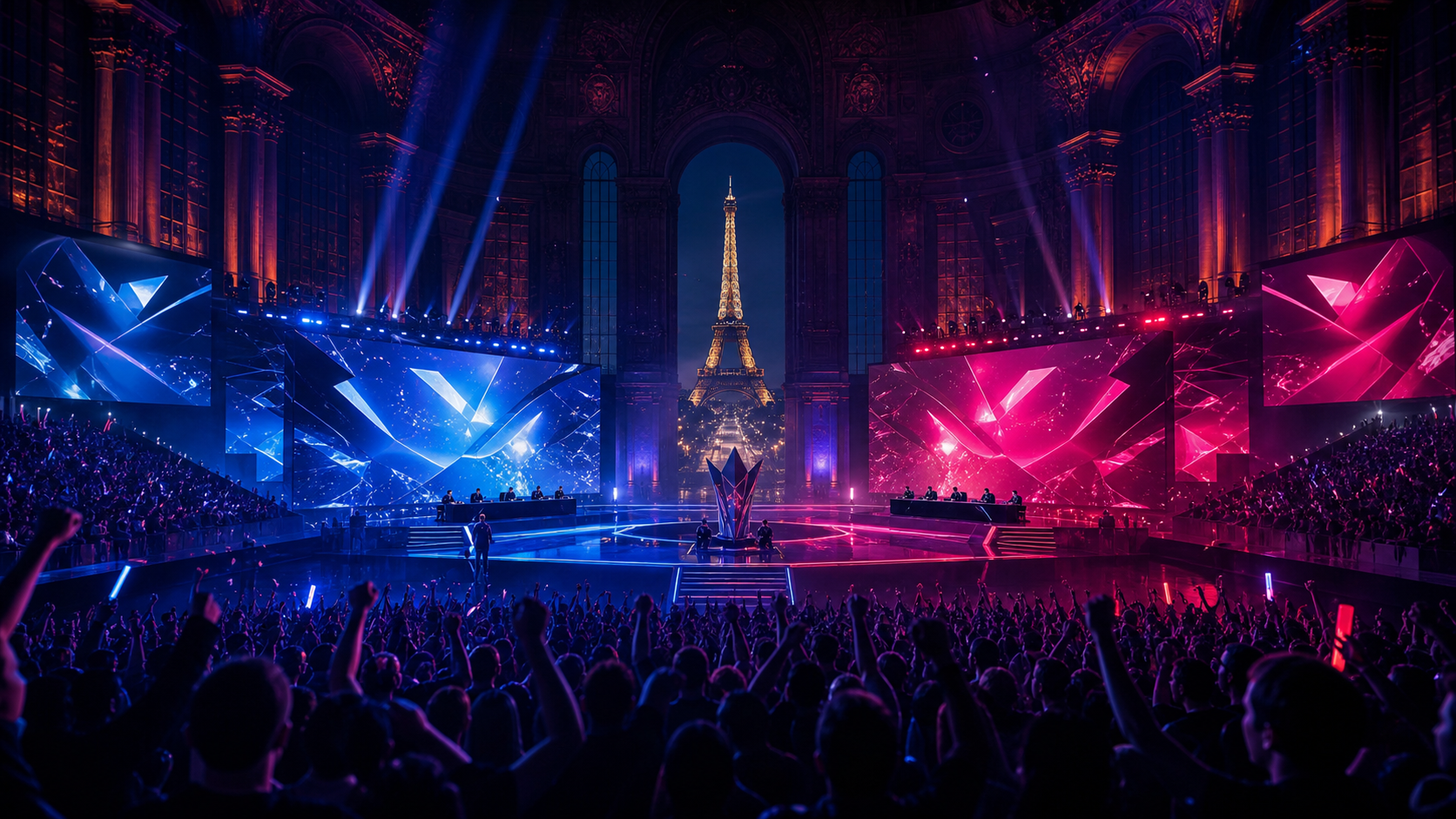
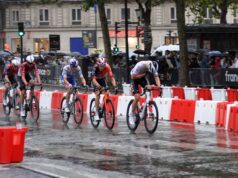
Paris’s event identity is equally public and emotional. Roland-Garros ran from 18 May to 7 June 2026. The Tour de France returned to the Champs-Élysées on 26 July. The Olympic Aquatics Centre and the Seine hosted the European Aquatics Championships from 31 July to 16 August. Esports World Cup finals at Accor Arena and a multi-tournament programme at Porte de Versailles demonstrated how quickly new event formats can join the city’s calendar. In October 2026, an NFL regular-season game is scheduled at Stade de France, followed by the Rolex Paris Masters at Paris La Défense Arena.
The venues form a metropolitan constellation. Accor Arena can reach a maximum configuration of 20,300. Adidas Arena, in the north of Paris, holds up to 9,000. Stade de France serves national-scale sport and concerts. Paris La Défense Arena draws major international entertainment to the western business district. The Philharmonie, Olympia, Zénith and Palais des Congrès cover different musical and performance experiences.
Paris 2024 proved the principle at its most ambitious: the city itself can become the stage. Heritage sites and public space were not decorative backdrops but part of the event language. That memory now strengthens Paris’s argument to organisers: the destination can carry a global story beyond the perimeter of a venue.
How an event becomes tourism
An event ticket or delegate badge creates a reason to travel. Paris then creates reasons to stay. That conversion happens through several linked decisions:
- Accommodation: the room closest to a venue may win the first night; Paris’s museums, neighbourhoods and restaurants can win the next.
- Food and hospitality: breakfast meetings, working lunches, client dinners and post-show gatherings distribute spending through cafés, restaurants, bars and caterers.
- Retail: fashion, beauty, department stores, galleries and specialist shops benefit when professional travel acquires leisure time.
- Mobility: airport and station transfers, public transport, taxis, VTCs, coaches and chauffeur services connect a fragmented calendar.
- Production: staging, sound, lighting, signage, translation, security, cleaning, logistics and temporary labour create business-to-business demand.
- Extended tourism: delegates may add Versailles, Champagne, Normandy or the Riviera; companions often have a separate daytime itinerary.
The calendar’s effect is visible even when a precise event-specific total is unavailable. Paris je t’aime’s 2026 outlook explicitly compares quarters with and without exceptional drivers such as the Paris Air Show or major concerts. Hotel performance is not detached from the event schedule; it moves with it.
One capital, many strategic venues
| Venue | Verified scale or role | Strategic advantage |
|---|---|---|
| Paris Expo Porte de Versailles | 169,400 m²; 200 events and 5.5m+ visitors annually (operator) | Urban location, Metro and on-site hotel cluster |
| Paris Nord Villepinte | 243,515 m², nine halls | RER station and proximity to CDG |
| Accor Arena | Up to 20,300 | Large indoor sport and entertainment in central-east Paris |
| Adidas Arena | Up to 9,000 | Sport, concerts and northern Paris regeneration |
| Stade de France | National stadium | Global-scale sport, ceremonies and concerts |
| Paris La Défense Arena | Major indoor arena | International shows beside Europe’s largest business district |
| Palais des Congrès de Paris | Convention and performance complex | Porte Maillot hotel cluster and western business access |
Beyond Paris: Cannes, Nice and Monaco extend the event economy
France’s event strength is not a single-city story. It is a portfolio, and the Mediterranean coast supplies another powerful season and style.
In Cannes, the 79th Festival de Cannes ran from 12–23 May 2026, while Cannes Lions gathered the global creative industry from 22–26 June. The Palais des Festivals offers 46,000 square metres of modular exhibition space and a 2,300-seat auditorium. Its special power is compression: the Palais, Croisette hotels, restaurants, yachts, beaches and brand spaces sit within a dense walkable zone. Film, television, property, advertising and luxury events repeatedly remake the same waterfront.
Nice combines gateway and destination. Its tourism authority counts around 300 hotels and tourist residences across the metropolitan area, with many higher-category properties equipped for meetings. Palais Nikaïa can hold 1,000 to 9,000 indoors and up to 56,000 in its outdoor configuration; the Palais des Expositions offers 17,000 square metres. The 2026 calendar included Carnival, Paris–Nice, Ironman France Nice, concerts at Allianz Riviera and Rendez-vous en France, which brought nearly 800 international buyers from more than 50 countries.
Monaco turns an entire principality into a controlled event environment. The Formula 1 Grand Prix took place on 7 June 2026; the Monaco Yacht Show is scheduled for 23–26 September at Port Hercule. The Yacht Show’s official mobility plan—courtesy cars, golf carts and shuttle boats—shows an essential truth: at high-density events, transport is part of the product.
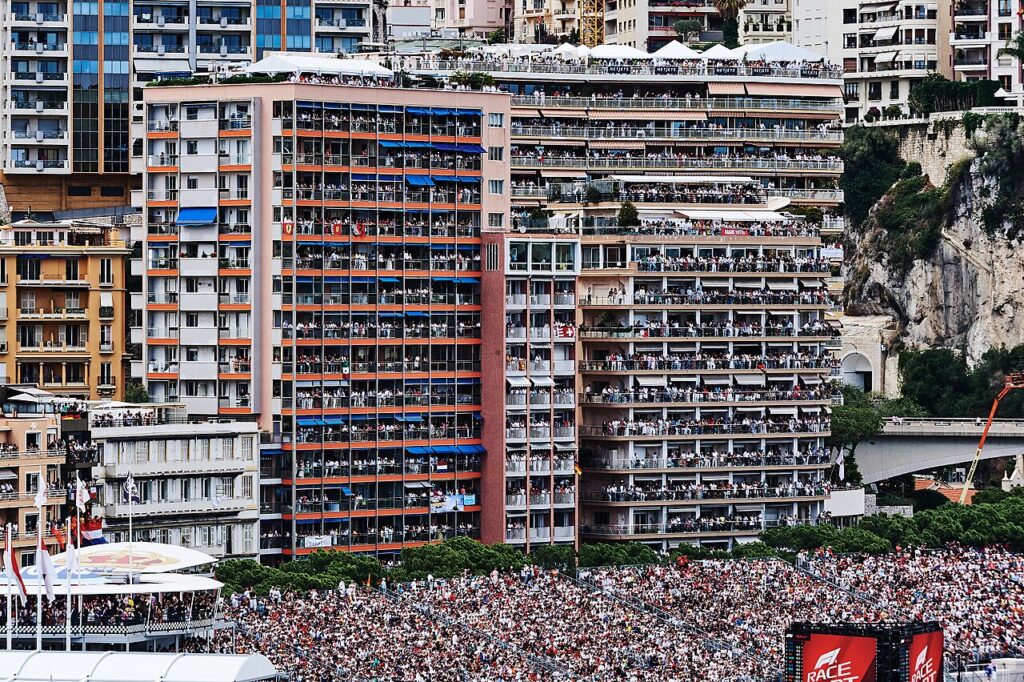
Source file · Licence: CC BY-SA 4.0
The last mile is part of the event
For an organiser, the event begins before registration and ends after the final departure. A delayed airport pickup can compromise a ministerial programme; a coach sent to the wrong entrance can strand a delegation; an improvised Fashion Week route can erase the margin between two shows. The “last mile” is therefore not secondary transport. It is reputation, timing and duty of care.
That is where the work of oui stars belongs naturally in the story: airport and railway transfers, VIP chauffeurs, delegation movements, corporate transport, meet-and-greet, luggage handling and coordinated event mobility. The service is most valuable when it understands the programme as a whole—flight changes, accreditation points, security constraints, venue doors, guest hierarchy and contingency routes.
For practical planning, read our guides to getting around Paris in 2026 and choosing a ground-transport partner in France.
Paris is one of the world’s great event cities because it offers more than capacity. It gives gatherings an afterlife. The speech becomes a dinner conversation; the match becomes a weekend; the runway becomes a shopping journey; the exhibition becomes a partnership; the arrival becomes a memory of France. The event may last hours. The city makes it travel further.
Official sources and further reading
- Paris je t’aime — major events, 2025 congress and hotel indicators
- Paris je t’aime — fairs and trade shows calendar
- Viparis — Paris Expo Porte de Versailles spaces
- Viparis — Paris Nord Villepinte spaces
- Fédération de la Haute Couture et de la Mode — official events
- Roland-Garros — official 2026 schedule
- Festival de Cannes — official 2026 dates
- Explore Nice Côte d’Azur — major events
- Monaco Yacht Show — 2026 dates and mobility
Method and fact-check: verified on 14 September 2026 against official publications from Paris je t’aime, Viparis, Fédération de la Haute Couture et de la Mode, event organisers, UNESCO, OECD, Festival de Cannes, Explore Nice Côte d’Azur, Monaco Yacht Show and Formula 1. Forward-looking 2026 dates are identified as scheduled where they had not yet occurred. Operator figures are labelled. No aggregate economic-impact figure has been invented.
Osama Samaha
Editor-in-Chief — oui stars Travel





[…] as demand support, not as proof that every event automatically fills hotels. Read our analysis of how events power the Paris visitor economy and our investigation of who captured the region’s €7 billion summer tourism […]