





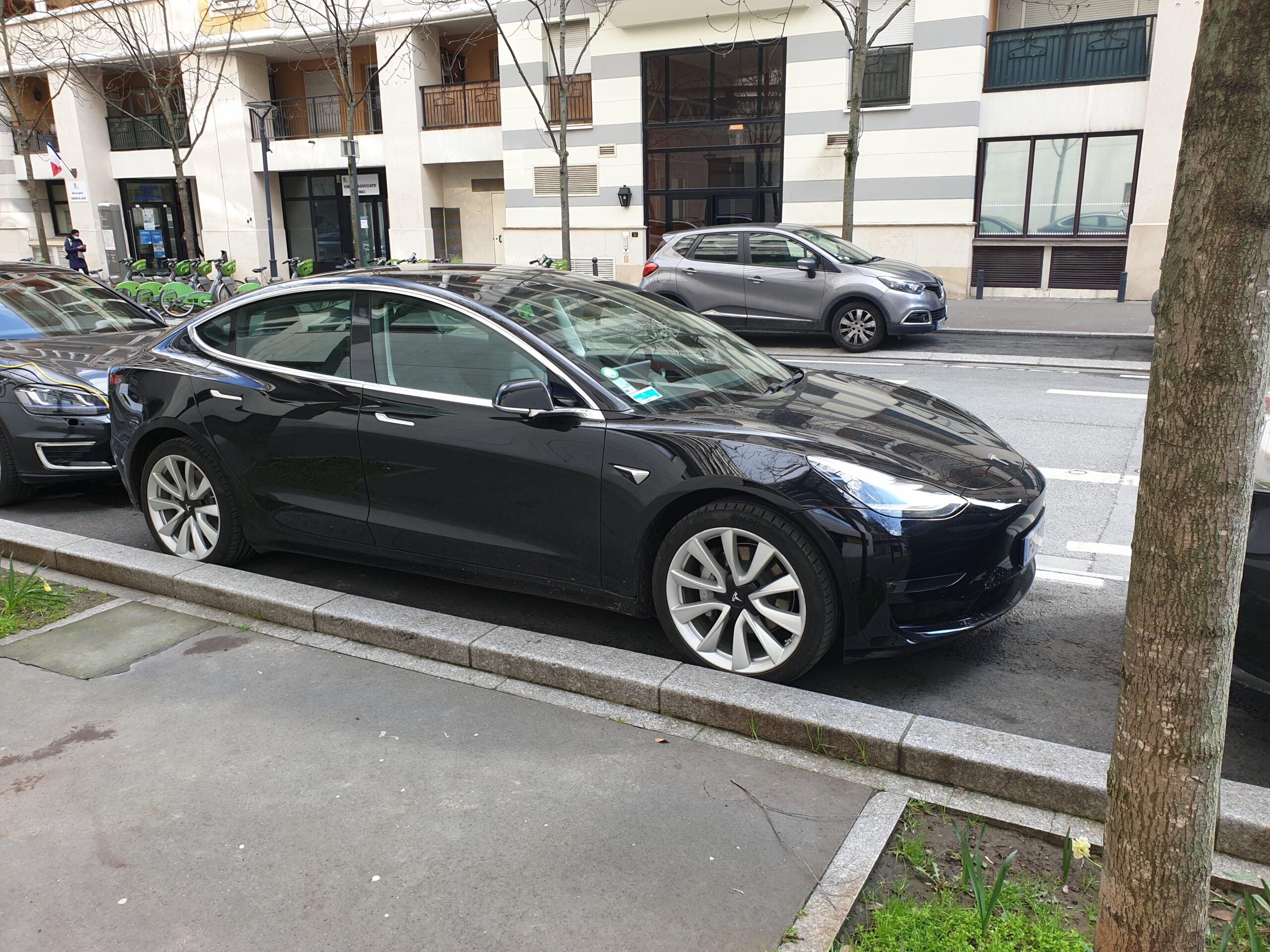
Fact-checked 14 September 2026 — France has moved from scepticism to a real-world evaluation of Tesla’s FSD Supervised. That is a significant policy turn. It is not permission for French owners to activate the system, and it is not the arrival of driverless cars in Paris.
On 2 September, Transport Minister Philippe Tabarot said that, after a “constructive exchange” with Elon Musk, France was entering a road-testing phase with two Tesla vehicles. French authorities, he said, had spent months working with Tesla on technical adaptations that could allow France to support a European homologation decision. Tesla’s own French page remains explicit: FSD Supervised is not currently available in France.
The verified position in one minute
| Question | Position on 14 September 2026 |
|---|---|
| Can a French customer use FSD Supervised? | No. Availability remains subject to regulatory approval. |
| What has France authorised? | An evaluation phase on public roads using two equipped vehicles—not a consumer launch. |
| How many test vehicles? | Two, officially confirmed. No official route, kilometre, driver or city count has been published. |
| Is it autonomous? | No. It is Level 2 driver assistance. The human remains attentive, responsible and ready to intervene. |
| Where is it accepted in the EU? | The Netherlands, Lithuania, Estonia, Denmark, Belgium and Slovenia. |
| What comes next? | A European member-state vote. A 6 October target has been reported, but is not a guaranteed official date. |
From a July warning to a September road test
The political change is real, but narrower than some headlines suggest. In July, Tabarot said the safety trade-offs were insufficient to approve the system “as it stood”. Concerns included speed behaviour and whether a driver would remain attentive during complex urban manoeuvres. The September decision did not erase those concerns; it created a way to examine them in French conditions.
After the minister’s discussion with Musk, two vehicles were made available for evaluation. Reporting citing Tesla identifies UTAC as the independent technical body involved. The government has not published a full protocol, route map or timetable. We cannot responsibly say that a fleet is “driving itself around Paris”, or that approval is inevitable. France has moved from refusing recognition without further answers to collecting evidence that may support—or challenge—the European case.
What is FSD Supervised?
Despite the name, Full Self-Driving (Supervised) does not make a Tesla fully autonomous. It is an advanced, AI-based driver-assistance system able to navigate a route, steer, change lanes, respond to signals, manage speed and park in many situations. The driver remains the legal and operational backstop for every metre.
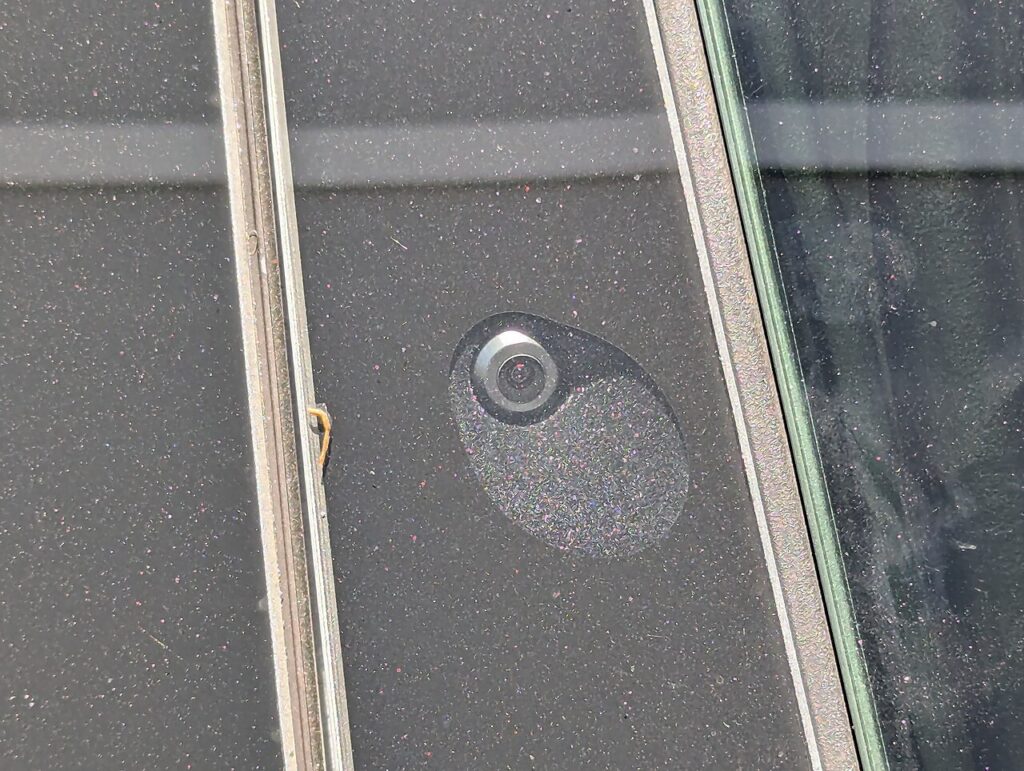
- Cameras and vision: exterior cameras observe lanes, signs, signals, vehicles and vulnerable road users. Software converts images into estimates of objects, geometry and movement.
- AI: neural networks infer road structure, predict trajectories and help select a path. Models are trained offline using selected, anonymised fleet data, simulation and labelled examples; a car does not teach itself Paris live.
- Real-time control: the onboard computer repeatedly turns perception and prediction into steering, acceleration and braking. Navigation, maps and positioning assist while vision remains central.
- Driver monitoring: the cabin camera and steering-wheel input assess attention. Escalating warnings can suspend the feature. Monitoring reduces misuse; it does not transfer responsibility from the driver.
Tesla’s manual names the hard cases: narrow roads, roadworks, complex intersections, pedestrians, cyclists, unprotected turns and double-parked vehicles. Low light, glare, rain, snow and fog can degrade cameras. A system can perform convincingly for an hour and still make a sudden mistake in the next second. That is why “Supervised” is not a footnote.
The Dutch gateway—and the exact European list
On 10 April 2026, the Netherlands’ RDW issued a provisional type approval under Article 39 of EU Regulation 2018/858, used when new technology does not fit every existing technical rule. It was initially valid only in the Netherlands, while other countries could choose to recognise it during the European procedure.
By 14 September, six EU states had done so: the Netherlands, Lithuania, Estonia, Denmark, Belgium and Slovenia. Slovenia’s recognition on 7 September made it the latest addition, so articles published only days earlier may still say five.
RDW says its work lasted more than 18 months and covered over 3,000 hours and 1,000 test runs on proving grounds, public roads and in severe weather. It also reviewed 1.8 million kilometres of European data and requires monthly in-use reporting. Those are regulator programme figures, not proof that every edge case is solved. The European Transport Safety Council has called for more public evidence, independent in-use investigation and safeguards against speeding and driver overreliance. Innovation gains legitimacy through scrutiny.
What would EU approval mean?
RDW submits the Article 39 case to the European Commission and member states vote in the relevant technical committee. A favourable decision would convert the Dutch provisional approval into an EU framework, potentially with conditions or limits. A negative decision would trigger withdrawal after the regulatory transition in Article 39.
This remains a supervised-assistance approval pathway, not a robotaxi licence. Fully automated vehicles face a different regime, including EU Implementing Regulation 2022/1426 and newer UNECE rules for automated driving systems in defined domains. France would still have to oversee deployment, enforcement, insurance, software updates and real-world safety.
The Paris question: is the city ready?
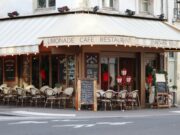
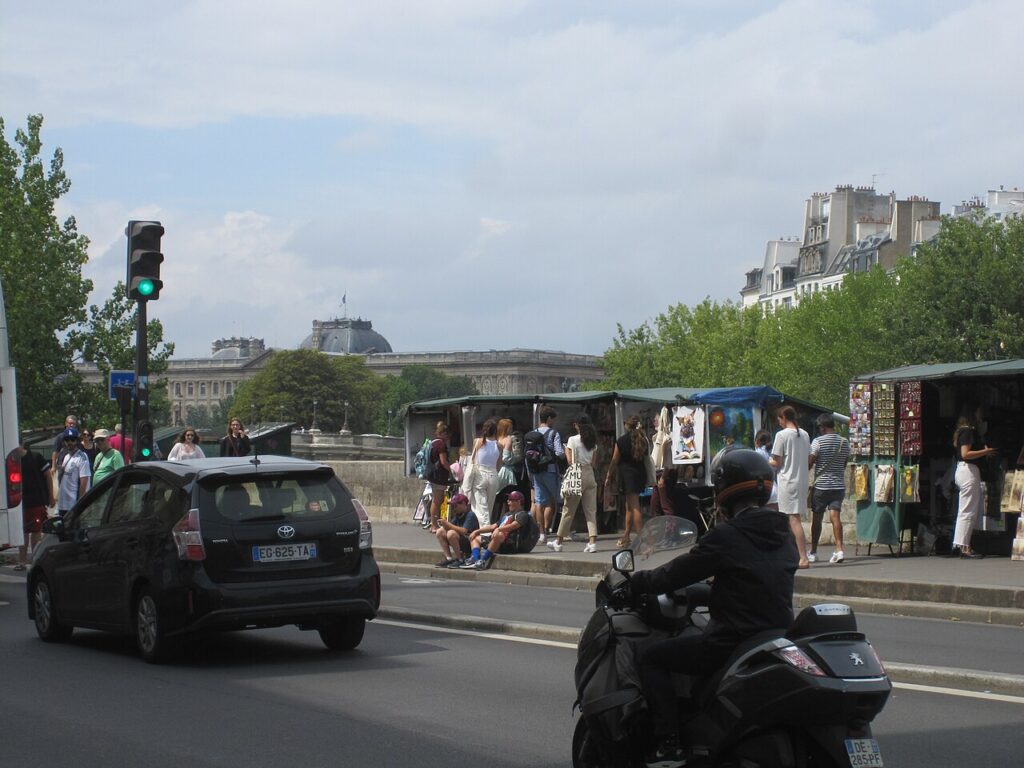
Paris is a stress test made of millions of small negotiations. A pedestrian emerges from behind a van. A cyclist uses a bus lane open to bicycles on one street but not the next. A delivery rider filters forward. A scooter changes line abruptly. A motorcycle enters a blind angle. A roundabout becomes a conversation in gestures. Roadworks erase a lane. Rain turns markings reflective; night makes dark clothing harder to see.
Official city data show the scale: Paris recorded more than 1,600 kilometres of cycle routes in 2025; bicycle traffic rose 7.9% in one year and 47% from 2020. More than four million daily trips are made on foot. The Street Code prioritises pedestrians and sets detailed rules for bus and cycle lanes, blocked junctions and cyclist signals. These are not edge cases. They are Paris.
The system must obey written law while handling uncertainty: leaving space, yielding early, recognising cyclist-specific signals, avoiding blocked intersections and coping with counterflow or shared lanes. French roundabouts, priority-to-the-right situations and dense two-wheeler traffic add local texture. The serious question is not whether software completes a curated demonstration. It is whether performance remains predictably safe through ordinary rain, glare, darkness, works and human improvisation.
The Paris Est ride-along: context, not approval
Tesla is offering passenger ride-along experiences at its Paris Est centre in Bailly-Romainvilliers from 1 July to 30 September 2026. A Tesla team member demonstrates FSD Supervised in real traffic. It lets visitors observe the interface, but it is a marketing demonstration—not homologation, unsupervised driving or permission for customers to activate the feature.
For today’s real transport choices, see our guide to the Metro, taxi, VTC and private chauffeur in Paris and our analysis of choosing a ground-transport partner in France.
And what about taxis and chauffeurs?
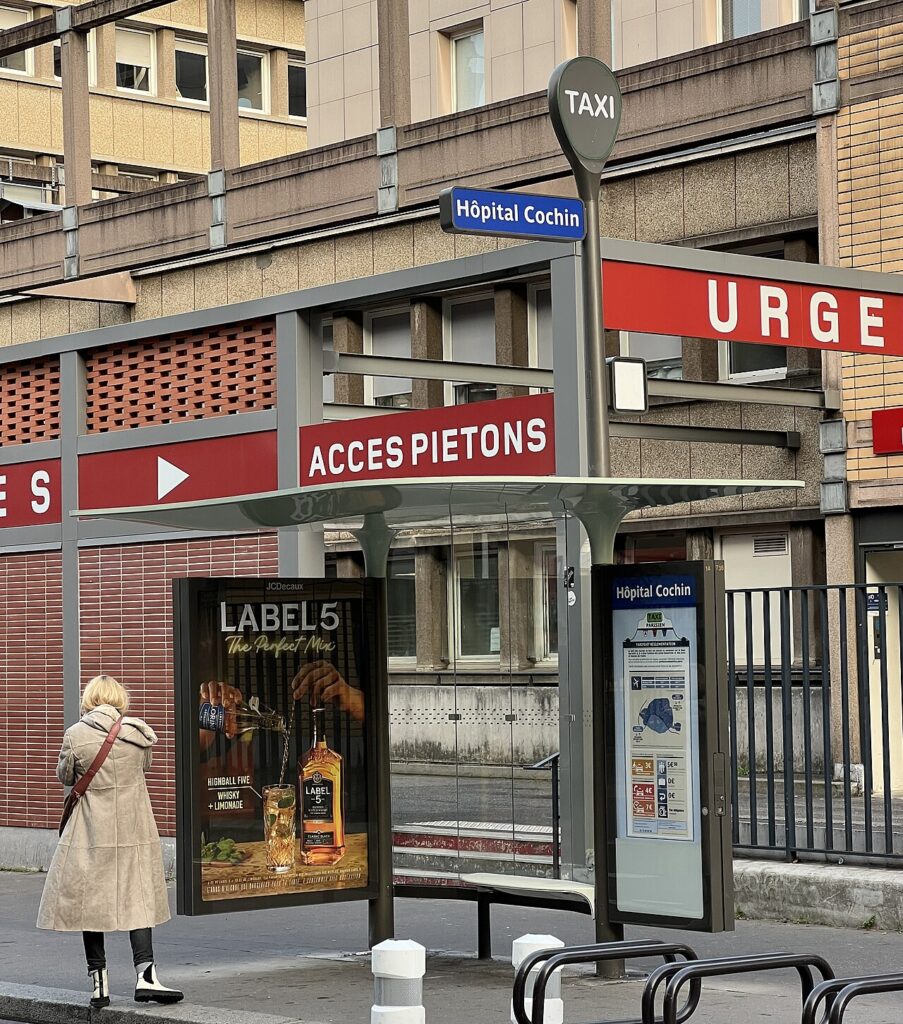
FSD Supervised today cannot replace a taxi, VTC or private chauffeur. A licensed, attentive human must remain at the controls. Claims that jobs are about to vanish confuse Level 2 assistance with a future automated service.
If highly automated systems eventually become reliable and lawful in defined zones, they could change platform economics, fleet use, insurance and the division of responsibility among driver, operator, manufacturer and software provider. Standard airport corridors or geofenced districts may be easier to automate than open-ended premium itineraries. New work may emerge in remote assistance, fleet care, safety operations and customer support even if some driving hours change.
Premium chauffeur service also sells what an algorithm does not: a person at arrivals with the client’s name; luggage assistance; security judgement; discretion; multilingual hospitality; protocol; local knowledge; rapid response to a changed itinerary; care for children, older travellers or a VIP delegation. Automation may become part of that service before it becomes a substitute for it.
If there is a crash, who is responsible?
For FSD Supervised today, the starting point is the driver. Because it is Level 2, the driver retains the driving task. French compulsory motor-liability insurance compensates third-party victims. Investigators and insurers can then ask: Was assistance active? Did it issue a takeover warning? Was the driver attentive? Did a defective component or update contribute?
Responsibility can have layers. Driver misuse may create liability; a proven defect can support recourse against a manufacturer or software producer. The revised EU Product Liability Directive expressly covers software and AI, but its new regime applies to products placed on the market after 9 December 2026, not yet on 14 September.
French law already includes provisions for genuinely delegated driving systems, including transfer of some offence liability when an approved system performs the dynamic task inside its conditions. Those provisions do not make FSD Supervised autonomous. They show where law may move as systems take more of the task. Insurance, event data and software versioning will matter as much as the damaged metal.
Supervised today, robotaxi tomorrow
The essential line is simple: assistance is not autonomy. FSD Supervised is a broad driver aid with a human accountable for every metre. A robotaxi would need to drive without an onboard driver inside a defined operational domain, recover safely from faults, meet a different approval standard and comply with local service rules.
France may be approaching a new chapter in mobility. The two test cars replace speculation with evidence. The Dutch process gives Europe a structured way to say yes, no or yes-with-conditions. Paris matters because technology that can coexist with its pedestrians, cyclists, buses, scooters, motorcycles and improvisations will have faced one of Europe’s hardest urban examinations.
But the real question is no longer simply: “Can the car drive?”
It is: “Are our cities, laws, insurers, professionals and citizens ready for the day when the driver becomes less important—and perhaps one day disappears entirely?”
Sources and verification note
This investigation was checked immediately before publication on 14 September 2026. Primary sources include Tesla France, the official Paris Est event, RDW’s approval explanation and test update, the EU type-approval regulation, the Slovenian authority, the Danish authority and the City of Paris mobility report. The minister’s two-car statement was cross-checked against his published remarks and Reuters. Where official detail does not exist, this article says so.
Osama Samaha
Editor-in-Chief — oui stars Travel