














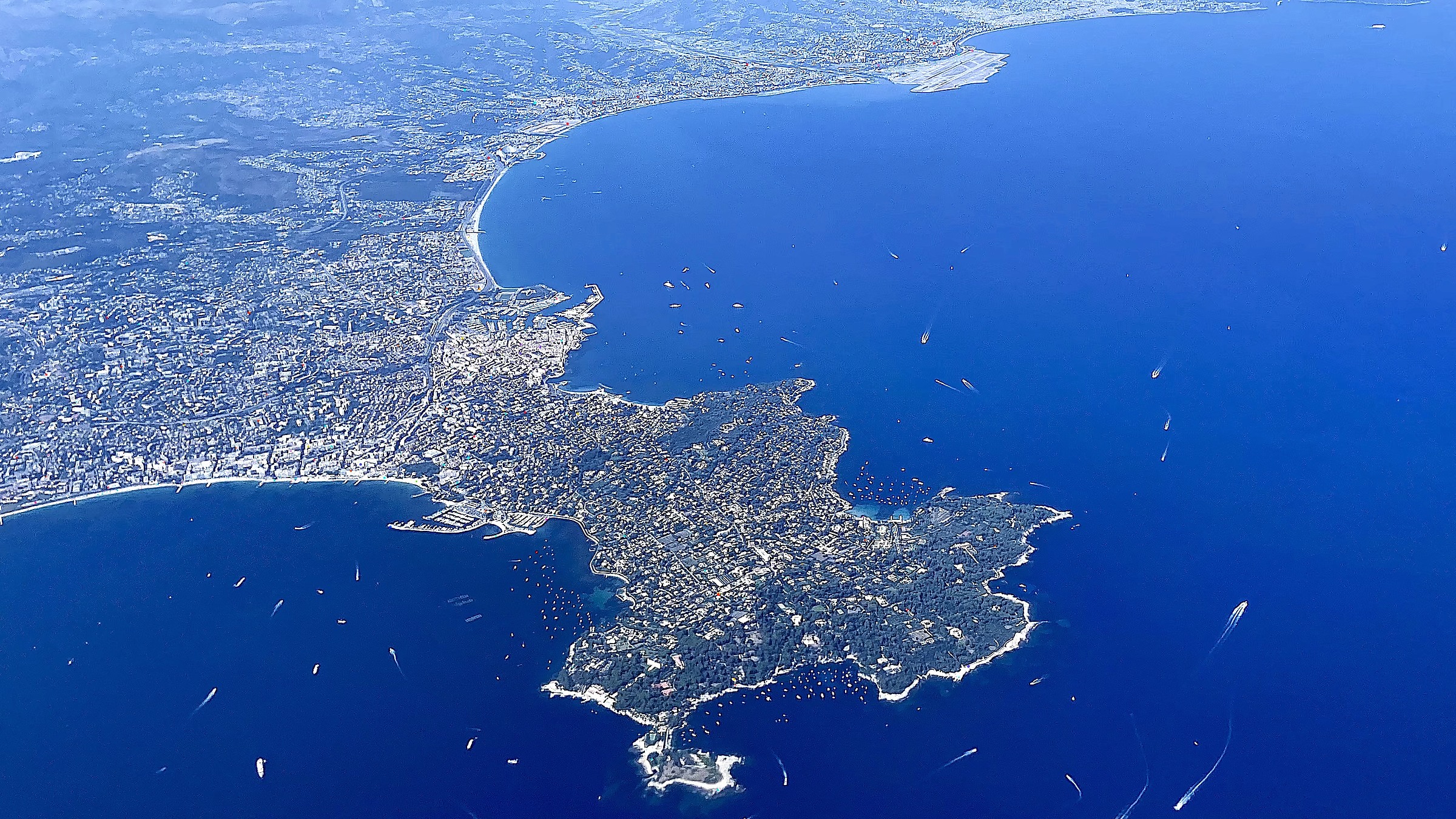
Antibes sells a form of Riviera wealth that is deliberately quieter than the red carpet in Cannes and less compressed than Monaco: a walled old town, a working superyacht port, pine-shaded beaches, and villas hidden behind the stone and greenery of Cap d’Antibes. The investment question is whether that discretion creates durable value, or merely an expensive illusion of scarcity.
For international buyers, Antibes is not one market. It is at least four: compact apartments around the old town and Port Vauban; resort homes in Juan-les-Pins; family residences connected to the year-round economy around Sophia Antipolis; and the thin, trophy segment of Cap d’Antibes villas. Each is exposed to a different mix of tourism, local employment, seasonality, regulation and liquidity.
This feature separates official data from market interpretation. It does not assume that a famous address guarantees capital growth, and it does not treat an asking price as a completed transaction. The central argument is narrower: Antibes has an unusual combination of global leisure appeal and an inhabited, working urban economy. That combination deserves attention, but only if the property, legal use and carrying costs are examined with the same discipline as the view.
Antibes in numbers: a city with a second-home economy
Antibes had a municipal population of 77,637 in 2023, according to INSEE’s commune file. Its 65,414 dwellings included 40,003 principal residences, 21,945 second homes or occasional dwellings and 3,467 vacant units. In percentage terms, 33.5% of the stock was secondary or occasional, compared with 9.7% for France as a whole. Apartments represented 84.7% of all dwellings and houses 14.8%.
Those figures matter more than the mythology. They demonstrate that non-permanent ownership is not a niche at the edge of Antibes; it is embedded in the city’s housing structure. They also show why buyers should not confuse the municipality with the Cap. Most of Antibes is an apartment market, even though the international image is dominated by private villas.
The municipality says Antibes Juan-les-Pins attracts more than one million visitors a year and that the population rises from roughly 80,000 to more than 200,000 in summer. It also identifies 23 kilometres of coastline, four ports, the old town, Juan-les-Pins and Cap d’Antibes as distinct parts of the destination. These are official promotional figures, not an audited estimate of unique visitors, but they convey the scale of the seasonal pressure.
Why discreet wealth chooses the Cap
“Discreet wealth” is not an official buyer category. It is an editorial description of a preference: privacy over spectacle, space over proximity to a red carpet, and the ability to host a family and staff without turning every arrival into a public event. Cap d’Antibes offers large plots, mature gardens, sea views, coves and a road geography that allows residences to sit back from the waterfront.
The peninsula also carries cultural and hospitality signals that reinforce its position. The Hôtel du Cap-Eden-Roc, the Belles Rives in Juan-les-Pins, the Picasso Museum in Antibes and the jazz festival create a destination identity that mixes private retreat with internationally legible names. Port Vauban adds a separate wealth infrastructure built around yachts, crews, brokers, maintenance and charter activity.
None of this proves a financial return. It explains use-value and buyer motivation. A family that spends several weeks each year on the Riviera may value bedrooms for children, nannies, assistants or security; a garden; controlled access; and the ability to receive guests privately. That is a different product from a luxury hotel suite. The two can be complementary: hotels provide service and short-stay flexibility, while a residence provides continuity, storage, routines and control.
Port Vauban: wealth infrastructure, not just a postcard
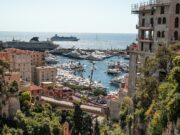
The current Port Vauban website states that the marina has 1,500 berths and can receive boats up to 150 metres. Its detailed superyacht page says the International Yacht Club of Antibes has 18 berths for yachts up to 160 metres. Port Vauban therefore matters to property analysis not because every yacht owner buys a home, but because it anchors a specialised international economy.
Owners, captains and crews require technical services, food, transport, accommodation, legal and financial support. The city’s old streets and restaurants sit immediately beside this ecosystem. The port is also being modernised under a 25-year public-service delegation that began in 2017, according to the operator. Municipal budget material for 2025 referred to €150 million of Port Vauban investment and €15 million a year, although investors should examine the programme and delivery timetable rather than treating announced expenditure as completed work.
This produces a useful distinction. A marina view can command an emotional premium, but the investable value lies in the depth and persistence of the surrounding activity. The risk is paying for the word “yachting” while buying a compromised apartment with noise, no parking, poor energy performance or expensive copropriété works.
Tourism has depth, but seasonality has not disappeared
The Côte d’Azur tourism observatory reported more than 12 million visitors and close to 70 million nights across the wider destination in 2025, with an average stay of six nights and average occupancy of 67%. A separate 2025 hotel and tourism-residence assessment recorded nearly 13 million nights and hotel occupancy approaching 66%. These are regional figures, not Antibes-only totals.
Local official material cited 53 hotels with 1,867 rooms, 18 tourism residences and four campsites. The municipality also describes a strategy of culture, sport and congress activity intended to support year-round tourism. That matters because a property market supported only by July and August is more vulnerable than one connected to residents, business travellers and off-season events.
Yet the summer surge from roughly 80,000 residents to more than 200,000 people also reveals the operating constraint: roads, parking, beaches, waste collection and services face pressure precisely when tourism income is strongest. In investment terms, high-season demand can improve gross rental revenue while increasing wear, management costs and neighbourhood conflict. Seasonality is not eliminated; it is diversified.
The other stabiliser: Sophia Antipolis
Antibes is the largest city associated with the Sophia Antipolis technology cluster. Its municipal profile explicitly connects the city to the technopole and to a broader intercommunal economy. That employment base does not turn a Cap villa into a conventional rental investment, but it can support year-round demand for ordinary apartments and family housing in areas with practical road or rail access.
This is one reason to separate glamorous Antibes from investable Antibes. A well-located two- or three-bedroom apartment used by residents may offer a more legible rental market than a highly individual villa. Conversely, the villa may deliver personal use, privacy and long holding-period scarcity, but with weaker yield, higher maintenance and fewer comparable sales.
The strongest property thesis therefore depends on the buyer’s objective. Income-seeking investors need evidence of lawful, repeatable demand. Lifestyle buyers need to quantify the cost of the weeks they will actually use. Family offices considering intergenerational ownership need governance, succession and tax advice, not merely a view of the sea.
What the notarial data says, and what it cannot say
When consulted in September 2026, the Notaires de France price page for Antibes displayed a median of €5,152 per square metre for old apartments, based on 1,750 sales, and €6,186 per square metre for houses, based on 171 sales. The page also displayed lower and upper reference values of €4,333 and €6,181 for apartments, and €5,120 and €8,174 for houses. Buyers should check the period and methodology on the live database when making a decision.
An earlier national notarial report, covering transactions to March 2024, put Antibes old apartments at €4,940 per square metre, up 2.1% over one year, and the median old-house price at €780,000, up 6.1%. The report warned that median changes can reflect the mix of properties sold as well as underlying price movement.
Neither dataset is a Cap d’Antibes villa index. Exceptional waterfront or near-water estates trade infrequently, differ radically in land, condition, view and privacy, and may be sold through confidential networks. Citywide medians are useful for calibration, not valuation. A buyer should demand recent, genuinely comparable completed transactions and commission an independent valuation where the sums justify it.
Four micro-markets, four different risks
Old Antibes and Port Vauban. Character, walkability, restaurants, the market and rail access can support both personal use and broad visitor appeal. Constraints include historic fabric, stairs, small plans, noise, summer congestion, limited parking and potentially costly copropriété works. A port or rampart view does not cure a weak building file.
Cap d’Antibes. Privacy, gardens, sea access and limited supply drive the narrative. The trade-off is high entry cost, thin transaction evidence, security and grounds expenditure, salt and humidity, insurance questions, wildfire and coastal-risk due diligence, and dependence on a car or driver. A villa can be a magnificent usable asset and still be an inefficient income asset.
Juan-les-Pins. Beaches, the rail station, nightlife and the jazz identity create a recognisable resort proposition. Apartments may be easier to operate than estates, but seasonality, street-by-street noise, building quality and short-term letting rules matter. A bright summer street may feel very different in January.
Residential Antibes and Sophia-facing districts. These areas are less cinematic but can benefit from schools, services and year-round employment. The investment case may rest more on ordinary housing demand than luxury tourism. That can improve liquidity, though it offers less scarcity and weaker trophy appeal.
Short-term rental is a legal question before it is a yield
Antibes requires tourism-furnished accommodation to be declared and the registration number to appear in advertisements. In May 2025 the municipal council reduced the annual limit for renting a principal residence as tourist accommodation from 120 to 90 days, effective 1 July 2025. It also launched studies for possible caps on temporary change-of-use authorisations in central Antibes and Juan-les-Pins.
The crucial distinction is between a principal residence, a second home and premises whose use has legally changed. A copropriété’s rules may impose additional restrictions. National law, municipal rules and enforcement can evolve. Therefore, a buyer should model a property at zero short-term-rental income until a notaire or specialist lawyer has confirmed the current position for that exact address and use.
This is not a technical footnote. A purchase price justified by 12 months of optimistic holiday occupancy can become irrational if the lawful operating window is narrower, if management absorbs a large share of revenue, or if the building prohibits the activity.
The real carrying cost of Riviera privacy
Acquisition costs are only the beginning. Owners must budget for taxe foncière, insurance, utilities, security, gardens and pools, façades and roofs, lifts and common areas, pest and humidity control, energy work and periodic refurbishment. Near the sea, corrosion and salt accelerate maintenance. In a villa, a neglected exterior can destroy both enjoyment and resale presentation; in an apartment, deferred copropriété works can arrive as large special assessments.
For non-residents, tax residence, rental-income taxation, capital-gains rules, wealth-tax exposure, estate planning, financing and currency risk require advice across jurisdictions. France’s legal system can provide structure and documentation, but it does not make ownership passive.
Climate and physical risk must also be address-specific. Buyers should consult the official Géorisques report, planning documents, flood and wildfire information, coastal exposure, soil conditions and insurance history. A panoramic view is not a substitute for a survey, drainage inspection or review of permits.
Does privacy protect value?
Privacy can support willingness to pay when it is difficult to reproduce: mature planting, separation from neighbours, secure access, a quiet setting and a credible view corridor. But privacy can also conceal defects, isolate a property from services or produce expensive security and transport needs. Its value is buyer-specific.
The more defensible long-term case for Antibes rests on several demand pillars rather than one celebrity association: a substantial resident population, second-home culture, international tourism, a major marina, nearby employment, access to Nice airport, and proximity to both Cannes and Nice. This breadth may help the market absorb shocks better than a single-season resort, but it cannot prevent downturns or guarantee liquidity.
For comparison, our analysis of Cannes and La Croisette examines event-driven visibility and branded prestige, while our Nice property feature looks at a larger urban economy and stronger transport depth. Antibes sits between them geographically and conceptually: smaller than Nice, quieter than Cannes, but connected to both.
Who might Antibes suit?
Antibes may suit a long-horizon lifestyle buyer who will use the property regularly, values privacy and accepts carrying costs. It may suit an international family that needs several bedrooms and continuity between visits. It may suit an apartment investor focused on year-round resident demand, provided the purchase price and long-term rent produce a credible net return.
It may be less suitable for a buyer who needs quick liquidity, relies on high leverage, assumes unrestricted holiday letting, or expects a trophy villa to behave like a diversified financial asset. In the Cap segment, an apparently modest price reduction can represent a large absolute sum, and the buyer pool at resale may be narrow.
A disciplined shortlist should begin with purpose, not postcode: personal use, long-term rent, seasonal use, wealth preservation or family succession. Only then should the buyer compare micro-location, transport, legal use, building condition, operating budget and exit market.
Editor’s view: the value is in the ecosystem
Osama Samaha, Editor-in-Chief, oui stars Travel: Antibes illustrates a principle at the heart of this series: expensive property is not protected by scenery alone. The surrounding ecosystem matters – law, maintenance, access, hotels, restaurants, culture, year-round employment and a destination’s ability to remain desirable across generations.
The Cap’s discretion is compelling because it sits beside an active city rather than outside one. But discretion should never become opacity. The more exceptional the property, the more rigorous the buyer must be about completed transaction evidence, permits, physical condition, taxation and the realistic cost of ownership.
Travel brings people to France. Lifestyle makes them return. Investment can keep them connected to France for generations. In Antibes, that connection can be unusually personal. It is not automatically profitable.
Investor checklist before making an offer
- Define whether the purchase is for use, long-term income, seasonal occupation or intergenerational ownership.
- Compare completed transactions in the same micro-market; do not apply the Antibes median mechanically to Cap d’Antibes.
- Verify title, boundaries, easements, planning permissions and the legality of all extensions, pools and outbuildings.
- Read the copropriété rules, meeting minutes, work plan, charges and litigation for any apartment.
- Confirm current short-term-rental and change-of-use rules for the exact address before assigning rental income.
- Commission building, roof, drainage, humidity, pool and grounds inspections appropriate to the property.
- Check Géorisques, insurance availability, energy performance and likely climate-adaptation costs.
- Model acquisition, tax, maintenance, management, security, vacancy and resale costs under conservative assumptions.
- Take French and home-jurisdiction legal and tax advice before signing.
This article is editorial analysis, not individual investment, legal or tax advice. Prices and rules change; verify live data and obtain qualified advice before acting.
Explore the complete French Real Estate Investment Guide, and follow oui stars Travel for continuing analysis of tourism, investment, luxury and the economies shaping the way the world travels.
Sources
- INSEE: Commune d’Antibes, population and housing data for 2023
- Ville d’Antibes Juan-les-Pins: destination, coastline, visitor and seasonal-population context
- Côte d’Azur France Tourism Observatory: 2025 destination indicators
- Côte d’Azur France: 2025 tourism assessment
- Port Vauban: current capacity and infrastructure
- Port Vauban: IYCA superyacht berths and concession context
- Notaires de France: Antibes transaction price page
- Notaires de France: coastal property report, July 2024
- Ville d’Antibes: May 2025 short-term-rental regulation
- Géorisques: official property-level risk information