















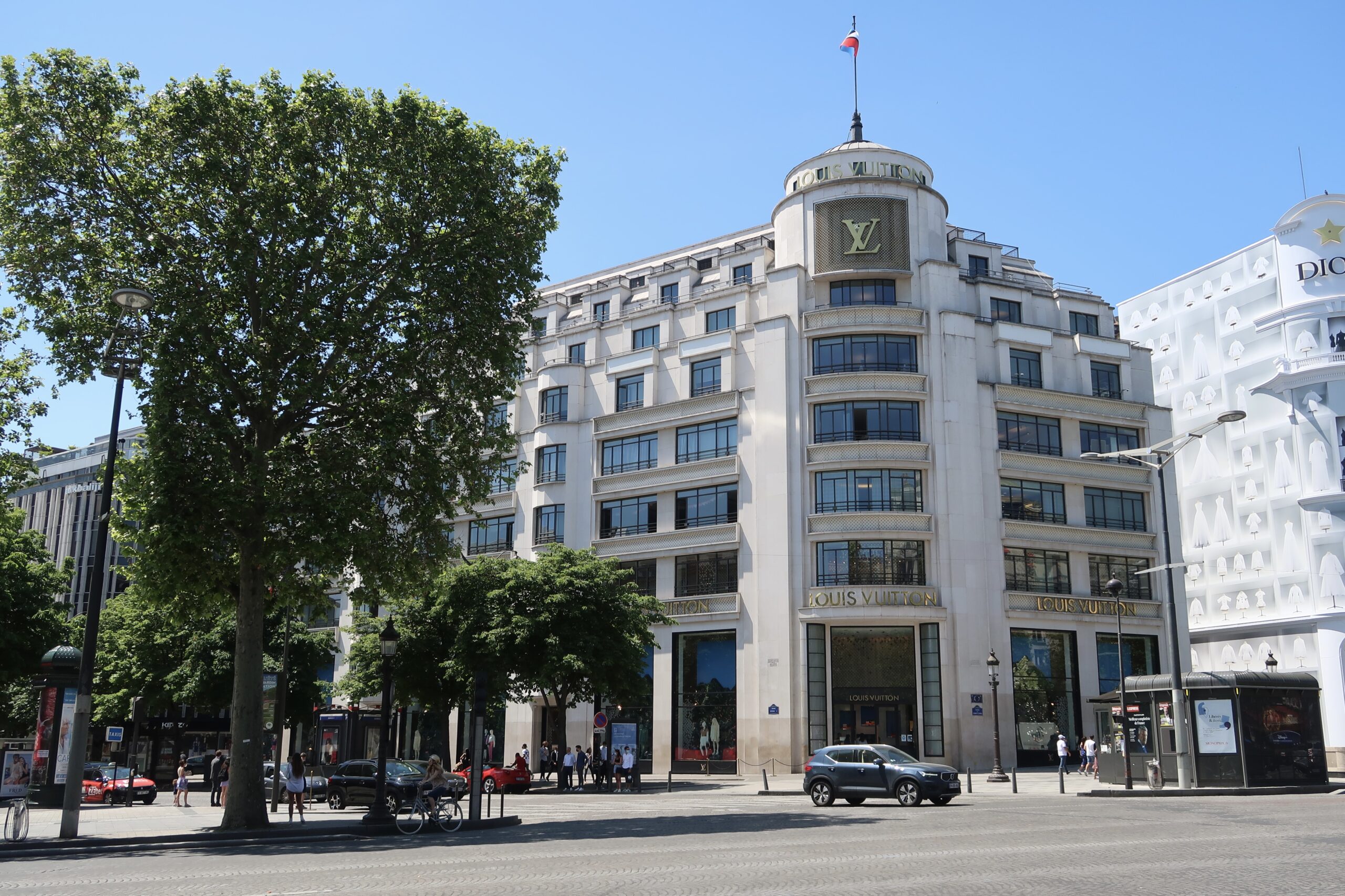
Paris sells an image of luxury that looks entirely French. The money crossing its counters is far more international. Behind the limestone façades, private salons and carefully guarded doors, a small share of foreign visitors carries an outsized share of the capital’s tourism economy. Understanding who they are matters not only to Louis Vuitton, Dior or Chanel, but also to hotels, airports, restaurants, landlords, payment companies and public authorities.
The most useful new evidence comes from a 2025 study by Choose Paris Region, the Paris Île-de-France Chamber of Commerce and Industry and its Crocis research unit. It does not claim to identify every handbag buyer. Instead, it examines international tourists classified as “high contribution” because of the economic value of their stays. That distinction is essential: tourism expenditure includes accommodation, food, transport, leisure and shopping, not luxury retail alone.
A minority that generates almost half the foreign spend
Fact: Paris Region received 22.6 million international tourists in 2024. Of those, 5.6 million were classified as high-contribution visitors. They generated an estimated €6.9 billion, or 46% of the region’s €14.9 billion in international tourist consumption, according to the CCI Paris Île-de-France study.
- United States: 688,000 high-contribution visitors generated €1.1 billion. Average spending reached €1,561 per stay and per person.
- China: 299,000 high-contribution visitors generated €447 million. Average spending reached €1,495 per stay and per person.
- Gulf countries: 135,000 high-contribution visitors generated €392 million. Average spending reached €1,592 per stay and per person.
The comparison is revealing. Americans bring the largest pool and the largest aggregate spend among the three markets identified by the study. Gulf travellers form a much smaller cohort, yet their average spending is the highest. Chinese high-value visitors sit between the two in volume and remain central to the shopping economy even though overall Chinese arrivals have not fully regained their pre-pandemic level.
Analysis: There is no single “foreign luxury buyer.” Paris depends on a portfolio. American demand offers volume and resilience; Gulf demand offers exceptional value per trip and often a wider hospitality footprint; Chinese demand offers significant shopping intensity and recovery potential. Treating them as one generic affluent audience is commercially lazy and statistically misleading.
Tourism volume is not tourism value
Paris Region welcomed 48.7 million tourists in 2024 and recorded €23.4 billion in tourist spending. International visitors represented less than half of arrivals but produced €14.9 billion, almost two thirds of total tourist consumption. The official 2024 tourism review also counted 2.7 million American visitors, making the United States the region’s largest foreign market.
This is why simple arrival rankings can conceal the commercial reality. A short-haul visitor staying two nights on a modest budget and a long-haul family booking connecting rooms, chauffeur transfers and private appointments both count as tourists. They do not create the same revenue, employment or tax effects.
OUISTARS has previously examined why the affluent traveller is not one person. The new high-contribution data sharpens that point: nationality, length of stay, party size, accommodation choice and purpose of travel all matter. Wealth is not a passport category, and averages must never be used to stereotype individual visitors.
The American engine
For Paris, the United States combines scale, repeat travel and purchasing power. American visitors accounted for 12% of international tourists in the region in 2024. Within the high-contribution segment, they generated 16% of spending.
Official Olympic-period research offers another clue. INSEE found that visitors from the Americas staying in commercial accommodation spent an average of €267 per night during the Paris 2024 Games, the highest figure reported for that origin grouping alongside other long-haul markets. Two thirds of their hotel nights were in four- or five-star properties. This was a special event period, not a normal-year benchmark, but it illustrates how premium accommodation and leisure lift the value of a trip.
American purchasing power is also sensitive to exchange rates, equity markets and luxury price inflation. In March 2025, Global Blue reported that US tax-free spending in continental Europe was 16% higher year on year, while the average spend per shopper across all origin markets softened as the dollar-euro exchange rate became less favourable. The lesson for Paris is uncomfortable but useful: brand desire may be durable, yet the conversion of desire into a purchase is price-sensitive.
China: smaller than before, still too important to misunderstand
Chinese tourism once symbolised the globalisation of European luxury retail. The return has been slower and more complex than many Paris boutiques expected. The 2024 regional data counted about 510,000 Chinese tourists, of whom 299,000 fell into the high-contribution group. Their €447 million in estimated spending represented 7% of expenditure by the high-value segment.
The opportunity is not simply to wait for old group-tour patterns to return. Younger independent travellers, digitally informed clients and experienced luxury consumers compare Paris with Tokyo, Milan, Dubai and domestic Chinese retail. They expect price transparency, efficient tax-refund procedures, familiar payment options, Mandarin-capable service and confidence about personal safety.
Analysis: Paris cannot assume that “Made in France” guarantees the sale. The city must earn the transaction through service, convenience and trust. A delayed refund, an intimidating queue or a poor arrival experience can erase the advantage created by heritage and craftsmanship.
The Gulf: small in headcount, large in economic radius
The CCI study counted 345,000 visitors from Gulf countries in 2024, including 135,000 high-contribution travellers. Their average spend of €1,592 per person per stay was the highest of the three priority markets, while their 700,000 nights show why headcount alone understates their importance.
The economic radius often extends beyond a boutique purchase. Larger family groups can create demand for suites or connected rooms, Arabic-speaking staff, private transfers, extended restaurant service, personal shoppers, medical and wellness appointments and longer stays. This is also why the distinction explored in France’s competition for the luxury traveller matters: the value is distributed across an ecosystem.
Monthly numbers must be read cautiously. Global Blue recorded a 12% year-on-year fall in Gulf tax-free spending in continental Europe in March 2025, after a 21% increase in February, and attributed much of the swing to Ramadan moving ten days earlier. Calendar effects can make a healthy market look suddenly weak. Strategy should therefore use rolling periods and travel calendars, not headlines built on a single month.
French luxury is an export industry, even on a Paris pavement
The Comité Colbert says French luxury represents one quarter of the global luxury market, generates an average 86% of its members’ turnover from exports and supports more than one million direct and indirect jobs. Those figures cover a broad membership spanning fashion, leather goods, jewellery, hospitality, gastronomy, wine, museums and other métiers. They should not be confused with the share of Paris boutique sales made to tourists.
They do, however, expose the strategic structure. French luxury is culturally anchored in France but economically dependent on demand beyond France. A sale to a visitor on Avenue Montaigne is effectively an export carried home in a suitcase. A sale in New York, Shanghai or Dubai is a conventional export. Both rely on the same intangible assets: reputation, design, scarcity, service and confidence in origin.
Paris adds something that an overseas boutique cannot fully reproduce. The city supplies the theatre of purchase: the flagship, the atelier story, the palace hotel, the restaurant, the exhibition and the memory of place. That experience is a competitive advantage, but it is not automatic. Our analysis of La Vallée Village as a tourism engine shows how access, curation and hospitality can turn retail into a destination rather than a transaction.
What Paris must protect
The investment agenda is broader than opening more boutiques.
- Frictionless arrival: premium airport transfers, luggage handling and multilingual wayfinding connect Charles de Gaulle and Orly to the shopping and hotel districts.
- Secure public space: visible safety, clean streets and reliable transport protect both visitors and workers without converting central Paris into a sterile enclave.
- Human service: training in languages, cultural fluency and clienteling is harder to copy than marble interiors.
- Tax-free infrastructure: faster digital validation, clearer eligibility information and better refund tracking reduce abandoned purchases and post-trip frustration.
- Experiential retail: appointments, craftsmanship demonstrations, exhibitions and gastronomy give travellers a reason to buy in Paris rather than online or at home.
- Better measurement: anonymised data linking origin, length of stay and categories of spend can guide policy without profiling individuals.
For investors, the opportunity lies in the connective tissue: luxury-capable hospitality, payments, tax-refund technology, secure mobility, concierge services, retail logistics, authentication, repair and resale, and workforce training. These businesses capture value around the purchase while strengthening the destination.
The risk in 2026
Tourist numbers can rise while luxury footfall falls. In July 2026, Le Monde reported that an index based on store entrances showed 11.3% fewer visitors to Paris luxury boutiques in the first half of the year, even as overall tourism remained strong. The report linked the weakness to fewer Chinese and Gulf shoppers, a stronger euro and steep increases in iconic handbag prices. This is a reported market signal, not an official measure of total luxury sales, but it reinforces the central argument: the composition of visitors matters as much as the total.
OUISTARS view: Paris should not chase wealthy tourists at the expense of residents or ordinary travellers. The sound policy is to raise value through quality, not exclusion: better streets, better transport, better service and longer, richer stays. Those improvements benefit the city beyond luxury retail.
Who really buys French luxury?
The honest answer is plural. French clients provide local legitimacy and a base of demand. European neighbours add frequent, resilient traffic. Americans currently deliver the strongest combination of volume and high-value spending. Chinese visitors remain a decisive recovery market. Gulf travellers bring exceptional value relative to their numbers. Other long-haul markets, from Brazil to India and Southeast Asia, widen the future pool.
Paris therefore does not need a single “best” luxury tourist. It needs a balanced international portfolio and an experience capable of converting admiration into spending without compromising the city that creates the admiration. The shop window may be French. The economic power behind it is global.
Sources and data note
This feature distinguishes official tourism expenditure from luxury retail sales. Principal sources: CCI Paris Île-de-France and Choose Paris Region high-contribution study (published October 2025, data for 2024); INSEE analysis of Paris 2024 visitor spending (published November 2025); Comité Colbert industry figures; and Global Blue’s March 2025 tax-free shopping update. Market conditions can change and monthly tax-free data does not represent the whole luxury sector.





[…] of high spend, longer stays and demand across several premium services. As our investigation into who really buys French luxury shows, headcount is a poor proxy for economic […]
[…] by headcount, and it also contains an unusually large premium segment. As our investigation into the foreign spending behind French luxury explains, the useful question is not “Are Americans rich?” It is which traveller segments buy […]
[…] Paris still has unusual power as a conversion market. In 2024, 5.6 million high-contribution international visitors to Paris Region generated €6.9 billion in total tourism spending. Americans in that segment generated €1.1 billion; Chinese visitors €447 million; Gulf visitors €392 million. Those totals cover the whole trip, not luxury retail alone, a boundary explored in our investigation into who really buys French luxury in Paris. […]