












CANNES, France – For two weeks in May, La Croisette appears to be the world’s most valuable pavement. Film stars move between palaces and premieres, photographers occupy the steps of the Palais des Festivals, yachts crowd the bay and apartments facing the Mediterranean become private viewing boxes over a global spectacle. Yet the serious property question begins when the red carpet is rolled away.
Is Cannes real estate valuable because it is famous, or because the city has built an unusually durable machine for attracting visitors, professionals and capital across much of the year? The distinction matters. A postcard can sell a week. A long-term asset needs recurring demand, useful infrastructure, enforceable rules, manageable costs and a buyer pool that still exists when markets turn.
This reported analysis finds a stronger case than glamour alone, but not a simple one. Cannes combines international leisure, business events, aviation access, luxury hospitality, yachting and a dense stock of second homes. It also combines very high entry prices in the best streets, a large seasonal housing footprint, costly copropriétés, climate exposure and rental rules that investors cannot treat as an afterthought.
Fact check: 5 September 2026. Market figures are dated and geographically identified. This is editorial analysis, not individualized financial, legal or tax advice.
The Croisette is not a market; it is a global shop window
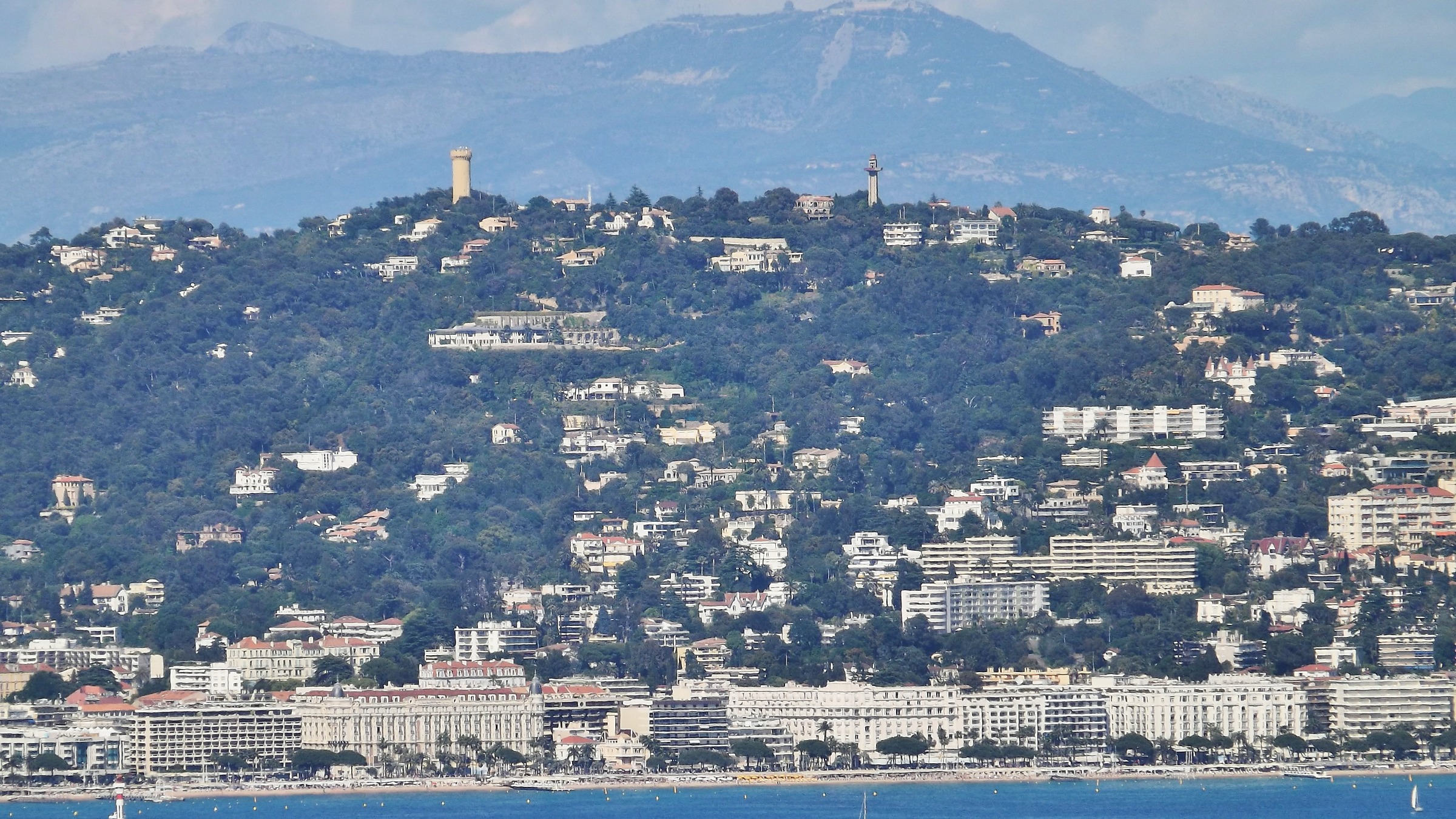
La Croisette is only about three kilometres long, but it concentrates a rare stack of demand generators: Mediterranean frontage, beaches, luxury retail, the Palais des Festivals, the Vieux-Port, flagship hotels including the Carlton, Martinez and JW Marriott, and walking access to the compact centre known as the Banane. A sea-view apartment here is not priced like an average apartment in Cannes because the buyer is acquiring scarcity, visibility and convenience at the same time.
That does not make every Croisette property equivalent. A high floor, open sea view, generous terrace, quiet orientation, parking, security, lift quality and a well-run building can materially alter value. So can a major forthcoming works programme, an ageing façade, weak energy performance or noise from traffic and events. Two apartments separated by one block can have different light, outlook, charges and resale audiences.
The Croisette is therefore better understood as the visible tip of several Cannes submarkets. Palm Beach and Pointe Croisette offer a more residential relationship with the water. La Californie and Super-Cannes attract buyers seeking views, privacy and larger residences or villas, usually with greater dependence on a car. The Banane prioritizes walkability to the Palais, restaurants, retail and rail station. Le Suquet offers historic texture with practical constraints. La Bocca has a different price structure and an urban-renewal story rather than a palace-front proposition.
The numbers behind the image
France’s national statistics office, INSEE, counted 74,350 residents in Cannes in 2023. It also counted 73,529 dwellings: 38,593 principal residences, 32,466 second homes or occasional dwellings and 2,470 vacant homes. In other words, 44.2% of the city’s housing stock was classified as secondary or occasional, while 92.4% of dwellings were apartments. Those figures explain both the depth of the second-home culture and the local policy tension around housing availability.
The public price map operated by France’s notarial network displayed a median of €5,606 per square metre for existing apartments in Cannes, based on 2,243 recorded sales in its displayed transaction window when checked for this article. That is a citywide median, not a Croisette valuation. It includes neighborhoods, building qualities and outlooks that are not comparable. Completed prime seafront transactions may sit far above it; agency advertisements are asking prices, not notarized sale evidence.
The correct lesson is not “Cannes costs €5,606 per square metre.” It is that an official citywide reference exists, while the prime market requires address-level evidence. A buyer should ask a notaire or qualified valuer for recent comparable completed sales, inspect the building’s records and test the apartment against alternatives in the same micro-location. A glossy listing cannot substitute for that work.
Why Cannes creates demand beyond July and August
Cannes is seasonal, but it is not merely a summer resort. The city’s official figures describe nearly four million visitors a year, 64% of them foreign, and an accommodation base of almost 120 hotels, 7,400 hotel rooms and 6,600 serviced or tourism apartments. It reported 3,794,736 nights in commercial accommodation in 2022. These are municipal figures and should be read as destination indicators, not a rental guarantee for a private owner.
The more important differentiator is the event calendar. MIPIM brings the international property industry in March. The Festival de Cannes dominates May. Cannes Lions follows in June. The Yachting Festival arrives in September; TFWA and MIPCOM help carry professional demand into autumn. Corporate meetings, television markets, concerts and cultural events fill additional dates.
The city reported 72 professional events and 300,000 accredited professionals at the Palais des Festivals in 2023. A municipal deliberation estimated the Palais ecosystem’s 2023 impact at 13,000 jobs and more than €1 billion in total economic benefits. In 2025, the Palais operator recorded €55 million in revenue, according to the city. Methodologies matter, and economic-impact estimates are not equivalent to property income. Still, the institutional point is clear: Cannes has an engine designed to import demand outside the traditional beach season.
Summer remains powerful. The municipality reported hotel occupancy of 84% in June 2025, seven points above June 2024, and up to 97% in August. That was a city communication about a record season, so investors should not extrapolate it into a normal annual occupancy assumption. A single apartment’s performance depends on legality, exact location, capacity, management, reviews, event dates and the owner’s own use.
La Croisette’s economic moat
In investment language, the Croisette’s “moat” is not a promise of rising prices. It is the difficulty of reproducing the ecosystem. Another Mediterranean town can build luxury apartments. It cannot quickly manufacture the Cannes Film Festival, an internationally recognized convention venue, a century of screen mythology, established palace hotels, major retail, marina infrastructure and a name understood across Europe, the Gulf, North America and Asia.
That brand can support liquidity because a future buyer does not need a long explanation of the destination. It can also attract diverse use cases: a second home, a pied-à-terre for business events, a family base on the Riviera, a residence for longer stays, or a property held for intergenerational use. For some high-net-worth families travelling with children, assistants, nannies or security, a large private apartment serves a different need from a suite.
This does not mean private residences replace luxury hotels. Palaces sell daily service, restaurants, spas, event access and professional hospitality. Homes sell privacy, space, routines and control. The two products often reinforce the same destination network. A family may own an apartment and still use hotel restaurants, beach clubs and concierge services; event delegates may rent a residence while meetings remain anchored in the Palais and hotels.
The public realm is part of the private asset
A prime address does not preserve itself. Cannes began a broad Croisette improvement programme in 2017, covering underground networks, beaches and the future redesign of the boulevard. The city’s current schedule says surface works are planned from mid-October 2026, after MIPCOM, with an international team including Atelier d’Urbanité Roland Castor and Snøhetta. The plan includes a wider pedestrian promenade, vegetation, safer crossings, a defined cycle route, improved lighting and stronger video protection.
For an owner, this has two opposite implications. Long-term investment in public space can strengthen destination quality and the experience outside the front door. Construction can also create noise, access changes and disruption, while programmes and budgets can move. The municipality explicitly labels the timetable subject to change. A buyer should review the exact phase affecting the building instead of assuming that every Croisette block receives an immediate benefit.
Elsewhere, the Vieux-Port is undergoing a €56.2 million modernization financed by its operator, while the city has invested in beaches, cultural sites and transport. Such projects illustrate a central principle of this series: property value is partly supported by the destination around the property. But public expenditure does not cure an overpaid purchase or a badly governed copropriété.
What ownership really costs
The purchase price is only the opening entry. On an existing French property, acquisition taxes and notarial costs are commonly around 7% to 8%, although the exact amount must be calculated for the transaction. Owners then face taxe foncière, insurance, utilities, building charges, reserve contributions, repairs and possibly wealth, income or capital-gains taxation depending on residence, structure and worldwide circumstances.
On the Croisette, copropriété charges can reflect lifts, caretakers, security, gardens, pools, central systems and demanding façades exposed to salt air. Meeting minutes, the building’s maintenance log, technical diagnostics, unpaid charges, litigation, insurance claims and the multi-year works plan deserve more attention than lobby marble. A terrace with a sea view is attractive; waterproofing failure can be extremely expensive.
Energy performance is another capital question. French DPE rules affect letting and renovation obligations, and air-conditioning demand is rising during hotter periods. Buyers should examine insulation, glazing, cooling permissions, façade constraints and the building’s ability to finance upgrades. In a heritage-sensitive or architecturally prominent building, technical work may require approvals that make simple solutions impossible.
Climate diligence belongs in the file as well. Coastal flooding, intense rainfall, heat, fire exposure in hillside zones and salt corrosion vary by address. The official Géorisques report, local risk plans, insurance history and building-specific evidence should be reviewed before signing. A Mediterranean view is an amenity; it is also an exposure that must be priced and insured.
Rental income: event peaks are not an annual yield
Cannes can produce exceptional nightly prices during major events. That fact is real and frequently advertised. It is also one of the easiest ways to build a misleading spreadsheet. A week at a premium rate does not reveal the net annual return after empty nights, agency commissions, cleaning, linen, platform charges, utilities, damage, insurance, tax and the owner’s blocked dates.
Every furnished tourism rental in Cannes must be declared to the municipality and obtain a 13-digit registration number, according to the city’s current guidance. That number must appear in listings and be transmitted to intermediaries. The city page currently states a 120-day annual ceiling for letting a principal residence; national legislation now allows municipalities to reduce that ceiling, so an owner must verify the rule and any local deliberation in force at the time of letting. A second home can raise additional change-of-use and planning questions, and copropriété rules may prohibit or constrain short stays.
The responsible model begins with legal eligibility, not an assumed occupancy rate. It then uses conservative annual nights, different seasonal prices and a full operating-cost schedule. If the investment works only because every congress week is sold at the highest online asking rate, it probably does not work.
Who might Cannes suit?
Cannes may suit an internationally mobile buyer who values personal use, understands a long holding period and wants a recognizable Riviera base with both leisure and professional demand. It may suit a family office seeking a scarce, usable European asset rather than maximum current yield. It can also suit an operator with local management expertise and a legally rentable property designed for event and extended-stay guests.
It is less persuasive for an investor who needs immediate liquidity, a high stable income yield, minimal administration or a low entry cost. Prime homes can take time to sell, especially at large ticket sizes. Currency moves can change the result for a dollar-, sterling- or Gulf-currency investor. Renovation and furnishing to international expectations can consume capital before the first night is sold.
The property type should follow the use case. A compact central apartment may have a broader rental and resale audience. A large sea-view residence can deliver family utility and scarcity but carry higher charges and a narrower buyer pool. A hillside villa offers privacy and land while adding security, garden, pool, transport and wildfire-management costs. There is no single “Cannes yield.”
The policy question Cannes cannot avoid
A city in which 44.2% of housing is secondary or occasional must manage two legitimate ambitions: remaining internationally attractive and housing the people who make the destination function. Hotel staff, technicians, restaurant workers, shop employees, cleaners, security teams and cultural professionals cannot sustain a luxury ecosystem if ordinary housing becomes inaccessible.
That makes housing policy part of the investment thesis. Registration, enforcement, renovation, worker accommodation, transport and the balance between visitor beds and principal residences shape the destination’s resilience. Investors benefit from a functioning city, not merely an exclusive façade. Cannes’s prestige is strongest when public space, local life and the visitor economy coexist rather than displace one another.
Verdict: more than an address, less than a guarantee
La Croisette is more than a luxury address because it sits inside a difficult-to-replicate tourism and business ecosystem. Cannes creates recurring reasons to arrive: cinema, property, advertising, television, yachts, culture, beaches and the wider Riviera. Public and private investment continue to renew the stage. That combination can support long-term desirability and international liquidity.
But destination strength and investment performance are not synonyms. The price paid, sea view, building governance, energy condition, legal rental status, total costs and exit audience still decide the outcome. The best Cannes purchase is not necessarily the most photographed one. It is the property whose location, building and economics remain convincing after the festival lights go dark.
As we argued in our overview of French locations worth watching, tourism can deepen demand but cannot guarantee return. Readers can follow the full French Real Estate Investment Guide and compare Cannes with Paris’s Golden Triangle and Cergy-Pontoise’s proposed tourism transformation.
Sources and further reading
- INSEE – Dossier complet, Commune de Cannes (population and housing, 2023)
- Immobilier.notaires.fr – Existing-apartment transaction prices, Cannes
- Ville de Cannes – Cannes en chiffres
- Ville de Cannes – 2025 municipal deliberation, tourism and Palais impact
- Ville de Cannes – Palais des Festivals 2025 revenue
- Ville de Cannes – Summer 2025 tourism report
- Ville de Cannes – Current Croisette works and schedule
- Ville de Cannes – Furnished tourism rental registration
- Géorisques – Official property risk information
Follow oui stars Travel for continuing analysis of tourism, investment, luxury and the economies shaping the way the world travels.






[…] comparison, our analysis of Cannes and La Croisette examines event-driven visibility and branded prestige, while our Nice property feature looks at a […]