


















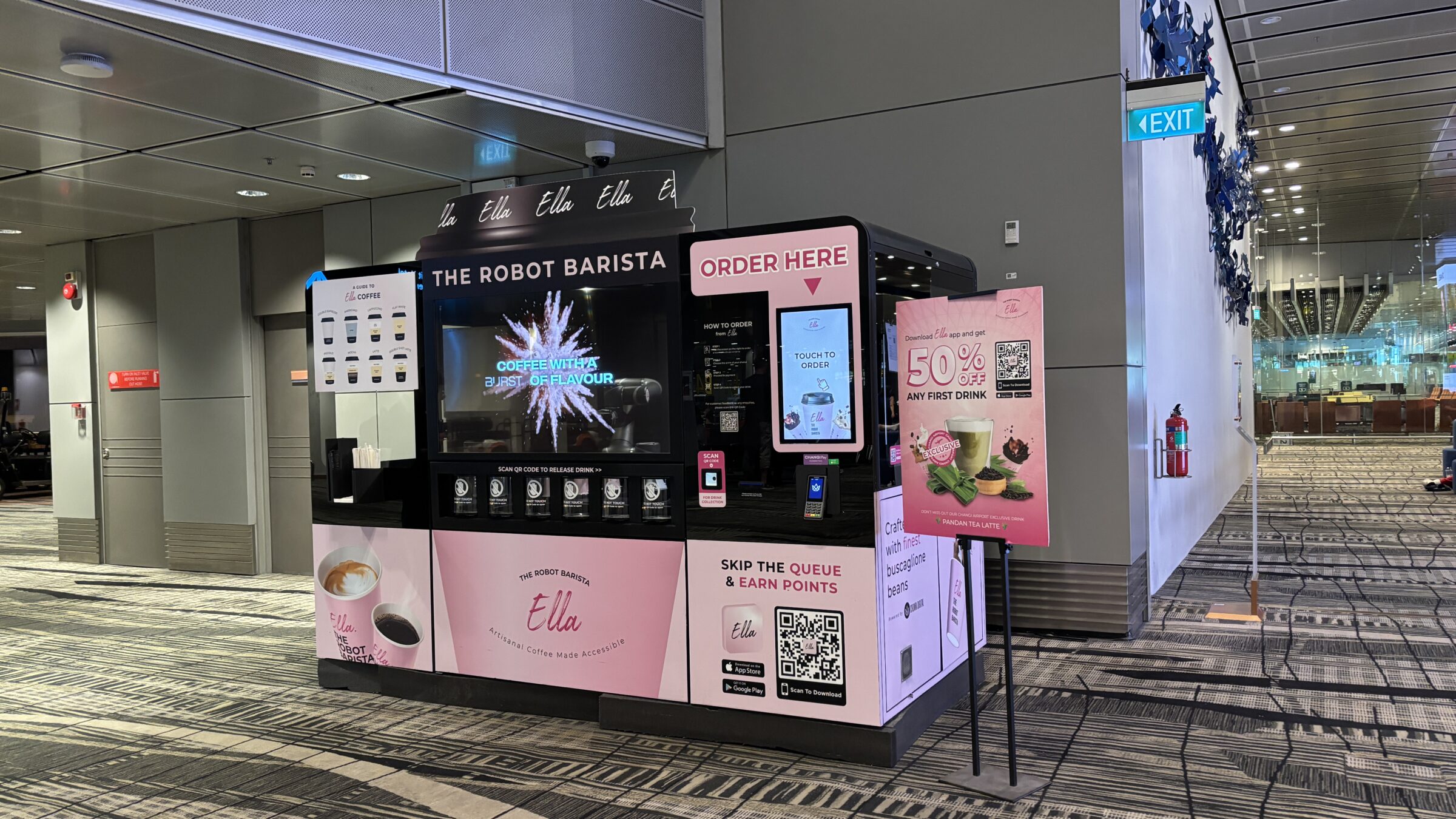
The most consequential travel technology may soon be the one a guest barely notices. It predicts that a bag will miss a connection, translates a late-night message to a hotel, spots an unusual surge in demand, rewrites an itinerary after a cancellation and tells a destination manager that one district is overcrowded. None of those tasks requires a humanoid robot. All can alter who gets served, how much they pay and which workers still receive the call.
That is why the central question is not whether artificial intelligence will “arrive” in tourism. It has. Machine learning already ranks search results, forecasts occupancy, detects fraud and allocates prices. Generative systems are adding a conversational layer; so-called agents are beginning to move from suggesting an action to executing one. The real contest is over design: will companies use AI to remove administrative friction and give hospitality professionals more time for judgment, or treat every human interaction as a cost to eliminate?
This is a reported editorial analysis based on official institutions, peer-reviewed research and disclosed company deployments. Evidence about current use is separated from forecasts. Vendor-funded surveys are identified as such.
What the evidence says—and what it does not
The strongest cross-economy evidence argues for transformation more than immediate mass redundancy. A 2025 International Labour Organization and NASK study assessed nearly 30,000 occupational tasks and found that one in four workers globally is in an occupation with some exposure to generative AI. The figure describes potential exposure, not observed job loss. The ILO’s conclusion is that human input means most exposed jobs are likelier to change than disappear; clerical occupations remain the most exposed.
Tourism-specific evidence is less mature. The OECD’s 2024 paper Artificial Intelligence and Tourism says sector studies on jobs remain scarce. It nonetheless identifies a credible division: routine information, reservation, scheduling and back-office tasks are increasingly automatable, while complex problem-solving, management, social interaction, complaint handling and crisis decisions remain bottleneck skills. This is the proper starting point—neither an AI jobs apocalypse nor a frictionless productivity miracle is proven.
The new front door to travel
Online travel agencies spent two decades teaching travellers to use boxes, dates and filters. Generative AI reverses the interface: the traveller can state an intention—“a quiet accessible beach hotel, direct flight from Paris, vegetarian food, no car”—and expect the system to translate it into inventory. Booking.com launched an AI Trip Planner in 2023 and later added natural-language filters, property questions and review summaries. Expedia’s 2026 product roadmap includes natural-language activity planning and AI comparisons of hotel trade-offs.
This changes distribution power. In a conventional search page, hotels compete for ranking inside visible criteria. In a generated answer, the system may shortlist three options and omit hundreds. Accuracy, structured data, availability and machine-readable policies become commercial infrastructure. A hotel or DMC that is beautiful but digitally illegible risks becoming invisible before a human adviser ever sees it.
Booking.com’s 2025 global AI sentiment survey reported that 62% of travellers surveyed had already used AI to plan or book a trip. That is company-commissioned research, not a neutral census, but it shows the direction of consumer experimentation. Expedia’s YouGov survey of more than 5,700 adults in the United States, United Kingdom and India in March 2026 found a trust boundary: 40% worried about poor customer service if something went wrong after AI made a purchase. Travellers may accept machine inspiration faster than machine accountability.
Travel agencies: from search desk to verification desk
AI can draft itineraries, compare schedules, translate proposals, summarise visa rules and create first versions of client communications. For high-volume agencies, that can compress hours of low-value assembly. It can also commoditise agencies whose only service is copying public information into a PDF.
The defensible agent will do what a general model cannot reliably do alone: know the client’s unstated tolerances, verify live conditions, negotiate with suppliers, recognise a bad connection, document who is responsible and answer when a passport is lost at 02:00. Corporate travel adds policy, duty of care and complex ticketing. Luxury travel adds discretion, taste and access. Group travel adds contracts and operational dependencies. AI raises the premium on accountable expertise.
That does not protect every role. Entry-level itinerary formatting, basic call-centre queries and repetitive ticket servicing are exposed. Agencies should redesign jobs before headcount pressure dictates the outcome: junior staff can train on source verification, disruption handling, accessibility, sustainability evidence and supplier quality instead of spending a career on copy-paste work.
DMCs and guides: local truth becomes valuable
Destination management companies hold something large models lack: current, negotiated, local operational truth. Which museum entrance works for a coach today? Which restaurant can actually handle forty halal meals at 20:30? Which street closure invalidates tomorrow’s transfer plan? A DMC can use AI to query contracts, assemble multilingual proposals and forecast staffing—but only if its supplier data are clean and permissioned.
Guides face a similar split. AI can deliver names, dates and translations. It cannot reliably read a group’s energy, protect people in a crowd, improvise around a closure, interpret contested history with sensitivity or create the social memory of a journey. The weak product—a memorised script—will face price pressure. The strong guide becomes a curator, storyteller, safety professional and human interface to place.
Destinations should resist replacing certified local knowledge with generic synthetic narration. It can spread errors, flatten minority histories and divert spending from residents. The opportunity is augmentation: real-time translation, accessibility descriptions, archive search and visitor-flow alerts in the guide’s hands.
Hotels: where the efficiency case is strongest
Hotels combine thin margins, perishable inventory, fragmented software and round-the-clock service. That makes them fertile ground for AI. Current uses include competitor-rate intelligence, dynamic pricing, occupancy forecasting, labour scheduling, review analysis, guest messaging, preventive maintenance and routing service requests from the front desk to operations.
Amadeus’s supplier-commissioned Travel Dreams 2026 survey covered 500 senior hoteliers and 6,000 travellers. It reported that 499 of the 500 hoteliers planned AI investment in 2026, averaging $319,000. Forty percent said they used AI for competitor-rate or market intelligence, 39% for dynamic pricing and revenue management, 38% for occupancy and labour forecasts, and 36% for either guest-service chatbots or review analysis. Those figures indicate intent among a selected global sample; they do not prove return on investment.
A documented operational example is more instructive. Singapore’s Tourism Board reported that Conrad Centennial Singapore reduced staff-scheduling time from two hours to 15 minutes using AI-powered scheduling. The gain did not require replacing the welcome; it removed a managerial chore. Another integration between Amadeus HotSOS and Canary Technologies turns guest messages into operational tickets, a useful bridge only when employees still own resolution.
The boundary appears in the same Amadeus study: a majority of travellers wanted automation mainly for in-room controls, while majorities preferred human-led interaction for room service, luggage, service requests, check-in, concierge, housekeeping and payment. The commercial lesson is not “no automation.” It is that a luxury promise becomes weaker when technology is used to hide understaffing.
Airlines and airports: AI during disruption
Aviation produces vast operational data and punishes slow decisions. AI can assist with crew and gate allocation, predictive maintenance, fuel and route planning, baggage connections, fraud and personalised disruption messages. Delta reports using models to route bags with short connections, support gate decisions and optimise maintenance timing. Its Delta Concierge began as a limited beta in 2025, connecting authenticated travellers to flight, gate, seat, credit and baggage information, with handoff to reservation staff when the tool cannot resolve a case.
That last design choice matters. A chatbot is convenient when a flight is on time; during cancellation, the traveller needs authority, alternatives and empathy. Automation that repeats policy while withholding a human is not service innovation. It is a queue without a visible line.
Biometrics can speed a journey, but faces, passports and travel patterns are exceptionally sensitive data. The OECD notes biometric processing at major airports including Paris, Los Angeles and Vancouver. Efficiency claims must be matched by lawful purpose, data minimisation, security, appeal routes and a non-biometric alternative where required.
Tourism boards and destinations: from promotion to orchestration
For a tourism board, AI is more than a marketing generator. It can combine arrival, mobility, event, accommodation and sentiment data to decide where and when demand should be encouraged. It can translate official information, answer accessibility questions, distribute visitors beyond hotspots and alert operators to pressure.
Singapore offers the clearest state-backed case. The Singapore Tourism Board signed an AI cooperation agreement in 2025 aimed at personalised recommendations, multilingual assistance, productivity and destination insight. Its tourism innovation system publishes playbooks and pilots. In 2025, the board said 28 tourism companies adopted technology solutions; it also reported the scheduling gain at Conrad. Spain’s SEGITTUR, meanwhile, named VisitMadridGPT its 2025 AI for Tourism winner: the city tool offers destination assistance in 95 languages and gives managers interaction data for marketing analysis.
These are not proofs that AI caused higher visitor receipts. They show institutional capability: verified content, shared data, experimentation, procurement and skills. Destinations that merely buy a chatbot without maintaining the knowledge beneath it will create a confident-looking layer over stale information.
Pricing and personalization: value or surveillance?
Personalization can be benign: remembering a traveller needs a step-free room, suggesting a late checkout after a night flight, or translating dietary requirements. It can also become opaque discrimination when a platform infers willingness to pay and shows different choices or pressure tactics without explanation.
Revenue management long predates generative AI. Hotels and airlines already vary prices by demand, timing and inventory. More granular models can improve load factors and reduce waste, but individualised pricing based on behaviour, location or inferred wealth raises fairness and regulatory questions. Companies should distinguish inventory pricing from personal vulnerability pricing—and be able to explain the difference to regulators and customers.
Privacy is not a footnote. Booking.com’s privacy notice says its AI planner can use personal data shared in the chat and search or booking history to tailor recommendations; call summaries and voice assistance may also process booking details. The useful question is not whether the policy is disclosed somewhere. It is whether the traveller understands what is collected, can refuse without losing core service and can correct a consequential error.
The misinformation problem is physical
An invented restaurant is embarrassing. An invented visa rule, unsafe trail, closed border crossing, inaccessible station or wrong medication advice can cause material harm. Travel moves AI errors from a screen into unfamiliar streets.
Peer-reviewed work is starting to measure the trust dynamics. A 2026 study in Humanities and Social Sciences Communications ran three experiments with 708 participants and found human recommendations more persuasive for near-future trips than AI recommendations, mediated by credibility; errors weakened the difference. Another 2024 hospitality study found that reviews perceived as undisclosed AI output were judged less useful, trustworthy and authentic. The evidence is contextual, not universal, but it undermines the idea that synthetic fluency automatically earns trust.
Every operational travel answer should therefore have provenance, freshness and an escalation path. Visa and health information should point to competent authorities. Availability and price should come from live inventory. Generated destination copy should be reviewed by people with local and cultural knowledge. “The model said so” is not an accountable source.
Bias and the destinations an algorithm never shows
Recommendation systems learn from past demand, reviews, language coverage and commercially available inventory. That can reinforce popularity: famous districts receive more content, more clicks and still more recommendations. Small businesses without structured feeds, communities underrepresented online and languages with fewer digital resources may disappear from the generated shortlist.
Bias is not solved by asking a model to be fair. Tourism boards and platforms need tests: which neighbourhoods, price points, ownership types, languages and accessibility needs are represented? Are sponsored placements disclosed? Can suppliers challenge an incorrect description? Can a traveller understand why an option was recommended?
There is also a geographic divide. The ILO finds exposure to generative AI much higher in high-income labour markets than low-income ones, partly because work is more digitised. Yet low-income destinations may bear a different risk: value extraction. If discovery, customer data and payment sit with foreign platforms, local operators can receive the visitor while surrendering margin and insight.
Will jobs disappear?
Some tasks and some positions will. Reservation clerks, basic content production, repetitive customer support, administrative coordination and manual revenue reports are exposed. A company that says otherwise is avoiding the labour question. But exposure is not the same as removal, and tourism contains physical, interpersonal and exception-heavy work that is difficult to automate well.
The likely near-term pattern is uneven task recomposition. One revenue manager may supervise systems across more properties. A call-centre team may handle fewer routine contacts but more angry and complex ones. Front desks may shrink in select-service hotels while guest-relations roles remain central in luxury. Housekeeping schedules may be optimised, but rooms still require skilled physical work. Guides may use live translation while their authority shifts toward interpretation and care.
This creates a job-quality risk. If AI removes the easy interactions and leaves workers only the hardest cases under tighter algorithmic measurement, work can become more stressful. The ILO warns about algorithmic management and calls for social dialogue. Productivity gains should fund training, better staffing at peak moments and higher-value roles—not only reduce payroll.
What tourism and hospitality schools must teach now
Tourism universities, hotel schools and vocational colleges should not bolt a one-semester “prompt engineering” elective onto an unchanged curriculum. The next workforce needs operational AI literacy integrated with hospitality, finance, law and ethics. UNESCO’s AI competency frameworks offer a useful philosophy: human-centred agency, ethics, foundations and applications, system design and continuing professional learning.
A serious curriculum should include:
- Data foundations: property-management, customer, distribution and destination data; data quality; APIs; consent; retention; cybersecurity.
- AI operations: how prediction, recommendation, language models, computer vision and automation differ; where confidence scores and human review belong.
- Verification: source checking, live inventory validation, hallucination testing, multilingual quality assurance and incident documentation.
- Revenue and fairness: forecasting, elasticity, dynamic pricing, channel economics and tests for discriminatory outcomes.
- Service design: mapping moments where automation reduces friction and moments where a human creates trust, recovery or delight.
- Tourism law and governance: privacy, consumer rights, accessibility, intellectual property, the EU AI Act and supplier contracts.
- Human skills under pressure: empathy, intercultural communication, negotiation, crisis response, leadership and storytelling.
- Experimentation: controlled pilots with measurable baselines, failure logs and stop criteria—not promotional demos.
Assessment must change too. Students should be allowed to use AI in designated work, but required to disclose it, verify outputs, cite primary sources and defend decisions orally. A future revenue manager should audit a model; a future concierge should correct it; a future destination manager should detect who its recommendations exclude.
Professional training cannot wait for the next graduating class
Most people who will work in tourism in 2030 are already employed. Employers need paid, role-specific learning: two hours for a housekeeping supervisor will differ from training for a marketer or a chief data officer. Small businesses need shared tools and public extension services because they cannot each hire an AI governance team.
Worker participation is practical risk control. Frontline employees know which guest questions are ambiguous, where data are wrong and when an escalation arrives too late. Involve them in procurement, testing and thresholds. A system imposed from headquarters can optimise the metric it can see while damaging the service it cannot measure.
For a wider view of the labour challenge, see OUISTARS’ analysis of hospitality’s workforce shortage, our guide to skills every hospitality professional needs and the overview of tourism and hospitality schools in France.
Where the investment opportunities are
The least durable business may be another generic itinerary generator. Models and interfaces are easy to copy. Defensible opportunities sit closer to verified transactions and difficult operations:
- permissioned, continuously updated destination knowledge in multiple languages;
- middleware connecting hotel, airline, DMC and activity systems without exposing unnecessary personal data;
- agent-assist tools that summarise context and preserve seamless human handoff;
- quality assurance for accessibility, visa, health and disruption information;
- cybersecurity, model monitoring, bias audits and AI incident insurance;
- forecasting for staffing, energy, food waste and visitor flows;
- training platforms built around real hospitality scenarios;
- direct-booking and machine-readable distribution tools for SMEs.
Investors should ask for a baseline. How long did the task take before AI? What error rate is acceptable? Who checks the output? Does satisfaction improve? Does revenue rise after platform fees? A demo that saves five minutes while creating one expensive service failure is not productivity.
Which countries and companies benefit most?
Analysis, not forecast: the early beneficiaries will not simply be the countries with the biggest models. Tourism advantage requires five complementary assets: high-quality digital infrastructure; interoperable and lawful data; businesses capable of implementation; a multilingual skilled workforce; and trusted physical service.
That favours platform-rich markets such as the United States and China in consumer interfaces, digitally coordinated hubs such as Singapore, and destinations such as Spain that have invested in smart-destination infrastructure. European operators may turn regulation and strong destination institutions into a trust advantage if compliance becomes product quality rather than paperwork. Gulf destinations can build AI into new airports and hotels without as much legacy technology, but must still develop local talent, cultural data and credible privacy governance.
Company size helps but is not destiny. Global groups possess data, capital and integration teams. Independent hotels and specialist agencies possess intimacy, agility and distinctive knowledge. Shared infrastructure, open standards and cooperative destination data can prevent AI from becoming a scale monopoly.
What happens to those who wait?
Waiting has three costs. First, the knowledge gap: staff do not learn where tools fail. Second, the distribution gap: products are absent from conversational discovery. Third, the data gap: competitors accumulate cleaner feedback loops.
But “move fast” is incomplete advice in a sector built on safety and trust. The right strategy is to start with bounded, reversible uses—internal search, translation drafts, staff scheduling, knowledge retrieval—then measure. Do not begin by automating visa advice, emergency response or irreversible purchases. Companies that wait to learn will fall behind; companies that automate accountability may damage the asset they were trying to scale.
A practical boardroom test
- Name the customer or worker problem. “Use AI” is not a strategy.
- Map the data. Establish ownership, permission, freshness and security.
- Define the human boundary. Say who approves prices, safety advice, refunds and sensitive decisions.
- Measure quality and labour effects. Track errors, escalation time, satisfaction, workload and job redesign.
- Offer recourse. Customers and suppliers need a route to correction and a competent person.
- Share productivity. Invest part of the gain in skills, service capacity and decent work.
Three evidence-based scenarios for the next decade
Forecast, not established fact: in an augmentation scenario, AI becomes the invisible operating layer while people retain authority at moments of emotion, safety and exception. Productivity rises, jobs change and premium human service gains value. In a cost-cutting scenario, companies remove staff faster than systems mature; customer friction and worker stress increase, and trusted brands reverse some automation. In a concentration scenario, a few assistants control discovery and transactions, squeezing destination and supplier margins.
All three can occur simultaneously in different segments. Budget travel may accept more self-service; luxury may make visible human attention scarcer and more valuable. Highly standardised hotels may automate further than resorts built around relationships. The policy choice is to shape incentives before the default becomes irreversible.
The human hospitality test
A machine can remember a pillow preference. Hospitality begins when the plan breaks: a receptionist sees that an exhausted family needs help before asking; a guide changes tone after difficult history; an airline employee owns a missed connection; a housekeeper notices risk in a room; a travel adviser says the popular option is wrong for this client.
AI can make those people better informed and less burdened. It cannot be held morally responsible for the guest. If tourism forgets that difference, it may produce efficient transactions and impoverished journeys.
OUISTARS conclusion and recommendations
Artificial intelligence will transform tourism because it acts on the sector’s core materials: information, prediction, coordination, language and trust. Replacement will be selective, concentrated first in routine digital tasks. The outcome for employment is a management and policy decision, not a property of the technology.
Companies should automate queues, duplicate entry and search—not accountability. Schools should teach data and model literacy alongside empathy, crisis judgment and culture. Governments should help SMEs connect to trusted data, enforce transparency and fund worker transition. Destinations should keep local knowledge and local businesses visible in machine-generated travel.
The winners will combine computation with hospitality. The losers may include both those who refuse to learn and those who mistake a fluent interface for a responsible host.
Sources and further reading
- OECD, Artificial Intelligence and Tourism, 2024.
- ILO and NASK, Generative AI and Jobs: A 2025 Update.
- OECD Tourism Trends and Policies 2024: Strengthening the Tourism Workforce.
- Amadeus, Travel Dreams 2026 (supplier-commissioned survey).
- Singapore Tourism Board: 2025 technology deployments and outcomes, 2026.
- Singapore Tourism Board AI cooperation announcement, 2025.
- SEGITTUR: VisitMadridGPT and the AI for Tourism Awards, 2025.
- Booking.com: AI planning and search features, 2024.
- Expedia Group / YouGov: AI Trust Gap survey, 2026.
- Delta Air Lines: Responsible Approach to AI and operational uses.
- UNESCO: AI Competency Framework for Teachers, 2024.
- Li and Su, Humans or Generative AI? Influence of Recommendation Agents on Tourists’ Decision-Making, 2026.
- Consumer Reactions to Perceived Undisclosed ChatGPT Usage in Online Reviews, 2024.
- European Commission: Navigating the EU AI Act.